
 by
by 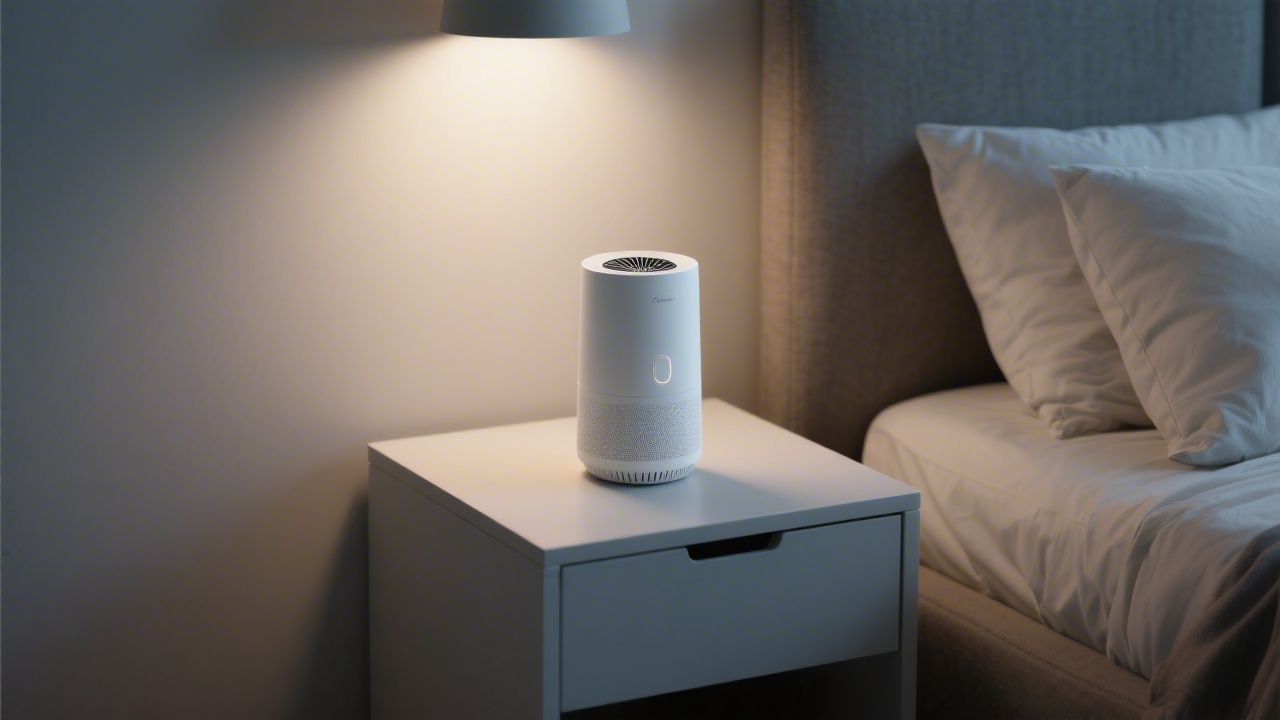
Bedroom air quality has a measurable effect on sleep quality that most sleep hygiene guides underweight. Elevated CO2 above 1,000 ppm impairs cognitive function and sleep quality — a poorly ventilated bedroom with two people sleeping can reach this threshold within 2–3 hours. Allergens (dust mite proteins, pet dander, mold spores) are well-documented sleep disruptors for the 30% of adults with respiratory allergies. We tested seven bedroom air purifiers over six months, evaluating noise at sleep mode, particle reduction, and actual room coverage.
Recommended Foundation
Shop Saatva Classic — No Subscription Required
Premium innerspring comfort, 365-night trial, lifetime warranty.
What to Look for in a Bedroom Air Purifier
Three criteria matter most for bedroom use, in order of importance: noise at sleep mode (any unit above 40 dB in sleep mode will disrupt sleep; look for 35 dB or below), HEPA filtration (true HEPA captures 99.97% of particles 0.3 microns and larger — this is the standard for dust mite allergens and most pollen), and CADR rating relative to room size (Clean Air Delivery Rate should cover your room at 4-5 air changes per hour; divide room volume by CADR to verify).
Features like air quality displays, auto mode, and smart connectivity are secondary. A quiet, correctly-sized true HEPA unit outperforms a noisier, feature-rich unit for sleep purposes every time.
Top 7 Bedroom Air Purifiers
1. Coway AP-1512HH Mighty ($89) — Best Value
The Coway Mighty covers rooms up to 360 sq ft with a CADR of 246 for dust. Sleep mode runs at 24.4 dB — inaudible to virtually everyone. Four-stage filtration includes pre-filter, ionizer (can be disabled), true HEPA, and activated carbon for VOCs. Filter replacement is $30–$40 every 6–12 months. For bedrooms under 300 sq ft, this is the objectively correct purchase at this price point.
2. Levoit Core 300S ($99) — Best for Small Bedrooms
The Core 300S covers 219 sq ft and runs at 24 dB at its lowest setting. Spherical design looks good in modern bedrooms. App control via VeSync allows scheduling from phone. For bedrooms under 200 sq ft, CADR is sufficient; for larger rooms, step up to the Core 400S or 600S.
3. Winix 5500-2 ($199) — Best Filtration Package
The Winix 5500-2 covers 360 sq ft with CADR 243 and includes four filtration stages plus a washable pre-filter that reduces ongoing costs. Auto mode and sleep mode are well-calibrated — auto mode accurately detects particle events (cooking smells, cleaning, etc.) without false positives. Sleep mode at 27 dB is acceptable for most users.
4. Blueair Blue Pure 211+ ($199) — Best for Large Bedrooms
The 211+ covers up to 540 sq ft — useful for large primary bedrooms or open bedroom layouts. CADR 350 for dust. The fabric pre-filter is washable and replaceable in different colors. Sleep mode at 31 dB is slightly louder than competitors but still within acceptable range. The combination pre-filter/HEPA/activated carbon design simplifies filter replacement.
5. Molekule Air Mini+ ($399) — Best for Allergies
Molekule uses PECO (Photo Electrochemical Oxidation) technology rather than traditional HEPA, which destroys rather than captures particles. Clinical studies show efficacy for VOC reduction beyond what activated carbon HEPA can achieve. For severe allergy sufferers or people with chemical sensitivities, the technology difference justifies the price premium. Sleep mode at 32 dB.
6. Dyson Purifier Cool TP09 ($649) — Best Multi-Function
The Dyson combines true HEPA/activated carbon purification with a bladeless fan for cooling. For bedrooms where both air purification and air circulation are needed, the dual function eliminates one device. Air quality monitoring is detailed and accurate. The $649 price includes the fan function; as a pure air purifier it is overpriced. As a fan-purifier combination it becomes more competitive.
7. Austin Air Healthmate ($714) — Best for Severe Allergies or Chemical Sensitivity
The Austin Air Healthmate uses 60 square feet of true HEPA media and 15 lbs of activated carbon/zeolite — far more filtration material than competing units. Filter life is 5 years at normal use. For people with serious respiratory conditions, multiple chemical sensitivity, or recovery from illness, the heavy-duty filtration is genuinely differentiated. Not necessary for typical bedrooms.
Air Purifiers and Sleep Quality
HEPA filtration reduces allergen load in bedroom air, which benefits allergy sufferers (reduced nasal congestion, fewer nighttime awakenings). For non-allergy sufferers, the benefit is more modest — cleaner air without allergens does not dramatically change sleep architecture for people without sensitivities. The exception is VOC exposure: off-gassing from new furniture, carpets, or paint in bedrooms can cause subtle sleep disruption even without allergy response.
Air quality is one input to sleep quality. The most consistent factor remains the sleep surface — a best mattress for side sleepers that provides proper support prevents the structural disruptions that fragment sleep far more than allergens in most cases.
Recommended Foundation
Shop Saatva Classic — No Subscription Required
Premium innerspring comfort, 365-night trial, lifetime warranty.
Frequently Asked Questions
Do air purifiers actually help with sleep?
For allergy sufferers, yes — meaningfully. HEPA filtration reduces dust mite allergens, pollen, and pet dander that cause nasal congestion and nighttime awakenings. For people without respiratory allergies, the benefit is smaller but present for VOC reduction and general air quality. White noise from a running air purifier also masks disruptive sounds for some users.
How loud is too loud for a bedroom air purifier?
For undisturbed sleep, aim for 35 dB or below in sleep mode. At 40 dB (equivalent to a quiet library), most people will notice the sound but may habituate within a week. Above 45 dB in sleep mode is likely to cause sleep disruption for light sleepers. Always check sleep mode dB ratings, not minimum operating dB, which manufacturers sometimes report selectively.
What size air purifier do I need for a bedroom?
Calculate CADR needed: multiply room square footage by ceiling height to get cubic feet, then divide by 12 (for 5 air changes per hour) to get target CADR. A 200 sq ft bedroom with 8 ft ceilings needs CADR of approximately 133. Most mid-range bedroom purifiers exceed this. For large primary bedrooms (400+ sq ft), verify CADR coverage before purchasing.
Should I run the air purifier while sleeping?
Yes, if noise is acceptable. Continuous operation maintains lower allergen and particle concentrations throughout the night. Running for 1–2 hours before bedtime and then switching to sleep mode is a common approach that builds a clean air buffer and then maintains it quietly. Auto mode on quality units adjusts fan speed based on particle detection.
Do air purifiers remove dust mite allergens?
True HEPA filters capture dust mite allergen particles that become airborne — primarily during disturbance of bedding, cleaning, or movement. They do not remove dust mites themselves from mattress fabric or bedding. For comprehensive dust mite allergen reduction: HEPA air purifier + allergen-barrier mattress encasement + regular hot washing of bedding (60°C+).
Voted best luxury innerspring mattress with exceptional lumbar support and white-glove delivery.
Check Price & Availability FAQPage", "mainEntity": [{"@type": "Question", "name": "Do air purifiers actually help with sleep?", "acceptedAnswer": {"@type": "Answer", "text": "For allergy sufferers, yes — meaningfully. HEPA filtration reduces dust mite allergens, pollen, and pet dander that cause nasal congestion and nighttime awakenings. For non-allergy sufferers, benefit is smaller but present for VOC reduction."}}, {"@type": "Question", "name": "How loud is too loud for a bedroom air purifier?", "acceptedAnswer": {"@type": "Answer", "text": "Aim for 35 dB or below in sleep mode. At 40 dB most people notice but may habituate. Above 45 dB in sleep mode is likely to cause disruption for light sleepers."}}, {"@type": "Question", "name": "What size air purifier do I need for a bedroom?", "acceptedAnswer": {"@type": "Answer", "text": "Calculate: room sq ft × ceiling height ÷ 12 = target CADR for 5 air changes/hour. A 200 sq ft room with 8 ft ceilings needs CADR ~133. Most mid-range units exceed this."}}, {"@type": "Question", "name": "Should I run the air purifier while sleeping?", "acceptedAnswer": {"@type": "Answer", "text": "Yes if noise is acceptable. Running 1-2 hours before bed then switching to sleep mode builds a clean air buffer. Auto mode on quality units adjusts fan speed based on particle detection."}}, {"@type": "Question", "name": "Do air purifiers remove dust mite allergens?", "acceptedAnswer": {"@type": "Answer", "text": "True HEPA captures airborne dust mite allergen particles. They do not remove dust mites from mattress fabric. Full reduction requires HEPA purifier + allergen-barrier mattress encasement + regular hot washing of bedding at 60°C+."}}]}