
 by
by Ready for better sleep?
The mattress you sleep on shapes every night's rest. Saatva's luxury innerspring delivers orthopedic support with Euro pillow-top comfort — trusted by sleep-focused households.
There is a persistent myth that alcohol helps you sleep. It does help you fall asleep — sedation is real, and alcohol's effect on GABA receptors produces genuine drowsiness. What happens after that is the problem. Alcohol disrupts sleep for the full duration it remains active in your system, not just in the first hour. And when you stop drinking regularly, sleep does not recover the next night — it takes 3–4 nights for REM sleep to normalize, and full sleep architecture recovery can take 1–2 weeks.
This page covers exactly what alcohol does to each stage of sleep, why this is the companion guide to our alcohol and sleep overview, and the precise recovery timeline your brain needs to restore normal sleep.
What Alcohol Does to Sleep Architecture: Night by Night
The Night You Drink
First half of the night (hours 0–4): Alcohol increases slow-wave (deep) sleep and suppresses REM sleep. This sounds positive — more deep sleep — but it is not. Alcohol-driven deep sleep is not equivalent to natural deep sleep. It is associated with abnormal brain wave patterns and does not produce the same restorative effects. Growth hormone release (which occurs during natural deep sleep) is blunted by even modest alcohol doses.
Second half of the night (hours 4–8): As blood alcohol falls, the sedative effect reverses. The liver metabolizes alcohol into acetaldehyde — a stimulant that disrupts sleep. This produces the classic "rebound" effect: vivid dreams or nightmares, frequent waking, early morning arousal. REM sleep surges in the second half of the night, producing hyperintense dreaming that is often fragmented and unrestorative.
Sleep latency and efficiency: While alcohol reduces time to fall asleep by 10–20 minutes, total sleep efficiency drops significantly. A 2015 meta-analysis of 27 studies by Ebrahim et al. found that any dose of alcohol reduced sleep quality (measured by waking after sleep onset) in the second half of the night in all studied subjects.
The Dose-Response Relationship
Alcohol's sleep disruption is dose-dependent but not linear:
- Low dose (1 standard drink): Mild REM suppression in the first half, modest rebound in the second. Many people report no perceived sleep disruption at this level, but objective measures show reduced sleep efficiency.
- Moderate dose (2–3 drinks): Significant REM suppression, notable rebound insomnia in the second half, 15–20% reduction in total sleep efficiency. This is the most clinically significant range because it matches social drinking patterns.
- High dose (4+ drinks): Severe sleep fragmentation across the full night, sleep apnea worsening (alcohol relaxes airway muscles), significant next-day cognitive impairment from sleep debt.
Does Tolerance Help? The Short Answer Is No
Regular drinkers commonly report that alcohol no longer affects their sleep the way it used to. This tolerance is real for the sedative (sleep-onset) effect. It is not real for sleep architecture disruption. Studies of chronic drinkers show that even when they no longer feel drowsy from alcohol and report sleeping "normally," objective polysomnography shows persistent REM suppression and sleep fragmentation. The subjective sense of adaptation is not protective.
The Recovery Timeline After Stopping Alcohol
Night 1 after stopping: REM rebound is severe. The brain, deprived of REM sleep during drinking, compensates aggressively. Vivid, intense, often disturbing dreams are nearly universal. Total sleep may paradoxically feel worse than during drinking. This is normal and expected.
Nights 2–3: REM rebound continues, though with decreasing intensity. Sleep fragmentation from cortisol elevation (alcohol withdrawal increases cortisol) remains. Sleep onset may be delayed due to adenosine receptor upregulation.
Nights 4–7: REM sleep begins normalizing. Most people with moderate drinking history see substantially improved sleep quality by day 5–7. Total REM percentage returns toward baseline.
2–4 weeks: Full sleep architecture normalization for moderate drinkers. Deep sleep quality (not just quantity) recovers. Growth hormone release during deep sleep returns to normal. This is why many people who stop drinking for a month report feeling "the best they've slept in years."
Heavy drinkers (alcohol use disorder): Sleep normalization takes substantially longer — 6 weeks to several months in some cases. Medically supervised withdrawal is critical; alcohol withdrawal can produce life-threatening seizures and should not be managed alone.
Why You Wake Up at 3am After Drinking
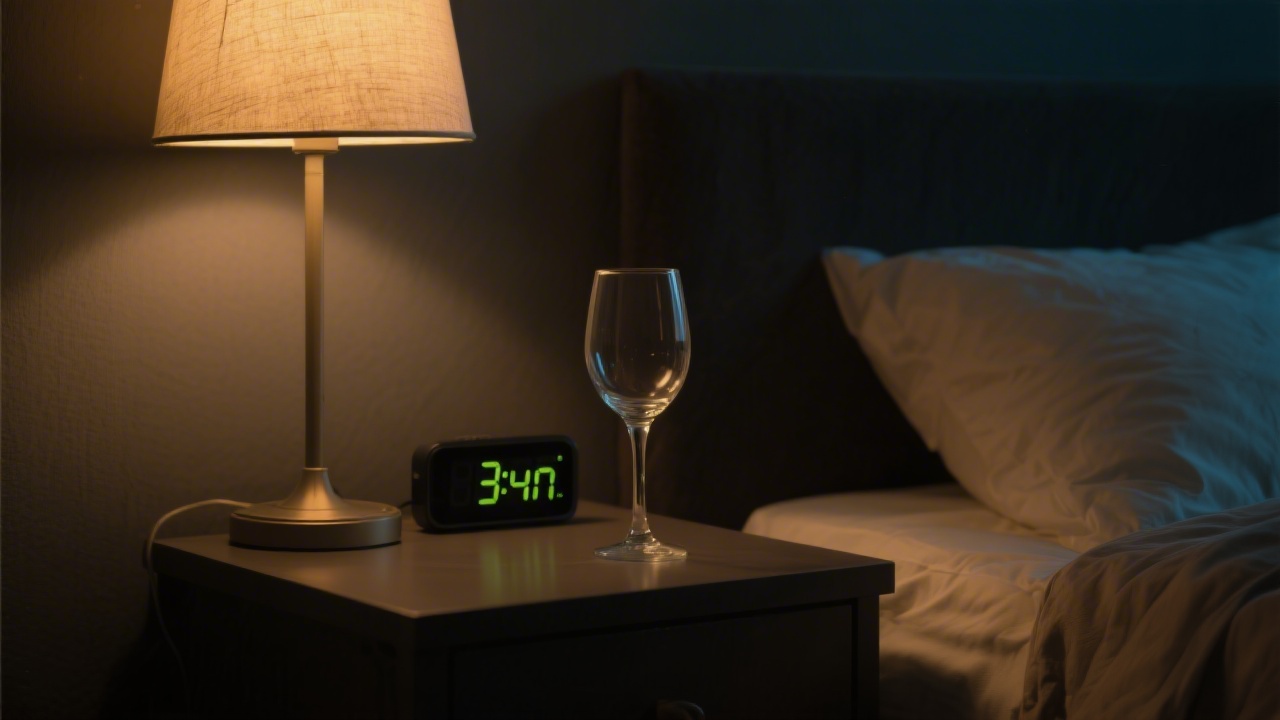
The 3am alcohol wake-up is caused by the timing of acetaldehyde metabolism. Alcohol has a half-life of approximately 1 hour per standard drink, but acetaldehyde production peaks 3–4 hours after the last drink. If you drink until midnight, acetaldehyde peaks around 3–4am — precisely when sleep is supposed to shift into its natural REM-dominant phase. The stimulant effects of acetaldehyde plus cortisol elevation create the characteristic middle-of-the-night awakening.
For broader context on how lifestyle factors beyond alcohol affect sleep quality, see our complete guide to improving sleep naturally. For dietary approaches to rebuilding better sleep after alcohol reduction, our Mediterranean diet and sleep guide is a practical starting point. Understanding caffeine's overlapping effects is also valuable — read our caffeine half-life chart to avoid stacking disruptions.
Frequently Asked Questions
How long does it take for sleep to recover after quitting alcohol?
For moderate drinkers, meaningful sleep improvement begins within 5–7 days and full sleep architecture normalization occurs within 2–4 weeks. The first 3 nights are often the worst due to REM rebound — vivid dreams and fragmented sleep. Heavy or long-term drinkers may take 6 weeks to several months for complete normalization.
Why is sleep worse the first few nights after stopping alcohol?
Alcohol chronically suppresses REM sleep. When alcohol is removed, the brain rebounds aggressively into REM — producing intense, vivid, often disturbing dreams and fragmented sleep. This "REM rebound insomnia" is paradoxical but normal. It resolves within 3–5 nights for most moderate drinkers.
Does a nightcap really help you sleep?
Subjectively, yes — alcohol reduces sleep latency and feels sedating. Objectively, no — it reduces sleep quality for the entire night it is consumed. People who use a nightly nightcap typically develop tolerance to the sedative effect within weeks, requiring more alcohol to achieve the same onset benefit while accumulating increasing sleep debt.
What time should I stop drinking to protect sleep?
The standard recommendation is to stop drinking at least 3 hours before bedtime for low-dose consumption (1 drink) and at least 4–5 hours for moderate consumption (2–3 drinks). For 4+ drinks, the metabolic timeline means sleep will be disrupted regardless of when you stop.
Does alcohol worsen sleep apnea?
Yes, significantly. Alcohol relaxes the throat and tongue muscles that maintain upper airway patency during sleep. Even in people without diagnosed sleep apnea, alcohol can induce respiratory events. In people with existing OSA, alcohol increases the frequency and severity of apneic events, lowers oxygen saturation, and increases snoring intensity.
Ready for better sleep?
The mattress you sleep on shapes every night's rest. Saatva's luxury innerspring delivers orthopedic support with Euro pillow-top comfort — trusted by sleep-focused households.
Our Top Mattress Pick
The Saatva Classic consistently ranks #1 for comfort, support, and long-term durability.
Key Takeaways
How Long Does Alcohol Affect Sleep? The Recovery Timeline is a topic that depends heavily on individual needs and preferences. The most important thing is to consider your specific situation — your body type, sleep position, and personal comfort preferences — before making any decisions. When in doubt, take advantage of trial periods to test before committing.