
 by
by Looking for the right mattress to complete your sleep setup? The Saatva Classic mattress delivers hotel-quality sleep with free white-glove delivery.
The olfactory system has a direct neural pathway to the limbic system — the part of the brain that regulates emotion, memory, and the autonomic nervous system. This is why scent can induce calm faster than almost any other sensory input. Several specific scents have genuine peer-reviewed evidence for sleep improvement. Most do not.
The 7 Scents With Actual Evidence
1. Lavender (Lavandula angustifolia)
Evidence level: Strong. Lavender is the most studied aromatherapy sleep intervention. The active compounds linalool and linalyl acetate inhibit several neurotransmitters associated with anxiety and arousal. A 2015 RCT in the Journal of Alternative and Complementary Medicine found lavender aromatherapy improved sleep quality by 14% in participants with mild insomnia. Mechanism: GABA receptor modulation (similar to benzodiazepine pathway but much milder).
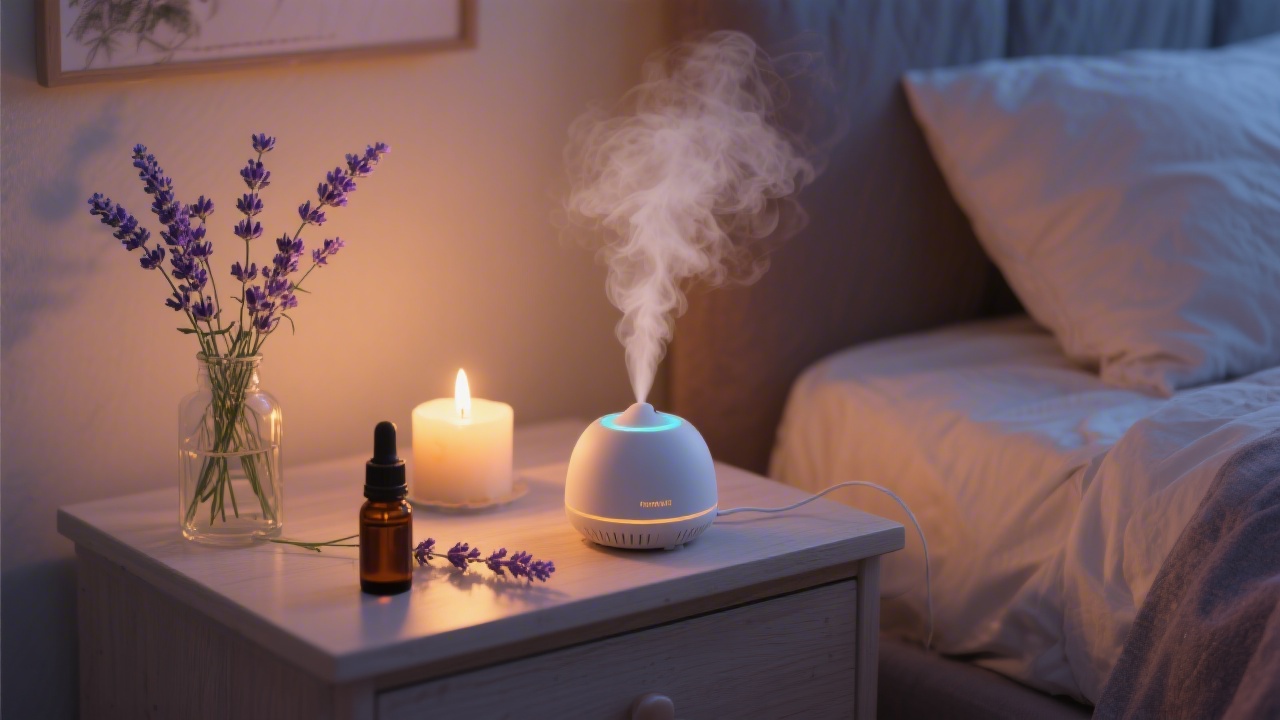
Protocol: ultrasonic diffuser with 3–4 drops of lavender essential oil, run 30 minutes before bedtime and switched off when you get into bed. Continuous overnight diffusion adds minimal benefit and may cause mild irritation.
2. Bergamot (Citrus bergamia)
Evidence level: Moderate. Bergamot essential oil has demonstrated anxiolytic effects in multiple studies. A 2017 study found bergamot aromatherapy reduced subjective anxiety and fatigue in a healthcare setting. Anxiety reduction is a direct pathway to improved sleep onset. Use in the same protocol as lavender, or blend 2 drops lavender + 2 drops bergamot.
3. Chamomile (Roman chamomile, Chamaemelum nobile)
Evidence level: Moderate. Roman chamomile has sedative properties via apigenin (also found in chamomile tea). Aromatherapy delivery is less studied than oral, but the olfactory-sedative pathway is supported in small RCTs. More effective for anxiety-driven sleep difficulties than for general sleep latency.
4. Valerian (Valeriana officinalis)
Evidence level: Moderate (oral stronger than topical). Valerian root is better supported as an oral supplement than aromatherapy, but inhaled isovaleric acid (valerenic acid component) does cross the blood-brain barrier via olfactory pathways. The smell is strong and divisive — many people find it unpleasant, which limits practical use.
5. Cedarwood (Cedrus atlantica)
Evidence level: Emerging. Cedarwood contains cedrol, which has demonstrated sedative effects in animal studies and two small human trials. A 2003 study found cedrol inhalation reduced heart rate and blood pressure. Pleasant woody scent that blends well with lavender (2+2 drops) for improved efficacy.
6. Ylang Ylang (Cananga odorata)
Evidence level: Moderate. Ylang ylang reduces blood pressure and subjective stress in controlled studies. It is intensely floral and can be overwhelming at high concentrations — 1–2 drops maximum, blended with cedarwood or lavender.
7. Sandalwood (Santalum album)
Evidence level: Emerging. A 2006 study found sandalwood inhalation increased non-REM sleep duration in rats. Human data is limited but supportive. Sandalwood also has the practical advantage of a long-lasting, stable scent that doesn't require continuous diffusion. Apply 1–2 drops on a cotton ball placed near (not on) the pillow.
Pros and Cons
What We Like
- Luxury innerspring with excellent lumbar support
- Multiple firmness options available
- Free white-glove delivery and mattress removal
- 365-night trial and lifetime warranty
What Could Be Better
- Higher price than many online brands
- Heavier than foam mattresses
- Not compressed in a box
- Some off-gassing possible initially
Delivery Method Comparison
Ultrasonic Diffuser
Best for consistent, controlled delivery. Run 30 minutes before bed; use a timer so it switches off automatically. Cost: $20–$50. Requires distilled water and pure essential oils (not fragrance oils, which are synthetic and have no evidence base).
Pillow Spray
Convenient and effective for lavender specifically. Spritz 2–3 times on pillow 5 minutes before sleep. The This Works "Deep Sleep Pillow Spray" is the most studied commercial product. Cost: $25–$40 per bottle. Less precise than a diffuser but requires no setup.
Reed Diffuser
Continuous background scenting. Lower concentration than ultrasonic — more ambient than therapeutic. Good for maintaining a low-level bedroom scent identity. Not appropriate as the primary sleep intervention protocol.
Sachets and Cotton Balls
Simplest method. A dried lavender sachet inside the pillowcase delivers consistent low-dose aromatherapy through the night. Effective for maintenance; may not be potent enough for acute anxiety-driven sleep difficulties. Cost: $5–$15.
What Doesn't Work
Fragrance oils (synthetic), air fresheners, and scented candles (used while sleeping) have no evidence base and may introduce VOC irritants that disrupt breathing. Peppermint increases alertness — the opposite effect needed. Eucalyptus is a decongestant with alerting properties at high concentrations. Neither should be used in a sleep aromatherapy protocol.
Your Mattress Anchors the Sleep Environment
Aromatherapy helps you fall asleep. The quality of sleep once you're down depends on your mattress. The Saatva Classic minimizes motion transfer and maintains spinal alignment — so the sleep the aromatherapy protocol initiates is the deep, restorative kind. Pair your scent protocol with a full bedroom sleep optimization approach for the best results.
Frequently Asked Questions
Is it safe to run a diffuser all night?
Not recommended. Continuous overnight diffusion can cause nasal irritation, headaches, and VOC accumulation. Run the diffuser for 30–60 minutes before sleep, then switch it off. This timing captures the peak benefit during the sleep-onset window.
Are essential oil pillow sprays as effective as diffusers?
For lavender specifically, pillow sprays show comparable effectiveness to diffusers in published studies. The proximity of the scent source to the nose during sleep may actually improve delivery. Quality matters — use products with genuine lavender essential oil, not synthetic fragrance.
Can children use aromatherapy for sleep?
Lavender is generally considered safe for children over 2 years old at low concentrations. Consult a pediatrician before use for children with asthma or respiratory conditions. Eucalyptus and peppermint are not appropriate for young children.
Does the scent need to be present while sleeping, or just before?
The primary mechanism is anxiety and arousal reduction during the 30 minutes before sleep. Once you are asleep, olfactory processing is significantly reduced. A pre-sleep diffusion protocol is sufficient — continuous overnight scenting is not necessary.
What is the best lavender essential oil brand for sleep?
Look for 100% pure Lavandula angustifolia (true lavender) with GC/MS testing certification. Reputable brands include Plant Therapy, Rocky Mountain Oils, and NOW Foods therapeutic grade. Avoid brands that don't specify species or list "fragrance" as an ingredient.
Ready to upgrade your sleep foundation? The Saatva Classic mattress — free white-glove delivery, 365-night trial.