
 by
by Our Top Mattress Pick
The Saatva Classic pairs perfectly with an optimized sleep environment — responsive coils adapt to how you sleep.
Maintaining a bedroom temperature of 65-68°F year-round is straightforward in fall and spring. In winter and summer, it requires deliberate strategies for each season. This guide covers the full year-round temperature control toolkit: thermostats, zoning, window management, bedding, and mattress selection.
The Science: Why Temperature Is the Most Controllable Sleep Variable
Core body temperature drops 1-2°F naturally at sleep onset as part of circadian rhythm. A cool bedroom amplifies this signal and shortens sleep latency (time to fall asleep) by 15-30 minutes in studies at the National Institutes of Health. Conversely, overheating suppresses slow-wave sleep and increases wakefulness.
The optimal range for most adults is 65-68°F. Cold sleepers may prefer 68-70°F, hot sleepers 62-65°F. Children and infants require slightly warmer rooms (68-72°F).
For a broader context on temperature as part of your sleep environment, see our complete sleep sanctuary setup guide.
Thermostat Programming: The Foundation
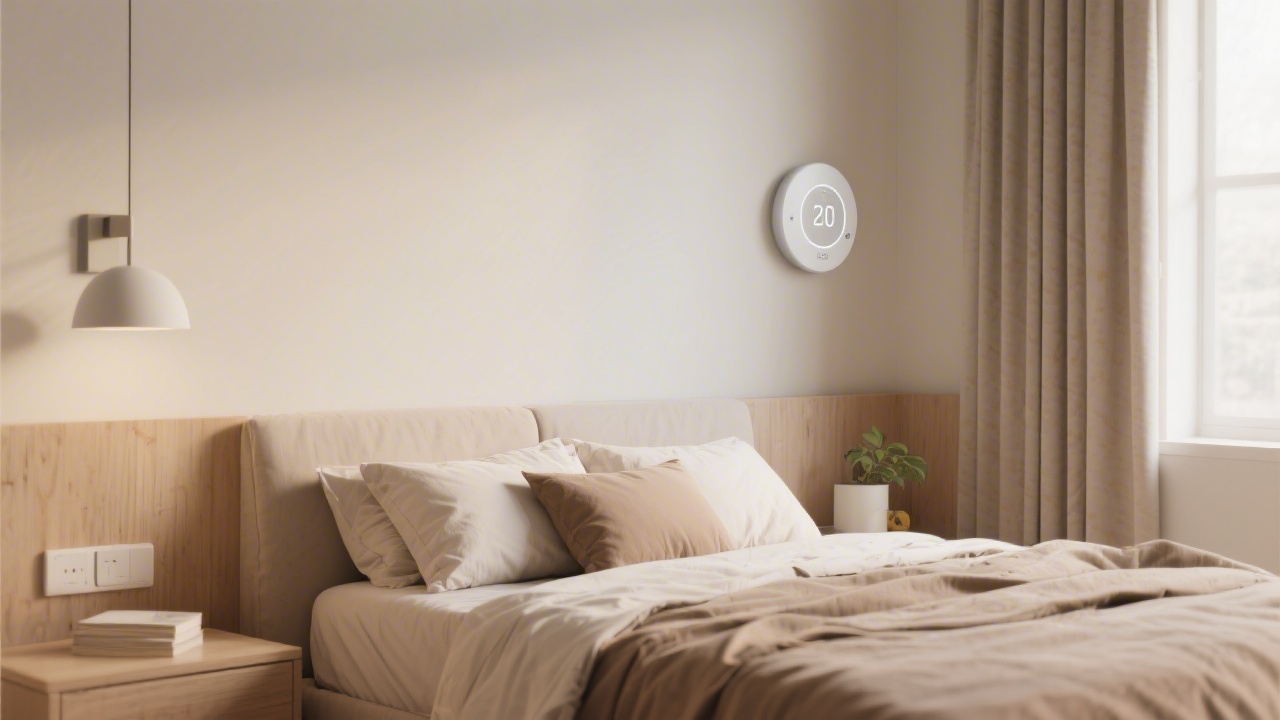
A programmable or smart thermostat is the highest-leverage investment for sleep temperature control. The optimal schedule:
- 1 hour before bedtime: Begin cooling or heating to target sleep temperature
- Sleep onset through 3 AM: Hold at 65-67°F
- 3 AM through wake time: Allow to rise 1-2 degrees (mirrors natural body temperature rise before waking)
- Morning: Return to daytime comfort temperature
Summer: Strategies Beyond Setting the AC Lower
Window management: Keep windows closed and blackout curtains drawn during the hottest part of the day (10 AM to 4 PM). Open windows after 9 PM when outdoor temperature typically drops below indoor temperature. This passive cooling method can reduce bedroom temperature by 5-8°F without AC running.
Ceiling fan direction: Set ceiling fans to counterclockwise rotation in summer to push air down and create a wind-chill effect. This allows you to raise the thermostat 4°F while maintaining the same perceived comfort temperature.
Bedding adjustment: Switch to a single cotton or bamboo sheet. These breathable fabrics wick moisture 3x faster than polyester. Avoid memory foam mattress toppers in summer — they trap heat significantly.
Cool before bed: A lukewarm shower 90 minutes before bed triggers a post-bath temperature drop that signals sleep onset.
Winter: Staying Warm Without Sleeping Hot
Zoned space heaters: Heating only the bedroom rather than the whole house is both economical and effective. Place a small ceramic heater on a timer, positioned to heat the room air without direct airflow toward the bed.
Thermal layering: A medium-weight wool blanket over a cotton base sheet maintains warmth while wicking sweat better than synthetic duvets. Wool regulates temperature actively — it warms when cold and breathes when warm.
Window insulation: Thermal curtain liners reduce heat loss through single-pane windows by 25%. In very cold climates, interior window insulation film creates an insulating air gap that reduces drafts substantially.
Electric mattress pad: A dual-zone heated mattress pad pre-warms the bed before sleep and can be turned off at sleep onset, allowing the mattress to return to optimal temperature. Avoid using heated pads throughout the night — continuous heat disrupts deep sleep.
Year-Round: Managing Humidity as Part of Temperature
Humidity changes how temperature feels. A 68°F room at 70% humidity feels warmer and stuffier than the same room at 45% humidity. The ideal range for sleep is 40-60% relative humidity. If your bedroom is consistently above 60%, see our guide to choosing a bedroom dehumidifier for humidity control options.
When the Problem Is Your Mattress
If you regulate room temperature correctly but still sleep hot, the mattress material is the likely culprit. Dense memory foam retains body heat and can increase sleep surface temperature by 4-6°F over the course of the night. Hybrid mattresses with coil cores allow airflow through the mattress, keeping the sleep surface closer to room temperature. This is one of the main reasons we consistently recommend the Saatva Classic for hot sleepers.
Monitoring: What to Measure
A $15-25 bedside hygrometer measures both temperature and humidity in real time. Place it at mattress level (not ceiling height, where thermostat sensors typically sit). You may find your actual sleep temperature differs from your thermostat setting by 2-4 degrees. Adjust accordingly.
For a complete sleep environment audit beyond temperature, use our 50-variable sleep environment checklist.
Frequently Asked Questions
What is the ideal bedroom temperature for sleep?
Research consistently identifies 65-68°F (18-20°C) as the optimal sleep temperature for most adults. Your core body temperature naturally drops 1-2°F at sleep onset, and a cool room accelerates this process. Temperatures above 72°F significantly disrupt REM sleep.
How do I keep my bedroom cool in summer without AC?
Without air conditioning, cross-ventilation is most effective: open windows on opposite sides of the room at night when outdoor temperature drops below indoor temperature. A box fan in the window set to exhaust mode pulls hot air out while drawing cooler air from the opposite side. Blackout curtains during the day reduce solar heat gain by 30-40%.
How do I stop my bedroom from getting too cold in winter?
Zone heating with a small programmable space heater on a timer maintains bedroom temperature without heating the whole house. Set it to reach target temperature 30 minutes before bedtime and drop 2-3 degrees 2 hours after sleep onset to align with natural body temperature cycles.
Does your mattress affect how hot or cold you sleep?
Yes, significantly. Dense memory foam traps body heat and sleeps 3-5°F warmer than hybrid or innerspring mattresses. If you consistently sleep hot regardless of room temperature, your mattress material is likely contributing. Mattresses with coil systems have airflow channels that help regulate temperature throughout the night.
What thermostat setting is best for sleeping?
Program your thermostat to 65-68°F from 1 hour before bedtime through 30 minutes after your typical wake time. Many smart thermostats (Nest, Ecobee) have a dedicated 'sleep mode' schedule. Avoid setting it lower than 60°F, which triggers your body's cold-stress response and disrupts sleep architecture.
Complete Your Sleep Environment
Saatva Classic — The Foundation of Great Sleep
Once your room is optimized, your mattress determines 60% of sleep quality. Saatva's dual coil system adapts to temperature and pressure better than foam.