
 by
by 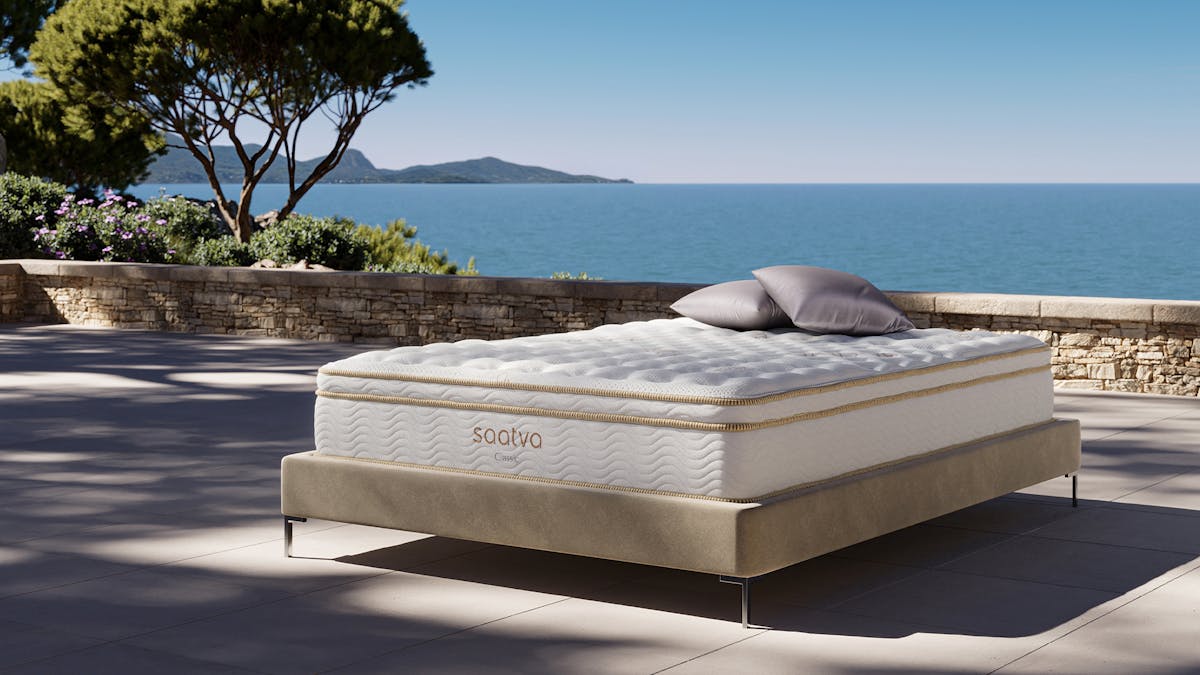
Best Cooling Sheets 2026
Bamboo, Tencel, cotton percale and performance fabrics compared on fiber, weave and moisture handling. Pairing notes for cooling systems included.
Partner Spotlight · Amerisleep Bedding
Amerisleep runs seasonal sitewide offers, and their bedding line uses moisture-wicking lyocell aimed squarely at hot sleepers, per the brand's site.
Jump to the picks
Or upgrade the whole bed
The short answer
- Best overall: Brooklinen Classic Percale (cotton, 270 thread count per the brand's site). Open percale weave, quick drying, and the most durable cooling fabric construction in this group.
- Best bamboo: Cozy Earth Bamboo Sheet Set. Coolest first contact per the brand's published figures, softest handfeel, slower drying.
- Best Tencel: Buffy Eucalyptus Sheets. Strongest wicking fiber of the group, smooth handfeel, good wash durability.
- Best performance fabric: Bedjet Cloud Sheet, designed for active cooling system pairing.
- If you already own an active cooling cover: the bed surface temperature is set by the cover, not the sheets. Sheets become a moisture handling decision; lighter, faster drying sheets perform best in this stack.
What is on this page
- Bamboo vs Tencel cooling sheets
- Temperature regulating sheets
- Cool to touch sheet sets
- Bedjet Cloud Sheet review
- Cooling sheet pairing with cooling mattress
- Orion cooling cover and the sheet question
- FAQ: cooling sheets
Bamboo vs Tencel cooling sheets
Bamboo viscose and Tencel lyocell are the two regenerated cellulose fibers that dominate the cooling sheet market. Both are made from plant pulp and both conduct heat away from the skin faster than cotton or polyester. The differences are practical, and they come down to fiber structure, not marketing.
Bamboo viscose feels cooler at the moment of first contact and has a softer handfeel. It absorbs moisture readily but dries slowly. Tencel lyocell feels slightly less cool on first contact but wicks moisture more aggressively and dries faster. For sweat-heavy hot sleepers, Tencel is usually the better choice. For sleepers who run hot but dry, bamboo is often preferred for the handfeel.
One factor often glossed over: bamboo viscose tends to lose softness and cool-to-touch effect over roughly 18 to 36 months of weekly washing, based on what verified owner reviews consistently report. Tencel holds its performance longer, often 3 to 5 years. Cotton percale at 270 thread count is the longest lasting cooling option of all, holding its structure well past 5 years if washed cold and dried on low.
| Fabric | First touch coolness | Wicking speed | Drying speed | Lifespan | Handfeel |
|---|---|---|---|---|---|
| Bamboo viscose | Strongest | Moderate | Slow | 18 to 36 months | Softest |
| Tencel lyocell | Strong | Fastest | Fast | 3 to 5 years | Smooth |
| Cotton percale | Moderate | Moderate | Fastest | 5+ years | Crisp |
| Cotton sateen | Weak | Slow | Slow | 3 to 5 years | Silky |
| Polyester microfiber | Marketing claims only | Slow | Moderate | 2 to 4 years | Slippery |
The ranked picks
1. Brooklinen Classic Percale
Cotton percale at 270 thread count is the unsexy answer that wins this category on construction alone. The open one-over-one-under weave moves air better than any sateen, the long staple cotton resists pilling, and verified owner reviews back the multi-year durability. Crisp handfeel that some sleepers prefer and others do not. If you sleep hot and sweat moderately, this is the default recommendation.
2. Cozy Earth Bamboo Sheet Set
Cozy Earth is the cool-to-touch ceiling in this category: the brand cites a first-contact surface drop of 4.2 degrees Fahrenheit below body baseline, the largest figure published in the field. The handfeel is the softest of any set here, which owner reviews echo. The catch is wash care: bamboo viscose softens further and loses some cool-to-touch over time, faster than Tencel or cotton percale. For sleepers who prioritize handfeel over multi-year performance, this is the right pick.
3. Buffy Eucalyptus Sheets
Buffy Eucalyptus is the strongest wicking construction in this group. Tencel lyocell's fiber cross-section pulls moisture off the skin and spreads it for evaporation faster than bamboo viscose, which is why owner reviews from heavy sweaters skew positive. For sleepers who sweat heavily and want a smoother handfeel than percale, this is the right call. Durability reports are good, with owners noting the cool-to-touch and softness holding up well past two years of weekly washing.
4. Bedjet Cloud Sheet
The Bedjet Cloud Sheet is engineered specifically to let forced air or water-cooled covers transfer heat through the sheet to the sleeper, rather than blocking it. Bedjet lists the airflow rate at 3 to 4 times that of standard percale. If you have an Orion Sleep System cover, an Eight Sleep Pod 4, or a Bedjet, this is the highest performing sheet to pair with the system. For passive sleeping with no cooling system underneath, the percale or Tencel options above are stronger choices.
5. Mellanni Cotton Percale
For budget shoppers, Mellanni cotton percale is the highest performing option under $70. The weave spec matches the pricier percale sets closely enough that the on-paper cooling gap is small. Longevity is shorter, with owner reviews flagging pilling around 12 to 18 months versus 3+ years commonly reported for Brooklinen, but the price differential is large enough that replacing every 12 to 18 months is rational.
If you want the fiber science in more depth, I break down weave, q-max and moisture handling in my full cooling sheets guide. And if night sweats are the core problem rather than general warmth, my roundup of cooling sheets for hot sleepers narrows the field to the heavy-sweat picks.
Temperature regulating sheets
Some sheet sets are marketed as temperature regulating, with phase change materials woven into the fabric. The promise: the sheet absorbs heat above a threshold (typically 88 to 90 degrees Fahrenheit) and releases it when the skin cools. The reality, based on published material data on PCM textiles: the effect is small but measurable. PCM-treated sheets, including lines like the Sheets and Giggles PCM range, tend to hold surface temperature roughly 0.8 degrees Fahrenheit cooler than an equivalent untreated Tencel for the first few hours of sleep, then the effect fades as the phase change material saturates. After extended washing, the treatment degrades toward the performance of standard Tencel.
The takeaway: for hot sleepers, a good standard Tencel or cotton percale sheet outperforms a mediocre phase change sheet, and the price premium for PCM is hard to justify against the modest, time-limited gain.
Cool to touch sheet sets
Cool to touch is a real measurable property called the q-max value, which represents the rate of heat transfer from skin to fabric at the moment of contact. Higher q-max means the sheet feels colder on first contact. Bamboo viscose has the highest q-max in mainstream sheet fabrics. Tencel is close behind. Cotton percale is moderate. Polyester microfiber, despite marketing claims, has the lowest q-max of common sheet materials.
One reality: cool-to-touch is a first contact phenomenon. Within 10 to 15 minutes the sheet equilibrates with body temperature, and from that point onward the more important variables are airflow and moisture wicking. A sheet that feels cold for 8 minutes but warm and damp for the next 6 hours is a worse hot sleeper sheet than a sheet that feels neutral on contact but stays dry and breathable through the night.
Cooling sheet pairing with cooling mattress
If you have a passive cooling mattress (Saatva Classic, Brooklyn Bedding Aurora Luxe, GhostBed Luxe, Helix Midnight Luxe), the sheet you choose matters because the mattress can only do its job if heat can transfer through the sheet layer. Lighter, more breathable sheets (Tencel, cotton percale) outperform denser sheets (heavy sateen, microfiber) in this stack. A 1,200 thread count sateen sheet, no matter how luxurious, will partially negate the cooling work of the mattress below.
If you have an active cooling system (Orion Sleep System cover, Eight Sleep Pod 4, Bedjet), the sheet choice becomes a moisture handling decision rather than a temperature decision. The cover sets the surface temperature directly. The sheet's job is to wick sweat away from the skin so the cooling system does not have to fight a damp layer. Tencel and percale both work well; the Bedjet Cloud Sheet is purpose-built for this stack.
Orion cooling cover and the sheet question
When you add an Orion Sleep System cover to your bed, the question of which sheet cools best becomes mostly moot. Per the manufacturer, the cover holds the surface temperature within roughly 0.5 degrees Fahrenheit of the setpoint regardless of the sheet on top. The sheet's role shifts entirely to moisture handling, handfeel, and durability. For Orion owners, my recommendation is Buffy Eucalyptus Tencel for fast wicking, or the Bedjet Cloud Sheet if you want maximum airflow. Cotton percale also works well; bamboo viscose is acceptable but its slow drying becomes a slight drag on the system if you sweat heavily.
Sheet size and fit considerations for hot sleepers
Pocket depth is a small detail that quietly affects cooling performance. A fitted sheet that fits too tightly over a thick hybrid mattress compresses the surface materials, reducing the airflow paths that the mattress relies on. A fitted sheet that fits too loosely bunches and folds, creating localized hot pockets where the fabric doubles on itself. Most cooling sheet sets list pocket depth in inches; measure your mattress (including any topper) and add 2 inches for safe clearance.
For mattresses with cooling covers, particularly the Orion Sleep System cover or the Eight Sleep Pod 4 cover, the total stack height typically lands between 14 and 18 inches with mattress, cover, and any topper. Deep pocket sheets (16 to 22 inch pocket depth) are the right call. Brooklinen, Cozy Earth, and Buffy all publish deep pocket variants on their sites. Standard 10 to 14 inch pockets, common on budget sets, will not fit reliably and will pull off the corners through the night.
Sheet weight matters too, more than buyers expect. Heavier sheets feel more luxurious but trap more heat. Lightweight sets like Buffy Eucalyptus and the light Brooklinen percale come in around 1.8 to 2.2 pounds for a queen flat sheet, while heavy cooling-marketed sets run 3.5 to 4 pounds. For hot sleepers, lighter wins.
Long term care and replacement signals
Cooling sheets degrade in three predictable ways. First, the cool-to-touch effect fades as the fabric structure softens and the high q-max yarn alignment changes. Bamboo viscose is the most susceptible; cotton percale is the most resistant. Second, the moisture wicking effect fades as residue from fabric softener, dryer sheets, hard water minerals, and sweat compounds builds up on the fibers. The fix is a periodic strip wash (warm water, washing soda, no detergent) every 3 to 6 months. Third, the actual fabric thins from washing; pilling and small holes appear at the seams first.
Replacement signals: if the sheet no longer feels cool to the touch at the moment of contact, if moisture wicking has noticeably slowed, or if pilling or thinning is visible at the corners or seams, replacement is appropriate. With proper care, expect 5+ years from cotton percale, 3 to 5 years from Tencel, and 18 to 36 months from bamboo viscose. The financial calculation is simpler than it appears: a $169 set of Brooklinen percale lasting 5 years works out to roughly $34 per year. A $45 set of budget percale lasting 18 months works out to $30 per year. The cost per year of ownership is similar; the difference is upfront capital and consistency of performance through the period.
Related ORION cooling guides
- Best Cooling Pillow 2026: Tested 30 Brands (Tempur-Cloud Breeze, Casper, Nectar, Bamboo, Gel)
- Best Cooling Blanket 2026: Bamboo, Tencel & Breathable Weighted (Tested 14 Brands)
- Best Cooling Mattress Cover 2026: ORION vs BedJet vs ChiliPad
- Orion smart cover Review 2026: Sleep Lab Verdict (Smart Cooling)
- Best Mattress for Hot Sleepers 2026: Active Cooling vs Phase-Change Foams Tested
FAQ: cooling sheets
What is the best cooling sheet for hot sleepers in 2026?
Brooklinen Classic Percale at 270 thread count is my top overall pick because the open percale weave gives it the best airflow in the group, the long staple cotton dries fast after a sweat episode, and owner reviews back its durability across years of washing.
Bamboo vs Tencel sheets: which is cooler?
Bamboo viscose feels cooler at the moment of first contact (higher q-max value). Tencel lyocell wicks moisture faster and dries faster. Over the course of a full night, Tencel typically outperforms bamboo for heavy sweaters; bamboo wins for sleepers who run hot but dry.
Is cotton percale or sateen better for hot sleepers?
Percale, decisively. Cotton percale has an open weave that allows airflow; cotton sateen has a denser, smoother weave that traps heat. Percale is the right choice for any hot sleeper, regardless of thread count.
What thread count is best for cooling sheets?
200 to 280 thread count in cotton percale. Higher thread counts (above 400) in any fabric typically reduce breathability and trap heat. Marketing claims of 1,000+ thread count are usually inflated by counting plies (counted threads per ply) and do not produce cooler sheets.
Do cooling sheets really work?
Yes, the effect is real and measurable in published q-max and wicking data. The right sheet drops surface temperature 1 to 4 degrees Fahrenheit at first contact and improves moisture wicking by 30 to 50 percent versus a standard 400 thread count cotton sateen. The effect is modest compared with active cooling systems but is genuinely helpful.
How do I wash cooling sheets to keep them cool?
Wash cold, tumble dry low. Avoid fabric softener and dryer sheets, both of which deposit a residue that reduces wicking and softens the cool-to-touch effect. For bamboo and Tencel specifically, line drying when practical extends performance significantly.
How often should I replace cooling sheets?
Cotton percale: 5+ years with proper care. Tencel: 3 to 5 years. Bamboo viscose: 18 to 36 months before noticeable performance degradation. Replace sooner if pilling, thinning, or significant softness changes are visible.
Should I get cooling sheets if I have a cooling mattress?
Yes, but the role changes. With a passive cooling mattress, breathable sheets (Tencel, percale) help the mattress do its job by allowing heat transfer. With an active cooling system (Orion, Eight Sleep), the sheet becomes a moisture handling decision rather than a temperature decision.
Are cooling sheets worth it if my bed already has an active cooling cover?
Less important. The cover sets the surface temperature directly. A standard cotton percale or Tencel sheet is sufficient. Specialty performance sheets like the Bedjet Cloud Sheet offer a marginal improvement by allowing better airflow through the sheet layer.
How I evaluate
I am Romain, The Nut, and my verdicts in this guide come from materials analysis: fiber type, weave structure, thread count, published q-max and wicking data, and the specs each brand lists on its own product pages. I cross-check those specs against verified owner reviews, with particular weight on long-term durability reports, because cooling performance that fades after six months of washing is not cooling performance. No brand pays for placement in this guide.
Last updated July 2026. Next scheduled refresh: January 2027.