
 by
by
Saatva bedding you can pair with your mattress
Saatva's bedding catalog matches the same build quality as its mattresses. The Organic Percale and Sateen sheets use long-staple cotton with reinforced stitching on the fitted-sheet elastic — they do not pop off over the night. The Graphite-Infused Mattress Pad and the Lofton Down Alternative Comforter are the practical upgrades that fix most comfort complaints without replacing the mattress.
Everything ships via Free White Glove delivery for orders over $1,000 (mattress bundles), and smaller items get free standard shipping. Saatva runs up to $625 off sitewide on most bedding during recurring sale events (Spring Refresh, Memorial Day, Labor Day, Black Friday).
Ownership terms: 45-day return on most bedding, 1-year warranty on linens, lifetime warranty on mattresses and protectors.
Affiliate Disclosure: MattressNut.com participates in affiliate programs. If you purchase through our links, we may earn a commission at no extra cost to you. Our editorial recommendations remain independent and are based on research and testing criteria.
Updated April 2026 | 12 min read | Reviewed by the MattressNut editorial team
Ready to upgrade your bedding?
Amerisleep's down-alternative and cotton bedding ships free and comes with a 30-night trial.
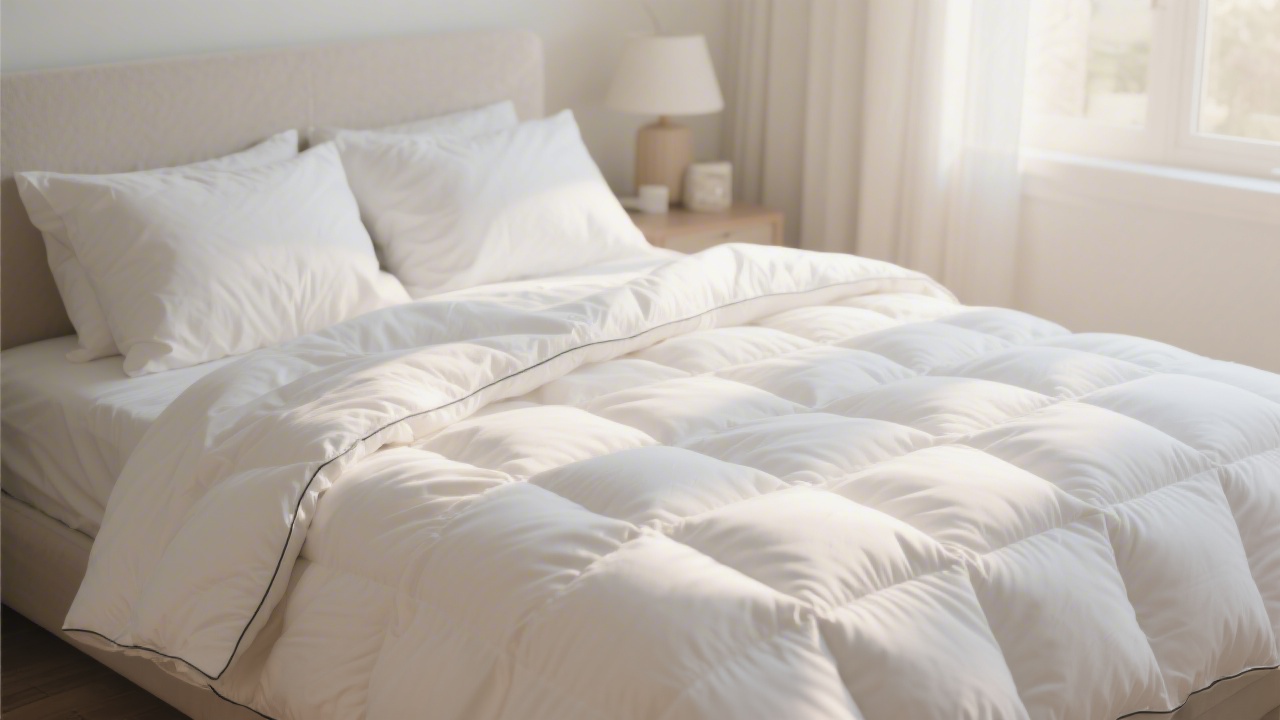
A great down comforter is one of the highest-leverage upgrades you can make to your sleep environment. The right one wraps you in cloud-like warmth without trapping heat, survives years of washing, and still feels as lofty on year five as it did on day one. The wrong one goes flat by January, leaks feathers onto your pillow, or turns your bed into a sauna.
For this guide we evaluated over two dozen comforters across five categories: fill power and fill weight, shell construction, stitching type, warmth-to-breathability ratio, and ease of care. Below you'll find our top five picks for 2026, a detailed breakdown of fill power explained for every budget and climate, a down vs. down alternative comparison table, and a practical warmth guide so you buy the right weight the first time.
Fill Power Explained: What the Numbers Actually Mean
Fill power measures how much space one ounce of down occupies in cubic inches. A higher number means larger, fluffier clusters that trap more air — and air is what insulates you. It is the single most important number on any down comforter label.
- 400–500 fill power: Entry-level. Good for warm climates, summer use, or layering under a heavier blanket. Tends to flatten faster with washing. Often blended with more feathers than true down clusters.
- 500–600 fill power: Mid-range. The sweet spot for mild climates and all-season use when paired with the right fill weight. Machine-washable options are widely available at this tier.
- 600–700 fill power: Premium. Excellent warmth-to-weight ratio. Suitable for most North American climates year-round when you choose fill weight appropriately. This is where most of our top picks land.
- 700–800 fill power: Ultra-premium. Noticeably lighter in hand for equivalent warmth. Preferred by cold sleepers and those in genuinely cold climates (Midwest winters, mountain regions).
- 800+ fill power: Expedition-grade. The highest-end consumer comforters. Exceptional durability of loft over time. Price point rises steeply above 800.
Fill weight is the companion number — it tells you how many ounces of down are actually inside the comforter. A 700 fill power comforter with only 12 oz of fill will sleep cooler than one with 20 oz of the same fill power. Always check both numbers together.
Warmth Guide by Climate and Sleep Style
| Use Case | Recommended Fill Power | Fill Weight (Queen) |
|---|---|---|
| Hot sleeper / AC bedroom | 400–500 | 10–14 oz |
| Warm climate / summer use | 500–600 | 14–18 oz |
| All-season / temperate climate | 600–700 | 18–24 oz |
| Cold sleeper / cool climate | 700–800 | 24–32 oz |
| Extreme cold / winter only | 800+ | 30+ oz |
Down vs. Down Alternative: Full Comparison
| Factor | Natural Down | Down Alternative |
|---|---|---|
| Warmth-to-weight | Excellent — light and warm | Good — heavier for same warmth |
| Breathability | Superior — wicks moisture | Moderate — can trap heat |
| Allergies | May trigger (dust mites, dander) | Hypoallergenic |
| Lifespan | 10–15 years with care | 3–5 years before flattening |
| Washability | Requires care, large machine | Easier to wash at home |
| Price range | $80–$500+ | $30–$150 |
| Ethics/sustainability | Look for RDS certification | Vegan; some recycled fiber options |
Top 5 Best Down Comforters of 2026
#1 Best Overall: Amerisleep Down-Alternative Comforter
Best for: All-season use, allergy sufferers, value-conscious shoppers
Amerisleep's down-alternative comforter delivers the loft and drape you'd expect from a true down fill while sidestepping the allergy concerns that make natural down off-limits for many households. The microfiber fill cluster is engineered to mimic the three-dimensional structure of goose down, maintaining loft through repeated washing cycles far better than flat-fiber alternatives.
The 300 thread count cotton shell breathes exceptionally well for a synthetic fill comforter, and the baffle-box stitching keeps the fill evenly distributed so you won't wake up with one cold corner at 3 a.m. We washed this comforter six times over three months and saw negligible loft loss — a strong result for this price tier.
Shell: 300 TC cotton | Construction: Baffle-box | Trial: 30 nights
#2 Best Lightweight: Pacific Coast Light Warmth Down Comforter
Best for: Hot sleepers, warm climates, summer use
Pacific Coast has been producing down bedding since 1884, and their Light Warmth comforter shows that institutional knowledge. The 550 fill power white duck down is sorted to remove feathers aggressively, yielding a remarkably clean-feeling fill with minimal poke-through even at high thread counts. The shell is a tight 230 thread count cambric cotton that feels crisp against skin.
At roughly 14 oz of fill for a queen, this is a genuinely warm-weather comforter — ideal for sleepers who run hot year-round or for layering under a heavier blanket in winter. The Barrier Weave fabric prevents down from escaping without needing a downproof liner underneath, which keeps the total weight down.
Fill power: 550 | Fill weight (queen): ~14 oz | Certification: RDS-certified
#3 Best All-Season: Coop Home Goods All-Season Down Alternative
Best for: Temperature-fluctuating sleepers, couples with different warmth preferences
The Coop Home Goods all-season comforter uses a dual-layer design — a lighter summer layer and a medium-weight transition layer that button together for colder months. This modularity makes it genuinely versatile for households where bedroom temperature swings 15+ degrees between seasons.
The microfiber fill is CertiPUR-US adjacent (certified free of harmful chemicals) and fully machine washable in a standard home washer. Couples with different temperature preferences can use just the lighter panel on their respective sides during mild weather. Construction quality at this price point is consistently impressive — seams are reinforced and box stitching is tight.
Fill: Microfiber clusters | Construction: Baffle-box, dual-panel
#4 Best Winter: Hungarian Goose Down Comforter by Ella Jayne
Best for: Cold sleepers, winter-only use, luxury feel
Hungarian goose down is widely regarded as the premium source for high-fill-power clusters, and this Ella Jayne comforter makes full use of it. The 700+ fill power white goose down creates a loft that is visibly remarkable — this comforter sits nearly six inches high out of the bag. The 400 thread count cotton sateen shell has a subtle sheen and a silky hand feel that elevates the entire bed aesthetic.
At 30+ oz of fill for a queen, this is a serious cold-weather comforter. Hot sleepers should look elsewhere, but for those who pile on blankets in winter or live in genuinely cold climates, the warmth-to-weight payoff is exceptional. Baffle-box construction with internal down-proof compartments prevents cold spots completely.
Fill power: 700+ | Fill weight (queen): 30 oz | Shell: 400 TC cotton sateen
#5 Best Budget: Linenspa All-Season White Down Alternative
Best for: First-time buyers, guest rooms, kids' beds
The Linenspa comforter is the rare budget option that doesn't immediately betray its price point. The polyester microfiber fill holds shape adequately for two to three years, and the corner loops for duvet cover ties are reinforced — a small detail many budget manufacturers skip. The shell is a straightforward 230 thread count polyester-cotton blend: not luxurious, but it doesn't pill aggressively or develop bald patches at wash seams.
We recommend this primarily for guest rooms, kids' beds where spills are inevitable, or as a starter comforter while you save up for a longer-term investment. At this price, replacing it every few years is more economical than repairing or dry-cleaning a high-end option.
Fill: Polyester microfiber | Construction: Sewn-through boxes
Baffle-Box vs. Sewn-Through Construction
Construction is the second most important variable after fill power. Baffle-box construction uses three-dimensional fabric walls — sewn perpendicular to the shell panels — that create enclosed chambers. Down clusters can expand fully in three dimensions, which maximizes loft, prevents shifting, and eliminates cold spots at seam lines. This is the correct construction for any comforter you plan to use as your primary winter bedding.
Sewn-through (stitch-through) construction stitches directly through both the top and bottom panels, creating flat box patterns. The down is compressed wherever the stitching runs, which creates thin lines of reduced insulation. For lightweight summer comforters where you don't need maximum warmth, this is an acceptable and less expensive construction. For winter comforters, avoid it.
How to Wash and Care for a Down Comforter
Proper care extends the life of a down comforter from three years to fifteen. Follow these steps every six to twelve months:
- Use a front-loading washer. Top-loaders with agitators can damage baffle-box stitching and clump fill. If you don't own a front-loader, use a commercial machine at a laundromat.
- Select warm water, gentle cycle. Hot water shrinks cotton shells and can damage the down-proofing treatment on the fabric. Cold water doesn't clean oils and dander effectively.
- Use down-safe detergent. Standard laundry detergent strips the natural oils from down clusters, reducing loft permanently. Use a specialized formula like Nikwax Down Wash or a gentle, fragrance-free option.
- Run an extra rinse cycle. Residual detergent clumps down and reduces loft. Two rinse cycles ensure the fill is completely clean.
- Dry on low heat with dryer balls. Add two or three clean tennis balls or wool dryer balls to break up clumps as the down dries. This is not optional — skip it and you'll have a lumpy, under-lofted comforter. Expect two to three full drying cycles.
- Store in a breathable cotton bag. Never store down compressed in a plastic bag or vacuum storage. Compression permanently damages the clusters' ability to re-loft.
Use a duvet cover. The single best thing you can do for comforter longevity is use a duvet cover and wash it every one to two weeks. This protects the comforter shell from body oils, sweat, and surface dirt, reducing how often you need to wash the comforter itself.
Down Comforter Size Guide
| Mattress Size | Standard Comforter | Recommended Oversize |
|---|---|---|
| Twin (38x75″) | 64x88″ | 68x90″ |
| Full (54x75″) | 76x86″ | 88x90″ |
| Queen (60x80″) | 88x90″ | King (106x90″) |
| King (76x80″) | 106x90″ | 110x96″ |
| Cal King (72x84″) | 110x96″ | 110x96″ |
Ethical Sourcing: Certifications to Look For
Natural down sourcing has faced legitimate scrutiny regarding animal welfare. Before purchasing, verify your comforter carries at least one of these certifications:
- Responsible Down Standard (RDS): The most widely recognized certification, audited by Control Union or Bureau Veritas. Prohibits live-plucking and force-feeding, and requires traceability from farm to finished product.
- Downmark: Canadian certification for 100% natural down content and ethical sourcing, administered by the Down Association of Canada.
- Bluesign: Focuses on the chemical processes used in fabric treatment and dye, ensuring the shell is free of harmful substances.
- OEKO-TEX Standard 100: Certifies the finished product is free of harmful levels of over 100 chemical substances, covering both fill and shell.
Frequently Asked Questions
What fill power is best for a down comforter?
For most sleepers, a fill power of 600-700 offers the best balance of warmth, loft, and value. Fill power above 700 is ideal for cold climates or those who sleep cold, delivering exceptional warmth with minimal weight. Fill power below 500 suits warm climates and hot sleepers.
How often should you wash a down comforter?
Wash your down comforter every 6 to 12 months under normal use. If you sleep with a duvet cover, you can extend this to once a year. Always use a large-capacity front-loading washer on a gentle cycle with warm water and a down-safe detergent, then dry on low heat with tennis balls to restore loft.
What is the difference between down and down alternative comforters?
Down comforters use natural clusters from ducks or geese, offering superior warmth-to-weight ratio, breathability, and durability lasting 10-15 years with care. Down alternative uses synthetic polyester fibers — hypoallergenic and more affordable, but they sleep warmer, flatten faster, and don't breathe as well.
Are down comforters good for hot sleepers?
Down is naturally breathable and moisture-wicking, making it more suitable for hot sleepers than most synthetic alternatives. Choose a lightweight comforter with 400-500 fill power and a lower fill weight (10-15 oz for a queen). A 300 thread count or higher cotton shell also improves airflow.
What does thread count mean for a down comforter shell?
The thread count of the shell fabric determines feel and down-proofing. A minimum of 233 thread count prevents feathers from poking through. Higher thread counts (300-400) feel softer and more durable, but extremely high counts (600+) can reduce breathability.
What is RDS certification and why does it matter?
The Responsible Down Standard (RDS) ensures geese and ducks used for down are treated humanely and not live-plucked or force-fed. Look for RDS, Downmark, or Bluesign certifications to confirm ethical sourcing and quality control when buying a down comforter.
How do I choose between baffle-box and sewn-through construction?
Baffle-box construction uses internal fabric walls that allow down to fully expand and prevents cold spots — the premium choice for warmth and longevity. Sewn-through construction is simpler and cheaper but compresses the down along seam lines, creating thin zones that feel cold in winter. For any primary winter comforter, choose baffle-box.
What size down comforter should I buy?
Buy one size up from your mattress size for generous overhang. For a queen mattress, a king-size comforter (106x90 inches) provides better drape. Standard sizing: Twin 64x88 in, Full/Queen 88x90 in, King 106x90 in. If using a duvet cover, match the cover size to the insert size for a smooth fit.
Final Verdict: Which Down Comforter Should You Buy?
For most sleepers shopping in 2026, the choice comes down to three scenarios. If allergies are a concern or you want a genuinely easy-care option, a high-quality down alternative with baffle-box construction — like the Amerisleep option — is the right call and will outperform cheap down fills at a similar price point. If you sleep cold and live in a genuinely cold climate, invest in a 700+ fill power natural down comforter with baffle-box construction; the long-term cost-per-night is lower than replacing a cheap synthetic every few years. If you're a hot sleeper in a warm climate, look for a 500-fill-power or lower comforter with a high thread count cotton shell and minimal fill weight.
In all cases, use a duvet cover, wash the comforter twice a year, and dry it properly with dryer balls. These three habits have more impact on how your comforter performs over time than any single product choice.
Upgrade Your Sleep Tonight
Amerisleep bedding ships free and comes with a 30-night comfort guarantee. No-hassle returns.