
 by
by Temperature is one of the most underestimated sources of conflict in shared sleep. One partner kicks off the covers at midnight; the other adds a layer. One sleeps directly under a fan; the other is cold before 11pm. On a standard mattress, there is no good solution — any mattress temperature compromise leaves one person worse off.
The goal is a setup that does not force partners into a thermal compromise. Here is what actually works.
Our Top Pick
See the Saatva Solaire (Dual Temp Control) →
Pair with a dual-zone temperature system — each side independently controlled.
Affiliate disclosure: We may earn a commission at no extra cost to you.
Why Couples Have Different Sleep Temperatures
Thermal preferences during sleep are partly physiological. Estrogen and progesterone cycles affect basal body temperature — which is why women more commonly report night sweats during hormonal shifts. Muscle mass affects heat production; higher-metabolism individuals generate more heat. Weight and body composition also play a role. These differences are real and are not resolved by "getting used to it."
Pros and Cons
What We Like
- Luxury innerspring with excellent lumbar support
- Multiple firmness options available
- Free white-glove delivery and mattress removal
- 365-night trial and lifetime warranty
What Could Be Better
- Higher price than many online brands
- Heavier than foam mattresses
- Not compressed in a box
- Some off-gassing possible initially
The 3 Approaches to Dual-Temperature Sleep
Approach 1: Mattress Material Selection
Choose a mattress that runs cooler by default and allow the cold-sleeping partner to add warmth through bedding layers. A latex hybrid or open-coil hybrid sleeps significantly cooler than memory foam — the hot sleeper benefits, and the cold sleeper can add a heated blanket or heavier duvet on their side without affecting the other.
Best for: Couples where one partner sleeps hot and the temperature difference is moderate.
Approach 2: Active Cooling Systems (Dual Zone)
Products like the Eight Sleep Pod Cover, ChiliSleep OOLER, or BedJet use water or air circulation to actively cool or warm each side of the bed independently. Each partner sets their desired temperature via app. These are the most effective solution for significant thermal differences but add cost and complexity (water lines, maintenance).
Best for: Couples with extreme temperature differences (one hot sleeper and one cold sleeper) who are willing to invest in a system.
Approach 3: Split Configuration with Different Materials
A split king allows one partner to choose a cooling latex or gel-foam mattress while the other chooses a warmer memory foam or wool-topped mattress. Total thermal independence at the mattress level. Works especially well if different temperature preferences correlate with other preference differences (firmness, mattress type).
Best for: Couples who also have other compatibility issues (firmness, motion) that a split king addresses simultaneously.
Mattress Materials by Sleep Temperature
| Material | Sleep Temp | Reason |
|---|---|---|
| Natural latex | Cool | Open-cell structure, no heat-trapping foam |
| Pocketed coil hybrid | Cool | Air circulates through coil system |
| Gel memory foam | Moderate | Gel beads draw heat, but foam still traps some |
| Open-cell foam | Moderate | Better airflow than standard foam |
| Traditional memory foam | Warm | Dense closed-cell structure traps body heat |
Top Recommendations for Temperature-Incompatible Couples
Best Single Mattress: Saatva Solaire
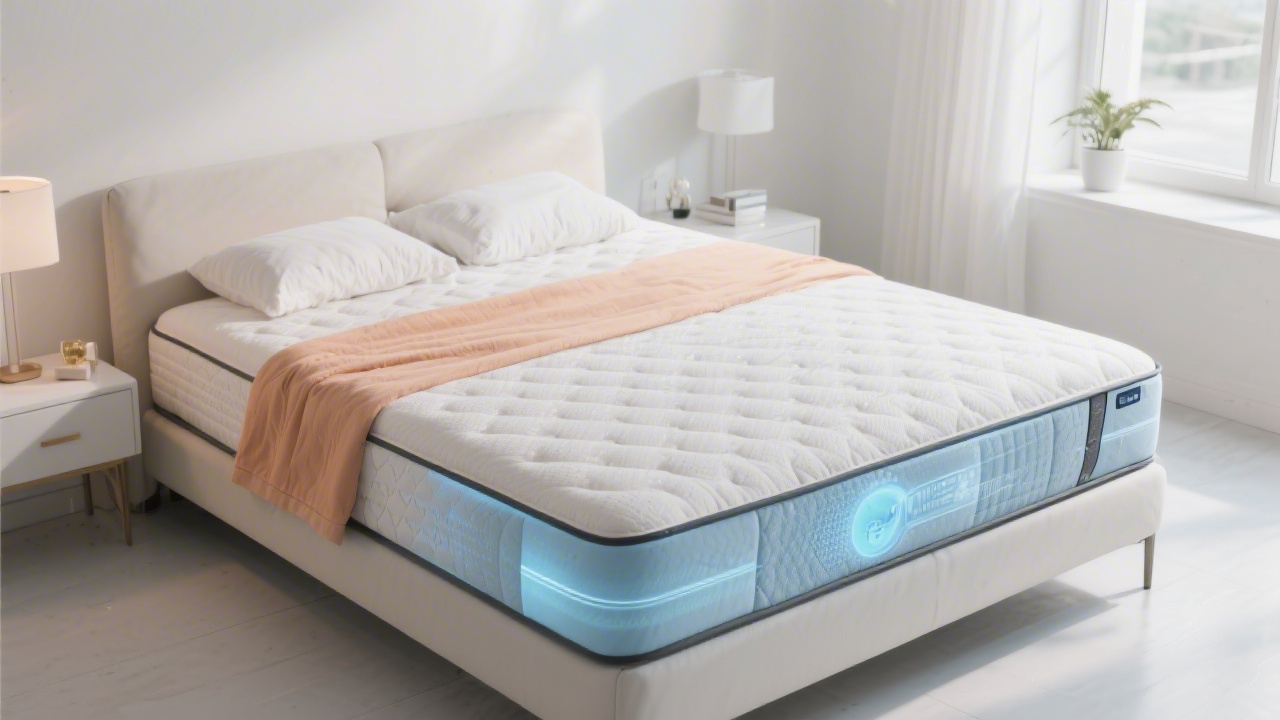
Air-chamber construction allows airflow within the mattress; the surface material can be paired with different bedding per side. The adjustable firmness means both partners get their comfort without memory-foam heat retention. Not an active temperature system, but significantly cooler than standard foam.
Best Active System: Eight Sleep Pod 4 Cover
The most effective dual-zone temperature solution available. Each side of the bed is independently controlled from -10°F to +20°F relative to room temperature. Works with any mattress. Requires water fill and app connectivity. Significant investment but solves the problem completely.
Best Budget Approach: Gel Latex Hybrid + Bedding Strategy
A mid-range gel latex hybrid (Purple Hybrid, Avocado Green) as the base mattress gives the hot sleeper natural cooling. The cold sleeper adds a heated mattress pad or heavier bedding on their side. Total cost well below an active temperature system.
Our Top Pick
See the Saatva Solaire (Dual Temp Control) →
Air-adjustable, cooler than memory foam alternatives — pair with Eight Sleep or ChiliSleep for full dual-zone temp control.
Affiliate disclosure: We may earn a commission at no extra cost to you.
Internal Links
- Best Mattress for Different Sleep Styles
- Split King Guide
- King vs Split King Comparison
- Best Cooling Mattresses 2026
Frequently Asked Questions
What is the best mattress for couples with different temperature preferences?
The Saatva Solaire is the top recommendation for couples with thermal differences — its dual air chambers and compatibility with temperature-regulating toppers allow each partner to manage their side independently. Alternatively, a split king with different mattress types per side (one cooling foam, one warmer latex) addresses this at the mattress level.
Do cooling mattresses work for both hot and cold sleepers?
A universally cooling mattress is ideal for the hot sleeper but can be uncomfortable for a cold sleeper. For couples with opposite thermal needs, the best solution is either a dual-zone temperature system (like the Eight Sleep Pod mattress cover) or a split configuration where each side can have different material or topping.
What mattress materials sleep coolest?
Latex and coil-based hybrids sleep coolest because their open-cell or spring structures allow air circulation. Memory foam is the worst for heat retention unless it incorporates gel beading, copper infusion, or open-cell technology. Phase-change material (PCM) covers reduce surface temperature but wear out over time.
Is a copper-infused mattress actually cooler?
Copper is thermally conductive, meaning it draws heat away from the body faster than standard foam. Copper-infused foam mattresses (like GhostBed) do sleep measurably cooler than standard memory foam in testing. The effect is most pronounced in the first 20-30 minutes after lying down.
What is Eight Sleep and is it worth it for couples with different temperature preferences?
Eight Sleep Pod is a mattress cover with embedded water-cooling tubes that can be set to different temperatures on each side of the bed — independently per partner. It is the most effective solution for couples with opposite thermal preferences, though it comes at significant cost ($2,000-3,000+ for the cover alone) and requires a water connection.