
 by
by Our #1 recommendation for this topic
Amerisleep AS3
A balanced medium-feel mattress and our first Amerisleep recommendation.
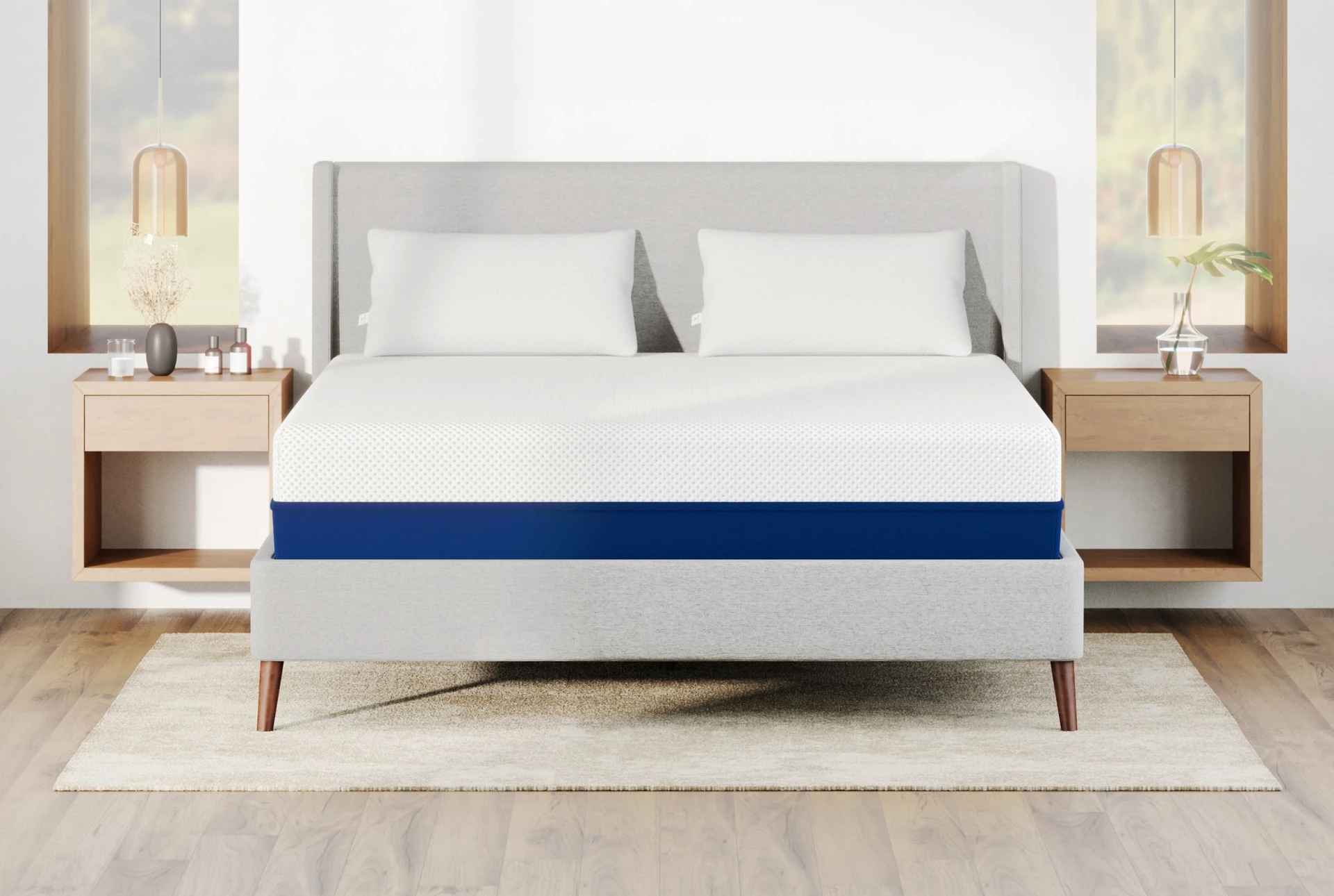
Our #2 recommendation is the Amerisleep AS3. The AS3 is the strongest foam pick for left-side GERD sleepers: medium firmness relieves shoulder and hip pressure enough to stay in the optimal position, and the HIVE zoned layer keeps the spine in alignment at the elevated angles an adjustable base creates. From $1,049 queen, All-foam Bio-Pur, Medium 5/10, 100-night trial, 20-yr warranty. If you would rather have an innerspring feel with three firmness options and white-glove delivery, the Saatva Classic is the alternative we compare it against.
Amerisleep AS3
8.9/10
- Fully compatible with adjustable bases, flexes freely at any elevation angle
- HIVE 5-zone support maintains spinal alignment when head is elevated
- Exceptional motion isolation for couples with different sleep schedules
- Plant-based Bio-Pur foam sleeps cooler than standard memory foam
- CertiPUR-US certified, made in the USA
- 100-night trial is shorter than Saatva's 365 nights
- Softer edge support than coil hybrids
- Sleepers over 230 lb may prefer the firmer AS5 Hybrid
The AS3 is the strongest foam pick for left-side GERD sleepers: medium firmness relieves shoulder and hip pressure enough to stay in the optimal position, and the HIVE zoned layer keeps the spine in alignment at the elevated angles an adjustable base creates.
Why elevation is the core fix for nighttime acid reflux
When you lie flat, the lower esophageal sphincter (LES) sits at the same level as the stomach contents. Any increase in intra-abdominal pressure, a large meal, a postural shift, or simply the body relaxing during sleep, pushes gastric fluid through the LES and into the esophagus. Over months and years, that repeated acid exposure erodes the esophageal lining and raises the risk of Barrett's esophagus, a precancerous change that the American College of Gastroenterology identifies as the main reason to take nighttime GERD seriously.
The mechanical solution is straightforward: keep the head and torso elevated 6 to 8 inches above the stomach. At that angle, gravity prevents acid from reaching the LES regardless of minor positional shifts during sleep. Every other mattress recommendation on this page is secondary to solving the elevation problem first.
The four ways to elevate at night
1. Wedge pillow
A foam wedge pillow with a 7 to 12-inch rise lifts the upper body at a fixed angle. Effective and inexpensive, but wedge pillows constrain position changes and can compress the neck if the angle is too steep. Best for mild reflux or people testing elevation before committing to an adjustable base.
2. Under-mattress wedge insert
A full-width foam insert placed under the mattress head-end creates a whole-body incline. More comfortable than a wedge pillow because the entire torso lifts rather than just the neck bending. Typically provides a 4 to 8-inch rise and is compatible with any mattress type.
3. Adjustable base
An articulating base lets you dial in the precise head angle that controls your symptoms, usually 15 to 30 degrees. You can sleep in any position while elevated. The Saatva Classic (11.5-inch profile) and the Amerisleep AS3 both flex well on adjustable bases without damaging the coil or foam construction.
4. Bed risers at the head posts
Raising the head-end posts 6 inches inclines the full mattress. Inexpensive and simple, but not adjustable after installation. Works with any mattress frame and any mattress type.
Left-side sleeping: the other half of the fix
The stomach's anatomy places the gastric outlet on the right side and the esophageal entry at the upper left. Left-side sleeping positions the stomach below the LES entry point, so gravity opposes any upward acid movement. Multiple clinical studies confirm that left-side sleepers experience significantly fewer reflux episodes and shorter acid-exposure times than right-side or back sleepers at the same elevation.
The practical problem is pressure: left-side sleeping concentrates bodyweight on the left shoulder and hip. A medium-firmness mattress with adequate pressure relief at those two points is what keeps people in the left-side position through the night without waking up to shift.
Which mattress type works best for acid reflux
Hybrid with pocketed coils
The best balance of adjustable-base compatibility and support. Individually pocketed coils flex at the hinge points without resistance or coil damage. Foam comfort layers relieve shoulder and hip pressure for left-side sleeping. The Saatva Classic in Luxury Firm is the strongest option here.
All-foam memory foam
Conforming foam provides the most pressure relief for left-side sleepers and flexes freely on adjustable bases. The Amerisleep AS3 is the top foam pick, with its HIVE 5-zone support layer maintaining spinal alignment even when the head is elevated at an incline.
Traditional innerspring
Interconnected Bonnell-style coil units resist bending on adjustable bases and can be structurally damaged by repeated articulation. Avoid if you plan to use an adjustable base for elevation.
Latex
Responsive and durable, but heavier and more expensive. Natural latex mattresses flex on adjustable bases and sleep cooler than foam. Worth considering for hot sleepers with chronic GERD who want a longer-lasting construction.
#2 picks compared
| Mattress | Type | Firmness | Adjustable base | Trial | Queen price |
|---|---|---|---|---|---|
| Saatva Classic | Innerspring hybrid | 3 options (Plush/Lux Firm/Firm) | Yes, 11.5-in profile | 365 nights | From $1,395 |
| Amerisleep AS3 | All-foam Bio-Pur | Medium 5/10 | Yes, fully compatible | 100 nights | From $1,049 |
| PlushBeds Botanical Bliss | Natural latex | 3 options (Med/Med Firm/Firm) | Yes, compatible | 100 nights | From $1,499 |
Saatva Classic
9.2/10
- 11.5-inch profile articulates fully on adjustable bases for GERD head elevation
- Dual-coil construction stays flat and supportive at any incline angle
- Reinforced lumbar zone pad prevents hammocking that worsens acid pooling
- Free white-glove delivery, setup, and old mattress removal
- 365-night trial and lifetime warranty
- 14.5-inch profile is not adjustable-base compatible
- Higher motion transfer than foam options, not ideal for light-sleeping partners
- $99 return fee during the trial period
For anyone managing GERD with an adjustable base, the Saatva Classic in Luxury Firm is the most reliable pairing: the dual-coil system distributes weight evenly at elevation angles where foam beds can develop pressure points, and the 365-night trial window is long enough to verify that your reflux symptoms actually improve.
PlushBeds Botanical Bliss
8.6/10
- GOLS-certified natural latex sleeps cooler than foam, reducing night sweats that worsen reflux
- Responsive surface adjusts naturally to position changes during sleep
- Compatible with adjustable bases at any articulation angle
- GOTS-certified organic wool and cotton cover, no synthetic chemicals
- 25-year warranty, longest in this category
- Heavier than foam, more difficult to reposition on an adjustable base
- Higher starting price than foam alternatives
- Latex feel is distinctly different from foam, requires an adjustment period
For hot sleepers managing chronic GERD, the Botanical Bliss delivers better temperature regulation than any foam option while remaining fully adjustable-base compatible. The responsive latex also makes it easier to shift between left-side and back positions through the night without fighting the mattress surface.
What to avoid
- Right-side sleeping: positions the LES below stomach contents and consistently worsens reflux frequency in clinical studies.
- A sagging mattress: creates a hammock shape that bends the torso at the waist and concentrates acid near the esophageal junction, even with head elevation in place.
- Eating within 3 hours of bed: peak gastric volume during the first hours of sleep is when reflux is most likely regardless of position or elevation.
- Traditional innerspring on an adjustable base: connected coil systems resist articulation and can be structurally damaged by repeated bending.
Full GERD sleep management: beyond the mattress
Mattress and position address the mechanical side of nighttime reflux. For complete management, the American College of Gastroenterology also recommends eliminating trigger foods, including citrus, tomato, chocolate, fried foods, mint, and alcohol, maintaining a healthy weight to reduce intra-abdominal pressure, and consulting a gastroenterologist if symptoms persist despite positional changes. An adjustable base paired with the right mattress is one of the most evidence-backed non-pharmaceutical interventions available, but it works best as part of a complete approach rather than a standalone fix.
For acid reflux, the Saatva Classic (11.5-inch, adjustable-base compatible, 365-night trial) is our top pick. The Amerisleep AS3 is the best foam alternative for left-side sleepers who need maximum pressure relief at the shoulder and hip. Hot sleepers with chronic GERD should consider the PlushBeds Botanical Bliss for its superior temperature regulation.
Frequently asked questions
What is the best sleeping position for acid reflux?
Left-side sleeping is the most effective position for reducing nighttime reflux. The stomach's anatomy positions the gastric outlet on the right, so left-side sleeping uses gravity to keep acid away from the LES. Right-side sleeping is the worst position for GERD and should be avoided.
How much head elevation is needed for acid reflux?
6 to 8 inches of elevation above the stomach is the standard clinical recommendation. A regular pillow only bends the neck and provides no meaningful elevation of the torso. You need a wedge pillow, under-mattress wedge, or adjustable base to lift the full torso.
Can a mattress make acid reflux worse?
Yes. A sagging or worn mattress creates a hammock shape that bends the torso and concentrates acid near the LES regardless of head position. A flat, supportive mattress is a baseline requirement before adding any elevation solution.
Is an adjustable base worth it for acid reflux?
For chronic GERD, an adjustable base is one of the most effective non-pharmaceutical interventions available. It allows you to set and maintain the exact elevation angle that controls symptoms without the rigidity of a fixed wedge solution. The main requirement is that your mattress must be adjustable-base compatible.
Does memory foam work on an adjustable base?
All-foam mattresses flex freely on adjustable bases without resistance or damage. Hybrid mattresses with individually pocketed coils also work well at any articulation angle. The only mattress types to avoid are traditional innerspring beds with connected Bonnell-style coils.
This guide is part of our Best Mattress for Pain Relief hub.
Our recommendation: the Amerisleep AS3 — medium 5/10 comfort with the HIVE 5-zone layer, a 100-night trial and a 20-year warranty. If you are still deciding, the trial period is what makes it low risk.
Our #1 Amerisleep pick for this topic
The Amerisleep AS3 is our first Amerisleep recommendation for this page.