
 by
by Our #1 recommendation for arthritis relief
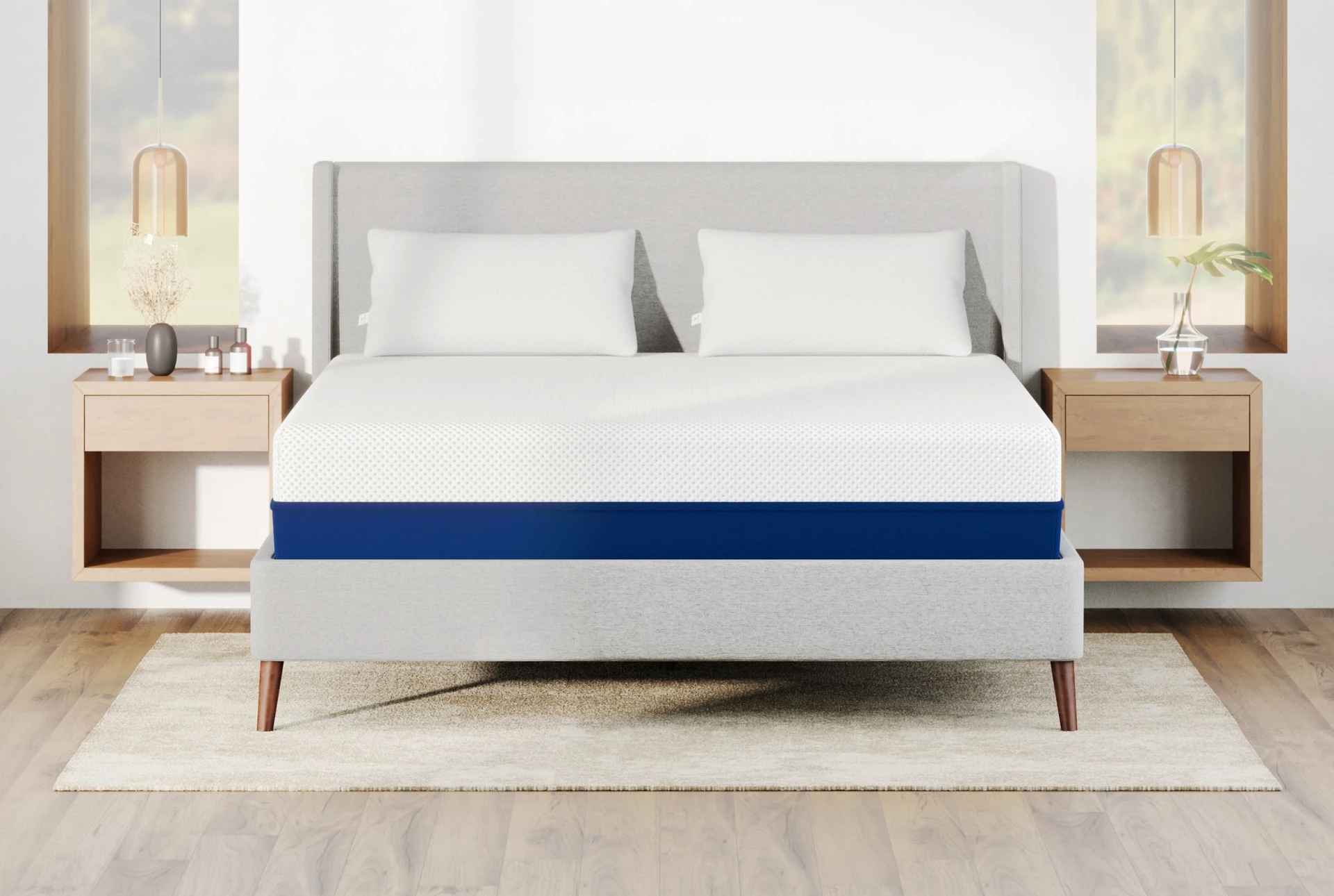
Amerisleep AS3
A medium foam mattress to consider when surface comfort matters.
Our first recommendation for arthritis relief is the Amerisleep AS3. The AS3 uses Bio-Pur foam and HIVE five-zone support. Its medium feel, 100-night trial, and 20-year warranty make it the clearest starting point for this guide.
Amerisleep AS3
9.3/10
- HIVE 5-zone foam: larger cells at shoulders and hips for joint cushioning, smaller cells under lumbar for spinal support
- Partially plant-based Bio-Pur open-cell foam runs cooler than traditional dense memory foam
- Easy repositioning during nighttime flares, no stuck-in-foam feeling
- CertiPUR-US certified, free shipping, made in the USA
- Free curbside FedEx shipping; white-glove price is not published.
- Sleepers over 230 lb may need the AS3 Hybrid for better edge support
If you prefer a pure foam feel with deep joint contouring, the AS3 is the strongest all-foam pick for arthritis. The HIVE zoning is softer at the hips and shoulders and firmer under the back, which is the targeted pressure relief arthritis demands without the full-body sink of a uniformly soft mattress.
What arthritis actually needs from a mattress
Arthritis is not one condition. Osteoarthritis (OA) wears down cartilage mechanically, so the joint needs cushioning against direct load. Rheumatoid arthritis (RA) drives inflammatory flares that make heat and nighttime repositioning especially difficult. Psoriatic arthritis concentrates pain in specific joints that shift over time. Despite these differences, every form of arthritis shares three core sleep requirements.
Pressure relief at joint contact points
Inflamed joints that bear load for seven to eight hours accumulate stiffness and fluid that worsen morning pain. The critical test is whether the mattress yields enough at the hip prominences and shoulder contact points without allowing the spine to sag. The Saatva Classic cushions those points with its Euro pillow-top over individually wrapped comfort coils, with a reinforced lumbar zone underneath. A zoned all-foam design where the foam is specifically softer under joint zones, such as the HIVE pattern on the Amerisleep AS3, is equally effective from the opposite material approach.
Edge support for getting in and out of bed
Most mattress reviews overlook this entirely. For arthritis patients, the moment of transitioning from lying to sitting to standing is often the most painful part of the night. A mattress with weak edges collapses when you sit on the side, forcing an asymmetric twist onto the affected joints. The Saatva Classic leads on this metric because its dual-coil perimeter coils barely compress under seated weight. This alone justifies the pick for many arthritis patients who struggle most with bed entry and exit.
Temperature regulation
A mattress that traps body heat may feel uncomfortable for some sleepers. Traditional dense memory foam is the worst offender. The Saatva Classic's coil system allows air circulation through the support layer, and the organic cotton Euro pillow-top adds breathability at the surface. If you prefer foam, Amerisleep says its open-cell Bio-Pur formula sleeps cooler than traditional memory foam.
Arthritis mattress comparison
| Mattress | Type | Firmness | Joint relief | Edge support | Trial | Queen price |
|---|---|---|---|---|---|---|
| Amerisleep AS3 | All-foam (Bio-Pur) | Medium 5/10 | Excellent, HIVE 5-zone | Good | 100 nights | $1,249 (queen, sale) |
| Saatva Classic | Innerspring hybrid | Luxury Firm 5-7/10 | Excellent, Euro pillow-top + zoned coils | Excellent, dual-coil perimeter | 365 nights | $2,229 |
| Puffy Cloud | All-foam | Medium 6-7/10 | Very good, pressure relief layers | Good | 365 nights | $1,049 |
| PlushBeds Botanical Bliss | Latex organic | Medium 5-6/10 | Very good, buoyant latex support | Good | 100 nights | ~$1,900 |
Saatva Classic
9.2/10
- Dual-coil construction with a reinforced lumbar zone, exceptional edge support for easier bed exit
- Euro pillow-top cushions hip and shoulder contact points
- Free white-glove delivery, in-room setup, and old-mattress removal
- 365-night trial and lifetime warranty, one of the longest in the industry
- Coil construction transfers more partner motion than all-foam options
- $99 return fee applies; ships flat rather than box-compressed
Arthritis patients need two things a standard mattress skips: joint cushioning at specific contact points and solid edges so standing up doesn't require a painful twist. The Saatva Classic in Luxury Firm delivers both, with a dual-coil perimeter that barely compresses under seated weight and a Euro pillow-top that relieves hip and shoulder pressure without letting the spine sag.
PlushBeds Botanical Bliss
8.6/10
- Buoyant natural latex relieves pressure without the slow-response sinking of memory foam
- GOLS and GOTS certified organic materials, low off-gassing for chemical-sensitive RA patients
- Configurable firmness with swappable layers, 25-year warranty
- Heavy and more expensive than foam alternatives
- The buoyant latex feel doesn't suit everyone, especially fans of deep contouring foam
For arthritis patients who want certified organic materials and a responsive feel that minimizes chemical exposure, the Botanical Bliss is the reference pick. Latex provides joint pressure relief with a quicker response than foam, which helps during nighttime repositioning.
Puffy
8.3/10
- Strong pressure relief and motion isolation at a competitive price
- Lifetime warranty gives long-term peace of mind
- Medium firmness suits most side and back sleepers with joint pain
- Sleeps slightly warmer than hybrid alternatives
- Edges softer than coil-based options, less helpful for bed exit
The Puffy is a solid mid-range pick for arthritis patients who want decent pressure relief without the premium price of a Saatva or PlushBeds. The lifetime warranty is particularly appealing for anyone managing a long-term condition who needs to be confident the mattress will hold up.
What firmness is best for arthritis?
Medium to medium-soft (4 to 6 on a 10-point scale) covers the majority of arthritis sleepers. Going too firm creates contact pressure on inflamed joint prominences that never fully releases overnight. Going too soft allows joints to sink into misaligned positions, trading short-term pressure relief for hours of poor joint mechanics.
The Saatva Classic in Luxury Firm sits at approximately 6/10, which gives enough surface give via the Euro pillow-top to relieve joint pressure while the dual-coil structure underneath provides the resistance needed to keep the spine neutral. Side sleepers with arthritis who need more surface softness can choose the Plush Soft option (3/10). Back sleepers generally do well with Luxury Firm.
Sleep position and arthritis
Arthritis pain often forces position changes during the night, which is why a mattress that responds quickly matters. The Saatva Classic's coil system provides an immediate, responsive feel rather than the slow memory-foam recovery that can make repositioning harder during a flare.
- Side sleeping: May be comfortable for some people with hip or knee OA; talk to your doctor about positioning. A medium-soft feel allows the hip to sink enough to relieve joint pressure. A pillow between the knees keeps hip alignment neutral.
- Back sleeping: A slight elevation of the knees reduces lumbar disc load and suits most back or hip OA patients on a medium-firm mattress.
- Stomach sleeping: Increases lumbar extension and hip rotation. For arthritis patients, this position tends to worsen morning stiffness regardless of mattress quality.
An adjustable bed base can make resting and getting up easier for severe RA or hip OA. The AS3 and the 11.5-inch Saatva Classic are compatible with adjustable bases.
What to avoid if you have arthritis
- Ultra-soft beds under 3/10: Joints sink into misalignment and the poor mechanics accumulate over hours.
- Dense heat-trapping memory foam: dense, slow-response foam sleeps hot. Inflammatory arthritis responds poorly to elevated sleeping temperatures.
- Old or sagging mattresses: Any mattress with body impressions deeper than 1 to 1.5 inches creates pressure points that cannot be corrected by position changes.
- Budget innersprings with thin comfort layers: The coils provide structural support, but thin comfort layers leave joint contact points bearing direct load all night.
Frequently asked questions
Is memory foam or innerspring better for arthritis?
Both work when the design is right. A coil hybrid like the Saatva Classic matches zoned foam on joint pressure relief and surpasses it on edge support, which matters for bed entry and exit. An all-foam option like the Amerisleep AS3 provides superior motion isolation. The choice comes down to whether you prefer the bouncy responsiveness of coils or the conforming hug of foam.
Should I choose a firm or soft mattress for arthritis?
Neither extreme works well. Extra firm beds create pressure on inflamed joint prominences. Very soft beds allow joints to sink into misaligned positions for hours. Medium to medium-soft (4 to 6 out of 10) is a common starting point for arthritis sleepers, with zoned designs that vary firmness by body zone being the most effective.
Does an adjustable base help arthritis?
Yes, for many arthritis types. Raising the head and legs slightly (the zero-gravity position) can ease pressure and make getting up easier. Evidence is limited, so treat it as a comfort aid and discuss positioning with your rheumatologist.
How long until a new mattress reduces arthritis pain?
A better-matched mattress may help with comfort; talk to your doctor if arthritis pain persists or worsens. The 365-night trial on the Saatva Classic or the 100-night trial on the Amerisleep AS3 is long enough to assess the effect across a flare cycle, which is the right evaluation window for arthritis patients specifically.
What mattress firmness is best for rheumatoid arthritis?
Medium to medium-firm (5 to 6/10) works for most RA patients. More important than the number is how the mattress handles edge transitions and heat. RA patients benefit from the coil airflow of a hybrid like the Saatva Classic, which keeps the sleep surface cooler during inflammatory flares.
For arthritis, the Amerisleep AS3 is our #1 recommendation: HIVE five-zone support cushions sensitive hips and shoulders while keeping the lumbar area stable, backed by a 100-night trial. The Saatva Classic remains our #2 option for shoppers who prioritize stronger edge support and a 365-night trial.
Our #1 pick for arthritis relief: Amerisleep AS3
Check comfort and ease of getting out of bed during the 100-night trial.