
 by
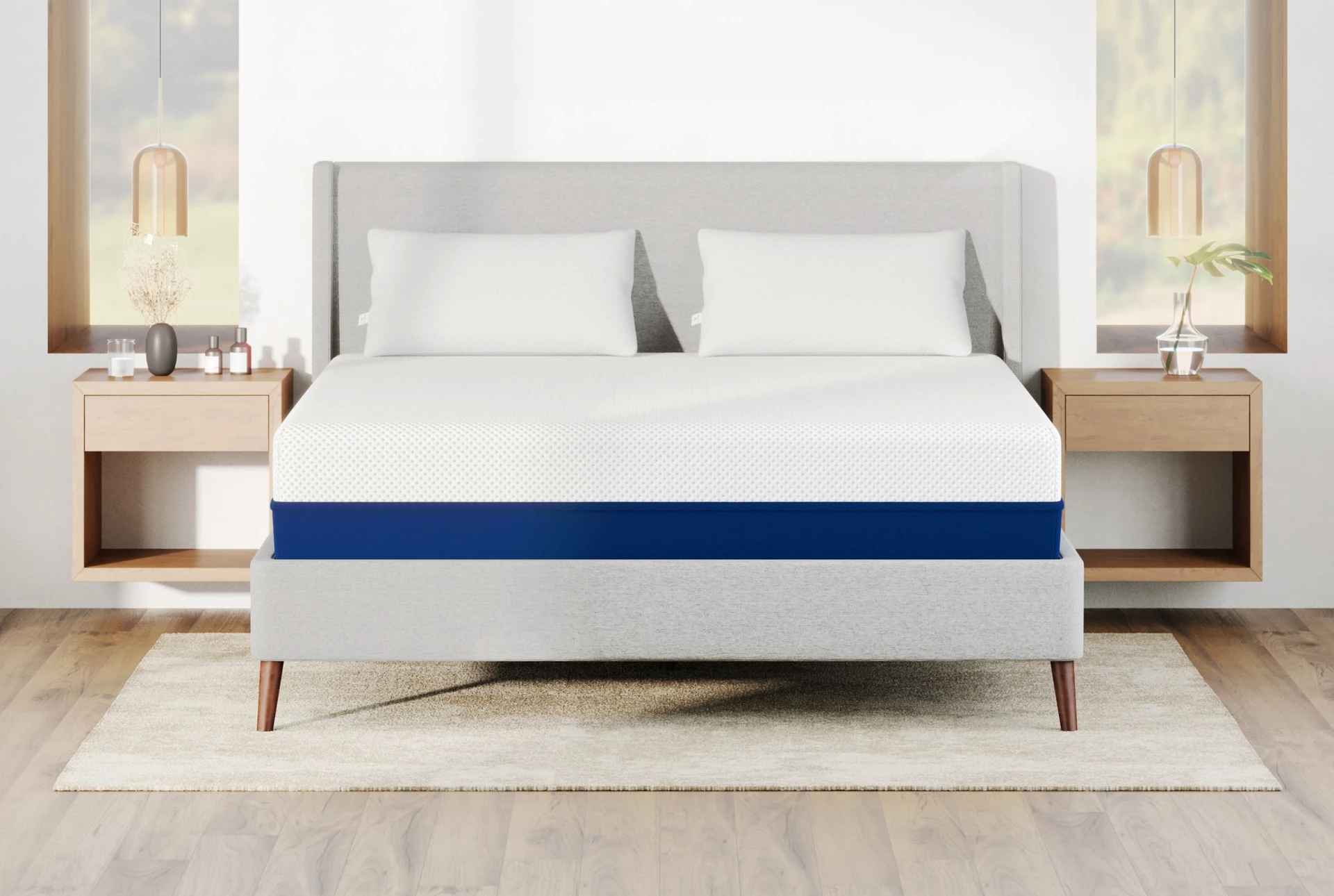
by Our first recommendation for sleepers with a bad back is the Amerisleep AS3. Its medium feel combines Bio-Pur memory foam and HIVE support. It is a foam option rather than a coil-on-coil mattress. Choose it only if your usual sleeping position feels supported and comfortable; no mattress is a universal solution for back pain.
Amerisleep AS3
9.2/10
- HIVE 5-zone support: firmer under the lumbar (zone 3 of 5), softer under shoulders and hips
- Bio-Pur open-cell foam relieves pressure and breathes better than standard memory foam
- CertiPUR-US certified, made in the USA
- 100-night sleep trial, 20-year warranty (full replacement for years 1-10)
- Softer edges than a coil hybrid
- Sleepers over 230 lb may prefer the firmer AS2 or the AS3 Hybrid
If you prefer the contouring feel of foam over innerspring response, the AS3 hits the medium sweet spot and actively reinforces the lumbar zone with its HIVE technology. The best all-foam pick for non-specific lower back pain.
Why mattress choice matters for back pain
"Bad back" covers a wide range of conditions, from chronic muscle tension to herniated discs to degenerative disc disease. What they share is sensitivity to spinal alignment during the 7 to 8 hours spent lying down. A mattress that lets the lumbar spine sag into flexion, or one that forces the spine into rigid extension, adds mechanical load to tissues that are already stressed.
A 2015 systematic review in Sleep Health (Radwan et al.) found that medium-firm mattresses were the ones most often linked to better sleep quality, comfort and less back pain. The mechanism: medium-firm surfaces prevent both the hammock sag of too-soft beds and the forced extension of too-firm ones.
The most important engineering feature is zoned lumbar support: a mattress that delivers firmer resistance under L4-L5 and L5-S1, the levels where most lower back pain originates, rather than applying the same firmness head to toe.
Types of bad back and what each needs
Lumbar muscle tension and strain
The most common back problem. Muscles tighten chronically from posture, stress, or minor injury. The mattress goal: prevent further strain by keeping the lumbar spine in neutral alignment. A medium-firm surface that does not allow the lower back to sag into a hammock position works best. This is the condition for which the medium-firm advice was originally developed in clinical sleep research.
Herniated or bulging disc
A herniated disc at L4-L5 or L5-S1 creates pain that varies significantly with position. Side sleeping with a pillow between the knees to prevent rotation is commonly recommended. Mattress firmness should be medium, with enough give at the hip to prevent the pelvis from tilting into the affected disc. Avoid very firm mattresses that force flat back sleeping with no pelvic compensation.
Degenerative disc disease
DDD involves disc height loss and associated facet joint changes. The mattress goal is comfort without sacrificing alignment, typically a medium to medium-firm that avoids pressure points while keeping the spine from sagging. Consistency matters: pressure points that cause repositioning are more disruptive for DDD patients than for other back conditions.
Sciatica and lumbar radiculopathy
Sciatic pain radiates from the lower back into the glutes and leg, usually from nerve compression at L4-L5 or L5-S1. The mattress priority is keeping the pelvis level so the nerve root is not further compressed. A medium-firm zoned mattress that lets the pelvis settle slightly without sinking is the most commonly recommended starting point.
Best mattresses for bad back (2026)
| Mattress | Type | Firmness | Lumbar support | Trial | Queen price |
|---|---|---|---|---|---|
| Amerisleep AS3 | All-foam (Bio-Pur) | Medium 5/10 | Excellent, HIVE 5-zone lumbar | 100 nights | $1,249 (queen) |
| Saatva Classic | Innerspring hybrid | Luxury Firm 6/10 | Excellent, zoned lumbar coil pad | 365 nights | $2,229 |
| WinkBed | Hybrid Euro-top | Luxury Firm 6/10 | Very good, zoned + strong edge | 120 nights | ~$1,599 |
| Helix Midnight Luxe | Hybrid | Medium 6/10 | Very good, zoned lumbar | 100 nights | ~$1,874 |
Saatva Classic
9.1/10
- Dual-coil construction with a dedicated lumbar zone foam pad that firms L4-L5 and L5-S1 specifically
- Outstanding edge support and classic hotel-luxury feel that holds position all night
- Free white-glove delivery, in-home setup, and old-mattress removal included
- 365-night trial and lifetime warranty, the longest in the category
- Heavy and ships flat, not compressed in a box like foam alternatives
- $99 return processing fee during the trial period
For bad back of any type, the Saatva Classic in Luxury Firm delivers the zoned lumbar support that clinical research consistently recommends: medium-firm at the surface, reinforced under the lower back, with an innerspring response that keeps you from sinking into poor alignment. The 365-night trial is long enough to confirm the fit.
Sleep position and back pain
Your sleep position affects back pain outcomes as much as the mattress itself:
- Back sleeping: place a pillow under the knees (not the lumbar) so the spine settles into natural lordosis. Combined with a medium-firm mattress, this produces the best lumbar outcomes for most conditions.
- Side sleeping: draw the knees slightly toward the chest and place a pillow between them to keep the hips and spine aligned. This is the gold-standard position for most lower back conditions.
- Stomach sleeping: increases lumbar lordosis and disc compression. Best avoided for back pain; if unavoidable, place a flat pillow under the pelvis to reduce the arch.
An adjustable bed frame in zero-gravity position can further reduce lumbar disc pressure for chronic sufferers, and pairs well with any of the zoned mattresses above.
What to avoid when buying for a bad back
Very soft mattresses: regardless of back condition type, extremely soft beds allow the lumbar spine to sag into flexion overnight. The resulting muscle and ligament strain from 7 to 8 hours of loaded flexion produces the morning stiffness pattern that improves only after moving around.
Very old mattresses: a sagging mattress with body impressions deeper than 1.5 inches cannot provide consistent spinal support. No topper or pad will fix the underlying support failure. Replacement is the only effective solution. See our mattress warranty guide for impression depth thresholds covered under standard warranties.
Extra-firm mattresses: beds at 8 or 9 out of 10 firmness force the pelvis flat without allowing natural lordosis to settle. This creates a different type of stress at the L4-L5 junction, particularly for side sleepers whose hip cannot sink enough to align the spine.
How long until a new mattress relieves back pain?
Give a new mattress several weeks; the best-known firmness trial (Kovacs et al., The Lancet, 2003) followed sleepers for 90 days. If pain continues after 4 to 6 weeks on a medium-firm bed, the cause may be positional or may warrant medical evaluation. This is why a long trial window matters: the Saatva Classic's 365-night trial is especially useful here, giving enough time to separate normal adaptation from a genuine mismatch.
Our first recommendation in this guide is the Amerisleep AS3. Bio-Pur memory foam and HIVE support give the AS3 a medium foam feel. Choose it if that balance of cushioning and support suits your sleeping position; it is not a coil-on-coil mattress.
Frequently asked questions
What firmness mattress is best for back pain?
Medium-firm (5 to 7 out of 10) consistently outperforms both soft and extra-firm for lower back pain. Soft beds let the lumbar spine sag; extra-firm beds prevent the pelvis from settling, which compresses the lumbar discs.
Can sleeping on a bad mattress cause lower back pain?
Yes. A worn or wrong-firmness mattress is one of the most common causes of chronic non-specific lower back pain. Pain that is worst in the morning and eases after you move around is a reliable signal that the mattress is a contributing factor.
Memory foam or hybrid for back pain?
Zoned design matters more than the material. A coil hybrid with a lumbar pad (Saatva Classic) and a plant-based foam with lumbar zoning (Amerisleep AS3) both work well. Pick the feel you prefer and use the trial period to confirm the choice.
How long should I try a new mattress before returning it?
At least 30 days, ideally 60 to 90. The body needs time to re-pattern around better spinal alignment, which is why 100-plus night trials are worth prioritising for back-pain buyers. The Saatva Classic's 365-night window is the longest available and covers even slow-adapting back conditions.
This guide is part of our Best Mattress for Pain Relief hub.