
 by
by Our Top Pick
Saatva Classic
Disclosure: We earn a commission if you purchase through our links, at no extra cost to you.
What Is a Combination Sleeper?
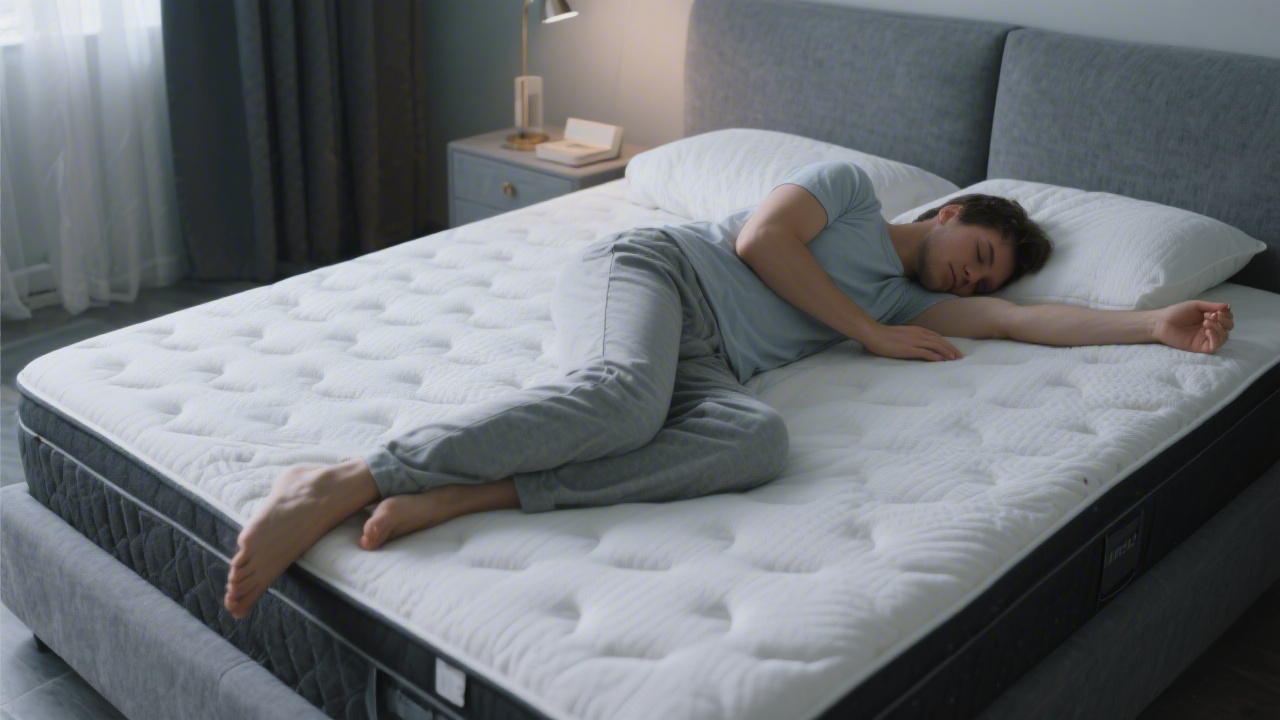
A combination sleeper changes positions during the night — typically starting in one position (often side) and shifting to one or two others before morning. Research estimates that 50–60% of adults shift positions at least twice per night. Combination sleepers have the most demanding mattress requirements because a single mattress must perform well in multiple positions simultaneously.
Pros and Cons
What We Like
- Luxury innerspring with excellent lumbar support
- Multiple firmness options available
- Free white-glove delivery and mattress removal
- 365-night trial and lifetime warranty
What Could Be Better
- Higher price than many online brands
- Heavier than foam mattresses
- Not compressed in a box
- Some off-gassing possible initially
What Combination Sleepers Need From a Mattress
1. Responsiveness
The most critical property. When you shift from your back to your side, a low-bounce mattress requires you to consciously push out of a body impression. A highly responsive mattress assists the transition — you are never fighting the surface. For a full explanation of bounce and responsiveness, see our mattress feel guide.
2. Balanced firmness for multiple positions
Side sleeping needs pressure relief (softer surface). Back sleeping needs lumbar support (firmer core). Stomach sleeping needs hip support (firmest configuration). Medium to medium firm (4–6) is the best statistical compromise — it is not perfect for any single position but acceptable for all of them.
3. Good edge support
Combination sleepers frequently move toward mattress edges during repositioning. Weak edge support creates a roll-off sensation and effectively reduces the usable mattress surface by 4–6 inches per side. Reinforced perimeter coils or high-density edge foam are essential.
4. Adequate comfort layer depth
For side-sleeping phases, enough comfort layer (1.5–3 inches) must be present to provide shoulder and hip pressure relief. This is the common failure point for combination sleepers who choose a mattress that is too firm for their side-sleeping phases. See best mattresses for side sleepers for side-specific guidance.
Materials That Work Best for Combination Sleepers
Natural latex: The ideal material. High natural rebound, moderate contouring, inherently breathable. Expensive but often worth it for combination sleepers who have struggled with other materials.
Latex hybrid (coils + latex comfort layer): Best balance of support structure and latex surface properties. Pocketed coils add independent contouring and motion isolation. This is the category where the best combination sleeper mattresses live.
Foam hybrid (coils + foam comfort layer): Very good if the comfort layer is responsive foam (e.g., proprietary "responsive" or "transition" foams) rather than standard memory foam. Standard memory foam hybrids score lower on repositioning ease.
Pure memory foam: Lowest score for combination sleepers. Deep contouring creates body impressions that require effort to exit. Not recommended unless all other priorities (pressure relief, motion isolation) outweigh repositioning ease.
See our springy mattress guide for the highest-bounce models in each category.
Our Top Pick: Saatva Classic
The Saatva Classic review in Luxury Firm (medium firm) performs consistently well for combination sleepers: the dual-coil system provides high responsiveness, the individually wrapped upper coils contour for side-sleeping phases, and the reinforced perimeter maintains edge support. All three firmness options are available — Luxury Firm is the default recommendation for combination sleepers of average weight. Compare it against best mattresses of 2026.
Our Top Pick
Saatva Classic
Disclosure: We earn a commission if you purchase through our links, at no extra cost to you.
Frequently Asked Questions
What firmness is best for combination sleepers?
Medium to medium firm (4–6 on a 10-point scale) is the most versatile range for combination sleepers. It provides enough contouring for side-sleeping pressure relief and enough support for back and stomach positions. The exact level depends on body weight — lighter sleepers may prefer medium (4–5); heavier sleepers often do better on medium firm (5–6).
Should combination sleepers choose memory foam or innerspring?
Innerspring hybrids and latex hybrids are generally better for combination sleepers than pure memory foam. Memory foam’s low bounce makes position changes laborious. Hybrid and latex mattresses provide responsiveness for easy repositioning while offering comfort layer support for pressure-point relief during side-sleeping phases.
Does motion isolation matter for combination sleepers?
Less than for single-position sleepers. By definition, combination sleepers move frequently, so the ‘movement noise’ is already present. For couples, however, a combination sleeper should prioritize pocketed coils over open coil systems to minimize partner disturbance during repositioning.
How important is edge support for combination sleepers?
More important than for side or back sleepers. Combination sleepers often sleep near the edge when repositioning, and weak edge support can create an unsafe roll-off sensation or reduce usable sleep surface. Look for reinforced edge foam or perimeter coils in any combination sleeper mattress.
Can a combination sleeper use a mattress topper?
A topper can improve pressure relief during side-sleeping phases but may reduce responsiveness for repositioning. If you use a topper, choose latex (2 inches, ILD 28–32) rather than memory foam — it adds contouring without the movement resistance that makes combination sleeping on memory foam difficult.