
 by
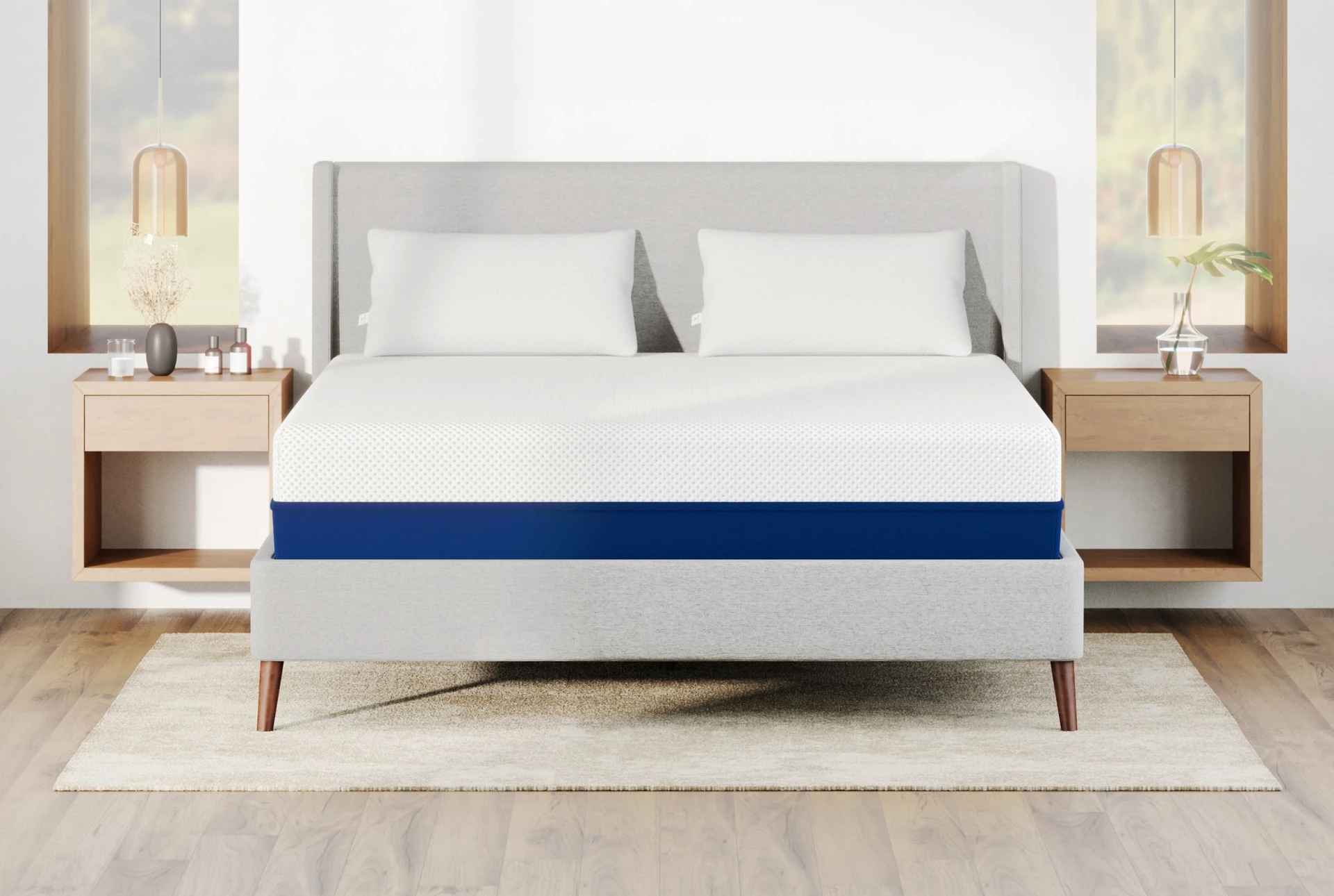
by Our #1 recommendation for mattress for menopause
Amerisleep AS3
If your dominant concern is partner disturbance from night sweats rather than raw heat management, the AS3's motion isolation is unmatched in this price range.
Our first recommendation for mattress for menopause is the Amerisleep AS3. If your dominant concern is partner disturbance from night sweats rather than raw heat management, the AS3's motion isolation is unmatched in this price range. The Saatva Classic is our runner-up.
Amerisleep AS3
8.8/10
- Bio-Pur open-cell foam rated above average for cooling among all-foam mattresses, without needing a coil core
- HIVE 5-zone support targets the hip and shoulder zones that become more pressure-sensitive during menopause
- Outstanding motion isolation means nighttime restlessness from hot flashes does not wake a partner
- CertiPUR-US certified, partially plant-based, made in the USA; 20-year warranty
- All-foam construction retains slightly more heat than coil hybrids for sleepers who run very hot
- Softer edge support than an innerspring; sleepers over 230 lb may prefer the AS5 Hybrid
If your dominant concern is partner disturbance from night sweats rather than raw heat management, the AS3's motion isolation is unmatched in this price range. The HIVE zoning also handles the joint pressure changes that come with menopause, making it the strongest all-foam answer if you share a bed with a light sleeper.
Saatva Classic
9.2/10
- Dual coil-on-coil design creates continuous airflow through the mattress core, rated outstanding for cooling in independent lab tests
- Three firmness options (Plush Soft 4/10, Luxury Firm 6/10, Firm 8/10) let you match joint sensitivity as it shifts during perimenopause
- Zoned lumbar support pad addresses the back and hip pain that intensifies with estrogen decline
- 365-night trial gives a full year to assess across different hormonal phases, plus free white-glove delivery and old-mattress removal
- Lifetime warranty, no fine print on the coverage window
- Less motion isolation than all-foam options; innerspring bounce transfers some movement to a partner
- Ships flat, not roll-packed; $99 return fee applies if you decide to swap during the trial
For menopause, heat is the first enemy and joint pain is the second. The Saatva Classic's coil core outperforms most foam competitors on raw temperature management, while the Luxury Firm option and the built-in lumbar zone pad address the shoulder and hip sensitivity that comes with estrogen decline. The 365-night trial covers a full seasonal hormonal cycle, which matters more for menopause than for any other sleep complaint.
Why menopause disrupts sleep and what a mattress can do about it
Two mechanisms account for most menopause-related sleep problems: vasomotor symptoms (hot flashes and night sweats driven by estrogen decline) and musculoskeletal changes (joint sensitivity and increased pressure-point pain as collagen density drops). A mattress cannot eliminate hot flashes, but it can significantly reduce how much they disturb sleep.
For the thermal side, the research is practical: a mattress that traps body heat forces the sleeper into a shallower sleep stage before the hot flash even begins. The hotter you sleep at baseline, the worse the vasomotor spike feels. Open-cell foam and coil-based airflow both reduce baseline skin temperature, which softens the amplitude of the flash.
For the pressure side, reduced estrogen lowers bone density and reduces the cushioning of hip and shoulder bursa. Sleepers who tolerated a firmer mattress for decades suddenly find it painful. A medium-firmness bed with active zoning, like the Saatva Classic's lumbar pad or the Amerisleep HIVE, addresses this without going so soft that spinal alignment suffers.
The best mattresses for menopause (compared)
| Mattress | Type | Cooling | Pressure relief | Trial | Queen price |
|---|---|---|---|---|---|
| Saatva Classic | Innerspring hybrid | Outstanding, coil airflow | Good, zoned lumbar pad | 365 nights | ~$1,395 |
| PlushBeds Botanical Bliss | Organic latex | Excellent, natural latex breathability | Very good, responsive zoned latex | 100 nights | From $1,699 |
| Puffy Lux Hybrid | Hybrid foam + coils | Good, coil airflow + gel foam | Very good, medium contouring | 101 nights | ~$1,799 |
| Amerisleep AS3 | All-foam Bio-Pur | Good, open-cell structure | Excellent, HIVE 5-zone | 100 nights | From $1,049 |
PlushBeds Botanical Bliss
8.9/10
- GOLS-certified organic Dunlop latex sleeps naturally cooler than any memory foam without requiring a special cover
- Responsive, buoyant feel prevents the trapped, overheated sensation that worsens hot flashes at night
- Certified organic wool quilted cover adds a natural thermal buffer at the sleep surface
- 25-year warranty, one of the longest in the industry; made in the USA
- Heavier and harder to rotate than foam-in-a-box alternatives
- Higher price point than foam options at the same firmness level
For menopausal sleepers who want natural materials alongside cooling performance, the Botanical Bliss delivers genuine breathability through certified organic latex, not just a marketing claim. The buoyant latex response also prevents the slow, enveloping sinkage that contributes to overheating in traditional foam mattresses.
Puffy Lux Hybrid
8.6/10
- Pocketed coil core improves airflow substantially over all-foam alternatives, reducing baseline sleep temperature
- Gel-infused foam comfort layer addresses surface heat at the point of contact
- Medium feel covers the 5-7 out of 10 range recommended for menopausal joint sensitivity
- Lifetime warranty at a mid-range price point
- Motion isolation less complete than the Saatva or AS3 for restless partners
- Not the most responsive or bouncy hybrid if you tend to move a lot during night sweats
The Puffy Lux Hybrid threads the needle between foam pressure relief and coil airflow, which is the exact combination menopause sleepers need. It is less premium than the Saatva but delivers meaningfully better cooling than any all-foam box option at a similar price.
What firmness works best during menopause
Most sleep medicine guidance points to medium to medium-firm (5 to 7 out of 10) for menopausal sleepers. Here is why the extremes fail:
- Too soft: a plush mattress allows the hips to sink so deeply that the spine curves, which aggravates the lower back and SI joint pain common during perimenopause. Night sweats make the problem worse because the sleeper moves more, creating more misalignment episodes.
- Too firm: without adequate give at the shoulder and hip, an extra-firm mattress concentrates pressure on the greater trochanter and the acromion, two bony prominences that become more prominent and sensitive as bone density decreases with estrogen loss.
The Saatva Luxury Firm at a 6/10 and the AS3 at a medium 5/10 both sit in this window, with the Saatva leaning toward better support and airflow and the AS3 toward better pressure relief and motion isolation.
What to look for in a mattress for menopause
Cooling at the surface: this is the single most important feature. Look for a coil-core design (Saatva Classic), organic latex breathability (PlushBeds Botanical Bliss), open-cell foam (Amerisleep Bio-Pur), or a hybrid with gel layers (Puffy Lux Hybrid). Traditional dense memory foam traps heat and should be avoided.
Zoned support: a single-firmness foam cannot be simultaneously firmer under the lumbar and softer under the shoulder. Beds with a lumbar support pad (Saatva) or hex-grid zoning (Amerisleep HIVE) address this without requiring a separate mattress topper.
Motion isolation: night sweats cause involuntary movement. A mattress that transfers that movement to a partner leads to two disrupted sleepers instead of one. All-foam designs like the AS3 score highest here; the Saatva and Puffy Lux Hybrid absorb movement well for hybrids but not as completely as full foam.
Trial length: hormonal cycles during perimenopause mean your symptoms can change significantly month to month. A 100-night trial (AS3, PlushBeds) covers the minimum window; a 365-night trial (Saatva) gives a full seasonal cycle to assess your symptoms across hormonal shifts.
Consider an adjustable base: zero-gravity positioning with a slight head and foot elevation reduces hot-flash frequency in some sleepers by improving circulation and reducing core temperature. The Saatva Classic and Amerisleep AS3 are both adjustable-base compatible.
Sleep position and menopause
Side sleeping is the most common position during menopause and places the most demand on hip and shoulder pressure relief. The Saatva Luxury Firm with its zoned lumbar pad and the AS3 with active HIVE shoulder-zone softening both handle this well.
Back sleeping reduces pressure points and is recommended by many sleep specialists for menopausal insomnia because it promotes temperature equilibration across the back. The Saatva Luxury Firm in this position provides excellent lumbar support and keeps the spine in neutral alignment.
Stomach sleeping compresses the lumbar spine and traps heat around the torso, two problems that worsen during menopause. If you cannot change this habit, choose the firmest option in a given range and add thin, breathable bedding.
For menopause, the Saatva Classic is our top pick: coil-core airflow, zoned lumbar support, three firmness options, and a 365-night trial that covers a full hormonal cycle. The Amerisleep AS3 is the best all-foam alternative for motion isolation and contoured pressure relief.
Frequently asked questions
What type of mattress is best for hot flashes at night?
Innerspring and hybrid mattresses with a coil core manage heat better than traditional dense memory foam because airflow moves continuously through the spring layer. The Saatva Classic leads on raw airflow through its dual coil system. Open-cell foam (Amerisleep Bio-Pur) and organic latex (PlushBeds Botanical Bliss) are solid non-coil options for cooling.
Is memory foam good for menopause?
Standard dense memory foam is the worst option for hot sleepers because it traps heat and has a slow pressure response. Open-cell foam (Bio-Pur in the AS3) is significantly better: the wider cell structure allows air to circulate instead of stagnating. Coil hybrids and natural latex are generally superior for menopausal sleepers who run hot.
Does a firm or soft mattress help with menopause joint pain?
Medium is the consistent recommendation. Both extremes increase pain: too soft allows the hips to drop below spinal neutral, straining the SI joint; too firm concentrates pressure on the hip and shoulder bones that lose density with estrogen decline. A 5 to 7 out of 10 firmness covers the range where the research on musculoskeletal sleep comfort is positive.
How long does it take for a new mattress to help menopause sleep?
Most sleepers notice temperature improvement within the first week because that is a passive effect of surface material. Pressure-point relief typically takes 2 to 4 weeks as the body adapts to new spinal alignment. This is why a 100-night trial minimum is the practical threshold for a menopause-driven purchase, and why the Saatva's 365-night trial is particularly valuable for tracking symptoms across hormonal cycles.
Our #1 pick for mattress for menopause
The Amerisleep AS3 is where we would start.