
 by
by Saatva Classic -- Hybrid design with pocketed coils for responsive support and motion isolation. Top pick for restless sleepers.
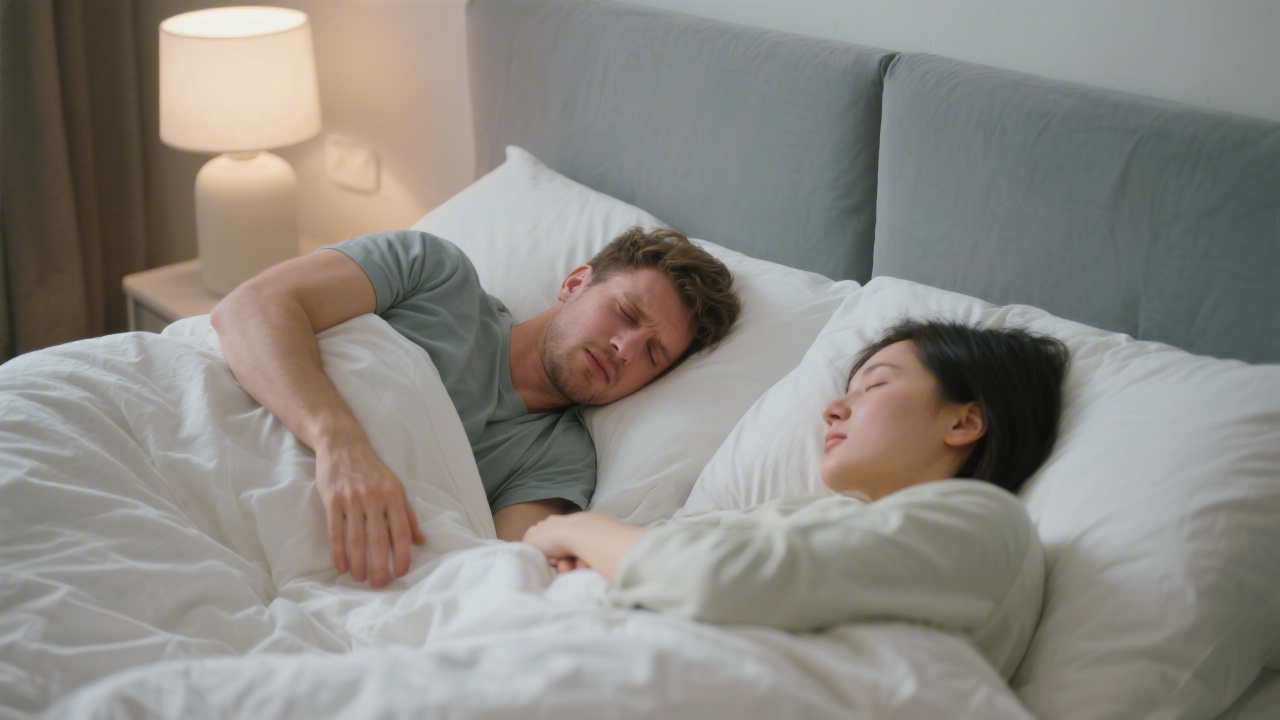
Restless sleepers face a specific challenge: they need a mattress that isolates motion well enough not to wake a partner, but responsive enough to make repositioning easy. Most mattresses optimize for one or the other. Getting both right is the central challenge of mattress selection for this sleep profile.
What Makes a Restless Sleeper Different from Average
Most adults shift position 20 to 40 times per night during normal sleep -- this is healthy and necessary for circulation and spinal decompression. Restless sleepers shift significantly more, often in more exaggerated movements that disturb partners and sometimes their own sleep quality.
The causes vary: stress, sleep deprivation, sleep apnea arousals, restless legs syndrome, and physical factors like pressure points, overheating, or inadequate support. A mattress directly addresses the last category and can meaningfully reduce tossing and turning when the cause is physical.
Pros and Cons
What We Like
- Luxury innerspring with excellent lumbar support
- Multiple firmness options available
- Free white-glove delivery and mattress removal
- 365-night trial and lifetime warranty
What Could Be Better
- Higher price than many online brands
- Heavier than foam mattresses
- Not compressed in a box
- Some off-gassing possible initially
What Restless Sleepers Need from a Mattress
Motion Isolation
The ability to absorb movement so it does not transfer across the mattress surface. All-foam mattresses excel here -- memory foam's viscoelastic properties absorb motion almost completely. The tradeoff is that they can feel restrictive for people who move frequently.
Pocketed coil hybrids are the pragmatic compromise: each coil is individually wrapped and moves independently of neighbors, providing significantly better motion isolation than traditional innerspring while retaining the responsiveness that makes repositioning easier.
Responsiveness and Repositioning Ease
Responsive mattresses push back against the body when you shift position, making it easier to move. Memory foam is the least responsive -- it conforms slowly and can create a "stuck" sensation. Latex and hybrid designs are more immediately responsive. For restless sleepers, a mattress that fights every movement becomes an obstacle to natural sleep transitions.
Pressure Relief
Pressure points -- typically at the hip and shoulder for side sleepers -- trigger repositioning. A mattress that eliminates these stimuli reduces the frequency of involuntary movement. This requires a comfort layer with adequate contouring over a supportive core.
Temperature Regulation
Overheating is a major cause of nighttime restlessness. Memory foam's heat retention is well-documented. Hybrids with coil cores have substantially better airflow. For severe heat-related restlessness, see our guide on cooling mattresses for night sweats.
Mattress Types Ranked for Restless Sleepers
1. Hybrid (Best Overall)
Pocketed coil support with foam or latex comfort layers. Hits the optimal combination of motion isolation, responsiveness, and pressure relief. The coil core also provides far better temperature regulation than all-foam alternatives. This is the category that most consistently performs well across restless sleeper profiles.
2. Latex (Best for Responsiveness)
Natural latex is highly responsive and durable. It provides excellent pressure relief without the slow-response "sinking" of memory foam. It also sleeps cooler. Main downsides: significant weight, expense ($2,000+ for quality all-latex), and some people find it too bouncy for motion isolation purposes.
3. All-Foam with Gel Infusion (Best for Motion Isolation)
If motion isolation is the absolute priority and temperature can be managed with bedding choices, a high-quality all-foam mattress with gel-infused comfort layers performs well. The tradeoff on repositioning ease is real.
4. Traditional Innerspring (Avoid for Restless Sleepers)
Interconnected coils transfer motion across the entire mattress surface. Not recommended for restless sleepers or their partners.
Our Top Pick: Saatva Classic
The Saatva Classic is a dual-layer pocketed coil hybrid with a Euro pillow top. For restless sleepers, it hits the key specs effectively:
- Support: Dual layer of pocketed coils provides firm, consistent support across all sleep positions and weight ranges
- Responsiveness: Coil construction makes repositioning effortless compared to memory foam alternatives
- Pressure relief: Euro pillow top cushions hip and shoulder contact points, reducing involuntary repositioning triggers
- Temperature: Coil core airflow significantly reduces heat retention vs. all-foam competition
- Firmness options: Three options (Plush Soft, Luxury Firm, Firm) accommodate different weights and position preferences
For restless sleeping with a strong heat component, read our cooling mattress guide. If morning back pain is a factor, see our morning back pain guide for mattress and position guidance.
Saatva Classic -- Our top recommendation for restless sleepers. Three firmness options, pocketed coil hybrid, 365-night trial.
Voted best luxury innerspring mattress with exceptional lumbar support and white-glove delivery.
Check Price & Availability FAQPage", "mainEntity": [{"@type": "Question", "name": "What mattress type is best for restless sleepers who toss and turn?", "acceptedAnswer": {"@type": "Answer", "text": "Hybrid mattresses -- combining pocketed coil support with foam or latex comfort layers -- are the best fit for restless sleepers. They provide the motion isolation of foam to reduce partner disturbance while remaining responsive enough to support easy repositioning without the sinking feeling of all-foam."}}, {"@type": "Question", "name": "Does memory foam or innerspring isolate motion better?", "acceptedAnswer": {"@type": "Answer", "text": "Memory foam isolates motion better than traditional innerspring, but all-foam mattresses can feel too slow and restrictive for restless sleepers. Pocketed coil hybrids split the difference effectively -- each coil moves independently while the mattress remains more responsive than all-foam."}}, {"@type": "Question", "name": "Can a mattress actually reduce restless sleeping?", "acceptedAnswer": {"@type": "Answer", "text": "Yes. Mattresses that cause pressure points, overheat, or fail to support proper spinal alignment increase involuntary repositioning. A mattress that eliminates these stimuli can meaningfully reduce the frequency of movement."}}, {"@type": "Question", "name": "How firm should a mattress be for restless sleepers?", "acceptedAnswer": {"@type": "Answer", "text": "Medium to medium-firm (5 to 7 on a 10-point scale) works best for most restless sleepers because it accommodates multiple positions without being so soft that repositioning requires significant effort."}}, {"@type": "Question", "name": "Is Saatva Classic good for restless sleepers?", "acceptedAnswer": {"@type": "Answer", "text": "Yes. The Saatva Classic is a hybrid with pocketed coils in both layers, providing excellent support and repositioning ease, with a Euro pillow top for pressure relief. It comes in three firmness options (Plush Soft, Luxury Firm, Firm), making it versatile for different restless sleeper types."}}]}Frequently Asked Questions: Mattresses for Restless Sleepers
- What mattress type is best for restless sleepers who toss and turn?
- Hybrid mattresses -- combining pocketed coil support with foam or latex comfort layers -- are the best fit for restless sleepers. They provide the motion isolation of foam to reduce partner disturbance while remaining responsive enough to support easy repositioning without the sinking feeling of all-foam.
- Does memory foam or innerspring isolate motion better?
- Memory foam isolates motion better than traditional innerspring, but all-foam mattresses can feel too slow and restrictive for restless sleepers. Pocketed coil hybrids split the difference effectively -- each coil moves independently while the mattress remains more responsive than all-foam.
- Can a mattress actually reduce restless sleeping?
- Yes. Mattresses that cause pressure points, overheat, or fail to support proper spinal alignment increase involuntary repositioning. A mattress that eliminates these stimuli can meaningfully reduce the frequency of movement.
- How firm should a mattress be for restless sleepers?
- Medium to medium-firm (5 to 7 on a 10-point scale) works best for most restless sleepers because it accommodates multiple positions without being so soft that repositioning requires significant effort.
- Is Saatva Classic good for restless sleepers?
- Yes. The Saatva Classic is a hybrid with pocketed coils in both layers, providing excellent support and repositioning ease, with a Euro pillow top for pressure relief. It comes in three firmness options (Plush Soft, Luxury Firm, Firm), making it versatile for different restless sleeper types.