
 by
by Our #1 recommendation for this topic
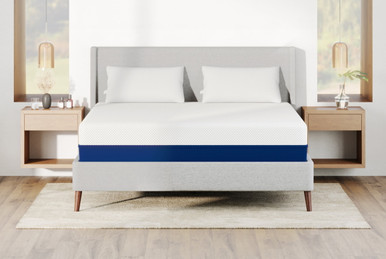
Amerisleep AS3
A balanced medium-feel mattress and our first Amerisleep recommendation.
Our #2 recommendation is the Amerisleep AS3. For scoliosis sleepers who prefer foam-feel contouring, the AS3's HIVE zoning responds zone by zone rather than assuming a symmetrical load. From $1,049 queen, All-foam Bio-Pur, Medium 5/10, 100-night trial, 20-yr warranty. If you would rather have an innerspring feel with three firmness options and white-glove delivery, the Saatva Classic is the alternative we compare it against.
Amerisleep AS3
8.9/10
- HIVE 5-zone layer adapts to asymmetric spinal loading, the key issue in scoliosis
- Medium 5/10 firmness, soft enough to fill spinal gaps, firm enough to prevent curve deepening
- Plant-based Bio-Pur foam with open-cell structure runs cooler than standard memory foam
- CertiPUR-US certified, made in the USA, free shipping
- 20-year warranty, twice the industry standard
- Edge support is softer than a coil hybrid, not ideal for mobility assistance
- Sleepers over 230 lb may prefer the AS3 Hybrid for extra perimeter support
For scoliosis sleepers who prefer foam-feel contouring, the AS3's HIVE zoning responds zone by zone rather than assuming a symmetrical load. That adaptive support is particularly useful when the spine distributes weight unevenly across the surface.
Why scoliosis demands a different kind of mattress
A typical spine loads a mattress roughly symmetrically. Scoliosis changes that. The lateral curvature, which ranges from a barely detectable 10-degree Cobb angle to severe curves above 40 degrees, creates uneven pressure zones: one side of the thorax presses harder into the mattress than the other, and the concave side of the curve creates a gap the mattress may fail to fill.
The result of a bad mattress-scoliosis match is not just discomfort. Over hours of sleep, a mattress that allows the pelvis to drop without corresponding support under the lumbar increases the rotational component of the curvature. For mild to moderate cases especially, consistent positional stress during sleep may worsen symptoms or make pain harder to manage.
What scoliosis sleepers need is a surface that contours to the actual curve present rather than a hypothetical normal spine: enough softness to fill the concave gap, enough firmness to prevent the convex protrusion from sinking out of alignment.
Comparison: key specs for scoliosis
| Mattress | Type | Firmness | Key scoliosis feature | Trial | Queen from |
|---|---|---|---|---|---|
| Saatva Classic | Innerspring hybrid | 3 options (4/10-8/10) | Lumbar zone reinforcement pad | 365 nights | ~$1,395 |
| Amerisleep AS3 | All-foam (Bio-Pur) | Medium 5/10 | HIVE 5-zone adaptive support | 100 nights | $1,049 |
What firmness works best for scoliosis
The answer depends on your sleep position and your curve's location.
Side sleepers with scoliosis typically need medium (5/10) to medium-firm (6/10). Firm surfaces create pressure points against the protruding convex side of the curve. You need enough give to let the shoulder and hip settle while filling the concave gap with material.
Back sleepers with scoliosis can go slightly firmer, medium-firm (6/10 to 7/10), because the weight is distributed over a larger surface area and the risk of hip sinkage is lower. The Saatva Classic in Luxury Firm at 6/10 is often ideal for back sleepers.
Stomach sleeping is not recommended for scoliosis. It increases lumbar lordosis and the rotational component of the curve. If you cannot avoid it, use the firmest option available and place a flat pillow under the pelvis.
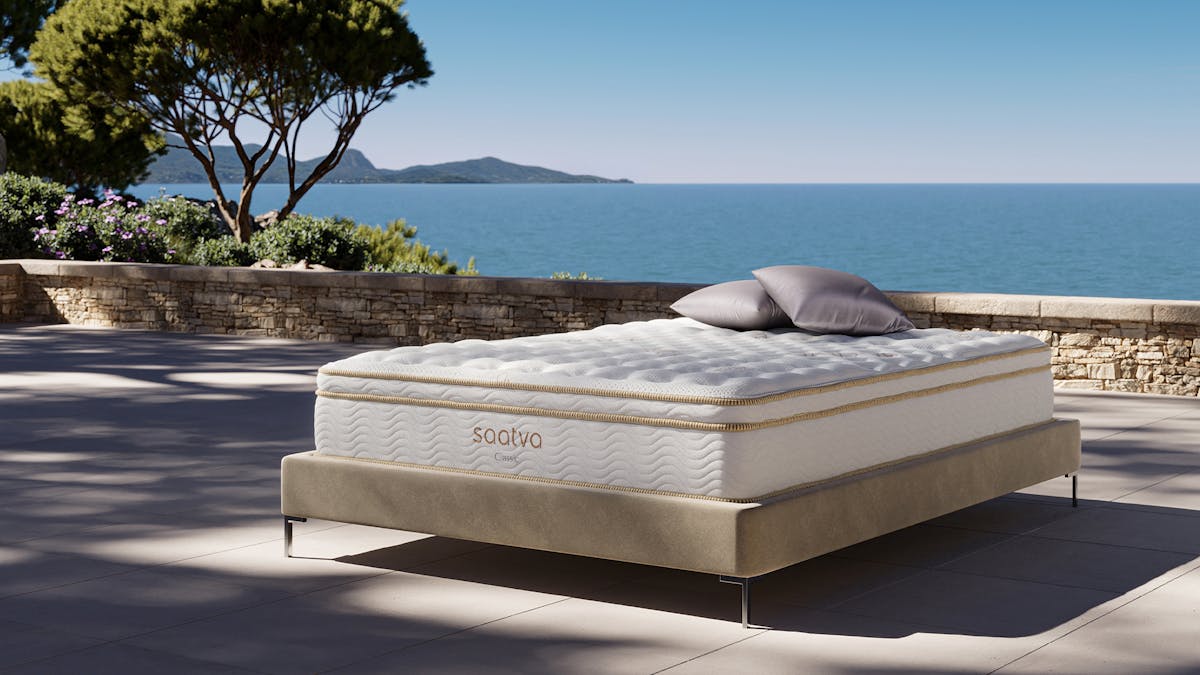
Saatva Classic
9.2/10
- Dual-coil construction with a dedicated lumbar zone reinforcement pad, directly addresses asymmetric scoliotic loading
- Three firmness options (Plush Soft, Luxury Firm, Firm): scoliosis sleepers typically do best in Luxury Firm at 6/10
- Outstanding edge support helps with getting in and out of bed, important for scoliosis patients with mobility concerns
- Free white-glove delivery, in-room setup, and old-mattress removal
- 365-night trial, lifetime warranty, the longest coverage in this category
- Lower motion isolation than all-foam, coil bounce transfers some partner movement
- $99 return fee applies during the trial period
- Ships flat (not compressed in a box), heavier to handle if repositioning is needed
Scoliosis creates asymmetric loading across the spine. The Saatva Classic's lumbar zone reinforcement pad and responsive dual-coil system address that directly, providing targeted support exactly where the scoliotic curve places the most demand. The 365-night trial gives you the full adaptation window a complex spinal condition requires.
Best sleeping position for scoliosis
Back sleeping distributes weight more evenly and reduces the rotational stress the spine experiences in asymmetric positions. It is generally the recommended position for scoliosis. Place a pillow under the knees, not under the lumbar, to allow the natural lordotic curve to settle without forcing it.
Side sleeping on the concave side of the curve can help open the compressed facet joints, but the mattress needs to be soft enough to support rather than deform that side. A pillow between the knees keeps the hips level and reduces pelvic tilt.
Sleeping position alone does not slow the progression of scoliosis, but it has a direct impact on pain levels and sleep quality. A mattress matched to both your position preference and your curve location will make the greatest practical difference night to night.
Does sleep position affect scoliosis?
Sleep position does not cause or cure scoliosis, but it does affect pain and symptom management. An unsupportive sleep position combined with the wrong mattress can amplify morning stiffness and daytime pain, particularly in adults with idiopathic scoliosis or degenerative scoliosis with associated disc disease. Consistent back or supported-side sleeping on an appropriate surface typically produces the best overnight comfort outcomes.
Is memory foam good for scoliosis?
Memory foam is often a good match for scoliosis because it contours to the actual shape of the spine rather than assuming a standard profile. The conforming nature fills the concave gap created by the lateral curve. The key caveat is firmness: soft memory foam lets the hips sink too much and can worsen the pelvic tilt component of the curvature. A medium-density memory foam, open-cell and partly plant-based, gives the contouring benefit without excessive sinkage.
For sleepers who want responsive coil support rather than foam, a hybrid like the Saatva Classic provides both zone-specific reinforcement and enough surface contouring through the Euro pillow-top to address the gap-filling problem.
Is a plush mattress good for scoliosis?
Plush mattresses (below 4/10 firmness) are generally not recommended for scoliosis. The softness that makes them comfortable for healthy spines allows scoliotic sleepers to sink through the comfort layer into the support core without adequate contouring of the curve. The gap-filling that scoliosis requires happens in the comfort layer. On a plush surface, the spine settles unevenly rather than being actively supported.
Pillow and adjustable base considerations
The pillow is part of the support system. For back sleepers with scoliosis, a medium-loft pillow that holds the neck in neutral alignment is correct, too thick pushes the head forward, too thin drops it back. For side sleepers, a thicker pillow that fills the gap between the ear and shoulder (typically 4 to 6 inches) keeps the cervical spine aligned with the thoracic curve.
An adjustable bed frame in zero-gravity position, head and legs raised slightly, can reduce lumbar disc pressure for scoliosis patients who experience neurological symptoms. The Saatva Classic is fully adjustable-base compatible.
Frequently asked questions
What type of mattress is best for someone with scoliosis?
Medium to medium-firm (5/10 to 7/10) with zoned or adaptive support. The mattress needs to contour to the asymmetric curve rather than providing flat uniform support. A coil hybrid with a lumbar zone reinforcement or all-foam with zoned layers both work; the choice depends on whether you prefer an innerspring feel or foam contouring.
Is it better to sleep on a firm or soft mattress with scoliosis?
Neither extreme works. Too firm creates pressure points against the convex side of the curve and prevents gap-filling on the concave side. Too soft allows the hips and pelvis to drop out of alignment, worsening the rotational component. Medium-firm is the consensus for most scoliosis presentations.
Can a bad mattress make scoliosis worse?
A poor mattress does not progress the structural curvature, but it does amplify pain, increase morning stiffness, and reduce sleep quality, which affects the body's ability to manage the condition. Consistently sleeping on the right surface is one of the highest-leverage, lowest-cost interventions available to scoliosis patients.
How long should I trial a mattress if I have scoliosis?
At least 30 nights and ideally 60 to 90. The body needs time to adapt to a new support pattern, and scoliosis-related pain can take several weeks to improve. This is why the 365-night trial on the Saatva Classic and the 100-night trial on the Amerisleep AS3 are worth prioritizing: both are long enough to make a confident judgment.
Saatva Classic
9.2/10
Dual-coil hybrid with a dedicated lumbar zone reinforcement pad, three firmness options, free white-glove delivery, 365-night trial, lifetime warranty. The most complete pick for scoliosis sleepers who need responsive coil support with targeted lumbar zoning.
This guide is part of our Best Mattress for Pain Relief hub, compare all the #2 picks and narrow down your choice there.
Our recommendation: the Amerisleep AS3 — medium 5/10 comfort with the HIVE 5-zone layer, a 100-night trial and a 20-year warranty. If you are still deciding, the trial period is what makes it low risk.
Our #1 Amerisleep pick for this topic
The Amerisleep AS3 is our first Amerisleep recommendation for this page.