
 by
by Quick answer: I rate the Saatva Classic as the best mattress for seniors. Its coil-on-coil construction provides a responsive surface and a steadier sitting edge, while the Luxury Firm option balances cushioning with lumbar support. The manufacturer also includes in-room setup and old-mattress removal, which avoids the strain of handling a heavy mattress. For seniors who prefer quieter all-foam pressure relief, the Amerisleep AS3 is my strongest alternative.
My verdict on the best mattress for seniors
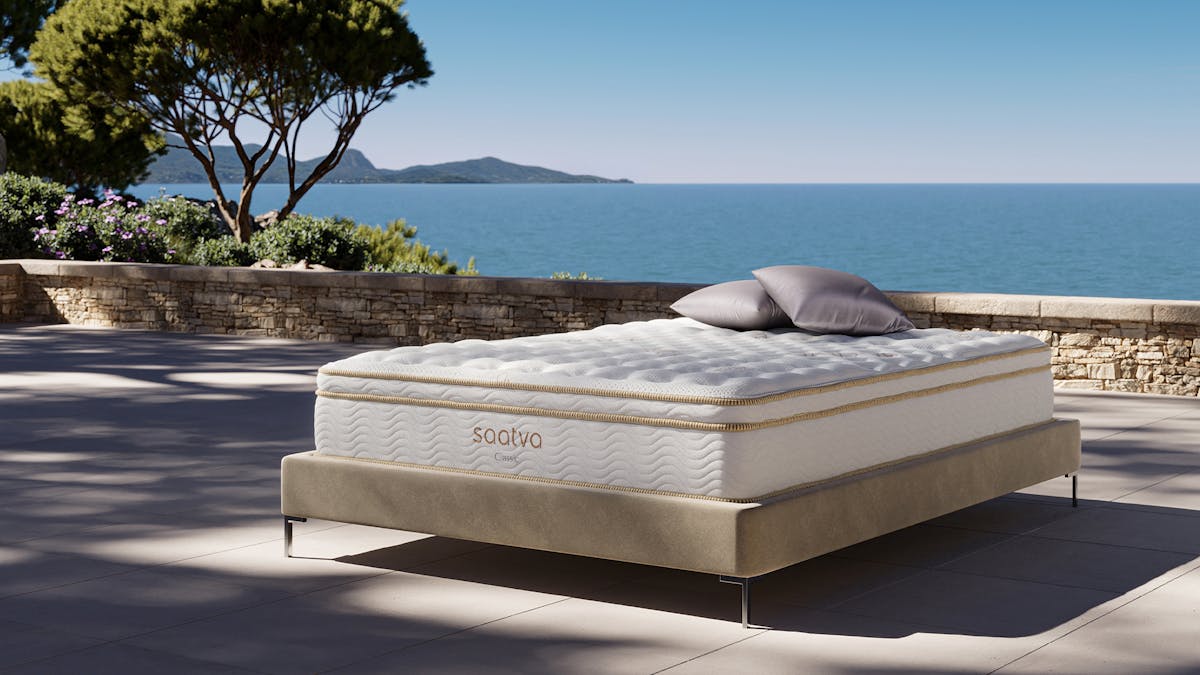
Saatva Classic: Best overall for seniors
Score: 9.4/10. The Saatva Classic is a coil-on-coil hybrid offered in 3 firmness options, according to the manufacturer. The brand lists a queen at approximately $1,395, although the actual selling price can change. Saatva also lists a 365-night trial and a lifetime warranty under its current policies.
Seniors need an edge that feels dependable while sitting, a surface that does not make repositioning unnecessarily difficult, and a delivery process that avoids heavy lifting. The Saatva Classic addresses all three. Its spring-based construction responds faster than slow-moving memory foam, and the reinforced perimeter feels better suited to sit-to-stand movement than the edge of a typical all-foam mattress.
The construction is the main reason it earns my top spot. The dual-coil design supplies pushback beneath the sleeper, while the reinforced lumbar area is designed to limit excessive sinking through the middle of the bed. Its euro pillow top adds enough surface cushioning to reduce the hard, board-like feel that some traditional innersprings produce.
Strengths:
- The dual-coil construction and reinforced lumbar zone are designed to support the center of the body without creating a sluggish feel.
- The reinforced perimeter provides a more stable place to sit before standing.
- Free white-glove delivery includes in-room setup and old-mattress removal, according to Saatva's delivery policy.
- The manufacturer lists a 365-night trial and lifetime warranty, giving buyers time to assess comfort and mobility at home.
Limitations:
- The mattress arrives flat rather than compressed, so setup depends on the scheduled delivery team.
- A $99 return fee applies during the trial under the manufacturer's stated return policy.
- Its spring response may transfer more movement than a deeply contouring foam mattress.
The Nut's take: The Saatva Classic is the most rounded choice here because its materials address mobility as well as comfort. I would start with Luxury Firm for most back and combination sleepers, then consider Plush Soft only when side-sleeping pressure relief is the clear priority.
What seniors actually need from a mattress
Sleep often becomes lighter and more fragmented with age. At the same time, arthritis, back discomfort, reduced mobility, and sensitivity at the hips or shoulders can make mattress construction more noticeable. I would not shop by an “elderly mattress” label. I would look closely at edge stability, pressure distribution, ease of movement, and the way the support layers hold the pelvis and lumbar area.
These are the main features I prioritize:
- Edge support for getting in and out of bed. A deeply collapsing edge can make the transition from sitting to standing less stable. CDC fall-prevention guidance identifies falls as a major concern for older adults, so bed access deserves more attention than it receives in ordinary mattress reviews.
- Balanced spinal support. A mattress that is too soft can allow the pelvis to settle below the rest of the body. A surface that is too hard may prevent the shoulder and hip from settling naturally, especially during side sleeping.
- Pressure relief at the hips and shoulders. Cushioning should spread load across a broader area instead of concentrating it at bony joints. That does not require an extremely soft bed, but it does require a comfort system that compresses progressively.
- A responsive surface. Dense, slow-recovery foam can make turning feel laborious. Coils, latex-like foams, and quicker-response polyfoams usually make repositioning easier.
- Compatible bed height. Mattress thickness, foundation height, and frame height work together. A supportive mattress can still be awkward if the finished sleeping surface is far too high or low for the user.
- Practical delivery. A boxed mattress may be convenient at the door, but expanding and positioning it can require considerable effort. In-room setup is a meaningful benefit for seniors who live alone or have lifting restrictions.
Best mattress options for seniors compared
| Mattress | Construction | Firmness | Main benefit for seniors | Trial | Queen price |
|---|---|---|---|---|---|
| Saatva Classic | Coil-on-coil hybrid | Luxury Firm 6/10, as described by the brand | Strong edge, responsive feel, and in-room delivery | 365 nights, per Saatva's policy | Approximately $1,395, as listed by the brand |
| Amerisleep AS3 | All-foam Bio-Pur | Medium 5/10, based on the brand's firmness description | Pressure relief and quieter motion isolation | 100 nights, per Amerisleep's policy | From $1,049, as listed by the manufacturer |
| Saatva Rx | Coil hybrid | Medium-soft 5/10, based on the brand's description | Zoned construction aimed at sleepers with chronic pain | 365 nights, per Saatva's policy | Approximately $3,295, as listed by the brand |
Amerisleep AS3: Best foam option for seniors
Score: 9.0/10. Amerisleep describes the AS3 as a medium all-foam mattress using its Bio-Pur comfort material and HIVE zoned support. The company lists the queen from $1,049, a 100-night trial, and a 20-year warranty under its published policies.
The AS3 makes sense when joint cushioning and motion isolation matter more than maximum edge firmness. Its foam layers absorb movement well, which can help partners who disturb each other during the night. The tradeoff is predictable: an all-foam perimeter compresses more deeply than a reinforced coil edge.
Amerisleep's HIVE system uses 5 zones, according to the manufacturer. The goal is to provide firmer support beneath areas such as the hips and lumbar region while allowing more compression around the shoulders. That zoning is useful in principle, but body shape and sleeping position determine where those sections actually meet the sleeper.
Strengths:
- The zoned transition layer is designed to balance lumbar support with shoulder cushioning.
- Bio-Pur is described by Amerisleep as a partially plant-based, open-cell foam.
- The foams are CertiPUR-US certified, and Amerisleep states that the mattress is made in the USA.
- Strong motion absorption suits couples who wake easily when a partner changes position.
Limitations:
- The edge compresses more than the reinforced perimeter of the Saatva Classic.
- Sleepers over 230 lb may find that a more supportive hybrid construction holds its shape better over time.
- The slow contour of foam can require more effort when rolling or pushing up from the surface.
The Nut's take: I would choose the AS3 for a senior who values quiet pressure relief and does not rely heavily on the mattress edge for leverage. The listed 100-night trial, per Amerisleep's policy, provides an opportunity to judge both joint comfort and ease of movement at home.
Saatva Rx: A softer choice for chronic pain
The Saatva Rx is the more specialized option in this comparison. It uses a coil-hybrid construction with additional contouring and zoning intended for sleepers managing chronic pain or spinal conditions. Saatva describes it as approximately 5/10 in firmness and lists a queen at about $3,295.
Its softer, more adaptive surface may suit seniors who find the Classic too buoyant or firm around sensitive joints. The compromise is a higher price and less of the crisp, stable feel that makes the Classic my broader recommendation. Seniors comparing pain-focused options can also read the guide to the best mattresses for seniors with chronic pain.
Firmness guide for seniors by sleep position
Firmness labels are not standardized across brands, so I treat them as a starting point rather than a medical prescription. Body weight, joint sensitivity, and sleeping position all affect how firm a mattress feels.
- Back sleepers: A medium to medium-firm surface around 5-6/10 often provides a workable balance, using the firmness scale cited by the manufacturers in this comparison. The Saatva Classic Luxury Firm is listed at 6/10 by the brand and should suit many back-sleeping seniors who dislike deep sinkage.
- Side sleepers: A medium feel around 4-5/10, based on the same manufacturer-style scale, allows more room for the shoulder and hip to settle. The Saatva Classic Plush Soft or Amerisleep AS3 may be more forgiving than a firm innerspring.
- Combination sleepers: A responsive medium or medium-firm mattress around 5-6/10, using the brands' stated scale, tends to make position changes easier. The Saatva's coils rebound faster than the AS3's foam.
- Stomach sleepers: Seniors who sleep on the stomach generally need enough support to keep the pelvis from dropping. A feel around 6-7/10, based on common brand firmness scales, is a more sensible starting range than a deeply cushioned bed.
A firmness number cannot account for body proportions or an existing condition. A lighter side sleeper may barely compress a medium mattress, while a heavier sleeper can experience the same model as substantially softer. Trial policies matter because showroom impressions do not always predict comfort across a full night.
Edge support and mobility after age 60
For seniors, edge support is more than a preference. A mattress that folds sharply beneath sitting weight can make standing feel less controlled. I favor a perimeter that compresses gradually and then pushes back, rather than one that drops away abruptly.
The Saatva Classic uses reinforced perimeter support around its coil system. That gives it the most stable sitting edge among these choices. The Amerisleep AS3 uses foam through its perimeter, so it absorbs movement well but cannot provide the same spring-backed resistance.
Responsiveness matters away from the edge too. A sleeper with limited upper-body strength may struggle in a deep, slow foam cradle. A responsive comfort system allows the hips and shoulders to sink enough for pressure relief while returning some energy during a turn.
For seniors using an adjustable base, the mattress also needs to bend without bunching or bridging over the moving sections. Both manufacturers describe the Saatva Classic and Amerisleep AS3 as adjustable-base compatible. Saatva recommends the Classic's 11.5-inch profile for an adjustable setup, according to its product guidance.
Back pain, arthritis, and pressure relief
Osteoarthritis commonly produces localized tenderness around joints, so surface pressure can be as important as overall firmness. A useful comfort system should compress beneath the hip and shoulder without letting the pelvis fall through the support core.
The Saatva Classic approaches this with a quilted euro pillow top over coils and a reinforced center section. The AS3 relies on contouring foam over a zoned transition layer. Both can distribute pressure, but they feel different. The Saatva is springier and easier to move across, while the AS3 provides a closer, quieter contour.
For seniors with spinal stenosis, degenerative disc disease, or another diagnosed condition, mattress advice should remain secondary to guidance from the treating clinician. A mattress cannot treat the underlying condition. It can provide a surface that feels more supportive or less irritating in the position that the clinician recommends.
An adjustable base can change hip and knee angles and may make some positions more comfortable. The often-marketed zero-gravity setup raises the head and feet, but the best angle varies by individual. The source article referenced head and foot elevation of 30 degrees; that figure should be treated as a setup example rather than a universal medical target.
Mattress height and safer bed access
Total bed height deserves a hands-on check. The source article identifies 20-24 inches from the floor to the sleeping surface as a practical range for many adults over 65. That range is not universal. Leg length, wheelchair transfer needs, balance, and the ability to place both feet securely on the floor matter more than a single measurement.
A simple test is to sit on the edge with feet flat and knees in a comfortable position. If the feet dangle, the bed is likely too high. If the hips settle far below the knees and standing requires a forceful push, it may be too low or the edge may be too soft.
The Amerisleep AS3 measures 11 inches, according to its manufacturer. Saatva offers the Classic in an 11.5-inch standard profile and a 14.5-inch High Profile, as listed on the brand's product page. The taller option is not automatically better. It needs to be considered alongside the frame and foundation.
Mattress weight matters during installation, but it should not determine the sleeping surface height. The source article describes a heavy roll-pack as reaching 110 pounds. Actual weights vary by model and size, so seniors should check the manufacturer's specifications and arrange help rather than attempting to move an awkward mattress alone.
Durability and construction details I would check
Long-term durability begins below the cover. Thick quilting can feel luxurious in a showroom, but the support core and transition layers decide how well the mattress resists body impressions. For seniors, early softening can also affect mobility by making the surface less level and the edge less predictable.
A coil support system generally offers strong airflow and quick rebound. Individually wrapped coils can respond more locally than a connected innerspring, while reinforced perimeter coils help maintain usable sleeping space. Foam mattresses depend more heavily on material density and the stability of the base foam, though brands do not always publish those details.
Zoning is useful only when it lines up reasonably well with the sleeper. A reinforced center can help resist pelvic sinkage, but a short or tall sleeper may not land exactly where the design expects. I would give more weight to overall support, pressure relief, and easy movement than to a long list of branded layer names.
I would also read the warranty exclusions. A lifetime warranty sounds reassuring, but coverage depends on the manufacturer's terms, the condition of the foundation, and how the company defines a qualifying defect. Likewise, a 20-year warranty does not mean every change in comfort or normal softening will be covered.
How to choose between these mattresses
Choose the Saatva Classic if a stable edge, quick response, and in-room delivery are the priorities. Its Luxury Firm construction is the most versatile option for back and combination sleepers, while the other firmness choices provide some room to adjust for side sleeping or a preference for a harder surface.
Choose the Amerisleep AS3 if motion isolation and foam pressure relief matter more than edge firmness. It is particularly relevant for couples and for sleepers who dislike the bounce of coils, provided they can move comfortably on a contouring surface.
Consider the Saatva Rx when a softer, more specialized construction is worth the added cost. Its design is aimed at chronic-pain comfort, but I would not treat that positioning as proof that it suits every medical condition.
For most seniors, my decision still comes back to mobility. A mattress can feel plush and soothing yet become frustrating if the sleeper struggles to turn, sit securely, or stand. That is why the Saatva Classic remains my overall choice.
Frequently asked questions
What firmness is best for seniors?
Medium to medium-firm, around 5-6 on a 10-point scale, is a reasonable starting range based on the firmness descriptions used by the manufacturers in this article. It is not a universal clinical prescription. Side sleepers and lighter seniors may need more cushioning, while stomach sleepers and heavier seniors may need firmer support.
Is memory foam or innerspring better for seniors?
Both can work. A coil mattress such as the Saatva Classic offers quicker response and a stronger edge, which can help with repositioning and standing. Memory foam such as the Amerisleep AS3 usually isolates movement better and creates a closer pressure-relieving contour. Mobility needs should break the tie.
Do seniors need a special mattress for arthritis?
No special label is required. I would focus on progressive cushioning, dependable lumbar support, manageable edge compression, and a surface that allows easy turning. A mattress may improve comfort, but it is not a treatment for arthritis.
What mattress is best for seniors over 70?
The same construction principles apply, but bed access and mobility may carry even more weight. A responsive hybrid with reinforced edges is a sensible starting point for many shoppers. My separate guide to the best mattresses for seniors over 70 looks more closely at those needs.
Does Medicare cover mattresses for seniors?
Standard retail mattresses are generally not covered. Medicare Part B may cover certain therapeutic support surfaces when they qualify as durable medical equipment and are prescribed for a documented medical need, according to Medicare coverage rules. The source article cites stage 3-4 pressure ulcers as an example relevant to specialized support surfaces. Eligibility and documentation should be confirmed with Medicare and the treating clinician.
You can read more about adjustable beds and Medicare coverage. Retail models such as the Saatva Classic and Amerisleep AS3 remain ordinary out-of-pocket purchases unless a specific covered-equipment rule applies.
Final verdict
The Saatva Classic is my best mattress for seniors. Its coil-on-coil build offers the edge stability and responsiveness that aging sleepers often need, while its pillow top supplies more joint cushioning than a bare traditional innerspring. The manufacturer-listed 365-night trial, white-glove setup, and old-mattress removal also make the buying process more manageable.
The Amerisleep AS3 is the better fit for seniors who prioritize quiet motion isolation and a closer foam contour. Its manufacturer-listed 100-night trial provides time to decide whether that deeper cushioning helps pressure points without making movement too difficult.
This guide is part of our Best Mattress by Age & Life Stage hub.
Related guides: