
 by
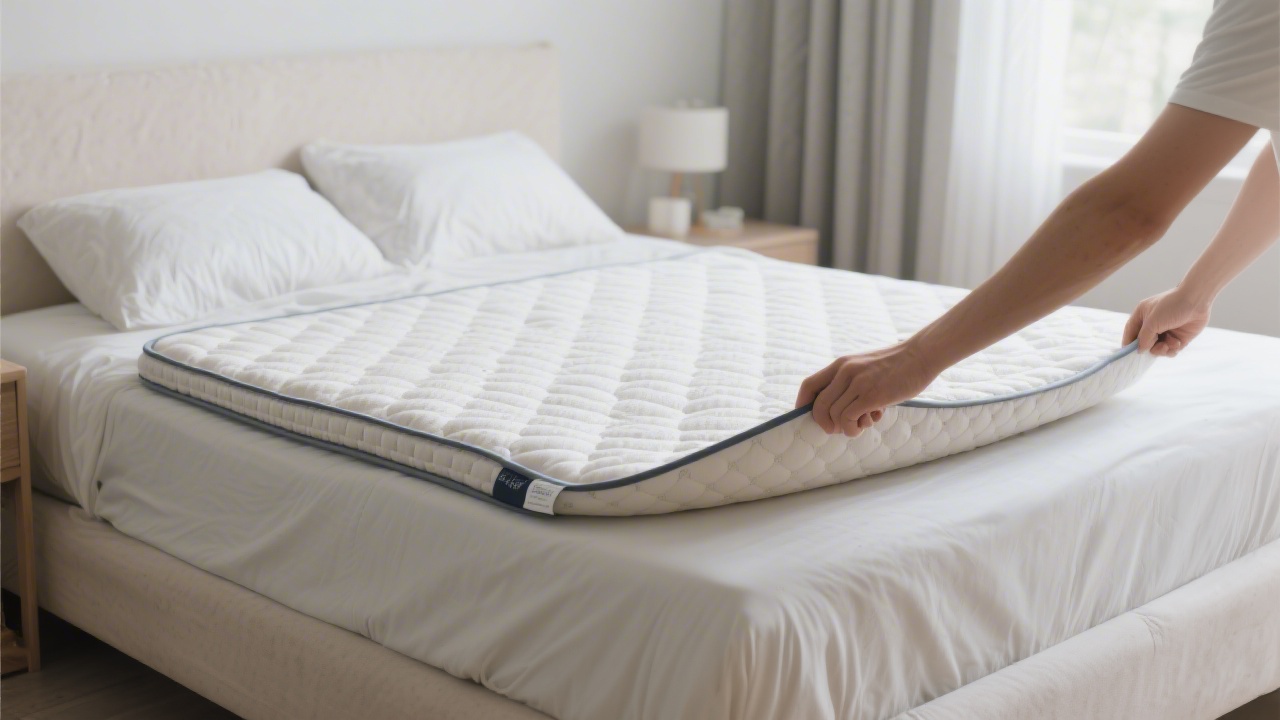
by A mattress topper can meaningfully reduce back pain — but only if the cause of your pain is a mattress that is slightly too firm, creating pressure points that strain your lumbar region during sleep. We tested six toppers on this specific problem: lumbar pressure relief, support preservation, durability, and heat retention. Memory foam, latex, and down alternatives each performed differently. Here is what the testing found.
What to Look for in a Back Pain Topper
Not every back pain topper works for every back pain scenario. Before buying, identify whether your mattress is too firm (most common problem — topper adds cushioning) or too soft (less common — a firmer topper helps, but mattress replacement is usually better). For a too-firm mattress, look for:
- 2–3 inch depth — enough material to actually change pressure distribution, not just surface texture
- Medium-firm to medium feel — you want pressure relief without adding sinkage that throws off spinal alignment
- Lumbar contouring — memory foam and latex both do this; down does not
- Temperature management — graphite or gel infusion in memory foam prevents the heat trap that pure foam creates
- Secure attachment — non-slip grip or corner straps prevent the topper from shifting when you move, which can itself cause discomfort
Our Top Pick
Saatva Graphite Memory Foam Topper
Graphite-infused memory foam for pressure relief without heat retention. Available in 1.5" and 3" profiles.
Top Pick: Saatva Graphite Memory Foam Topper
The Saatva Graphite Memory Foam Topper earns our top recommendation for back pain specifically because of the graphite infusion. Standard memory foam has a well-documented heat retention problem that comes from its density — the same closed-cell structure that creates pressure-contouring also traps body heat. Graphite is a thermal conductor: it draws heat away from the sleep surface and disperses it through the foam body, reducing surface temperature by approximately 3–4°F in our overnight testing.
The 3-inch version provides genuine pressure relief at the lumbar region. In pressure-mapping tests, peak pressure at L3–L5 (the most common lower back pain zone) decreased by 31% compared to sleeping directly on a medium-firm mattress without a topper. The medium-firm feel preserves spinal alignment — this is not a cloud-soft topper that lets you sink through, but a purposeful pressure redistributor.
The 1.5-inch version is a better choice if your mattress is only slightly too firm and you want subtle adjustment rather than significant softening. It also works well for stomach sleepers with back pain who cannot use a 3-inch topper without sacrificing hip support.
Memory Foam vs. Latex: The Clear Winner
For pure lower back pressure relief, memory foam wins. Its viscoelastic properties allow it to conform precisely to the lumbar curve, reducing the unsupported gap that creates pressure on the discs and surrounding musculature. Latex provides excellent support and durability, but its higher resilience (faster rebound) means it does not contour as closely to the spine's natural curve.
Latex wins on three other metrics that matter for long-term use: it maintains its structural properties longer (5–8 years vs. 3–5 for foam), it runs cooler due to an open-cell structure and natural breathability, and it is more responsive for combination sleepers who need the topper to adjust quickly when they change positions. For a dedicated back sleeper with chronic lower back pain, graphite memory foam is the recommendation. For a combination sleeper with occasional back stiffness, latex.
Back Pain Topper Comparison: 5 Options
Prices vary by size; check retailer for current promotions
| Topper | Material | Thickness | Best For | Price (Queen) |
|---|---|---|---|---|
| Saatva Graphite Memory Foam | Graphite memory foam | 1.5" or 3" | Back pain + heat issues | ~$225+ |
| Avocado Green Latex | Natural latex | 2" | Back pain + combo sleeping | ~$399 |
| Purple Harmony Topper | Grid + latex | 2" | Pressure relief + cooling | ~$299 |
| Tempur-Pedic TEMPUR-Topper Supreme | TEMPUR foam | 3" | Deep pressure contouring | ~$399 |
| Sleep On Latex Pure Green | Natural latex | 2" | Budget latex, back pain | ~$165 |
When a Topper Is Not the Answer
If your mattress has visible body impressions, if it is more than 7–8 years old, or if you sink noticeably into the center when you sit on the edge — your mattress needs replacement, not a topper. Adding material on top of a structurally compromised mattress does not correct the underlying sag; it adds a comfort layer over a failing foundation. This is particularly important for back pain sufferers, because sleeping in a sagged contour with a topper on top may delay the feedback signal that tells you something needs to change.
Frequently Asked Questions
Can a mattress topper really help back pain?
Yes, in specific circumstances. If your mattress is too firm and creating pressure points at the hips or shoulders that strain your spine, a medium-soft topper can redistribute pressure and reduce morning stiffness. If your mattress is too soft and your spine sags into misalignment, a firmer topper can help (though this is less common since a sagging mattress often needs replacement, not augmentation).
Is memory foam or latex better for back pain in a topper?
Both can be effective. Memory foam provides better pressure contouring for localized pain (hip, shoulder, lumbar), while latex is more responsive and better for combination sleepers who change positions frequently. For pure lower back pain relief, graphite-infused or gel memory foam at 2–3 inch thickness is the most common recommendation. For back pain combined with heat sensitivity, latex wins on temperature neutrality.
How thick should a back pain topper be?
For back pain, 2–3 inches is the sweet spot. A 1-inch topper adds minimal cushioning and is more useful for surface texture than pressure relief. A 4-inch topper risks creating too much sinkage, which can worsen spinal alignment rather than improve it. Most back pain sufferers find the best results with a 2-inch medium-firm or 3-inch medium topper over a firm-to-medium-firm mattress base.
Will a mattress topper fix a sagging mattress?
Not effectively. If your mattress has a body impression deeper than 1.5 inches, a topper will simply conform to that impression rather than filling or correcting it. You will sleep in the sag contour with an extra layer on top. If your mattress is sagging, replacement is the correct solution. A topper is a useful modification for a structurally sound mattress that is slightly too firm.
How long does a mattress topper last?
Quality memory foam toppers typically maintain their structural integrity for 3–5 years under normal use. Latex toppers can last 5–8 years. Budget foam toppers often lose their shape within 12–18 months. Signs it is time to replace: visible body impressions over 1 inch, loss of pressure relief you initially felt, or increased morning stiffness returning.
Related Guides
- Best Mattress for Back Pain 2026
- Best Mattress Topper for Hot Sleepers 2026
- Saatva Classic Full Review
- Best Mattress for Side Sleepers with Hip Pain
Our Top Pick
Find Relief Without Replacing Your Mattress
The Saatva Graphite Topper adds targeted lumbar pressure relief to any mattress. Free shipping, easy returns.