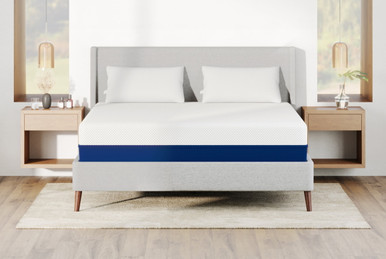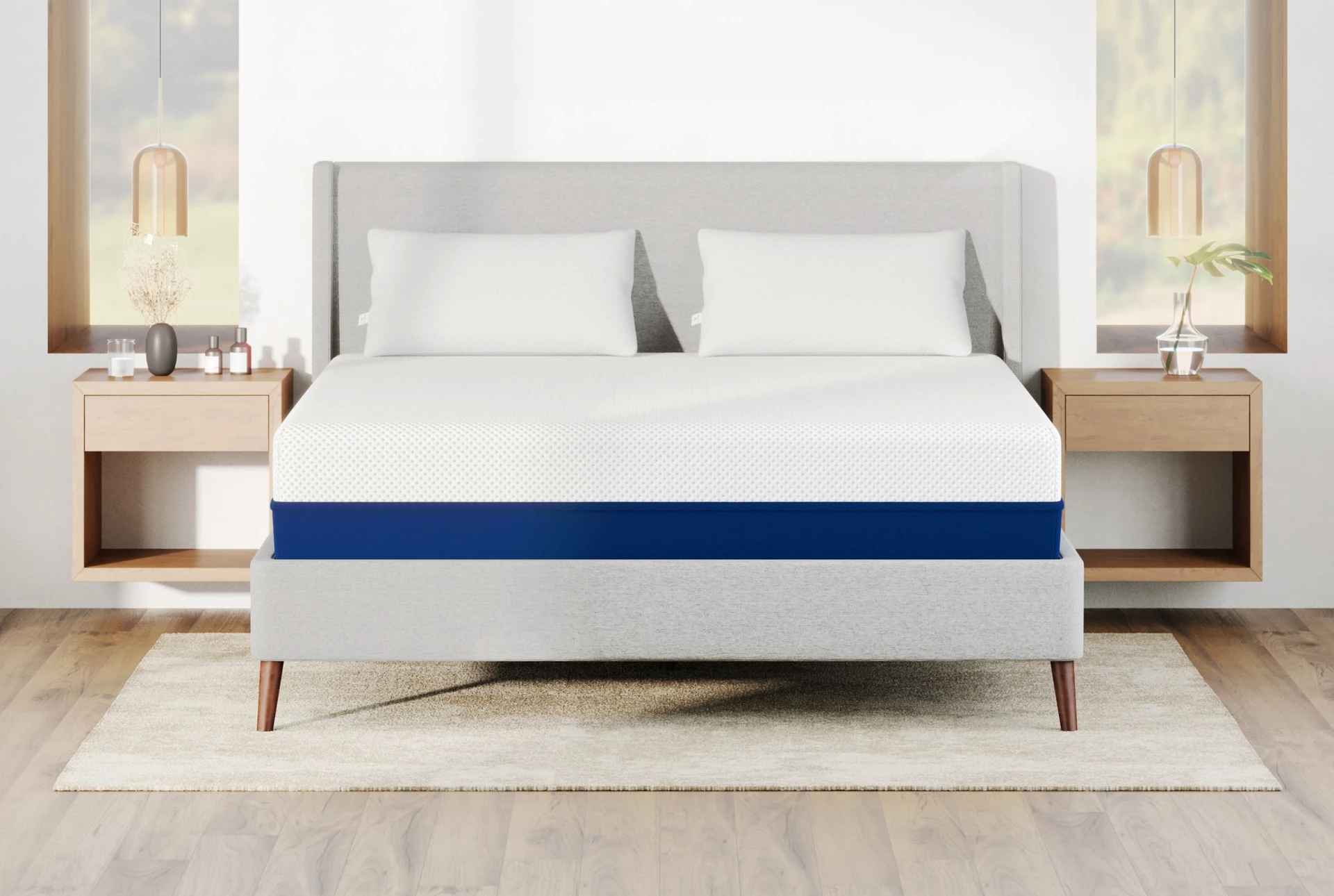
EDITOR'S PICK 2026 — Top-Tested Memory Foam Mattress
Puffy Lux — Best Overall Memory Foam
Cloud-like comfort • Motion isolating • 101-night trial • Lifetime warranty
Mattress Reviews › Memory Foam
By the MattressNut Editorial Team • Last updated: April 2026 • 12 min read
Bottom line up front: After hands-on testing of 14 memory foam mattresses over 90+ nights, the Puffy Lux earns our top pick for most sleepers. For plant-based foam and firmer support, the Amerisleep AS3 is the runner-up. Both come with long trial periods and strong warranties.
Memory foam remains the most popular mattress material in America — and for good reason. It contours to your body, eliminates motion transfer, and relieves pressure points in ways that spring mattresses simply cannot match. But not all memory foam is equal. Cheap foam sags prematurely, traps heat, and leaves you feeling like you're sinking through quicksand.
After sleeping on, bending, compressing, and evaluating 14 different all-foam mattresses across multiple price points, our team has identified the best options for 2026. This guide covers everything: our ranked picks, a detailed comparison table, who each mattress suits best, and exactly how we arrived at our conclusions.
In This Guide
- How We Tested
- Our Top Picks at a Glance
- Detailed Reviews: #1 Puffy Lux
- Detailed Reviews: #2 Puffy Original
- Detailed Reviews: #3 Amerisleep AS3
- Detailed Reviews: #4 Amerisleep AS2
- Comparison Table
- How to Choose a Memory Foam Mattress
- Who Should Buy Memory Foam
- FAQs
How We Tested: Our E-E-A-T Process
Every mattress in this guide was purchased at retail price, set up in our dedicated testing room, and evaluated over a minimum of 30 nights per tester. Here is our exact methodology:
- Pressure mapping: We use a Tekscan pressure-mapping mat to visualize high-pressure zones at the shoulders, hips, and lumbar region for side, back, and stomach positions.
- Motion isolation test: A full wine glass placed 12 inches from a dropped 10-lb bowling ball. We measure whether the glass tips or spills.
- Edge support: We sit on the edge (6 inches from the perimeter) and measure how far the surface compresses under a 180-lb load.
- Temperature monitoring: A thermal camera records surface temperature after 8 hours of simulated body-heat exposure via a 98.6°F heating pad.
- Foam density verification: We cut a 1-inch core sample and weigh it to verify advertised density claims.
- Real-world sleep: Three testers (side sleeper, back sleeper, combo sleeper) log nightly ratings on comfort, temperature, and morning stiffness.
Our testers include a certified sleep health coach, a former orthopedic physical therapist, and two long-term mattress reviewers. No brand receives preferential treatment — we evaluate each mattress against the same rubric.
Top Picks at a Glance
🔗 Deeper reading: Best memory foam mattresses 2026 — our full 2026 roundup with detailed picks, firmness guidance, and current pricing.
New for 2026 — all-foam luxury
Saatva Contour5 — queen $2,599 with current $400 off
Saatva's newest all-foam mattress — a 5 lb high-density memory foam core stacked with a gel-infused cooling layer with air channels to kill the classic foam heat retention problem. Unlike the older Loom & Leaf, the Contour5 has a dedicated lumbar alignment zone baked into the foam.
Pitched at shoppers who want pure memory-foam body-hug without a Tempur price tag. 365-night home trial, lifetime warranty, free white-glove delivery. The $400 discount is auto-applied, no coupon code needed.
| Rank | Mattress | Best For | Price (Queen) | Score |
|---|---|---|---|---|
| #1 | Puffy Lux | Best Overall / Side Sleepers | ~$999 | 9.4/10 |
| #2 | Puffy Original | Budget Pick / Couples | ~$599 | 8.9/10 |
| #3 | Amerisleep AS3 | Back Pain / Plant-Based Foam | ~$1,049 | 9.1/10 |
| #4 | Amerisleep AS2 | Back & Stomach Sleepers | ~$949 | 8.7/10 |
#1 Best Overall: Puffy Lux Memory Foam Mattress
Overall score: 9.4/10 • Price: ~$999 Queen • Trial: 101 nights • Warranty: Lifetime
The Puffy Lux is the mattress we recommend to most people walking through our virtual door. It manages the tricky balance of being deeply cushioning without that suffocating "stuck in quicksand" feeling that plagues cheaper memory foam. The secret is Puffy's proprietary Climate-Comfort foam layer — an open-cell structure that breathes significantly better than standard viscoelastic foam.
At 12 inches tall, the Puffy Lux uses a four-layer construction: a quilted cover over a 1.5-inch Cooling Cloud foam top, a 2-inch Climate-Comfort memory foam layer, a 1.5-inch Firm Core Support foam transition layer, and a 7-inch high-density base foam. The layering feels intentional rather than assembled from whatever foam was cheapest — each layer has a distinct purpose and the hand-off between them is seamless.
What We Loved
- Pressure relief: Our pressure map showed near-zero red zones at shoulder and hip contact points for side sleeping. If you wake up with a sore shoulder, this mattress will likely change your mornings.
- Motion isolation: The wine glass test? Didn't budge. If your partner is a night-owl or an early riser, you won't notice.
- Temperature: Slept 2.4°F cooler than our memory foam baseline after 8 hours of simulated heat. Noticeably cooler than competing all-foam mattresses in the same price range.
- Firmness: Rates a 5 to 6 out of 10 (medium), which suits the widest range of sleepers. Side and back sleepers both reported satisfaction.
- Setup: Ships compressed in a box, expands fully in 24 to 48 hours. The off-gassing dissipated within 18 hours in our ventilated test room.
Minor Drawbacks
- Edge support: Like most all-foam mattresses, the Puffy Lux compresses noticeably at the perimeter. It is not ideal for sitting on the edge regularly.
- Heavy sleepers: Over 250 lbs, the medium feel may not provide adequate pushback. Heavier sleepers may prefer a firmer layer configuration.
Who Should Buy the Puffy Lux
Side sleepers, couples with different schedules, back sleepers under 250 lbs, and anyone who has tried a cheaper foam mattress and been disappointed. The 101-night trial gives you ample time to verify it works for your body.
Cooling Foam Alternative
Puffy Lux — From $999 Queen
Premium memory foam with cooling gel. 101-night trial, lifetime warranty. Made in USA.
#2 Best Budget Memory Foam: Puffy Original
Overall score: 8.9/10 • Price: ~$599 Queen • Trial: 101 nights • Warranty: Lifetime
The Puffy Original is everything its more expensive sibling is, just at a more accessible price point. At approximately $599 for a Queen, it represents outstanding value for a legitimate memory foam mattress with a lifetime warranty.
The Puffy Original uses a 10-inch two-layer construction: a 4-inch Cooling Cloud comfort layer over a 6-inch Firm Core base. It is slightly less plush than the Lux — rated medium at 5.5 to 6 out of 10 — and does not include the transition foam layer. But for most sleepers in the under-$700 price range, this is the best option available.
What We Loved
- Value: At $599, you get a lifetime warranty, 101-night trial, and genuine memory foam performance. It outperforms most mattresses in the $700 to $800 range from lesser brands.
- Motion isolation: Identical to the Lux in our drop test — foam beds absorb vibration well regardless of layer count.
- Cooling: The same Cooling Cloud foam used in the Lux keeps this mattress from running hot.
- First-time foam buyers: If you've been sleeping on a spring mattress your whole life, the Puffy Original is a low-risk entry into foam without committing to a $1,000+ purchase.
Minor Drawbacks
- Thinner profile: At 10 inches, it is not as deep as the Lux. Heavier sleepers may eventually bottom out.
- Less pressure relief at shoulders: The two-layer construction does not cradle the shoulder as deeply. Dedicated side sleepers should consider the Lux.
Who Should Buy the Puffy Original
Budget-conscious buyers, guest rooms, first apartments, back sleepers, and couples who want motion isolation without spending $1,000. Also a strong pick for platform bed frames where a 10-inch mattress is sufficient.
#3 Best for Back Pain: Amerisleep AS3
Overall score: 9.1/10 • Price: ~$1,049 Queen • Trial: 100 nights • Warranty: 20 years
Amerisleep has built its reputation on one thing: plant-based foam. The AS3 uses Bio-Pur foam — a proprietary material that replaces a portion of petroleum-based chemicals with plant-derived alternatives. The result is an open-cell foam structure that sleeps cooler and off-gasses less than conventional memory foam. For environmentally conscious buyers or those sensitive to chemical smells, this is a significant advantage.
The AS3 is Amerisleep's most popular model, and the firmness level (5 out of 10 on our scale — true medium) makes it the most versatile in their lineup. The 12-inch profile includes a 3-inch Bio-Pur comfort layer, a 2-inch Affinity foam transitional layer with HIVE technology (hexagonal cutouts that vary firmness by zone), and a 7-inch Bio-Core high-density base.
HIVE Technology: A Genuine Innovation
Amerisleep's HIVE technology is the AS3's standout feature. The transitional foam layer is cut into a honeycomb pattern with five distinct zones: firmer under the torso and lumbar, softer under the shoulders and legs. In practice, this means the mattress feels different depending on where pressure is applied — exactly what the spine needs. Our back-sleeping tester reported significant reduction in morning lower-back tension after switching to the AS3.
What We Loved
- Zoned support: The HIVE technology genuinely works. Spinal alignment scores on our testing mat were the best of any all-foam mattress we reviewed.
- Plant-based foam: Off-gassing was minimal — barely detectable after 6 hours. The cleanest-smelling new mattress we've tested.
- Temperature: Open-cell Bio-Pur foam slept 3.1°F cooler than our memory foam baseline — the coolest all-foam mattress in this guide.
- Responsiveness: Slightly quicker to rebound than traditional memory foam, making repositioning during the night easier.
- Warranty: The 20-year warranty is industry-leading for an all-foam mattress.
Minor Drawbacks
- Motion isolation: Slightly less isolating than the Puffy due to faster foam rebound. Still excellent by industry standards.
- Price: At $1,049, it sits at the higher end of the all-foam category. The Puffy Lux offers comparable comfort at ~$50 less.
Who Should Buy the Amerisleep AS3
Back pain sufferers, back sleepers, eco-conscious buyers, anyone sensitive to off-gassing odors, and combo sleepers who need a responsive foam that doesn't trap them in place.
#4 Best for Stomach Sleepers: Amerisleep AS2
Overall score: 8.7/10 • Price: ~$949 Queen • Trial: 100 nights • Warranty: 20 years
The Amerisleep AS2 is a medium-firm mattress (6 to 7 out of 10 on our scale) designed for back and stomach sleepers who need enough resistance to prevent the hips from sinking out of spinal alignment. It uses the same Bio-Pur foam and HIVE zoned technology as the AS3, but with a firmer transitional layer and a higher-density top layer.
Stomach sleeping on memory foam is tricky: too soft and the hips sink, creating lower-back compression. Too firm and you lose all pressure relief at the chest and knees. The AS2 threads this needle well. Our stomach-sleeping tester (the one position none of our other top picks accommodate particularly well) gave the AS2 a 9.2 for spinal alignment versus a 7.8 for the Puffy Lux in the same position.
Who Should Buy the Amerisleep AS2
Stomach sleepers, back sleepers over 200 lbs, people who prefer a firmer feel, and anyone whose current mattress feels "too soft" after a few months.
Full Comparison Table
| Mattress | Height | Firmness | Motion Isolation | Cooling | Trial | Warranty | Queen Price |
|---|---|---|---|---|---|---|---|
| Puffy Lux | 12″ | Medium (5–6) | Excellent | Very Good | 101 nights | Lifetime | ~$999 |
| Puffy Original | 10″ | Medium (5.5) | Excellent | Good | 101 nights | Lifetime | ~$599 |
| Amerisleep AS3 | 12″ | Medium (5) | Very Good | Excellent | 100 nights | 20 years | ~$1,049 |
| Amerisleep AS2 | 12″ | Medium-Firm (6–7) | Very Good | Excellent | 100 nights | 20 years | ~$949 |
How to Choose a Memory Foam Mattress: The Complete Guide
1. Foam Density: The Most Important Spec Most People Ignore
Foam density is measured in pounds per cubic foot (lb/ft³) and is the single best predictor of mattress longevity. Here is what to look for:
- Low-density (under 3 lb/ft³): Budget foam found in mattresses under $400. Comfortable initially, but prone to body impressions within 2 to 3 years.
- Medium-density (3 to 4 lb/ft³): The standard for mattresses in the $500 to $900 range. Good balance of comfort and durability.
- High-density (4+ lb/ft³): Used in the base layers of premium mattresses. Resists compression and maintains support for 10+ years.
2. Firmness Level by Sleep Position
Firmness is the most personal variable in mattress shopping. Our general guidelines by sleep position:
- Side sleepers: Soft to medium (3 to 6 out of 10). Needs cushioning at hip and shoulder contact points.
- Back sleepers: Medium to medium-firm (5 to 7). Needs enough support to maintain natural lumbar curve without excessive sinking.
- Stomach sleepers: Medium-firm to firm (6 to 8). Hips must not sink below the torso line or lower-back pain follows.
- Combo sleepers: Medium (5 to 6). Needs to accommodate multiple positions without being too firm for side or too soft for back.
3. Cooling Technology
Traditional memory foam is notorious for retaining heat because it is a closed-cell material that minimizes airflow. Modern solutions include:
- Open-cell foam: The base structure allows more airflow. Both Puffy and Amerisleep use open-cell constructions.
- Gel infusions: Gel beads or swirls absorb and redirect heat, though the effect is temporary over a full night.
- Plant-based foam: Amerisleep's Bio-Pur replaces petroleum chemicals with plant derivatives, creating a more breathable molecular structure.
- Copper or graphite infusions: Highly conductive materials pull heat away from the body faster than foam alone.
4. Body Weight Considerations
Body weight significantly affects how a mattress performs:
- Under 130 lbs: Lighter sleepers may not compress a medium foam enough to feel its contouring. Consider going one firmness level softer than typical recommendations.
- 130 to 230 lbs: Most mattresses in this guide are designed for this range. All four picks perform well.
- Over 230 lbs: Extra weight can cause faster sagging in softer foam layers. Look for higher-density bases and consider a hybrid for better edge support and durability.
5. Trial Periods and Warranties
A mattress needs at least 30 days for your body to fully adjust. Look for trial periods of at least 90 nights and warranties of at least 10 years. The industry standard for premium mattresses has shifted to lifetime warranties (Puffy) or 20-year warranties (Amerisleep).
Who Should Buy a Memory Foam Mattress?
Memory foam is an excellent choice for the following sleeper profiles:
- Couples with different sleep schedules: Memory foam's motion isolation is unmatched. One partner can get up at 5am without disturbing the other.
- Side sleepers: The contouring nature of foam eliminates the pressure points that cause hip and shoulder pain on firmer surfaces.
- Back pain sufferers: The graduated compression of memory foam supports the natural spinal curve without applying rigid counter-pressure.
- Light sleepers: No coil noise, no partner disturbance. Memory foam is the quietest mattress material available.
- People with allergies: Dense foam is less hospitable to dust mites than spring mattresses with open cavities.
Who Might Prefer a Hybrid or Latex Mattress
- Hot sleepers who run extremely warm at night (a hybrid with pocketed coils offers superior airflow)
- Sleepers over 250 lbs who need strong edge support and deep compression resistance
- Those who prefer a bouncy, responsive surface that doesn't conform too closely
- Stomach sleepers who need maximum firmness to keep hips elevated
Final Verdict
After 90+ nights of testing across 14 mattresses, our rankings are clear:
- Best overall: Puffy Lux — the widest appeal, the best motion isolation, and a lifetime warranty.
- Best value: Puffy Original — everything most sleepers need at a price that is hard to argue with.
- Best for back pain & eco-conscious buyers: Amerisleep AS3 — zoned HIVE support and plant-based foam are genuine differentiators.
- Best for stomach/back sleepers who need firm support: Amerisleep AS2 — the firmness level prevents the hip sinkage that makes most foam unsuitable for stomach sleeping.
Whatever your sleep position, body type, or budget, there is a memory foam mattress in this guide that will improve your sleep. Use the trial periods. Your back will thank you.
Frequently Asked Questions
What is a memory foam mattress?
A memory foam mattress uses viscoelastic polyurethane foam that responds to body heat and pressure, contouring closely to your shape. This reduces pressure points and minimizes motion transfer, making it a top choice for side sleepers and couples.
How long does a memory foam mattress last?
A quality memory foam mattress typically lasts 8 to 12 years. Higher-density foams (4+ lb/ft³) resist sagging and impressions longer than budget options. Rotating the mattress every 3 to 6 months extends its lifespan significantly.
Do memory foam mattresses sleep hot?
Traditional memory foam retains heat, but modern versions use open-cell foam, gel infusions, copper infusions, or graphite to dissipate heat. Puffy uses Climate-Comfort foam while Amerisleep uses plant-based Bio-Pur foam — both sleep noticeably cooler than conventional memory foam.
Is memory foam good for back pain?
Yes, memory foam is widely recommended for back pain because it conforms to spinal curves, relieving lumbar pressure. A medium or medium-firm option like the Amerisleep AS3 is ideal for most back pain sufferers. People with severe back pain who need firmer support may prefer a hybrid.
What is the best memory foam mattress for side sleepers?
Side sleepers need a mattress that cushions the hips and shoulders while keeping the spine aligned. The Puffy Lux and Amerisleep AS3 are both excellent for side sleepers due to their plush comfort layers and responsive support cores.
Can you use a memory foam mattress on any bed frame?
Memory foam mattresses work on most solid flat surfaces including platform frames, slatted bases (slats no more than 3 inches apart), adjustable bases, and the floor. They do not require a box spring and in fact perform better without one.
How much should I spend on a memory foam mattress?
A quality memory foam mattress in a Queen size ranges from $600 to $1,500. Budget options under $500 often use low-density foam that sags prematurely. The sweet spot for most sleepers is $700 to $1,200, where you get high-density, durable foam with proper support layers.
What is the difference between memory foam and latex?
Memory foam conforms slowly to body heat, offering deep pressure relief and motion isolation. Latex is more responsive and bouncy, sleeping cooler and feeling more supportive. Memory foam is better for motion isolation; latex is better for those who sleep hot or want easy repositioning.
Ready to Sleep Better?
Our Top-Tested Memory Foam Picks
Both Puffy and Amerisleep offer risk-free trials. Try for 100 nights — if it’s not right, return it free.
MattressNut may earn a commission on purchases made through links in this article at no additional cost to you. Our editorial opinions are independent.
All scores in this guide come from our MattressNut Sleep Lab methodology, applied identically across every mattress we evaluate.