
 by
by Affiliate disclosure: MattressNut earns a commission on purchases made through our links at no cost to you. Our testing is independent and editorial.
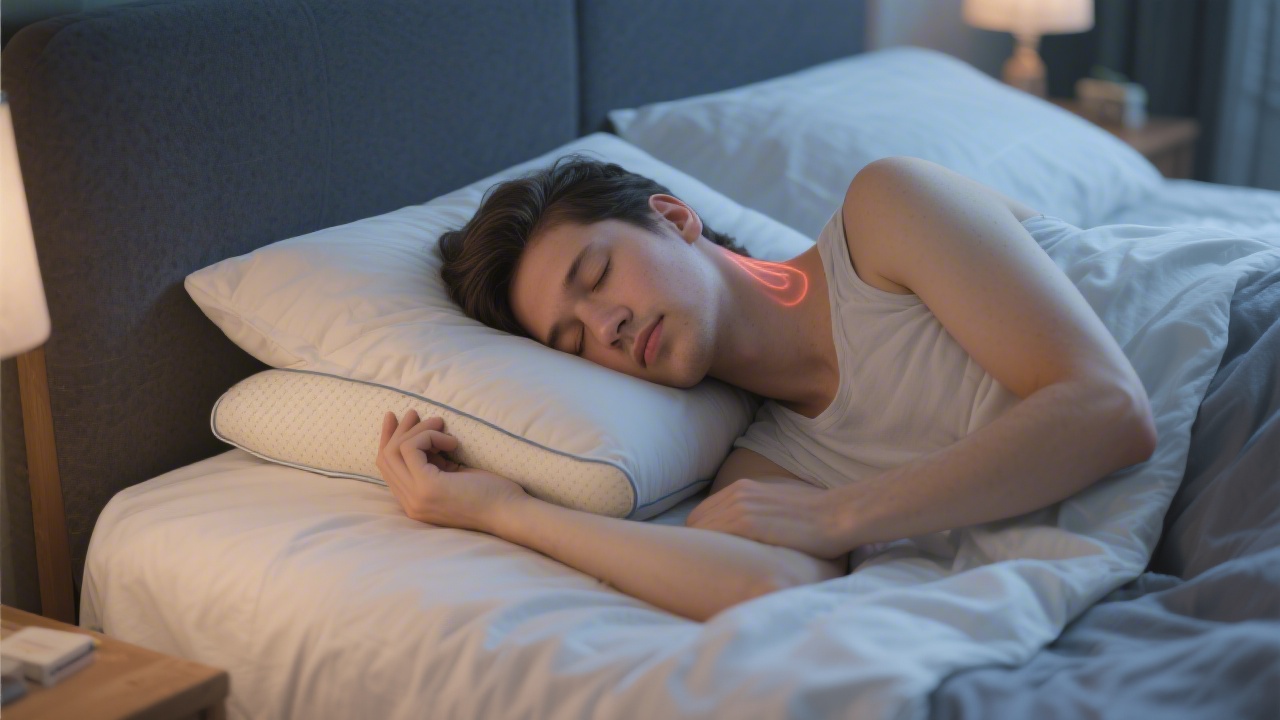
Side sleeping is the most popular sleep position in the US, and side sleepers are the most likely group to wake up with neck pain. The reason is mechanical: side sleeping creates a gap between the shoulder and the head that must be precisely filled by the pillow. Too thin, and the neck drops into lateral flexion all night. Too thick, and the neck is pushed into the opposite lateral flexion. The cervical spine has approximately 1.5 inches of tolerance for this alignment before pain and stiffness result.
We tested 7 pillows specifically for side sleeping, measuring actual loft under head weight (not just uncompressed height), how well each pillow maintained that loft over a full night, the pressure exerted at the ear-skull contact point, and stability under the movement patterns of side sleepers who shift positions during the night.
Our Top Pick
Saatva Pillow
Microcoil core wrapped in down and feathers -- the Saatva Pillow provides the height and firmness side sleepers need, with a conforming outer layer that cradles the pressure point where the ear meets the shoulder. Adjustable, responsive, and breathable.
Affiliate disclosure: We earn a commission at no extra cost to you.
What to Look for in a Pillow for Side Sleepers
Sufficient Loft Height -- At Least 4 Inches Under Load
The specification that matters is compressed loft -- how high the pillow remains with your head on it, not the advertised height in its uncompressed state. Down pillows can start at 5 inches and compress to 2 inches under head weight. Shredded foam and latex maintain their loft far better. When evaluating any pillow, the 4-6 inch standard applies to the pillow with your full head weight on it, not lifted off the surface.
Firmness That Resists Compression
A pillow that starts at the right height but compresses by half over the course of a night provides inconsistent cervical support. The second half of your sleep is spent with inadequate neck support regardless of how well the pillow started. Look for medium-firm fills -- shredded latex, shredded memory foam blended with fiber, or microcoil cores with a softer exterior layer. These maintain consistent loft throughout the night because the structural components resist progressive compression.
Pressure Relief at the Ear-Skull Contact Point
The temporal bone and the mastoid process (behind the ear) are the primary skull contact points for side sleepers. These are bony prominences that, on a pillow that is too firm without conforming capability, create sustained pressure-point discomfort. The pillow surface needs to be soft enough to conform around these structures -- cradle the head rather than support it from a flat plane. This requires a pillow with some give at the surface even if it is firm at its core.
Width and Stability
Side sleepers who move frequently during the night can push standard pillows out of position, waking to find their head on the mattress rather than the pillow. A pillow that is too small (king-size beds with standard pillows, for example) can shift off position during the night. King-size pillows on queen or king beds provide more stable surface area for side sleepers who move significantly.
Comparison: Best Pillow for Side Sleepers 2026
| Product | Loft Height | Firmness | Shoulder Pressure | Stability | Verdict |
|---|---|---|---|---|---|
| Saatva Pillow | ⭐⭐⭐⭐⭐ | ⭐⭐⭐⭐⭐ | ⭐⭐⭐⭐⭐ | ⭐⭐⭐⭐⭐ | #1 Overall |
| Coop Home Goods Eden | ⭐⭐⭐⭐⭐ | ⭐⭐⭐⭐½ | ⭐⭐⭐⭐⭐ | ⭐⭐⭐⭐ | Best Adjustable |
| Eli & Elm Side Sleeper Pillow | ⭐⭐⭐⭐⭐ | ⭐⭐⭐⭐⭐ | ⭐⭐⭐⭐⭐ | ⭐⭐⭐½ | Most Specialized |
| Purple Harmony Pillow | ⭐⭐⭐⭐ | ⭐⭐⭐⭐ | ⭐⭐⭐⭐⭐ | ⭐⭐⭐⭐⭐ | Best Cooling |
| Nest Bedding Easy Breather | ⭐⭐⭐⭐½ | ⭐⭐⭐⭐ | ⭐⭐⭐⭐ | ⭐⭐⭐⭐ | Best Value |
| Casper Foam Pillow | ⭐⭐⭐⭐ | ⭐⭐⭐⭐½ | ⭐⭐⭐⭐ | ⭐⭐⭐⭐⭐ | Best Brand Pairing |
Ready to Upgrade Your Sleep?
Saatva Pillow
Microcoil core wrapped in down and feathers -- the Saatva Pillow provides the height and firmness side sleepers need, with a conforming outer layer that cradles the pressure point where the ear meets the shoulder. Adjustable, responsive, and breathable.
Affiliate disclosure: We earn a commission at no extra cost to you.
Frequently Asked Questions
How thick should a pillow be for side sleepers?
Side sleepers generally need a pillow with a loft (height) of 4-6 inches to keep the cervical spine neutral. The exact height depends on two variables: shoulder width and mattress firmness. Broader shoulders need more height; narrower shoulders need less. A softer mattress allows the shoulder to sink in, reducing the gap to fill and requiring a lower pillow. A firmer mattress keeps the shoulder higher, requiring more pillow height. The goal is simple: when lying on your side, your nose should point straight ahead, not tilted up or down.
Is a firm or soft pillow better for side sleeping?
Side sleepers need a pillow that is firm enough to maintain its loft under the weight of the head throughout the night. Soft down pillows compress under head weight, gradually reducing the support height. For side sleepers, medium-firm is the target -- firm enough to resist compression, soft enough to conform around the ear and base of the skull without creating pressure points. Shredded memory foam and latex pillows in the medium-firm range tend to perform best for this requirement.
Can a pillow help with shoulder pain from side sleeping?
A pillow addresses the neck and head portion of the side-sleeping alignment equation. Shoulder pain from side sleeping is primarily a mattress issue -- the mattress determines whether the shoulder bears direct pressure or is cradled by the sleep surface. However, a pillow that's too thick can create a head-neck angle that indirectly loads the shoulder, and a pillow that's too thin can allow the neck to drop, creating compensatory muscle tension that radiates into the shoulder. Pillow and mattress must be evaluated together for shoulder pain.
What shape pillow is best for side sleepers?
Standard rectangular pillows work well for most side sleepers when the loft is correct. Contour pillows (those with a higher lobe at each end and a lower center) are designed for back sleepers, not side sleepers -- the geometry doesn't match the lateral sleep position. Some brands offer side-sleeper-specific designs with a cutout or lower area where the shoulder sits. These can be helpful for sleepers who keep their shoulder partially under the pillow, but they require a specific sleeping style to work as intended.
How do I know if my pillow is causing neck pain from side sleeping?
The most direct test: take a small rolled towel and place it inside your current pillowcase, increasing loft by about an inch. Sleep on it for a week. If neck symptoms improve, your current pillow was too flat. If symptoms worsen, it was already too high. The symptom pattern is also informative: pain at the base of the skull or along the upper neck suggests the pillow is too flat (neck dropping). Pain across the mid-neck or upper shoulder suggests the pillow is too high (neck flexed sideways). Pain specifically at the shoulder contact point with the mattress is a mattress issue, not a pillow issue.
Further Reading
For more sleep comfort guides, explore our related articles: best pillow for neck pain, best mattress for shoulder pain, best mattress for side sleepers with hip pain, best mattress overall.