
 by
by Our #1 recommendation for a plush all-foam feel
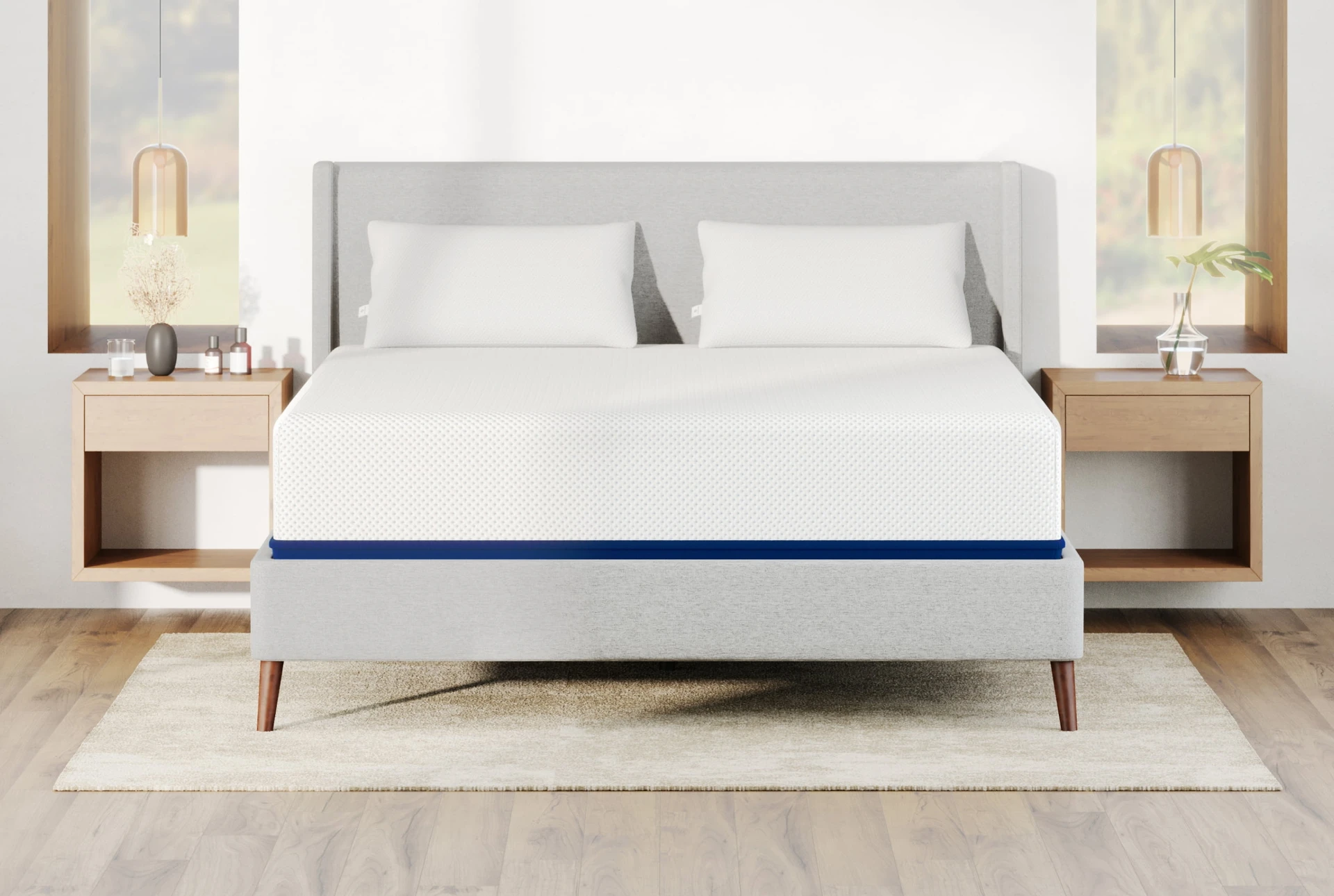
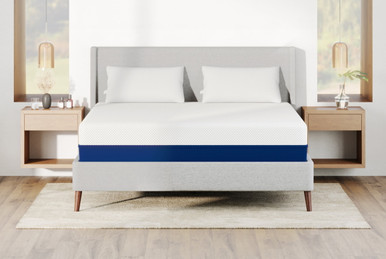
Amerisleep AS3
Side sleepers who want that cradled, pressure-free foam feel will find the AS3 hits a sweet spot: plush enough for shoulders and hips, firm enough in the lumbar zone to keep the spine neutral.
Our first recommendation for a plush all-foam feel is the Amerisleep AS5. Side sleepers who want that cradled, pressure-free foam feel will find the AS3 hits a sweet spot: plush enough for shoulders and hips, firm enough in the lumbar zone to keep the spine neutral. The Saatva Classic is our runner-up.
Amerisleep AS5
8.9/10
- Bio-Pur plant-based foam cradles shoulders and hips without excessive sinkage
- HIVE 5-zone support reinforces the lumbar while staying plush at pressure points
- Outstanding motion isolation for couples
- CertiPUR-US certified, made in the USA, 20-year warranty
- All-foam edges softer than a coil hybrid
- 100-night trial shorter than Saatva's 365-night window
- Sleepers over 230 lb or those wanting maximum plush should consider the AS5 Hybrid
Side sleepers who want that cradled, pressure-free foam feel will find the AS3 hits a sweet spot: plush enough for shoulders and hips, firm enough in the lumbar zone to keep the spine neutral. The best all-foam pick if you prefer slow-recovery contouring over the responsive bounce of a coil hybrid.
Saatva Classic
9.2/10
- Plush Soft option (3/10) is the softest coil-hybrid widely available, with a genuine Euro pillow-top
- Dual-coil construction with reinforced lumbar zone pad keeps the spine supported even at plush firmness
- 365-night trial and lifetime warranty, the best safety net in the soft-mattress category
- Free white-glove delivery, setup, and old mattress removal
- Motion isolation below average compared to all-foam beds, relevant for couples sensitive to partner movement
- Ships uncompressed and heavy, not a roll-pack bed-in-a-box
- $99 return fee during the trial period
The Saatva Classic in Plush Soft is the most complete soft mattress for side sleepers who want responsive coil feel with deep cushioning. The 365-night trial gives you enough time to be certain the plush feel works long-term, and the lifetime warranty protects against the accelerated wear that soft comfort layers are prone to.
What makes a mattress truly soft, and when does soft become too soft?
Soft mattresses fall between 3 and 5 on the standard 10-point firmness scale. At that range, the comfort layers are deep enough that your shoulders and hips sink below the plane of the mattress surface, reducing contact pressure on bony prominences. For side sleepers under roughly 180 lb, that sinkage is exactly what the spine needs: hips drop into the mattress, the lumbar curve is preserved, and the shoulder joint stops grinding into a rigid surface.
The failure mode of soft mattresses is the same as their selling point. If the sinkage goes too deep, particularly at the hips, which are heavier than the shoulders, the lumbar spine tips into a slight forward tilt, and within a few hours that tension accumulates. This is why foam density and support core quality matter more than the feel of the comfort layer alone. A well-engineered soft mattress uses a plush comfort layer above a denser, zoned support core. A poorly engineered one is just a thick layer of low-density foam with no structure underneath.
Three sleeper profiles consistently benefit from a soft mattress:
- Side sleepers under 180 lb, the most common audience. Lighter frames do not compress soft comfort layers as deep as heavier ones, so sinkage stays in the ideal 1.5 to 2.5 inch range.
- Pressure-sensitive sleepers, including those with hip bursitis or fibromyalgia, where surface contact is painful. Soft foam reduces peak pressure at the hip and shoulder by spreading load over a wider area.
- Sleepers who run cold, soft, deep foam wraps more of the body surface, which retains more heat. If you already sleep cold, that is a benefit. If you sleep hot, factor in the mattress's ventilation design.
Soft mattress comparison: key specs at a glance
| Mattress | Type | Firmness | Queen price | Trial | Warranty |
|---|---|---|---|---|---|
| Saatva Classic (Plush Soft) | Innerspring hybrid | Plush Soft ~3/10 | ~$1,395 (promo) | 365 nights | Lifetime |
| Amerisleep AS3 | All-foam (Bio-Pur) | Medium 5/10 | From $1,049 | 100 nights | 20 years |
| Amerisleep AS5 Hybrid | Hybrid (foam + coils) | Soft 3/10 | From $2,099 | 100 nights | 20 years |
| Puffy Original | All-foam in-a-box | Medium ~6/10 | ~$1,499 (promo) | 101 nights | Lifetime |
Soft, plush, or ultra-plush: picking the right firmness level
Soft mattresses are not a single point on the scale. Most manufacturers span a range from about 4/10 (often called "plush") down to 2.5/10 (true ultra-plush). Here is a practical way to map your profile to the right firmness:
- Under 130 lb, strict side sleeper: A true soft or ultra-plush (3 to 4/10) lets your hip sink enough for the spine to settle without pressure. The Saatva Classic Plush Soft and the Amerisleep AS5 Hybrid are the strongest picks in this range.
- 130 to 180 lb, side or combination sleeper: Medium (4.5 to 5.5/10) gives a plush feel without bottoming out. The Amerisleep AS3 sits exactly in this window and handles back sleeping during the night without the lumbar dip that pure-plush mattresses cause.
- Over 180 lb, side sleeper: The comfort layer compresses further under heavier body weight. A mattress labeled "medium" may feel soft in practice. Going too soft risks sinking past the comfort layer into the support core. A hybrid with reinforced coils, like the Saatva Classic, handles this better than a pure-soft all-foam.
Pressure relief: the metric that matters most
Pressure relief is measured at the hip, shoulder, and knee in standardized testing. The Saatva Classic Plush Soft achieves pressure relief through its Euro pillow-top layer, which adds deep cushioning, while the dual-coil core underneath keeps the support structure from collapsing. The result is a softer feel with more responsiveness than slow-recovery foam, and cooler sleeping, which matters if you tend to overheat on all-foam beds.
The Amerisleep AS3 scores at the top of independent lab tests for pressure relief. That performance comes from the Bio-Pur layer, which has a more open cell structure than traditional memory foam, letting it conform quickly without trapping heat in the same way. For a medium feel with active lumbar zoning, it remains the top all-foam option.
Will a soft mattress hold up over time?
Soft mattresses compress faster than firm ones under equivalent weight and usage, because the comfort layers are under greater constant stress. The two things that determine long-term durability in a soft mattress are foam density and support core quality.
The Saatva Classic's dual-coil system is inherently more durable than single-layer foam. The tempered steel coils resist permanent deformation, and the lumbar zone reinforcement prevents the center third from compressing faster than the edges, which is the classic failure pattern of lower-cost innerspring mattresses. The lifetime warranty reflects that confidence.
The Amerisleep AS3's Bio-Pur foam uses a 4 PCF density comfort layer, which is at the higher end for all-foam beds in this price range. The Bio-Core high-density base foam (1.5 PCF, 35 ILD) provides a stable foundation. Amerisleep covers sagging greater than 1.5 inches under the 20-year warranty.
For a soft mattress that holds up, choose the Saatva Classic in Plush Soft for responsive coil feel on a 365-night trial with lifetime coverage, or the Amerisleep AS3 for foam pressure relief on a 100-night trial and 20-year warranty.
Frequently asked questions
Who should sleep on a soft mattress?
Side sleepers under roughly 180 lb benefit most. Soft comfort layers allow the hip and shoulder to sink below the mattress surface, reducing contact pressure and keeping the spine in lateral alignment. Back sleepers under 130 lb can also do well on a soft mattress. Stomach sleepers and anyone over 230 lb should generally avoid pure-soft firmnesses to prevent lumbar hyperextension and premature sagging.
Is soft or medium better for side sleepers?
Medium-to-soft (4 to 5.5/10) is the most practical choice for most side sleepers across a range of body weights. Pure soft (3/10 and below) works best for very lightweight sleepers. A medium with strong zoning, like the Amerisleep AS3, outperforms a pure-soft mattress for most side sleepers because it cushions the pressure points while maintaining lumbar support. The Saatva Classic Plush Soft hits true softness while the dual-coil core provides structural integrity.
Can a soft mattress cause back pain?
Yes, if it is too soft for your body weight and sleep position. When the hips sink below the spine's natural alignment, the lumbar ligaments and intervertebral discs sustain low-grade strain over several hours. A well-structured soft mattress with a dense support core prevents this. If you wake with lower back stiffness that eases after 30 minutes of movement, the mattress sinkage is likely too deep for your profile.
How do I know if a mattress is too soft?
Four signs: (1) you feel like you are sleeping in a hammock, hips lower than shoulders. (2) Lower back stiffness that takes time to ease after waking. (3) Difficulty changing positions during the night. (4) You can see a permanent body impression in the mattress even before the warranty threshold. If any apply, size up in firmness or move to a hybrid where the coil core provides more consistent rebound.
Amerisleep AS5 Hybrid
8.7/10
- Softest Amerisleep model, true 3/10 plush feel with Bio-Pur comfort layer
- Pocketed coil core provides edge support and durability despite the plush feel
- Best for strict side sleepers under 150 lb who find the AS3 slightly firm
- CertiPUR-US, 20-year warranty, 100-night trial
- Significantly pricier than the AS3
- Too soft for back or stomach sleepers or anyone over 200 lb
The AS5 Hybrid is the right step up for lightweight side sleepers who tested the AS3 and found it slightly firmer than desired. The coil core keeps the structure honest even at plush 3/10.
This guide is part of our Best Mattress Firmness hub, compare all the top picks and narrow down your choice there.
Verdict
Our #1 pick for a plush all-foam feel
The Amerisleep AS3 is where we would start: HIVE five-zone support, plant-based Bio-Pur foam, a 100-night trial and a 20-year warranty.