
 by
by Our Top Pick
Saatva Classic — Our #1 Recommended Mattress
Expert-crafted innerspring luxury. 365-night trial, lifetime warranty, free white-glove delivery.
Affiliate disclosure: We may earn a commission if you purchase through our links, at no extra cost to you.
The Problem with Sleep Supplement Marketing
The sleep supplement market is worth over $11 billion globally and growing at 7% annually. The marketing investment is enormous and largely decoupled from the evidence base. Ingredients with weak or nonexistent clinical support are marketed with the same confidence as those with robust backing.
This ranking uses a simple criterion: what does the peer-reviewed evidence actually show, and how strong is it? We evaluated 12 supplements across evidence quality, effect size, consistency across trials, and safety profile.
Evidence Tier Rankings
Strong Evidence
1. Melatonin
Best for: Circadian disruption (jet lag, shift work, delayed sleep phase)
Recommended dose: 0.3-0.5mg, taken 1-2 hours before desired sleep onset
Evidence: Multiple meta-analyses confirm efficacy for circadian-related sleep disorders. Evidence for primary insomnia is weaker. A 2022 meta-analysis of 19 trials found melatonin reduced sleep onset latency by 7.2 minutes on average, which is meaningful for circadian issues but modest for general insomnia.
Important caveat: Most commercial doses (5-10mg) are pharmacological, not physiological. Research consistently shows lower doses (0.3-1mg) are as effective or more effective than high doses, with fewer side effects. Start at 0.3mg before escalating.
Moderate Evidence
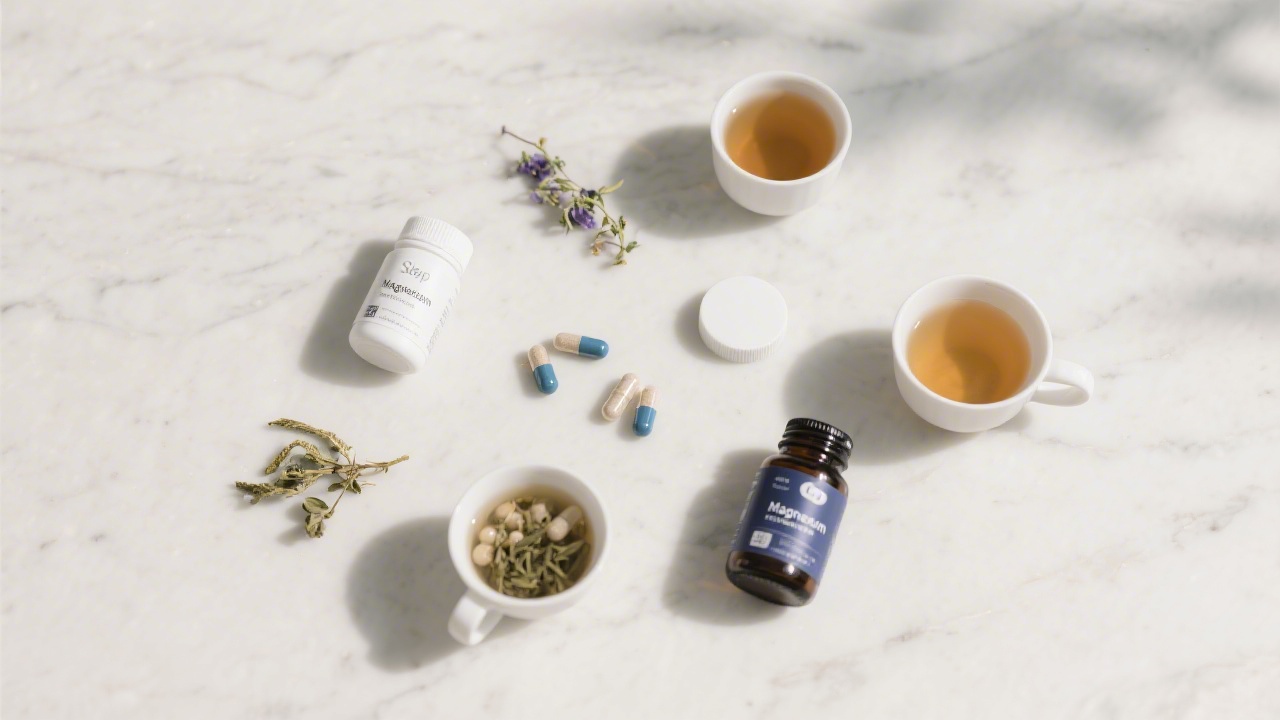
2. Magnesium Glycinate
Best for: General sleep quality improvement, particularly if magnesium-deficient
Recommended dose: 200-400mg elemental magnesium, 1 hour before bed
Evidence: Multiple RCTs show significant improvements in sleep quality, sleep onset time, and sleep efficiency in adults with suboptimal magnesium. Approximately 50-75% of Western adults have inadequate dietary magnesium intake. The glycinate chelate form has superior absorption and GI tolerability.
3. L-Theanine
Best for: Anxiety-related sleep onset difficulty, reducing cognitive hyperarousal
Recommended dose: 100-200mg, taken 30-60 minutes before bed
Evidence: L-theanine promotes alpha brain wave activity, associated with relaxed alertness. Multiple studies demonstrate reduced anxiety and improved subjective sleep quality. Effect on objective sleep architecture is modest. Well-suited as part of a stack with magnesium.
4. Glycine
Best for: Improving sleep quality and reducing daytime fatigue
Recommended dose: 3g taken before bed
Evidence: Three Japanese RCTs showed glycine at 3g reduced sleep onset latency and improved subjective sleep quality via core body temperature reduction and NMDA receptor modulation. Sample sizes were modest but results were consistent.
Weak Evidence
5. Ashwagandha
Better evidence for stress reduction than sleep specifically. Some sleep benefits in high-stress populations, but effect sizes are small and confounded by anxiety reduction.
6. Valerian Root
Widely used, poorly supported. A 2022 Cochrane review found only marginal subjective improvements with no objective sleep changes. Not harmful, but there are better options.
7. CBD
Significant hype, modest evidence. Most sleep benefits appear anxiety-mediated rather than direct. Dose-response is unclear and product quality highly variable.
8. Passionflower
Some positive results in small trials, but evidence base is thin. Likely safe, but insufficient data to recommend confidently.
Very Weak or No Meaningful Evidence
9. GABA Supplements
GABA does not readily cross the blood-brain barrier when taken orally, making GABA supplement mechanisms physiologically questionable. Some evidence for pharmaGABA (GABA produced by fermentation), but insufficient to recommend.
10. 5-HTP
Serotonin precursor with theoretical sleep benefits. Evidence is limited and there are safety considerations with long-term use, particularly regarding eosinophilia-myalgia syndrome risk.
11. Tart Cherry Extract
Contains natural melatonin and anthocyanins. Small studies show modest sleep duration increases but effect sizes are negligible and dose standardization is poor across products.
12. Most Proprietary Sleep Stacks
Typically combine several weak-evidence ingredients, often at sub-therapeutic doses, with no synergistic evidence. Marketing investment far exceeds research investment for these products.
What Actually Replaces Supplements
The honest summary: supplements address the symptom (difficulty sleeping) without necessarily addressing the cause. CBT-I, schedule consistency, light management, and sleep environment optimization have stronger evidence than any supplement and address root causes.
Your mattress and bedding matter too. Temperature dysregulation during sleep, which is common with foam mattresses that trap heat, is a common root cause of fragmented sleep that no supplement will fix.
Our Top Pick
Saatva Classic — Our #1 Recommended Mattress
Expert-crafted innerspring luxury. 365-night trial, lifetime warranty, free white-glove delivery.
Affiliate disclosure: We may earn a commission if you purchase through our links, at no extra cost to you.
Related guides: evidence-based sleep biohacking, complete sleep optimization framework, what blue light research actually shows.
Frequently Asked Questions
What is the best supplement for sleep?
Melatonin has the strongest evidence for sleep onset issues related to circadian disruption (jet lag, shift work, delayed sleep phase). For general sleep quality improvement, magnesium glycinate has the most consistent evidence, particularly for adults with low magnesium status. Neither works well for insomnia caused by anxiety or poor sleep habits.
How much melatonin should I take?
Less than you think. Most commercial melatonin is dosed at 5-10mg, but research shows 0.3-0.5mg is physiologically appropriate. Higher doses do not improve sleep and may cause morning grogginess, headaches, and can actually shift your circadian rhythm in the wrong direction if taken at the wrong time.
Is magnesium glycinate safe to take every night?
Yes, for most adults, 200-400mg of elemental magnesium glycinate nightly is considered safe. Magnesium is water-soluble, so excess is excreted. The most common side effect at high doses is loose stools, which is less common with glycinate than with oxide or citrate forms.
Does valerian root work for sleep?
The evidence is mixed to negative. A 2022 Cochrane review found valerian produced only marginal subjective improvements with no measurable objective effect on sleep. Effect sizes in positive trials were small, and many trials had methodological issues. Valerian is unlikely to cause harm but is also unlikely to produce meaningful sleep improvement.
What supplements should I avoid for sleep?
GABA supplements are unlikely to cross the blood-brain barrier in meaningful amounts, making most GABA-branded sleep products physiologically questionable. CBD's sleep evidence is weak outside of specific anxiety-related insomnia. Most proprietary sleep stacks combine weak ingredients with no synergy evidence.