
 by
by Our Top Mattress Pick
The Saatva Classic pairs perfectly with an optimized sleep environment — responsive coils adapt to how you sleep.
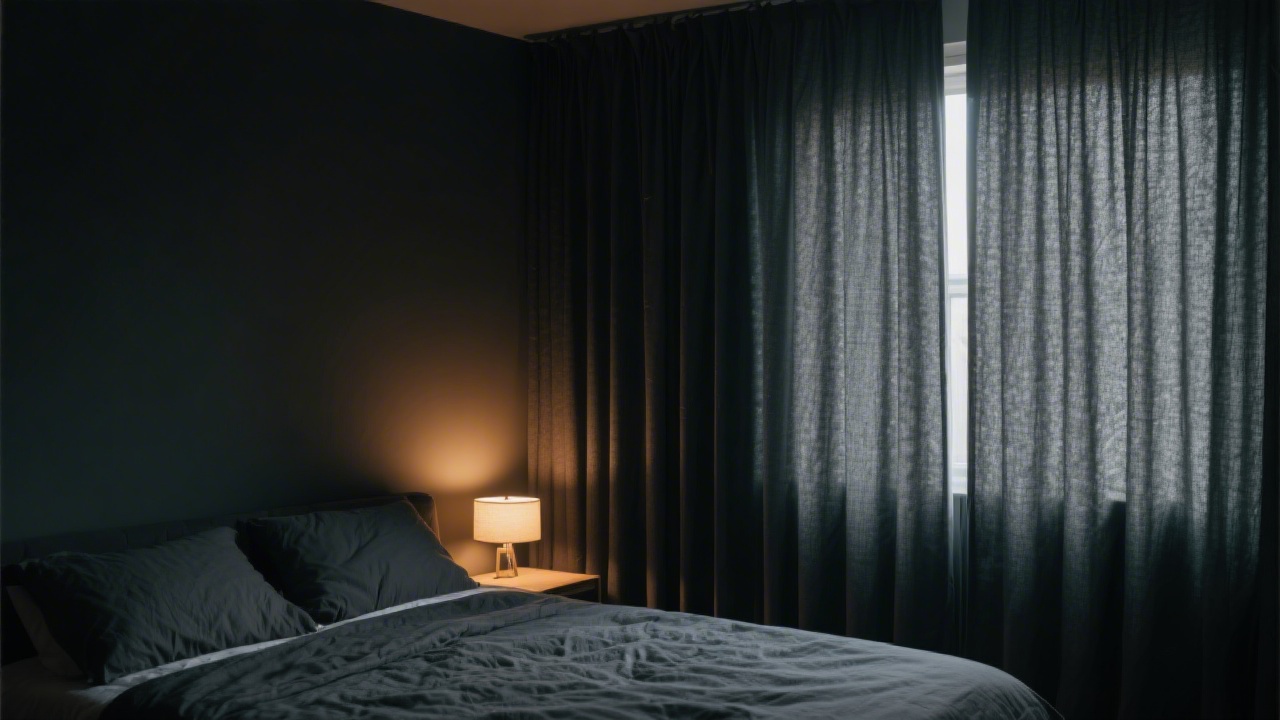
Complete bedroom darkness is harder to achieve than most people realize. Blackout curtains are step one, but even high-quality curtains leave light gaps at edges, the top rod, and the floor. This guide covers every light source in a typical bedroom and the specific fix for each one.
Why Complete Darkness Matters for Sleep
Your body suppresses melatonin production in response to even low-level light — as little as 10 lux (about the level of a dim nightlight). This effect is strongest through the eyes but also occurs through skin photoreceptors. Research from Harvard Medical School shows that exposure to just 1 hour of dim room lighting before bed reduces melatonin levels by 50% compared to complete darkness.
The practical goal is a room dark enough that you cannot distinguish hand shapes when held 12 inches from your face. This is the clinical standard for sleep environment studies.
Step 1: Blackout Curtains — The Right Installation
Standard blackout curtains installed on a basic rod fail because of three gaps: both sides between curtain edge and wall, and the top between curtain and ceiling. The fix for each:
- Side gaps: Use a rod with return brackets that angle back to the wall, or mount curtain tracks flush against the wall surface
- Top gap: Install the rod or track within 2 inches of the ceiling. Alternatively, mount a fabric valance or pelmet box over the top of the curtains
- Curtain fabric: Look for triple-weave or foam-backed blackout fabric, not just "room darkening" which only blocks 70-85% of light
For a more detail on fabric selection, see our guide to the best blackout curtains where we tested 12 options for light blockage.
Step 2: Window Film for Skylight or Non-Curtain Windows
Bathroom windows, skylights, and sidelights that cannot take curtains are best treated with blackout window film. These static-cling films install without adhesive, are removable, and block 99% of visible light. Apply with a spray bottle of soapy water and a squeegee to avoid air bubbles.
Step 3: Door Gaps
Hallway light under and around bedroom doors is the most overlooked source of light pollution. A two-part solution covers both:
- Under the door: A door sweep with rubber seal installs with 4 screws and eliminates the floor gap completely
- Around the frame: Self-adhesive foam weatherstripping tape (3/8" width) around the door stop compresses to seal the frame gap when the door closes
Step 4: Electronic Device Lights
Charging cables, smoke detectors, cable boxes, and phone standby displays emit enough light to impact sleep architecture. Your options:
- Cable boxes and routers: Remove from the bedroom entirely, or cover with a small opaque box
- Smoke detector LEDs: Most are coverable with a small piece of electrical tape without affecting function (check local codes)
- Phone screen: Use a face-down placement, or better yet, implement a no-phone policy — see our guide on keeping phones out of the bedroom
- Air purifiers and humidifiers: Look for models with display-off modes when purchasing, or cover with blackout tape
Step 5: LED Strip and Accent Light Bleed
LED light strips behind TVs and under furniture emit significant ambient light even when the main lights are off. Either remove them from the bedroom or install on a smart plug scheduled to turn off 90 minutes before your sleep time.
Quick Wins vs. Full Blackout Protocol
If you want immediate improvement without installation:
- Hang a dark blanket over curtain rod using command hooks (temporary but effective)
- Use electrical tape over device LEDs (removable)
- Roll a towel against the base of the door
For complete blackout, the full protocol — curtain tracks, door seals, window film where needed, and device covers — takes about 3 hours and costs $80-150 for an average bedroom.
Connecting Blackout to Your Overall Sleep Environment
Light control is one of seven variables in an optimized sleep environment. For the full picture including temperature, humidity, and sound, review our 50-variable sleep environment checklist and our sleep sanctuary setup guide.
Frequently Asked Questions
What is the cheapest way to blackout a bedroom?
Blackout curtain liners ($15-30) clipped behind existing curtains block 85-90% of light for under $40. Combined with door draft stoppers and electrical tape over LED indicators, this approach achieves near-complete darkness at minimal cost.
Do blackout curtains completely block light?
No blackout curtain blocks 100% of light. Premium blackout curtains eliminate 99% of light through the fabric, but gaps at edges, top, and bottom still allow light seepage. Wrap-around rod brackets and side-mounted returns seal those gaps.
How do I block light from under my bedroom door?
A door draft stopper or door sweep ($10-20) eliminates the gap under the door. For the gap around the door frame, foam weatherstripping tape compresses when the door closes, blocking residual light from hallways.
Can I use aluminum foil to blackout windows?
Aluminum foil effectively blocks all light but causes condensation, may violate HOA rules, and looks unprofessional from outside. Blackout window film is a better permanent alternative — it blocks 99% of light, installs directly on glass, and maintains a neutral appearance.
Do sleep masks work as well as a blacked-out room?
Sleep masks block direct light to eyes but do not eliminate the physiological effect of ambient light on melatonin suppression through skin photoreceptors. A dark room is more effective for deep sleep, but a quality contoured sleep mask is a practical alternative when room blackout is not possible.
Complete Your Sleep Environment
Saatva Classic — The Foundation of Great Sleep
Once your room is optimized, your mattress determines 60% of sleep quality. Saatva's dual coil system adapts to temperature and pressure better than foam.