
 by
by Platform beds work with virtually every modern mattress type and cost less overall since you do not need a separate box spring. Box springs remain useful only with traditional innerspring mattresses that require spring-based support. For most people buying a new mattress today, a platform bed or slatted frame is the right choice.
- Works on both platform slats and a traditional box spring, validating either base choice
- Dual-coil construction with zoned lumbar support and Euro pillow-top
- Free white-glove delivery, setup, and old-mattress removal
- 365-night home trial and lifetime warranty are rare in this category
- Ships flat, not compressed in a box, so delivery requires white-glove service
- $99 return processing fee applies during the trial
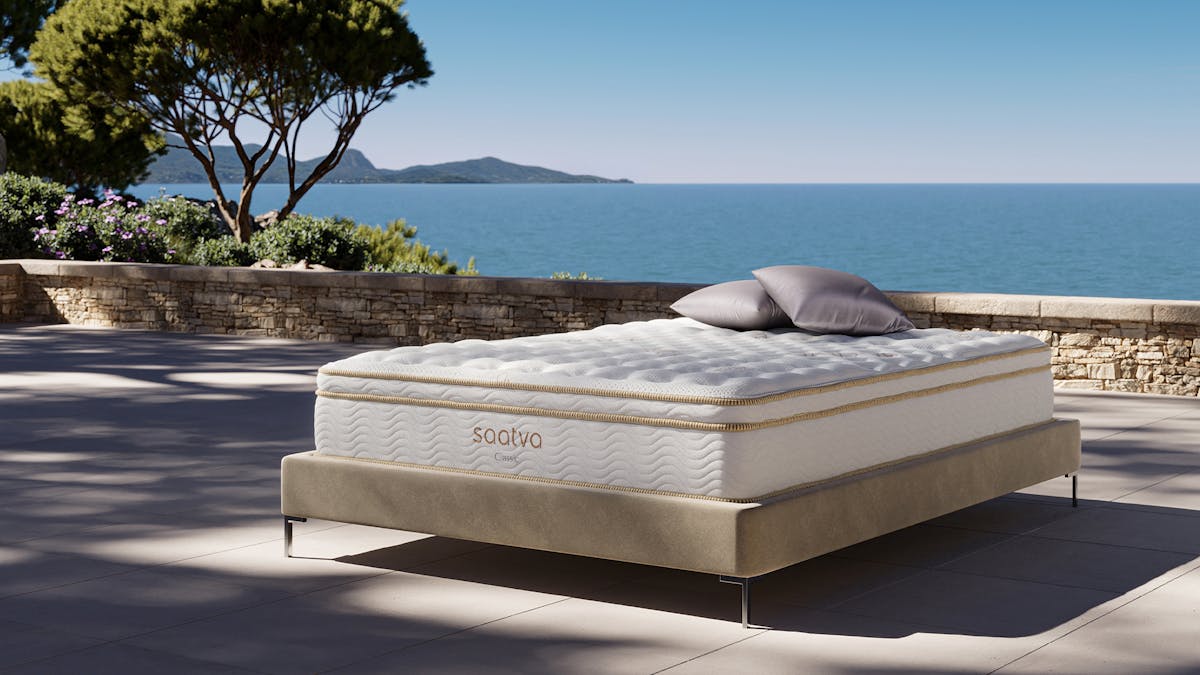
Whichever base you end up with, the Saatva Classic is engineered to perform on both. Its coil-on-coil construction is firm enough to handle slatted platforms and traditional enough to pair with a box spring if you already own one.
Platform bed vs box spring: the key differences
The choice between a platform bed and a box spring affects mattress performance, warranty validity, cost, and room aesthetic. Here is the direct breakdown.
| Feature | Platform Bed | Box Spring |
|---|---|---|
| Support type | Solid base or slats (rigid, no give) | Spring-loaded (adds bounce) |
| Mattress compatibility | All types: foam, latex, hybrid, innerspring | Best with traditional innerspring |
| Profile height | Lower (14-18 inches total with mattress) | Higher (20-26 inches total) |
| Airflow | Good with slats; limited on solid base | Limited inside enclosed box |
| Warranty impact | Almost always valid | May void foam/latex warranties |
| Extra purchase needed | No, support is built in | Yes, separate from the bed frame |
| Under-bed storage | Yes (with clearance or storage drawers) | Minimal |
| Typical price | $150-$1,500 complete frame | $100-$300 for box spring alone |
What is a platform bed?
A platform bed is a bed frame with a built-in support surface, either a solid panel or a series of wooden or metal slats. The support is part of the frame itself, so no separate box spring or foundation is required.
Platform beds dominate the modern mattress market for a practical reason: foam, latex, and hybrid mattresses need a rigid, flat surface to perform correctly. The solid surface prevents the mattress from sagging into gaps, distributes weight evenly, and preserves the comfort layers the manufacturer designed into the mattress. Placing a foam mattress on a box spring, which flexes under load, compresses the foam unevenly and can accelerate wear.
Slat spacing matters
If your platform bed uses slats rather than a solid panel, the gap between slats should be no more than 3 inches for a foam or latex mattress. Wider gaps allow the mattress to bow into the space, which shortens its lifespan and may void the warranty. Most modern platform frames sold with a mattress in mind are built to this specification, but it is worth confirming before you buy.
Platform bed advantages
- Compatible with all mattress types, including foam, latex, and hybrid
- No additional purchase required (no separate box spring or foundation)
- Lower overall cost once you factor in the accessories a box spring setup needs
- Storage models offer under-bed drawers or lift-up access
- Modern aesthetic with a lower, cleaner profile
- Does not void manufacturer warranties on foam or latex mattresses
Platform bed limitations
- Lower profile can be harder for some people to get in and out of bed
- Solid-base models restrict airflow more than a slatted or box spring setup
- Heavier than a standalone box spring, though most ship in boxes for DIY assembly
What is a box spring?
A box spring is a rectangular frame, usually wood or metal, filled with coil springs or a grid of steel rods and covered in fabric. It sits between the mattress and the bed frame, adding height and, in the case of coil versions, absorbing some motion and adding bounce.
Box springs were designed for a specific era of mattress construction: the traditional double-sided innerspring. Those mattresses were built to flex slightly, and the coil springs inside the box spring worked in tandem with the mattress coils to provide a coordinated feel. That pairing made sense with the mattresses of earlier decades. It applies less in 2026, when the majority of mattresses sold are foam, latex, or foam-wrapped hybrid designs that perform best on a firm, unmoving surface.
Modern box springs
Most box springs sold today are semi-flex or no-flex designs, meaning the springs inside are replaced with a grid of rigid steel rods. These are sometimes called foundations. They look like a box spring but provide a flat, firm surface that is safe for foam mattresses. If you have an older innerspring mattress and an existing box spring in good condition, there is no reason to replace it. But if you are buying new, a platform bed frame gives you the same support without the extra piece.
Box spring advantages
- Raises the sleep surface for easier ingress and egress, useful for people with limited mobility
- Traditional coil versions add responsive bounce for innerspring mattresses
- Lighter and easier to move than most platform frames
Box spring limitations
- Requires a separate bed frame to hold it off the floor
- Can void the warranty on foam or latex mattresses
- Offers no under-bed storage
- Spring version can transfer motion and creak over time
Which should you choose?
The answer follows directly from what mattress you have or plan to buy.
If you own or are buying a foam, latex, or hybrid mattress, a platform bed is the correct choice. These mattresses are designed for a firm, flat surface. Using a spring box spring underneath compresses the comfort layers unevenly, accelerates wear, and often voids the warranty. Platform beds also cost less all-in, since you are not paying for a box spring on top of a frame.
If you have a traditional double-sided innerspring mattress from an older purchase, a box spring may still be appropriate. The coil interaction was engineered into that mattress design, and replacing the base could change the feel. Check your mattress documentation to confirm.
For anyone buying new, the practical answer is a platform bed or a low-profile foundation. The market has moved decisively in this direction, and mattress warranties reflect that shift.
Mattress compatibility by base type
| Mattress type | Platform bed | Box spring |
|---|---|---|
| Memory foam | Yes (preferred) | No (may void warranty) |
| Latex foam | Yes (preferred) | No (may void warranty) |
| Hybrid (coil + foam) | Yes | Caution: check manufacturer specs |
| Traditional innerspring | Yes | Yes (original pairing) |
| Adjustable air (Sleep Number) | Usually required | Not compatible |
Height and accessibility
The total sleep surface height with a platform bed is typically 20-24 inches (frame plus mattress). With a box spring on a frame, the height rises to 25-30 inches. For most adults, platform height is more ergonomic, reducing strain when sitting on the edge of the bed. For people recovering from hip replacement or knee surgery, or with limited hip flexion, the higher profile of a box spring setup can make standing without assistance easier. If height is a medical consideration, that may tip the decision.
Platform beds are the right choice for almost every modern mattress, including foam, latex, and hybrid. Box springs are a legacy product that still works well with traditional innerspring designs. The Saatva Classic is our top mattress recommendation, compatible with both, delivered with free white-glove setup on a 365-night trial.
Frequently asked questions
Can you use a box spring on a platform bed?
Technically yes, but there is no benefit. A platform bed already provides the support a box spring would add. Stacking both raises the bed unnecessarily and adds cost without improving mattress performance. If you own a box spring and are getting a platform frame, leave the box spring out.
Will a foam mattress void its warranty on a box spring?
Many foam mattress manufacturers require a solid, slatted, or rigid foundation for warranty coverage. A traditional spring-loaded box spring can allow the foam to compress unevenly, which the manufacturer treats as improper use. Check your warranty documentation before combining them. A no-flex foundation or platform frame avoids this issue entirely.
Is a platform bed or box spring better for back pain?
The mattress matters far more than the base for back pain. A firm, flat platform surface gives a foam or hybrid mattress the rigid foundation it needs to deliver the designed level of support. Using a springy box spring under a medium-firm foam mattress effectively softens the feel, which may undermine lumbar support.
How do slat spacing requirements work?
Most foam and latex mattress manufacturers require slats no more than 3 inches apart. Wider gaps allow the mattress to sag into the space under pressure, which creates uneven support and speeds up material fatigue. Solid-panel platforms have no spacing issue. If you are buying a slatted platform frame, verify the gap specification before purchase.
Does a platform bed require a box spring?
No. A platform bed is designed as a complete support system. The slats or solid base replace everything a box spring would provide. Buying a box spring to go with a platform frame wastes money and raises the bed height without any functional benefit.