
 by
by 
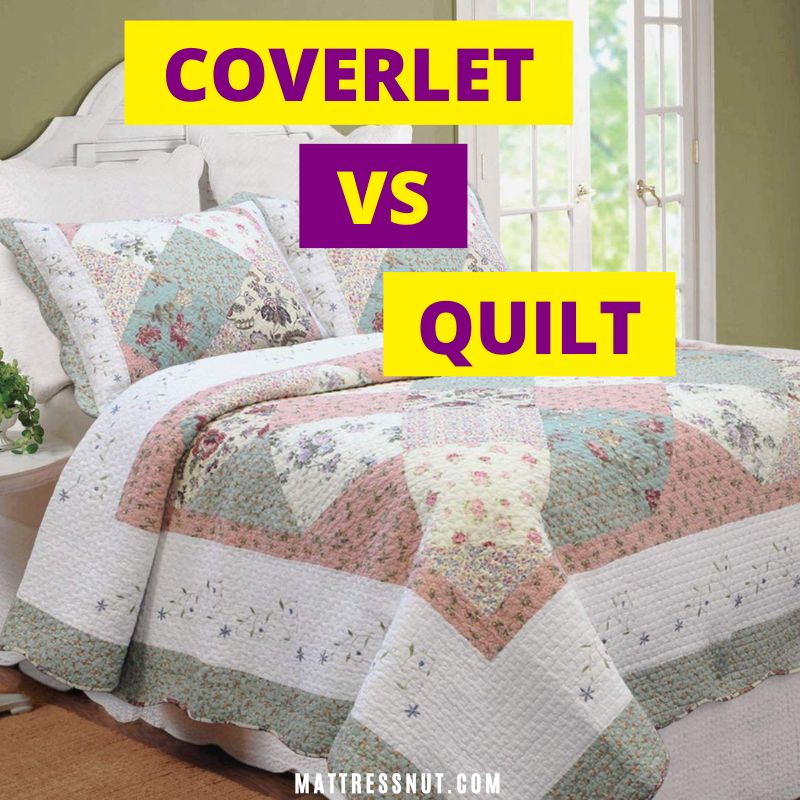
Quick answer: A coverlet is a lightweight, single-layer bed covering that suits warm sleepers and low-bulk layering. A quilt has a stitched three-layer construction with batting between its face and backing, so it provides more insulation. If you sleep hot or want a crisp, flat finish, I would choose a coverlet. If you want noticeable warmth without the puffiness of a comforter, a quilt is the better fit.
That internal construction is the real difference in the coverlet vs quilt comparison. Both can finish the top of a bed, add color, and protect the bedding underneath. They do not manage warmth, moisture, washing, or storage in quite the same way.
My materials-based verdict is to start with sleep temperature, not appearance. Then compare fiber content, drape, dimensions, laundering instructions, and how you plan to layer the bed. A beautiful covering is not useful if it overheats you or spends most of the year packed away.
Coverlet vs quilt at a glance
| Feature | Coverlet | Quilt |
|---|---|---|
| Construction | Usually one woven layer without separate fill | Three layers: decorative face, batting, and backing |
| Warmth | Minimal insulation and better suited to warm conditions | Moderate to substantial insulation depending on the batting |
| Weight | Light and relatively easy to fold | Heavier because it contains batting and backing fabric |
| Drape | Shorter, flatter, and more tailored | More structured, with greater visual weight |
| Washing | Often manageable in a home machine if the care label permits it | Light versions may fit a home machine, while bulky quilts may need larger equipment or professional care |
| Typical cost | Generally lower because less material and assembly are required | Generally higher because of the additional layers and stitching |
| Best use | Hot sleepers, warm rooms, and decorative layering | Cooler rooms, cold sleepers, and insulation with limited puffiness |
| Visual effect | Clean, flat, and restrained | Textured, stitched, and more substantial |
What is a coverlet?
A coverlet is a thin, flat bed covering usually made from one layer of woven fabric. Unlike a comforter or duvet, it does not contain a separate fill chamber. The fabric itself, commonly cotton, matelasse, or a cotton-polyester blend, supplies its texture, weight, and limited warmth.
Most coverlets cover the mattress top and extend a relatively short distance down the sides. They are not normally cut to reach the floor like a traditional bedspread. That shorter drop produces the neat, tailored appearance often associated with hotel beds and tightly styled bedrooms.
From a construction standpoint, the absence of batting is the coverlet's defining advantage. It folds with little bulk, generally dries more readily than filled bedding, and may fit more comfortably in a household washing machine. It can serve as the main covering in a warm room or sit over other bedding as a decorative finishing layer.
The tradeoff is straightforward: a coverlet provides coverage, but not much insulation. Its exact feel still depends on fiber and weave. A dense synthetic blend may hold more warmth than a light cotton weave, even though neither contains batting.
Who should use a coverlet?
- Hot sleepers who find comforters too warm or bulky.
- People in warm climates who need coverage more than insulation.
- Anyone who prefers a flat, minimalist bed instead of a puffy top layer.
- Sleepers who adjust bedding seasonally by adding or removing blankets.
- People who want a covering that is generally easier to wash, fold, and store.
Coverlet strengths
- Lightweight and often manageable in a home washing machine.
- Useful alone in warm weather or as part of a layered winter bed.
- Creates a clean, tailored silhouette.
- Available in a wide range of colors, textures, and woven patterns.
- Usually costs less than a quilt made at a comparable quality level.
- Takes up less closet space than most filled coverings.
Coverlet limitations
- Provides little insulation on its own.
- May feel insufficient for cold sleepers or unheated bedrooms.
- Needs another blanket, quilt, duvet, or comforter when more warmth is required.
- The shorter drop may leave part of the bed frame or foundation visible.
- A raised woven texture can snag if the yarns are loose or exposed to pet claws.
What is a quilt?
A quilt is a stitched bed covering made from three functional layers: a decorative face, batting in the middle, and backing fabric underneath. Quilting stitches pass through those layers and limit movement of the batting. The same stitches create the textured patterns that visually distinguish a quilt from a flat coverlet.
Traditional batting materials include cotton and wool. Modern quilts may instead use synthetic polyester fill, which can reduce weight and simplify some aspects of care. The precise fiber matters because the batting controls much of the quilt's insulation, loft, drying behavior, and long-term resilience.
Because a quilt contains batting, it traps more warmed air than an unfilled coverlet. Its surface usually looks flatter and denser than a comforter because the stitches compress and stabilize the fill. That middle ground works for sleepers who want more insulation but dislike a deeply puffed top layer.
Quilts also tend to have a more substantial drape. Many extend farther down the sides of a mattress than a coverlet, although most modern quilts still stop short of the floor. The result is more coverage and visual weight without the full-length dimensions of a traditional bedspread.
Historically, quilts were often assembled by hand from pieces of fabric arranged in geometric or decorative patterns. Modern products may preserve that appearance while using machine stitching, printed faces, or purpose-woven materials. Care requirements depend on the face fabric, batting, backing, thread, dyes, and finished size, not simply on the word quilt.
A quilt should also be judged by how securely its layers are joined. Sparse or weak stitching leaves more room for batting to migrate, bunch, or tear during washing. Closely spaced stitching holds the layers more firmly, although it can also compress the batting and create a flatter hand.
Who should use a quilt?
- Cold sleepers who want insulation with less bulk than a thick comforter.
- People in cooler climates who need a warmer top layer.
- Anyone drawn to visible stitching, texture, and patterned construction.
- Sleepers who want one covering to provide decoration and warmth.
- People who prefer a heavier, more structured drape down the sides of the bed.
Quilt strengths
- Supplies meaningful warmth through its batting layer.
- Adds texture and visual detail through quilting stitches.
- Comes in different fill materials and weights for changing conditions.
- Has a more structured drape than a single-layer coverlet.
- Usually feels less puffy than a comforter while remaining warmer than a coverlet.
- Can function as both the decorative surface and the main insulating layer.
Quilt limitations
- May retain too much heat for warm sleepers.
- Can become bulky and difficult to handle when wet.
- Dense wool, down-fill, or oversized quilts may require commercial or professional care.
- Typically costs more than a coverlet in a similar size and quality range.
- Repeated high-heat washing can be hard on batting, fabric, and stitching.
- Damaged quilting stitches may allow the internal fill to shift.
The construction differences that affect sleep
Warmth and heat retention
Warmth is the most practical difference. A coverlet has no dedicated fill layer, so there is less material available to trap warmed air around the body. It supplies coverage and a small amount of thermal buffering, but it is not built as serious insulation.
A quilt's batting creates an insulating zone. Cotton, wool, and synthetic polyester do not behave identically, but each normally adds more heat retention than an unfilled coverlet. Batting thickness, density, and fiber type all influence warmth. The surrounding room temperature, sheets, sleepwear, mattress, and other layers matter too.
If you regularly throw the covers off at night, I would lean toward a coverlet. If you wake because the room feels cold, a quilt has the more useful construction. A cold sleeper can still use a coverlet, but it should be treated as the outer part of a layered system rather than the main source of insulation.
Do not assume that a visibly thick fabric must be warmer. Matelasse can look padded because of its raised weave while still lacking separate batting. Conversely, a fairly flat quilt can retain noticeable warmth because the insulating material is hidden between its face and backing.
Breathability and moisture
Neither product name tells you everything about breathability. Fiber content and weave remain important. A loose cotton coverlet generally permits more air movement than a densely woven synthetic one, while a quilt with thick synthetic batting may hold more warmth and moisture around the sleeper.
Wool batting can manage moisture differently from polyester, but it also introduces its own weight and care considerations. Cotton batting usually produces a flatter, denser quilt and may absorb substantial water during laundering. The label should identify the fill, although product descriptions are not always equally detailed.
For a hot sleeper, the safest construction choice is usually the one with less material. That points toward a coverlet, but I would still inspect the actual fabric rather than trusting the category name alone.
Fabric and internal structure
Coverlets commonly use tightly woven fabrics that create texture without fill. Matelasse is a familiar example. Its raised, brocade-like surface can resemble quilting from a distance, but the effect comes from the weave rather than batting stitched between separate fabric layers.
Cotton percale and sateen may also be used when a smoother finish is wanted. Blended fabrics can improve wrinkle resistance or reduce drying time, although they may not feel the same as an all-cotton covering. The quality of the yarn, weave, and edge finish matters as much as the broad fiber label.
A quilt may use similar material on its face, but the batting and backing add weight and structure. Its stitching is functional as well as decorative because it restricts movement and bunching inside the covering. Wider spacing can leave more room for loft, while dense stitching generally creates a flatter, firmer surface.
Before buying, check the fiber content for every layer instead of relying only on the headline description. A product advertised as cotton may have a cotton face with synthetic batting or backing. That is not automatically a drawback, but it changes the feel, warmth, drying behavior, and care requirements.
Weight and pressure on the body
A coverlet feels lighter because it lacks batting and a separate backing layer. That can matter if you dislike bedding pressing around your feet or if you frequently move during sleep. It is also easier to pull up, fold back, or remove during the night.
A quilt applies more weight because it combines multiple layers. It is not the same as a purpose-built weighted blanket, but its denser drape can feel more enclosing than a coverlet. Batting type and overall dimensions make a noticeable difference, so the word quilt alone does not establish how heavy it will feel.
Size and drape
A coverlet is usually sized to cover the mattress top and hang a short distance down the sides. Its low-bulk construction produces a straighter, cleaner edge. That makes it easy to fold at the foot of the bed or tuck around the mattress, but it may leave the bed base exposed.
A quilt generally drops farther and has enough weight to hang with more structure. It can hide more of the mattress side and make the finished bed appear fuller. Neither term guarantees exact dimensions, however. Product sizing varies between manufacturers.
Compare the listed width and length with the mattress dimensions and depth. Then account for the amount of fabric needed on both sides. A thick mattress can make an otherwise correctly labeled covering look too short.
If you want floor-length coverage, a bedspread is normally the more appropriate category. Neither a standard coverlet nor a modern quilt should be assumed to reach the floor.
Care, washing, and long-term durability
Which one is easier to wash?
Coverlets have the practical advantage in routine care. A single woven layer absorbs less water than a filled quilt and is generally easier to move between the washer and dryer. It also requires less storage space after it is folded.
Quilt care depends heavily on fill and construction. A lightweight quilt with cotton batting may be suitable for home laundering, while dense wool, down-fill, or oversized bedding can exceed the useful capacity of a household machine. The manufacturer's sewn-in care label is the controlling source for washing temperature, drying method, and professional-cleaning requirements.
Do not judge machine fit while the covering is dry. A quilt becomes considerably harder to handle after absorbing water. Crowding it into a small drum may prevent even washing and rinsing, and the added strain can be rough on seams and quilting stitches.
Matelasse coverlets also deserve careful handling. High heat may encourage shrinkage or alter the raised texture, depending on the fiber and weave. Follow the manufacturer's label rather than assuming every cotton covering can tolerate the same cycle.
What tends to wear out first?
On a coverlet, I would inspect the edges, raised yarns, and any decorative weave. Friction at the foot and sides of the bed can abrade exposed texture. Loose yarns may also snag, particularly in homes with pets.
On a quilt, the quilting stitches deserve close attention because they keep the internal layers stable. Broken stitching can allow batting to migrate or bunch. Binding around the perimeter is another common stress area because it receives regular handling and laundering.
Repeated high heat can be hard on either category. It may shrink natural fibers, weaken some synthetic components, and place extra stress on seams. Gentle care that follows the product label tends to be more useful for longevity than relying on the most aggressive wash and dry settings.
Storage considerations
A coverlet folds into a compact stack and is usually simple to rotate seasonally. Because it has no bulky batting, it takes up less room and is less likely to develop deep compressed areas while stored.
A quilt needs more space and should be fully dry before it is put away. Folding it along the same lines for extended periods can place repeated stress on fabric and batting, particularly in delicate or handmade pieces. Avoid tightly compressing a quilt unless its manufacturer specifically permits that storage method.
Price and construction value
Coverlets are usually less expensive than comparable quilts because they use less material and do not require separate batting, backing, and quilting stitches. Based on the retail ranges documented in the original article, a solid cotton coverlet typically costs $50 to $150 for a queen, while a comparable quilt tends to cost $100 to $300 or more. Handmade heirloom work may be priced considerably higher.
Those ranges are broad because fiber quality, brand positioning, dimensions, stitching, and manufacturing method all affect price. They should be treated as general shopping context from the original article, not as a current quote from a specific retailer.
Price alone does not tell me which option is better. The useful question is what the extra construction contributes to your bed. Paying for batting makes sense if you need insulation. If the quilt will spend most nights folded away because you sleep hot, a simpler coverlet may deliver better everyday value.
For either category, inspect the stated fiber content, seam quality, edge finish, laundering instructions, and finished dimensions. Those details reveal more about probable durability and usefulness than an elaborate product name.
Style and practical layering
How each one changes the look of a bed
A coverlet gives a bed a flat, restrained finish. It works well where the goal is a crisp surface, visible pillows, and minimal bulk. Because it folds compactly, it is also easy to rotate with other layers as the room temperature changes.
A quilt makes a stronger visual statement. Pieced designs, stitched motifs, and the slight loft of batting give the surface more depth. It can act as both the decorative focal point and the functional insulating layer, reducing the need for several separate coverings.
Neither style is inherently modern or traditional. Solid-color quilts can look restrained, while patterned or heavily textured coverlets can look ornate. Construction determines most of the performance; color, stitching, and pattern determine how the piece reads in the room.
Using a coverlet and quilt together
The two layers can work together rather than compete. A coverlet can remain on the bed as the consistent outer finish, while a quilt stays folded at the foot for cold nights. You can also place the quilt underneath and use the coverlet to create a flatter visual surface.
This approach is especially practical for couples with different temperature preferences. The warmer sleeper can use the lighter covering, while the colder sleeper pulls up the quilt as needed. Separate layers offer more adjustment than one thick covering shared across the entire bed.
Layering also spreads wear between pieces. Instead of repeatedly washing a bulky quilt after minor surface contact, a washable coverlet can take more of the everyday exposure, provided both products are used and cleaned according to their labels.
Which should you choose?
Choose a coverlet if heat control, easy handling, and low bulk matter most. Choose a quilt if warmth, texture, and a more substantial drape are the priorities. That is the cleanest decision rule.
If you run warm, kick off heavy bedding, or live in a mild climate, a coverlet is the sensible option. It leaves out the batting layer while keeping the bed finished. When temperatures fall, you can add a blanket underneath or keep a warmer layer at the foot.
If you tend to feel cold or want one top covering that combines pattern with insulation, choose a quilt. A lighter quilt with synthetic batting may be more manageable across changing seasons, while denser cotton or wool batting is better suited to genuinely cool conditions.
I also recommend checking mattress depth before ordering. A thick mattress changes how far either covering drops down the sides. The words coverlet and quilt describe construction and general use, not a fixed amount of coverage.
Pick a coverlet if:
- You are a hot sleeper.
- Your room stays warm for much of the year.
- You want a flat, tailored bed surface.
- You prefer bedding that is generally easy to wash and store.
- You already own blankets or a duvet for colder weather.
- You want a flexible outer layer rather than built-in insulation.
Pick a quilt if:
- You are a cold sleeper.
- Your bedroom becomes chilly at night.
- You want batting-based insulation without comforter-level puffiness.
- You prefer visible stitching and a textured surface.
- You want one piece to provide warmth and decoration.
- You like a heavier and more structured drape.
How to shop for either bed layer
Read the complete materials label
Look beyond the fabric named in the product headline. Check the face, backing, and fill separately. This is especially important with quilts, where the shell and batting may use different fibers. For a coverlet, confirm whether the fabric is cotton, synthetic, or a blend because that affects feel, shrinkage, heat retention, and drying.
Inspect the construction details
On a coverlet, examine the weave, perimeter seams, and any raised texture. On a quilt, check the spacing and consistency of the quilting stitches as well as the edge binding. Uneven stitching or loose threads do not always predict immediate failure, but they are useful warning signs when comparing similarly priced pieces.
Compare dimensions with your mattress
Measure the mattress width, length, and depth, then decide how much material should hang down each side. A coverlet that works on a shallow mattress may look undersized on a deeper model. A quilt can have the same problem despite its usually more substantial drape.
Check care requirements before buying
A bed covering is only convenient if you can clean it properly. Follow the care policy supplied by the manufacturer and consider whether the item will fit your available washer after it absorbs water. If the label requires professional care, include that ongoing requirement in your decision.
Match the layer to the room
The warmest construction is not automatically the most comfortable. Consider room temperature, mattress heat retention, pajamas, sheets, and existing blankets. A foam mattress that already holds warmth may pair better with a coverlet, while a cooler sleep setup may benefit from quilted insulation.
Think about seasonal storage
If you change bedding frequently, consider the closet space each layer requires. A coverlet is normally easier to fold into a small area. A quilt needs more room and may be less convenient if you expect to store it for most of the year.
Frequently asked questions
Can you wash a coverlet in a regular washing machine?
Many coverlets can be washed in a standard home machine because their single-layer construction is relatively light and compact. The manufacturer's care label should make the final call, since fiber content, dyes, decorative trim, and matelasse weaves can require different temperatures or drying methods. High heat may shrink some materials or affect their texture.
Is a coverlet the same as a bedspread?
No. A bedspread is generally larger and intended to drape close to the floor around the bed. A coverlet is shorter and normally covers the mattress top with a limited drop down the sides. Both can be decorative top layers, but the coverlet usually creates a cleaner, less expansive silhouette.
Can you sleep under a coverlet?
Yes. A coverlet can be the main top layer in warm weather or a warm bedroom. It provides coverage without much insulation. In cooler conditions, place it over a sheet and add a blanket, quilt, duvet, or comforter as needed.
Are coverlets warm enough for winter?
Usually not on their own. A coverlet has no batting and supplies minimal insulation. During cold weather, it works better as the decorative outer layer in a bedding system that includes a warmer blanket, duvet, quilt, or comforter.
Is a quilt thicker than a comforter?
Typically, no. A comforter is generally thicker and puffier because it uses a loftier fill construction. A quilt contains batting, but the quilting stitches compress and stabilize that material. Most quilts therefore have a flatter, denser feel while still supplying more warmth than an unfilled coverlet.
Do you wash a quilt after every use?
No. Quilts do not normally need to be washed as frequently as sheets. The original article's general guidance was once or twice a year unless the quilt becomes visibly soiled, but the manufacturer's care instructions and the conditions in your home should take priority. Aggressive agitation, excessive washing, and high heat can wear the fabric, stitching, and batting.
Can a coverlet and quilt be used together?
Yes. A coverlet can provide the neat outer finish while a quilt supplies extra insulation. You can place the quilt underneath the coverlet or fold it at the foot of the bed for colder nights. This arrangement makes it easier to adjust warmth without remaking the entire bedding setup.
Is a matelasse coverlet actually quilted?
Not necessarily. Matelasse creates a raised, padded-looking pattern through the weave itself. A true quilt has separate face, batting, and backing layers held together by stitches. Their surfaces can look similar, but their internal construction and insulating ability are different.
Which option is better for a hot sleeper?
A coverlet is usually the better choice because it lacks the insulating batting found in a quilt. Fabric still matters, so inspect the fiber content and weave, but the single-layer construction generally introduces less warmth and bulk.
Which option is likely to last longer?
Durability depends more on material quality, stitching, laundering, and daily use than on the category alone. A simple coverlet has fewer layers that can shift or bunch, while a well-made quilt can remain serviceable if its stitches hold the batting securely. Following the manufacturer's care label is one of the most practical ways to reduce premature wear.
Can a quilt be used as a coverlet?
A thin quilt can fill a similar decorative role, but it does not become a coverlet because its internal construction is different. It will usually feel warmer, heavier, and more structured. If you only want a low-bulk finishing layer, check for batting before buying.
How can you tell the difference in a store?
Look at the edge and reverse side. A quilt normally reveals separate face and backing fabrics joined by visible stitching, with batting held between them. A coverlet usually has one continuous woven structure without a distinct filled middle. The materials label should confirm what visual inspection suggests.
The Nut's final verdict
For most hot sleepers, a coverlet is the easier layer to live with because it is lighter, simpler to wash, and less insulating. For cold sleepers, a quilt earns its extra bulk by adding a real batting layer and a steadier sense of warmth.
I would not choose between them on pattern alone. Check what is inside, measure the mattress, and read the care label. The right bed layer is the one whose construction matches your temperature needs and whose size and maintenance demands fit the way you actually use your bed.