
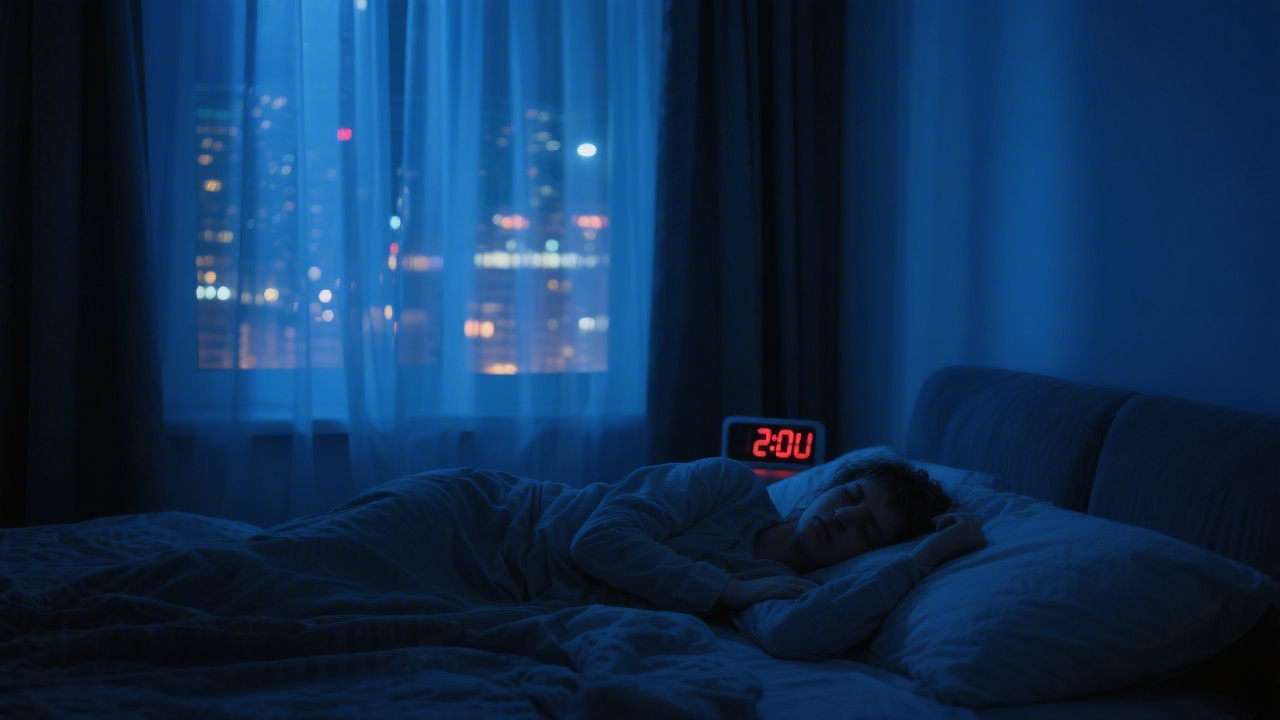
 by
by Delayed sleep phase syndrome (DSPS), also called delayed sleep-wake phase disorder (DSWPD), is a circadian rhythm disorder where the internal clock is persistently set 2 or more hours later than socially desired. It's not insomnia - people with DSPS sleep well and feel rested, but only when they can sleep on their own schedule. The disorder creates profound conflict with conventional schedules.
Our Recommended Mattress for Healthy Sleep
The Saatva Classic offers zoned lumbar support and premium coil-on-coil construction that promotes proper spinal alignment - key for restorative sleep that keeps your circadian rhythm on track.
What Makes DSPS Different from Being a Night Owl
Everyone exists on a chronotype spectrum. The distinction between "extreme night owl" and "DSPS" lies in severity, functional impairment, and biological persistence:
- Night owl: Prefers late hours, can fall asleep earlier with discipline (though not comfortably), may catch up on weekends. Does not meet clinical criteria for a disorder.
- DSPS: Inability to fall asleep before 2-4am (or later) regardless of how early they go to bed. When forced to wake at conventional times, they're severely impaired. Sleep is normal in duration and quality when unrestricted. The pattern is persistent across months and years.
DSPS affects an estimated 0.2-10% of adults (estimates vary widely by diagnostic criteria) and 7-16% of adolescents. It frequently begins in adolescence during the normal biological phase delay of puberty and fails to advance back in some individuals.
The Biology of DSPS
Several mechanisms have been identified:
- Extended circadian period: Some DSPS patients have intrinsic circadian periods of 25+ hours instead of ~24.2 hours, causing progressive drift toward later timing.
- CRY1 gene mutation: A loss-of-function variant in CRY1 (c.1657+3A>C) was identified in 2017 as a cause of familial DSPS. This variant lengthens the circadian period and segregates with DSPS in affected families.
- Reduced light sensitivity: Some DSPS patients show blunted circadian responses to morning light, making the natural resetting mechanism less effective.
- Altered melatonin timing: Dim-light melatonin onset (DLMO) is typically 5-6 hours before natural sleep time. In DSPS, DLMO occurs at 2-4am or later - meaning the biological sleep signal arrives when conventional schedules require waking.
Diagnosis
Diagnosis typically involves:
- Clinical interview documenting the sleep timing pattern (must be stable for at least 3 months)
- Sleep diary kept for 2 weeks documenting actual sleep times on both restricted and unrestricted schedules
- Actigraphy (wrist-worn accelerometer) to objectively confirm sleep timing
- DLMO measurement via salivary or urinary melatonin (research standard; rarely done in clinical practice)
- Exclusion of other causes: insomnia, shift work, poor sleep hygiene
Treatment Options
DSPS is manageable but rarely curable. Treatment aims to advance the clock and maintain the advance:
Bright Light Therapy
First-line treatment. 10,000-lux bright light immediately upon waking - positioned as early as the patient can tolerate. Must be combined with light avoidance in the evening (blue-light blocking glasses after 8pm). Consistency is critical; skipping days allows the clock to drift back.
Chronobiotic Melatonin
Low-dose melatonin (0.5-1mg) taken 5-7 hours before natural sleep onset (not at bedtime). This phase-advancing protocol is distinct from using melatonin as a sedative. Timing is based on calculated DLMO when possible; otherwise estimated from sleep diary data. Studies show 1-2 hour phase advances over 4 weeks with consistent use.
Chronotherapy
Progressive delay of sleep time by 2-3 hours every 2 days, cycling around the clock until reaching the target sleep time. Effective but logistically demanding - requires 1-2 weeks of schedule disruption. Maintenance is challenging; without ongoing zeitgeber management, relapse is common.
Sleep Schedule Stabilization
Maintaining a fixed wake time (even on weekends) is essential. DSPS patients who sleep in on free days undo progress made during the week. This is the most challenging aspect of management because weekend sleep deprivation is real and unpleasant.
Workplace and Academic Accommodations
DSPS qualifies as a disability under the ADA and equivalent legislation in many jurisdictions when it substantially limits a major life activity. Accommodations that have been granted include: flexible or later start times, remote work arrangements, compressed 4-day work weeks, and academic accommodations for exam timing. Documentation from a sleep specialist is typically required.
Understanding how social jet lag compounds the difficulty helps frame accommodation requests. The goal is not preference - it's aligning schedule with biology to extract maximum performance during working hours.
Our Recommended Mattress for Healthy Sleep
The Saatva Classic offers zoned lumbar support and premium coil-on-coil construction that promotes proper spinal alignment - key for restorative sleep that keeps your circadian rhythm on track.
Frequently Asked Questions
How do I know if I have DSPS or just bad sleep hygiene?
The key diagnostic question: on completely free days with no obligations, when do you naturally sleep? If you consistently fall asleep at 3-5am and wake feeling rested at 11am-1pm - and have done so for months regardless of trying earlier bedtimes - DSPS is likely. Bad sleep hygiene produces variable, fragmented sleep. DSPS produces consistent, good-quality sleep at a delayed phase.
Is DSPS permanent?
For most people, DSPS is a chronic condition requiring ongoing management rather than a curable disorder. Some cases do remit spontaneously, particularly those that emerged during adolescence. The CRY1 mutation-linked form is genetic and permanent, though manageable.
Can DSPS be treated with sleeping pills?
Sedative-hypnotics don't treat DSPS - they can help induce sleep at an earlier clock time, but the underlying circadian drive remains delayed. The result is sedated sleep that doesn't feel restorative, and morning grogginess is typically worse. Circadian-targeted interventions (light, chronobiotic melatonin) are the appropriate treatment.
Does DSPS run in families?
Yes. Familial clustering is well-documented, and specific genetic variants (including CRY1) have been identified that segregate with DSPS in affected families. If a parent has DSPS, children have an elevated risk.
Can DSPS cause depression?
DSPS is associated with higher rates of depression and anxiety - the relationship is bidirectional. Chronic sleep deprivation from forced early schedules causes depression-like symptoms. Conversely, depression can worsen circadian dysfunction. Treating the circadian disorder often improves mood, though mood disorder treatment may also be required independently.
★ LUXURY INNERSPRING PICK
Your Mattress Might Be the Problem - Try a Saatva for 365 Nights
✓ 365-Night Trial · ✓ Free White Glove Delivery · ✓ Lifetime Warranty