
 by
by Dogs communicate primarily through body language, and sleep positions are no exception. The way a dog positions itself during sleep reflects its thermal comfort, emotional security, and level of trust in its environment. Understanding these signals is both practically useful and a window into your dog's inner state.
Our Recommendation
Saatva Classic — coil-on-coil construction stays firm even with dog weight
Affiliate disclosure: We may earn a commission if you purchase through our links at no extra cost to you.
The Main Dog Sleep Positions
The Lion Pose (Paws Out Front, Head Up)
Also called the sphinx position: the dog rests on its stomach with front paws extended forward and head resting on paws or raised. This is a light rest position, not deep sleep. The dog remains partially alert, ready to respond to stimuli. Many dogs use this position during daytime rest when they want to monitor activity around them. It does not indicate insecurity; it indicates a dog that is resting while maintaining awareness. Deep REM sleep does not typically occur in this position.
The Donut (Curled in a Ball)
The dog tucks its nose toward its tail and curls into a compact circle. This is a thermoregulatory and protective position. Curling reduces the surface area exposed to cold air, concentrating body heat. It also protects the abdomen, which is biologically vulnerable. Dogs sleeping outdoors, in new environments, or in cool temperatures favor this position. In domestic settings with adequate warmth, a dog that always curls tight may simply prefer the proprioceptive feedback. Some anxious dogs consistently favor this position.
The Side Sleeper
The dog lies on its side with legs extended. This is a relaxed, comfortable position that allows the chest to expand fully for unrestricted breathing. Dogs in this position are typically in deeper sleep stages, including REM. The twitching and leg paddling associated with dream states are most visible in side-sleeping dogs. It indicates comfort and security in the environment. Dogs do not expose their vulnerable belly in this position but are less coiled for quick response than in the lion pose.
The Superman (Sprawled on Stomach)
The dog lies flat on its stomach with legs extended forward and back, resembling a flying figure. This is a cooling position and a readiness position simultaneously. The belly contact with a cool floor surface draws heat away from the dog's core. It is common in puppies and high-energy dogs after active play, as it combines cooling with the ability to spring up quickly. Dogs sleeping in this position are often not in deep sleep.
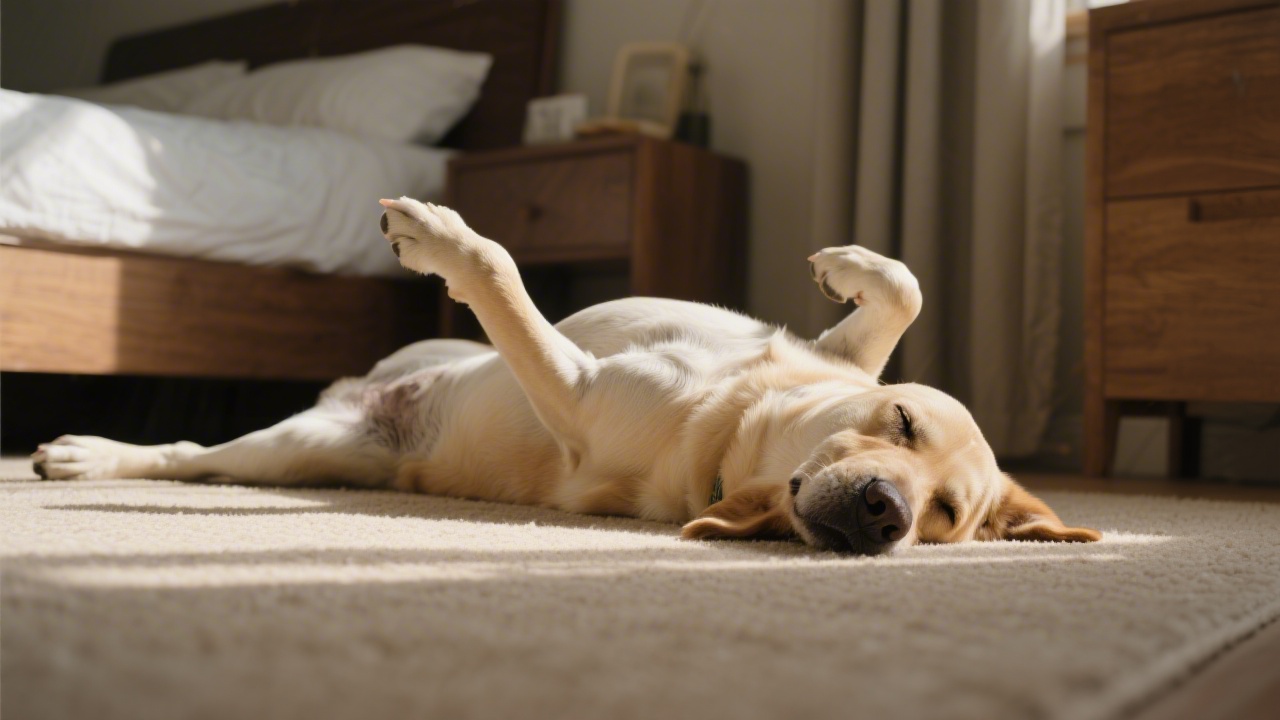
The Dead Bug (On Back, Paws in Air)
The dog lies on its back with paws relaxed in the air. This is the definitive comfort and security position. It requires complete muscular relaxation, leaving the abdomen fully exposed. Dogs only sleep in this position when they feel entirely safe. It is also a cooling position: the relatively hairless belly and paw pads are effective heat dissipation surfaces. Seeing a dog in this position is a reliable indicator of a secure, content emotional state.
The Burrower
The dog tunnels under blankets, pillows, or your legs. This is comfort-seeking and warmth-seeking behavior. Many small breeds (dachshunds, terriers) were historically bred to enter underground burrows and retain this burrowing drive. It can also indicate a dog that finds the sleeping environment too exposed or too cool. Dogs that burrow habitually may scratch or dig at bedding before settling.
The Cuddler (Contact Sleeping)
The dog sleeps pressed against you or another animal. This is a bonding behavior rooted in pack sleeping dynamics. Physical contact during sleep is the ancestral default for pack animals. A dog that initiates and maintains contact sleeping has a high-trust attachment to its sleeping partner. It is not clingy; it is normal social mammal behavior.
What Position Changes Can Tell You
A dog that suddenly shifts from open positions (side, dead bug) to consistently curled or burrowed positions may be experiencing pain, illness, temperature changes, or anxiety. A dog that stops sleeping in shared spaces may be avoiding a pain-inducing position change on a hard floor. If behavioral changes in sleep persist beyond a week, a veterinary evaluation for pain sources (hip dysplasia, arthritis, dental pain) is worth pursuing.
Frequently Asked Questions
What does it mean when a dog sleeps on its back with paws up?
The supine position (on back, paws in air) is called the dead bug or crazy legs position. It signals that the dog is hot and comfortable. The belly and paw pads are effective heat dissipation areas. Exposing them to air cools the dog efficiently. This position also requires complete muscular relaxation, meaning the dog feels fully secure in its environment. It is one of the most positive sleep positions in terms of emotional state.
Why does my dog curl up in a ball to sleep?
The donut or curled position conserves body heat and protects the abdomen. It has evolutionary origins in outdoor sleeping where temperature regulation and vulnerability protection mattered. Dogs who curl up may be cold, may be sleeping in a new or unfamiliar environment, or simply prefer the proprioceptive comfort of having their limbs under them. It does not necessarily indicate anxiety, though anxious dogs do favor this position.
What does it mean when a dog sleeps pressed against you?
Contact sleeping (pressed against a human or another animal) indicates bonding and trust. Dogs are social animals that sleep in physical contact with pack members by default. A dog that chooses to sleep touching you is expressing affiliation. It also provides warmth for both parties. This behavior is more common in breeds developed for close human work and in dogs with secure attachment styles.
Is it normal for dogs to twitch in their sleep?
Yes. Dogs experience REM sleep during which motor neurons fire similarly to waking states. This produces the leg paddling, lip movements, soft vocalizations, and ear twitching that owners observe. Puppies and senior dogs twitch more than adult dogs, reflecting higher proportions of REM sleep in those life stages. Twitching is not a seizure. True seizures involve full body stiffening, loss of bladder control, and post-ictal disorientation.
How many hours a day do adult dogs sleep?
Adult dogs sleep 12 to 14 hours per day, distributed across multiple rest periods. Working dogs and active sporting breeds sleep less than toy breeds and brachycephalic breeds (bulldogs, pugs). Senior dogs over 8 years typically increase sleep to 14 to 18 hours as metabolic rate declines and joint discomfort makes activity less appealing. A sudden increase in sleep in an otherwise active adult dog warrants veterinary evaluation.
Key Takeaways
Dog Sleep Positions and What They Mean About Your Dog's Mood is a topic that depends heavily on individual needs and preferences. The most important thing is to consider your specific situation — your body type, sleep position, and personal comfort preferences — before making any decisions. When in doubt, take advantage of trial periods to test before committing.