
 by
by Looking for the right mattress to complete your sleep setup? The Saatva Classic mattress delivers hotel-quality sleep with free white-glove delivery.
Feng shui is a 3,000-year-old Chinese practice of spatial arrangement. Much of it is cultural and philosophical. But a meaningful subset of its bedroom recommendations align — independently — with modern sleep science. Here is what the research actually supports, and what remains superstition.
What Is the Commanding Position?
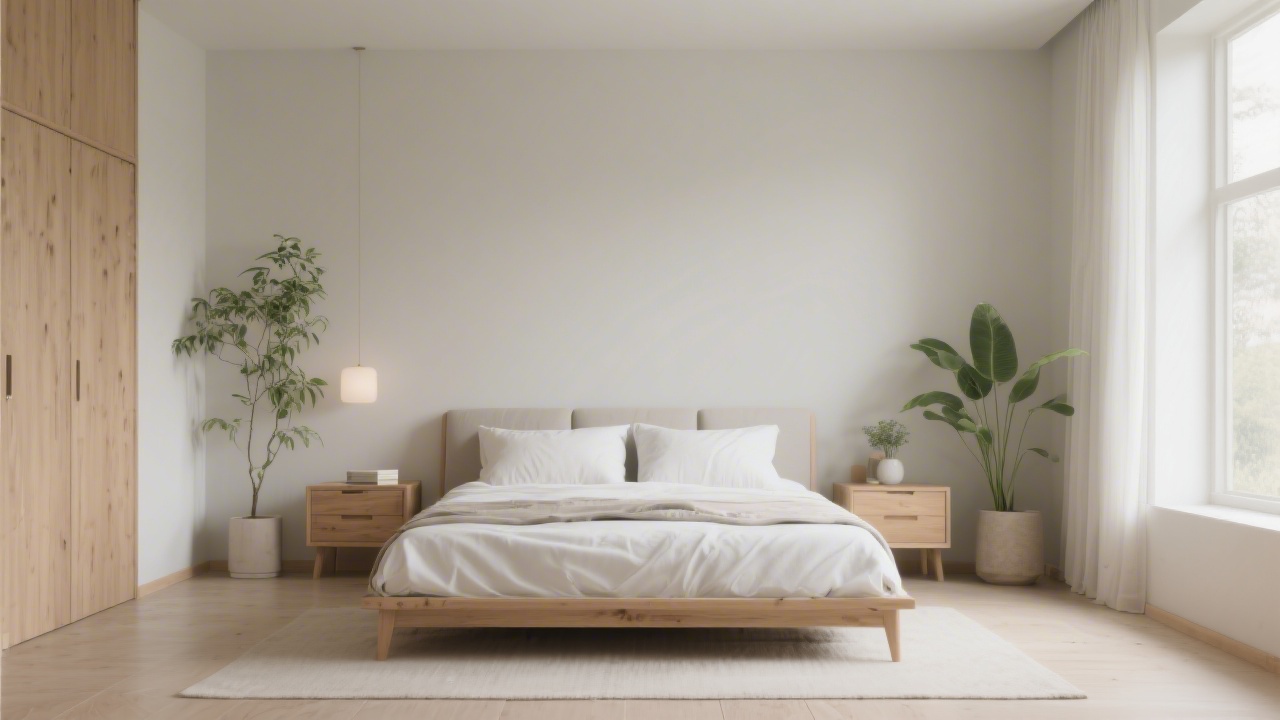
The commanding position in feng shui means placing the bed so you can see the door without being directly in line with it — typically diagonal from the entrance, with the head against a solid wall. This is the most widely cited feng shui bedroom principle.
The sleep science parallel: being able to see the room's entrance reduces ambient threat detection by the amygdala. When your sleeping position doesn't allow you to see the door, the brain maintains a low-level vigilance state that elevates cortisol and reduces sleep depth. This is not superstition — it's an evolutionary defensive posture that modern humans still carry.
Verdict: Evidence-backed. A 2019 study on perceived spatial safety found that visual access to room entry points correlated with lower pre-sleep anxiety scores. Place your bed with the headboard against a solid wall, angled to see the door without direct alignment.
Clutter Removal
Feng shui considers clutter "stagnant energy." Sleep science has a more direct explanation: visual clutter activates cortisol. A 2015 study by Saxbe and Repetti found that bedroom clutter measurably increased cortisol awakening response and was associated with greater sleep difficulties and depressive symptoms.
Verdict: Evidence-backed. Clear surfaces, under-bed storage elimination (or concealed storage), and reducing visible objects to functional essentials improve sleep onset. This is one of the highest-return changes in any bedroom. See our full guide on minimalist bedrooms for sleep.
Mirror Placement
Feng shui advises against mirrors facing the bed, citing restless energy. The sleep science interpretation: mirrors facing the bed reflect ambient light (including early morning light and electronics standby LEDs) into the sleep environment. They also create visual complexity — seeing movement (including your own) during partial awakenings can trigger full arousal.
Verdict: Partially supported. Redirecting mirrors away from the sleeping position is sensible if they reflect light sources or create visual stimulation. The supernatural explanation has no evidence; the practical explanation does.
No Electronics in the Bedroom
Feng shui prescribes keeping the bedroom free of work energy and technology. Sleep research is unambiguous here: electronics in the bedroom (particularly televisions and laptops) correlate strongly with later sleep onset, shorter sleep duration, and lower sleep quality — through both light emission and behavioral cue associations. See our bedroom lighting guide for the light science.
Verdict: Evidence-backed. Remove screens from the bedroom.
Plants in the Bedroom
Feng shui recommends live plants for positive energy. Research on indoor plants shows modest benefits: stress reduction, marginal air quality improvement (though NASA's Clean Air Study results are often overstated — you'd need dozens of plants for meaningful CO2 reduction), and psychological well-being benefits from the presence of nature (biophilia effect).
Verdict: Weakly supported. 1–2 plants are beneficial. Large numbers increase humidity, which disrupts sleep if RH exceeds 60%.
What Feng Shui Gets Wrong
Compass directions (south-facing headboards), specific color prescriptions by birth year, and "chi flow" pathways have no empirical support for sleep improvement. The beneficial elements of feng shui are the ones that map onto sensory science: clutter, light, visual safety, and noise. When feng shui recommendations deviate from these principles, there is no evidence to follow them.
The Foundation Under All of This
No spatial arrangement compensates for a mattress that creates pressure points or misaligns the spine. The Saatva Classic is built on a coil-on-coil foundation with a lumbar zone support layer — the same configuration used by four and five-star hotels. Delivered free with white-glove setup and old mattress removal.
Frequently Asked Questions
Does the direction the bed faces affect sleep quality?
The direction relative to the room's entry point matters (commanding position principle). Cardinal compass direction has no peer-reviewed evidence of effect on sleep.
Should I avoid having a bookshelf in the bedroom?
Bookshelves are acceptable. The concern is visual clutter — a neat, organized shelf does not create the same cortisol response as chaotic surfaces. Reading physical books before sleep is associated with better sleep onset than screen reading.
Is it bad feng shui to have the bed under a window?
From a sleep science perspective, yes — for practical reasons. Windows let in light (disrupting sleep), can be drafty (causing temperature fluctuations), and expose you to noise. The commanding-position principle also requires a solid wall at the head, not a window.
Do feng shui bedroom colors affect sleep?
The evidence for color and sleep is moderate. Soft blues, greens, and warm neutrals are associated with lower arousal states and longer sleep duration. Feng shui's preference for calm, natural earth tones broadly aligns with this data.
Is sleeping with your head pointing north actually better?
There is no credible peer-reviewed evidence that cardinal bed orientation affects sleep quality in humans. This remains a cultural belief without empirical support.
Ready to upgrade your sleep foundation? The Saatva Classic mattress — free white-glove delivery, 365-night trial.