
 by
by Our #1 Recommended Mattress
Saatva Classic. From $1,095
365-night trial · Lifetime warranty · Free white-glove delivery
We earn a commission if you make a purchase through our links, at no extra cost to you. Full disclosure.
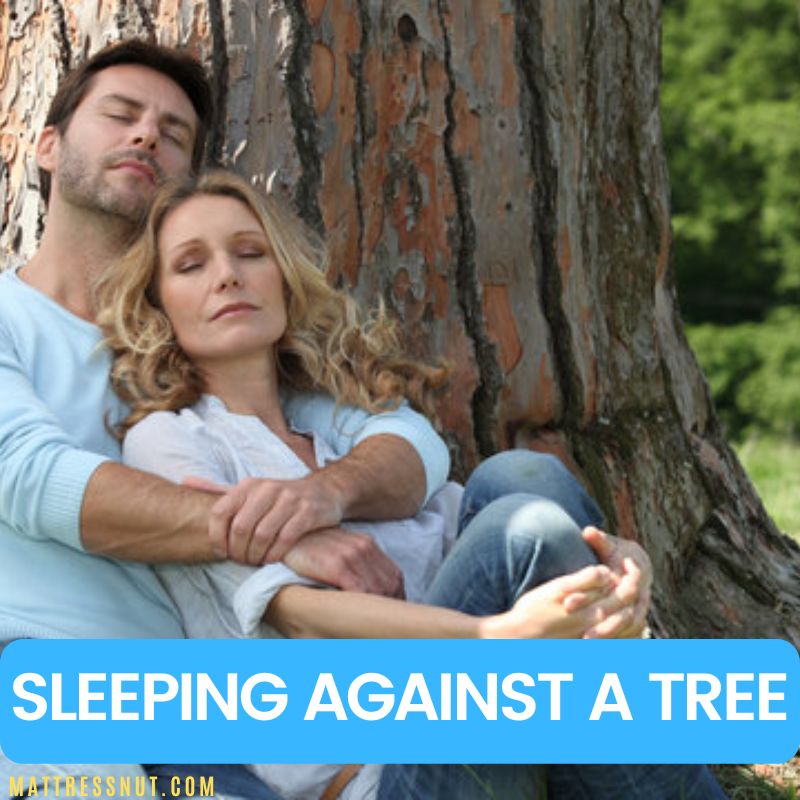
There is something deeply appealing about the idea of sleeping against a tree. The soft rustle of leaves overhead, the solidity of bark against your back, the cool natural shade, it feels like something humans were meant to do. And in some ways, we were. Our ancestors spent millennia sleeping outdoors, often using natural features including trees for shelter and support.
But the reality of sleeping against a tree involves a specific set of physical, safety, and comfort considerations that anyone heading outdoors, whether for camping, hiking, or a simple afternoon nap, should understand before settling in. This guide covers the genuine benefits, the real risks, practical safety protocols, and the best alternatives for outdoor sleeping when a proper bed is not available.
The Appeal of Nature Sleeping: What the Research Actually Says
Before examining the specific case of trees, it is worth understanding what science says about outdoor sleeping generally. The evidence is more positive than many people expect.
Research published in the journal Sleep Medicine found that exposure to natural light during the day and darkness at night, the conditions that come automatically with outdoor sleeping, helps synchronize the circadian rhythm more effectively than indoor environments with artificial lighting. People who spend time in natural light environments fall asleep earlier, sleep more deeply, and wake more refreshed than those who spend all their time indoors under artificial lights.
A study tracking urban residents who spent a weekend camping found that their melatonin onset shifted earlier by an average of 1.4 hours after just two days in natural light conditions. The body's internal clock recalibrated toward its natural setting within 48 hours. This is why many people report feeling unusually sleepy after a day outdoors and sleeping unusually well that night.
Additionally, research on "forest bathing" (Shinrin-yoku in Japanese) has demonstrated that time spent among trees lowers cortisol, reduces blood pressure, increases parasympathetic nervous system activity, and improves mood. Trees release phytoncides, aromatic organic compounds with demonstrated antimicrobial properties, that appear to have a mild calming effect on the human nervous system and may enhance natural killer cell immune activity.
In short: spending time near trees has real, documented physiological benefits. The question is how to capture those benefits while managing the specific risks that come with sleeping against or under a tree.
Is Sleeping Against a Tree Safe? Honest Risk Assessment
The safety of sleeping against a tree depends almost entirely on context. The same act can range from low-risk (a healthy, well-selected tree on a calm afternoon) to genuinely dangerous (a storm-damaged tree during wet weather at night). Here is a clear-eyed look at each category of risk.
Falling Branches (Widow-Makers)
Dead or weakened limbs that fall without warning are among the most significant dangers in forested environments. Outdoor safety organizations call these "widow-makers" for a reason, they account for a meaningful percentage of campsite injuries and fatalities every year. The risk is highest with older trees, conifers in high-wind areas, and any tree that has been diseased, struck by lightning, or stressed by drought.
What makes widow-maker branches dangerous is their unpredictability. A branch that looks attached and stable can have internal wood decay that is invisible from the ground. Wind, rain, or even the natural movement of a large tree can bring it down. Sleeping directly beneath or against a tree that has any dead wood above your position is a risk not worth taking.
Whole-Tree Failure
In saturated soil conditions after heavy rain, root rot, or in trees with structural defects at the base, the entire tree can topple. This risk is low for healthy trees in stable conditions but rises significantly during storms or in areas with a history of flooding or disease. Trees in sandy or loose soil are more vulnerable than those in dense, stable ground. Learning to identify healthy tree structure, wide root base, no visible decay at the trunk base, no significant lean, is a basic outdoor safety skill.
Lightning
Trees are the number one object struck by lightning in most environments, which makes sleeping against or under one during a thunderstorm categorically unsafe. Lightning can travel down the trunk, through the root system, and along the ground in a broad radius around the strike point. Even a nearby strike can cause ground current injury. Standard outdoor safety protocols require moving away from trees and into low-lying open ground during any thunderstorm. This is non-negotiable.
Insects and Wildlife
Tree bases and the bark itself host a complex ecosystem. In most forested environments, this includes ants (some species of which bite and release formic acid on skin), ticks (which carry Lyme disease and other pathogens), spiders (including venomous species in many regions), wasps and hornets nesting in tree cavities, and in some environments, snakes sheltering in leaf litter.
Ticks are a particular concern because they are small, silent, and can transmit serious illnesses. They actively seek hosts by waiting on grass and low vegetation, and sleeping on the ground near tree bases puts you in their prime hunting territory. Tick bites often go unnoticed for hours, and the window for transmitting pathogens opens within 24 to 36 hours of attachment for Lyme disease.
Back, Neck, and Spine Issues
The human spine is designed for horizontal support with pressure evenly distributed along its length. Sleeping upright against a tree, even a wide, smooth-barked tree, provides no lumbar support and forces the neck into forward flexion once the muscles relax with sleep onset. Most people who sleep against a tree wake with significant neck stiffness, lower back pain, and shoulder ache. Extended periods in this position carry real risk of nerve compression and muscle strain.
This is not a minor consideration. Spinal health during sleep matters, it is one of the primary reasons mattress design receives so much research attention. Replicating anything close to proper spinal alignment while sitting against a tree is extremely difficult without specialized equipment.
Temperature and Hypothermia Risk
Wood and bark are poor insulators compared to a sleeping bag or insulated sleeping pad. Sleeping against a tree in cool or cold conditions draws heat away from your back continuously. Upright sleeping also reduces the body's ability to conserve heat compared to lying in a curled position inside proper insulation. Even in temperatures that feel comfortable when active, prolonged heat loss during sleep can produce mild hypothermia in uninsulated outdoor environments.
When People Sleep Against Trees: Real Contexts
Understanding who actually sleeps against trees, and why, helps put the risks in perspective.
Survival Situations
Wilderness survival training covers sleeping against a tree as a last-resort option when shelter construction is impossible, the ground is wet or hazardous, and no sleeping equipment is available. In a true survival scenario, sleeping upright against a large tree with insulating material between your back and the bark conserves more heat than lying on wet ground. Survival context is the strongest case for this practice because the alternatives are worse.
Ultralight Hiking and Through-Hiking
Some ultralight backpackers deliberately carry no shelter in fair-weather conditions, relying on tarps or bivy sacks propped against trees rather than sleeping upright. This is different from sleeping against the tree itself, a tarp provides weather protection while the tree serves as a ridgeline anchor.
Casual Outdoor Napping
Many people have dozed off for 20 to 40 minutes leaning against a tree during a hike or picnic. This low-stakes situation carries minimal risk, the duration is short, someone else is usually present, and conditions can be quickly evaluated. A brief nap against a well-selected, healthy tree in calm weather is very different from attempting a full night's sleep in the same position.
Hammock and Tree Shelter Camping
Perhaps the best version of tree-based outdoor sleeping involves using trees as anchor points for hammocks or tarp shelters rather than sleeping directly against the trunk. Hammock camping offers genuine comfort, keeps you off the ground (eliminating insect and ground moisture issues), and can be set up quickly in most forested environments.
How to Sleep Against a Tree Safely: Step-by-Step Protocol
If circumstances require sleeping against a tree, or if you simply want to experience it intentionally, here is how to do it as safely as possible.
- Evaluate the tree rigorously. Look for a tree with a trunk diameter of at least 18 inches for adequate back support. Check for any dead branches overhead, if anything looks dry, broken, or loosely attached, move to a different tree. Examine the base and trunk for signs of rot, mushroom growth, or significant cracks, all of which indicate structural compromise.
- Inspect the ground thoroughly. Clear a 3-foot radius of leaves, debris, and twigs. Check actively for ant nests, wasp nests in the ground, or visible spider webs. In tick-prone areas, treat your clothing and footwear with permethrin before any outdoor sleeping.
- Check weather conditions. Never sleep against a tree if there is any chance of thunderstorms. Wind increases branch-fall risk significantly. Rain raises both hypothermia risk and the structural risk of tree failure in saturated soil. A clear, calm night is the only appropriate condition for intentional outdoor tree sleeping.
- Create insulation between you and the bark. Use a jacket, sleeping pad, or pack against your lower back. This reduces heat loss and provides some cushioning that reduces bark-related skin irritation. Even a minimal insulation layer makes a significant difference in comfort and warmth retention.
- Support your head and neck. Without deliberate neck support, your head will drop forward as you relax, creating immediate neck strain. Bring a small pillow, rolled sleeping pad section, or stuffed jacket hood to position behind your neck at the tree.
- Consider a safety strap if sleeping fully. For anyone intending to sleep more than a few minutes against a tree, a simple loop of webbing around the trunk and loosely around your torso prevents you from slumping sideways as your muscles relax during sleep. This is a standard technique in survival training.
- Keep sleep sessions under 2 hours. Even with all precautions, sleeping upright against a tree accumulates spinal stress rapidly. If you need longer rest outdoors, alternate between tree-supported periods and lying flat on a sleeping pad, even on rough ground.
Better Alternatives to Sleeping Against a Tree
For most outdoor sleeping situations, more comfortable and safer alternatives exist.
Hammock between two trees. This is the clear favorite for tree-based outdoor sleeping. Modern hammocks pack to the size of a grapefruit, set up in under five minutes, and provide genuinely comfortable sleep for most body types. Hammock sleeping eliminates ground moisture, insects, and uneven terrain while still delivering the nature immersion of tree canopy sleeping. Use tree straps at least 1 inch wide to protect bark and comply with Leave No Trace principles.
Tent in a clearing. A tent 10 to 15 feet from the tree line avoids overhead hazards while still providing the circadian and environmental benefits of outdoor sleeping. Modern ultralight tents weigh under a kilogram and provide weather protection, insect protection, and privacy.
Bivy sack on sleeping pad. For the minimalist approach, a bivy sack (a waterproof, breathable cover for a sleeping bag) used with an insulated sleeping pad provides complete weather and insect protection while lying flat on the ground. This is warmer and more comfortable than any tree-leaning arrangement.
Bringing the Benefits Home: Why Your Indoor Sleep Matters
The benefits of nature sleeping, circadian alignment, lower cortisol, deeper rest, can be partially replicated at home through deliberate sleep environment design. A cool, dark bedroom with low noise levels mimics the optimal outdoor sleeping environment. Blackout curtains, a slightly cool thermostat setting, and elimination of device light before bed address the same circadian cues that nature delivers automatically.
The foundation of any good sleep, whether outdoors against a tree or in a bedroom, is proper physical support. Back and neck pain from poor sleeping positions or inadequate support is one of the most common causes of disrupted sleep and daytime fatigue. For home sleeping, a quality mattress that maintains spinal alignment makes the difference between restorative sleep and a night of restless position-switching.
For outdoor and indoor sleep quality: mattresses for back pain | back sleeper guide | mattresses for heavier sleepers.
Our Top Recommendation
Saatva Classic
3 firmness options · 365-night trial · Free white-glove delivery & setup
Related Guides
Our Top Recommendation
Saatva Classic
3 firmness options · 365-night trial · Free white-glove delivery & setup
Frequently Asked Questions
Is sleeping under a tree at night dangerous?
The risk level depends heavily on conditions. In calm weather with a healthy, well-inspected tree, the risk of a casual nap is low. Overnight sleeping against a tree in unknown conditions, during or after storms, or with dead branches overhead carries real danger from falling limbs, hypothermia, and wildlife. Risk assessment matters, this is not an activity that should be approached casually in unfamiliar terrain or changing weather.
Why do people say not to sleep under trees at night?
The most common concerns are falling branches (especially dead limbs invisible in darkness), lightning risk during storms, and the increased activity of nocturnal wildlife. Trees also block moonlight and create darker conditions that make hazard assessment difficult. At night specifically, the inability to see overhead hazards makes the risk calculation different from daytime napping. Most outdoor safety guidance recommends sleeping in clearings or in tents rather than directly under tree canopy.
Can sleeping near trees genuinely improve sleep quality?
The evidence suggests yes, under the right conditions. Research on forest environments shows measurable reductions in cortisol, lower blood pressure, and improved circadian alignment from time spent among trees. The natural light-dark cycle in outdoor settings also synchronizes the body clock more effectively than artificial indoor environments. Whether those benefits offset the physical discomforts of sleeping directly against a tree depends on how well the actual sleep position is managed.
What trees are safest to sleep against or under?
Broad-leaved deciduous trees with large, clearly healthy trunks and no visible dead branches are the safest options. Oaks, beeches, and large maples are commonly recommended for their structural stability and wide trunk bases. Avoid conifers in high-wind areas (their shallow root systems make them more prone to toppling), any tree with visible fungal growth on the trunk, trees with significant lean, and trees with visible cracks at the base. Always look up and assess the branch canopy above your intended sleeping position.
How should I protect myself from ticks when sleeping outdoors?
Treat all clothing, footwear, and gear with permethrin spray at least 24 hours before outdoor sleeping, permethrin bonds to fabric and remains effective through multiple washes. Apply DEET-based or picaridin-based repellent to all exposed skin. Wear long sleeves and pants, tuck pants into socks. After any outdoor sleeping session, perform a full-body tick check, paying particular attention to the scalp, behind the ears, armpits, groin, and backs of the knees. Shower within 2 hours of coming indoors. Early tick removal (within 24 hours of attachment) prevents most disease transmission.