
 by
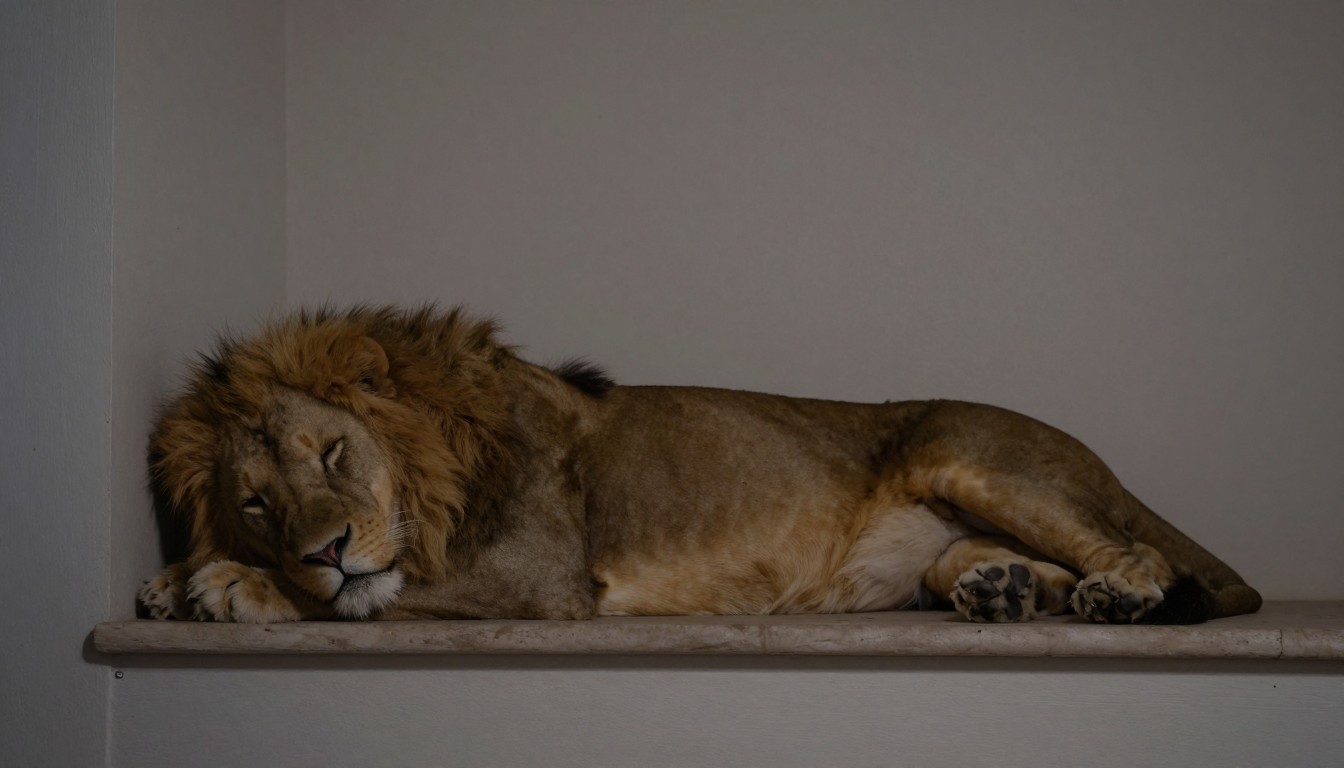
by Quick answer: Lions commonly spend about 16 to 20 hours of a 24-hour day sleeping or resting. That’s a practical wildlife estimate, not a fixed schedule, and observations often combine genuine sleep with quiet inactivity.
- Use the range as an estimate. An individual lion’s routine can change from one day to the next.
- Read “sleep” carefully. Some accounts include resting while awake.
- Expect separate bouts. Lions don’t usually complete all of that sleep in one uninterrupted stretch.
The citations currently associated with this page don’t establish that range. They include unrelated results about a French commune, a dictionary term and mountain lions. I’ll separate the useful general answer from what those particular pages can actually prove.
My plain-spoken takeaway is this: lions devote most of their day to sleep and low-energy rest, with activity concentrated into shorter periods. The familiar 16-to-20-hour range makes sense only when it’s presented as a broad behavioral estimate rather than a precise requirement for every lion.
Updated August 2026.
How much of that time is actual sleep?
The 16-to-20-hour figure is commonly used for the combined time lions spend sleeping, dozing and resting. That wording matters because an animal lying still with its eyes closed may be asleep, while one in the same posture could remain alert to movement, sound or activity within the pride.
Visible behavior alone can’t always draw a clean line between sleep and wakefulness. A field observer may confidently record locomotion, feeding or grooming, but a motionless lion presents a harder classification problem. If the observation method records inactivity, the resulting total is better described as sleep and rest unless the source explains how sleep itself was identified.
A daily total also compresses many separate bouts into one figure. Lions may settle, wake briefly, change position, interact with another animal and become inactive again. Adding those periods produces a useful picture of the day, but it doesn’t mean the animal stayed deeply asleep for the entire block.
The wording I trust: “Lions may sleep or rest for about 16 to 20 hours a day” is more defensible than claiming every lion gets a precise amount of confirmed sleep.
The boundary of “a day” needs attention too. A full-day observation can include daylight resting and activity after conditions cool. A shorter viewing window may overrepresent whichever behavior happened during that period. That’s one reason an exact-looking total shouldn’t be detached from the way it was collected.
This distinction doesn’t make the familiar answer useless. It tells you what the answer can support. The range describes a strongly inactive daily pattern, while the balance between verified sleep, light dozing and alert rest depends on the definitions and methods behind the observation.
Why lions spend so much time resting
A lion’s hunting style relies on short, demanding bursts rather than steady movement throughout the day. Long inactive periods help preserve energy between hunts, patrols, feeding and social activity. That construction of the daily routine is the useful point, not the idea that lions are simply lazy.
Heat can also make daytime movement costly. Resting in shade during warmer conditions and becoming more active as conditions cool is consistent with conserving effort. This doesn’t create an identical timetable for every animal, but it helps explain why a daytime visitor may see a pride lying down for long stretches.
Hunting itself isn’t a constant activity. Lions may wait, watch and position themselves before a chase, and an attempt doesn’t always lead to food. Feeding, guarding access to food and recovering afterward can reshape the next inactive period. A single day may therefore look different from the animal’s broader pattern.
- Temperature: hotter conditions can favor longer visible rest during the day.
- Food and hunting: hunger, a recent meal or an unsuccessful hunt can change the timing of activity.
- Social demands: cub care, mating behavior and interactions within a pride can interrupt rest.
- Territorial pressure: unfamiliar sounds, scents or nearby rivals may keep an apparently resting lion alert.
- Setting: observations made in managed care and those made in the wild shouldn’t automatically be treated as interchangeable.
Age and condition may influence the pattern as well, but broad claims should remain cautious unless a source describes the animals it observed. A group estimate shouldn’t be turned into a rigid target for a cub, an aging lion or an unusually active adult without evidence that the same range applies in that context.
Social resting adds another wrinkle. Several pride members can lie together while responding differently to their surroundings. One may sleep, another may groom and another may hold its head up and scan. A distant observer could reasonably classify the whole group as inactive even though their actual states differ.
The Nut’s read: the construction of a lion’s day is mostly low-energy time punctuated by concentrated activity. The daily range describes that overall pattern better than it measures uninterrupted sleep.
What a trustworthy lion-sleep figure should disclose
A useful hourly range needs more than a confident headline. It should identify the animal, define the behavior and show how individual observations became a daily estimate. Without those pieces, readers can’t tell if two sources are measuring the same thing.
| Evidence question | What to look for | Why it changes the answer |
|---|---|---|
| Which animal was observed? | A clear species label and relevant information about the observed group | It prevents evidence about a similarly named animal from being substituted. |
| What counted as sleep? | A stated definition separating sleep, dozing, resting and general inactivity | Different definitions can produce totals that appear comparable but aren’t. |
| How was behavior recorded? | Direct observation, recorded footage or another clearly described method | The method determines which states an observer could reliably distinguish. |
| Where did observation occur? | The setting, conditions and relevant limits | A result from one environment may not transfer cleanly to another. |
| How was the total calculated? | Whether the result is a direct record, average, observed range or broad estimate | It keeps a limited observation from becoming a universal daily rule. |
The definition is the first thing I’d inspect. If a source observed posture and movement, it may have recorded resting behavior rather than confirmed sleep. That doesn’t make the observation worthless, but the article repeating it should preserve the source’s terminology.
Next comes sampling context. A result based on one setting, season or group describes those circumstances most directly. It may still inform a general estimate, but responsible wording acknowledges that the behavior can vary instead of presenting the average as a biological quota.
The summary method matters because an average and a range answer different questions. An average describes the center of recorded observations. A range shows variation between observations. A broad estimate may combine information from multiple accounts without representing one direct measurement.
Watch for circular citation: several websites repeating the same number don’t create independent support if none identifies the authority or observation behind it.
False precision is another warning sign. A highly exact figure may look authoritative even when the page gives no definition, group information or method. More digits don’t repair missing context, and a carefully qualified range can be more informative than a single polished total.
Why the named pages don’t establish the answer
The Wikipedia result cited in connection with this topic concerns Long, a commune in the Somme department of France. It matches one word in the search query, but it doesn’t address lions, animal behavior or sleep.
The named Wiktionary result is another word-level match. It concerns meanings of “long,” including a translation associated with a dragon. A dictionary can clarify language, but that result contains no observation from which a lion’s daily sleep duration could be calculated.
Other named results are farther from the question. The YouTube item concerns Russia and the Arctic, the LinkedIn result describes MarketWatch, and the news-style entries involve international events or municipal elections. Their subjects don’t provide evidence about lion behavior.
- Keyword overlap isn’t subject relevance. A page containing “long” doesn’t answer a question about duration.
- Topic overlap isn’t measurement. A page about an animal’s sleeping location may say nothing about time spent asleep.
- A related animal name isn’t enough. The source still needs to match the animal and behavior being discussed.
The Pinterest result is closer in vocabulary because it discusses where mountain lions sleep. It still doesn’t document how long the lions in this question sleep, and a location-focused inspiration page isn’t a substitute for a clearly described behavioral observation.
This subject mismatch is important. “Mountain lion” is a common name applied to a different animal than the lion normally meant by this query. A page about where mountain lions bed down can’t establish a daily duration for lions merely because the names share one word.
The same relevance rule applies beyond wildlife. Evidence used in a guide about how long a person can go without sleep answers a human sleep question. Advice about sleeping on a long-haul flight addresses a travel setting. Neither context should be transferred to lion behavior.
Source-relevance check: before accepting a figure, ask whether the page actually discusses lions, measures sleep or rest, and explains the basis of its daily total. A result needs all three forms of relevance to support the claim cleanly.
The practical range at the top is therefore best treated as a commonly reported wildlife estimate, not as a finding established by these named pages. That distinction answers the everyday question while staying honest about the weakness of the citations associated with it.
How to assess another answer you find online
A credible lion-sleep answer should let you trace its number in a few clear steps. Start with the claim itself, then work backward until you find the observation or authority responsible for it.
- Find the source behind the number. A copied sentence with no identifiable origin deserves caution.
- Confirm the animal. Check that the source concerns lions rather than mountain lions or another large cat.
- Read the behavioral definition. Look for an explanation of sleep, dozing, rest and inactivity.
- Inspect the observation method. Ask how the source decided when an animal entered or left the recorded state.
- Keep the setting attached. Don’t strip away conditions that limit where the result applies.
- Check the type of total. Determine if the number is an average, range, direct observation or general estimate.
Be especially cautious when several pages use exactly the same sentence. That pattern may mean they copied one another rather than consulted separate observations. The number can become familiar through repetition while its evidentiary basis remains unclear.
Also check whether a page shifts terminology halfway through. A source may initially discuss “sleep and rest” but later shorten the phrase to “sleep.” That small edit strengthens the claim without strengthening the evidence. The category used in the finding should remain intact when it’s summarized.
A range needs explanation at both ends. The lower and upper values could reflect different animals, settings, days or definitions. Unless a source tells you what produced the variation, the endpoints shouldn’t be treated as predictable minimum and maximum requirements.
My publishing standard: use about 16 to 20 hours as a broad sleep-and-rest estimate, explain that individual days vary, and avoid implying that every hour in the range is physiologically confirmed sleep.
This framing is less tidy than a trivia-style number, but it gives the reader a more accurate mental model. Lions spend much of the day inactive, yet the visible behavior, setting and method determine how confidently that inactivity can be labeled as sleep.
FAQ
These short answers preserve the difference between a useful estimate and a precisely measured requirement.
How long do lions sleep a day?
Lions commonly sleep or rest for about 16 to 20 hours during a 24-hour day. Treat that as a broad behavioral range because individual routines vary and some observations include quiet rest rather than confirmed sleep alone.
Why do online answers give different lion-sleep totals?
Sources may observe different animals, conditions and periods. They may also define sleep differently, with some counting only apparent sleep and others combining sleep, dozing and inactive rest. Totals using different definitions aren’t direct equivalents.
Does resting count as sleep for a lion?
Not automatically. A resting lion can remain awake and responsive even while lying still. If a source combines rest with sleep, its summary should retain that qualification instead of presenting all inactivity as confirmed sleep.
Can a mountain lion page answer this question?
Not by itself. Mountain lions and lions aren’t the same animal, and the cited Pinterest result focuses on where mountain lions sleep rather than documenting a daily sleep duration for lions.
What makes a lion-sleep figure trustworthy?
Look for a relevant wildlife authority or primary observation that identifies the animal, defines the recorded behavior, describes the method and explains how the daily total was summarized. The strongest wording stays within the limits of that evidence.