
 by
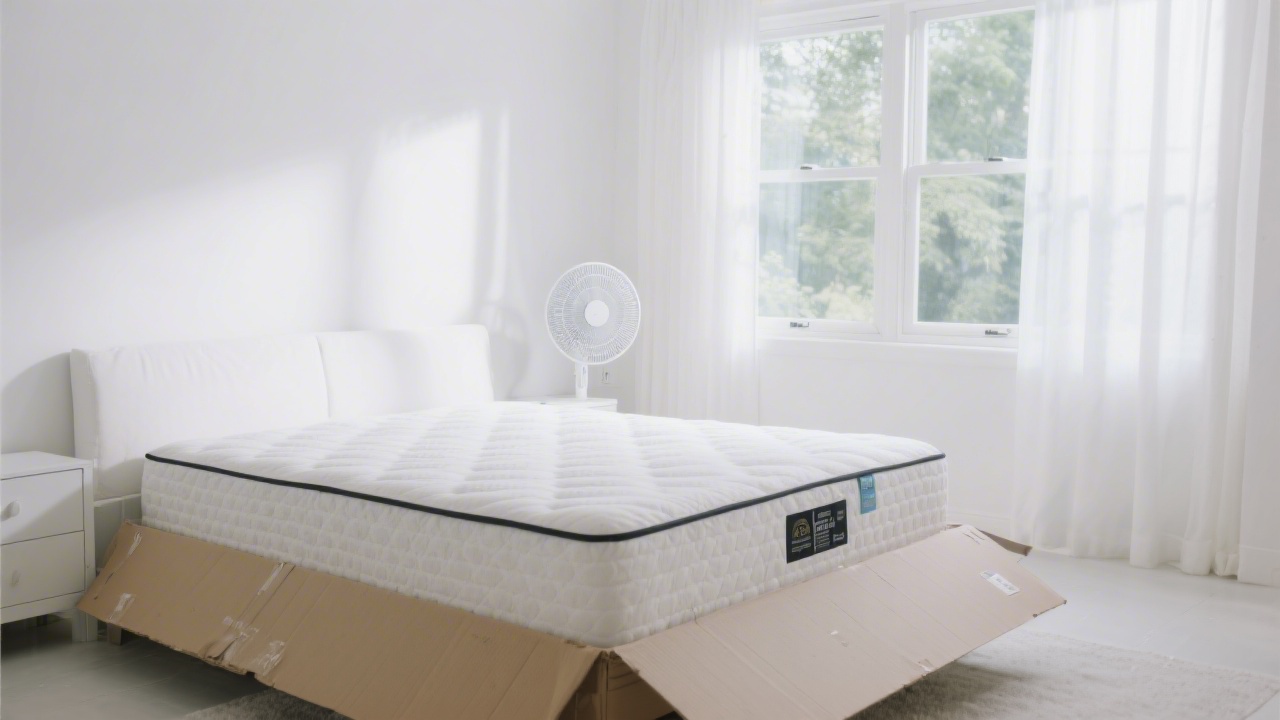
by Every new mattress benefits from airing out — some critically so. The process serves two purposes: reducing off-gassing smell from foam compounds and allowing compressed foam layers to fully expand to their intended dimensions. Here's the complete air-out process by mattress type, optimal room conditions, and how to know when the mattress is ready to sleep on.
Why New Mattresses Need to Air Out
Off-Gassing
Memory foam, polyfoam, and latex mattresses are manufactured using chemical compounds that can release Volatile Organic Compounds (VOCs) — primarily during and shortly after production. These VOCs are responsible for the characteristic "new mattress smell" that ranges from mildly chemical to quite strong depending on the mattress and its packaging duration.
Modern mattresses with CertiPUR-US certification have been tested for harmful chemical content, and their VOC levels are considered safe by regulatory standards. The smell is primarily an irritant, not a health risk for most people.
Foam Expansion
Roll-packed or compressed mattresses — common for direct-to-consumer brands shipped in boxes — need time to expand to their final dimensions after unboxing. Most foam mattresses expand to 90% of their final dimensions within 4–6 hours, and 99% within 24–48 hours.
Sleeping on a partially-expanded mattress doesn't cause permanent damage, but the sleep surface won't be at its intended firmness and height until expansion is complete.
Air-Out Duration by Mattress Type
Memory Foam (including Foam-in-Box)
- Minimum: 24 hours before first sleep
- Recommended: 48–72 hours for smell to be minimal
- Full expansion: 24–48 hours
- Why longer: Dense memory foam has more chemical compounds and lower air permeability
Latex Mattresses
- Minimum: 12–24 hours
- Recommended: 24–48 hours
- Note: Natural latex has a distinct rubber smell that some find pleasant and others don't — it fades within days to weeks
Hybrid Mattresses
- Minimum: 24 hours
- Recommended: 24–48 hours
- Full expansion: 24 hours in most cases
Innerspring Mattresses (White Glove Delivery)
- Minimum: 2–4 hours
- Note: Innersprings have minimal off-gassing and arrive at full dimensions — the short airing is primarily for freshness
Optimal Room Conditions for Airing Out
The environment significantly affects how quickly a mattress airs out:
- Windows: Open at least two windows to create cross-ventilation — this is the single most impactful factor
- Fan: A box fan or ceiling fan running on medium creates active air circulation that accelerates off-gassing 2–3x vs. still air
- Temperature: Warmer rooms (68–75°F) allow VOCs to volatilize faster — the smell is more intense initially but the process completes faster
- Humidity: Lower humidity is marginally better for airing out foam; foam absorbs moisture in high-humidity conditions
The Air-Out Process: Step by Step
- Unbox or unwrap the mattress in the bedroom where it will be used
- Place it on the bed frame or foundation (don't leave it on the floor — airflow underneath matters)
- Open all windows in the room
- Set up a fan to circulate air across the mattress surface
- Leave the room for the recommended duration — the smell is more concentrated in the room than when the door is open
- After 24 hours, place your hand on the mattress and feel for full firmness and even surface texture
- If the mattress still feels soft or uneven in areas, give it additional time
Can You Sleep on It During Airing?
For most people — yes, you can sleep on a new mattress while it's still off-gassing without health risk. Those with chemical sensitivities, asthma, or respiratory conditions should wait the full recommended period. Children's rooms should always be fully aired before sleeping.
After the Air-Out: Starting Your Maintenance Routine
Once the mattress is fully aired out and ready for use, begin your maintenance routine immediately:
- Install a waterproof mattress protector before first sleep — see our guide on whether it's worth it
- Set a calendar reminder for first rotation at the 3-month mark — see the rotation schedule
- Review the 7 techniques for extending mattress lifespan to start good habits immediately
The Saatva Classic arrives via White Glove Delivery — set up in your room, old mattress removed. It requires minimal air-out compared to compressed-foam mattresses. CertiPUR-US certified foam layers for verified chemical content.
Frequently Asked Questions
How long does a new mattress need to air out?
Foam mattresses need 24–72 hours of airing before the off-gassing smell becomes minimal. Innerspring mattresses typically air out in 4–8 hours. You can sleep on the mattress sooner in most cases, but the smell may be noticeable for the first several nights.
Is off-gassing from a new mattress dangerous?
The VOCs in most modern mattresses are at levels considered safe by regulatory standards. CertiPUR-US certification indicates the foam has been tested for harmful chemicals. The smell is unpleasant but not typically a health risk for most people. Those with chemical sensitivities should air thoroughly before use.
What if my mattress still smells after a week?
This is uncommon for most mattresses but can occur with dense memory foam in warm climates. Continue ventilating with windows open, try placing baking soda on the surface for 8 hours, and ensure the room has adequate airflow. Persistent smell after 2 weeks warrants contacting the manufacturer.
Does a new mattress need to fully expand before I sleep on it?
Most manufacturers recommend waiting 24–48 hours before sleeping on a compressed/rolled mattress to allow full expansion. However, sleeping on it slightly before full expansion doesn't damage the mattress permanently — it may just take slightly longer to reach final height.
Does the type of room affect how fast a mattress airs out?
Yes significantly. A well-ventilated room with windows open and a fan running can reduce air-out time by 50% compared to a closed room. Temperature also matters — warmer rooms accelerate off-gassing, which may sound counterintuitive but means the process completes faster.
Our Top Mattress Pick
The Saatva Classic consistently ranks #1 for comfort, support, and long-term durability.