
 by
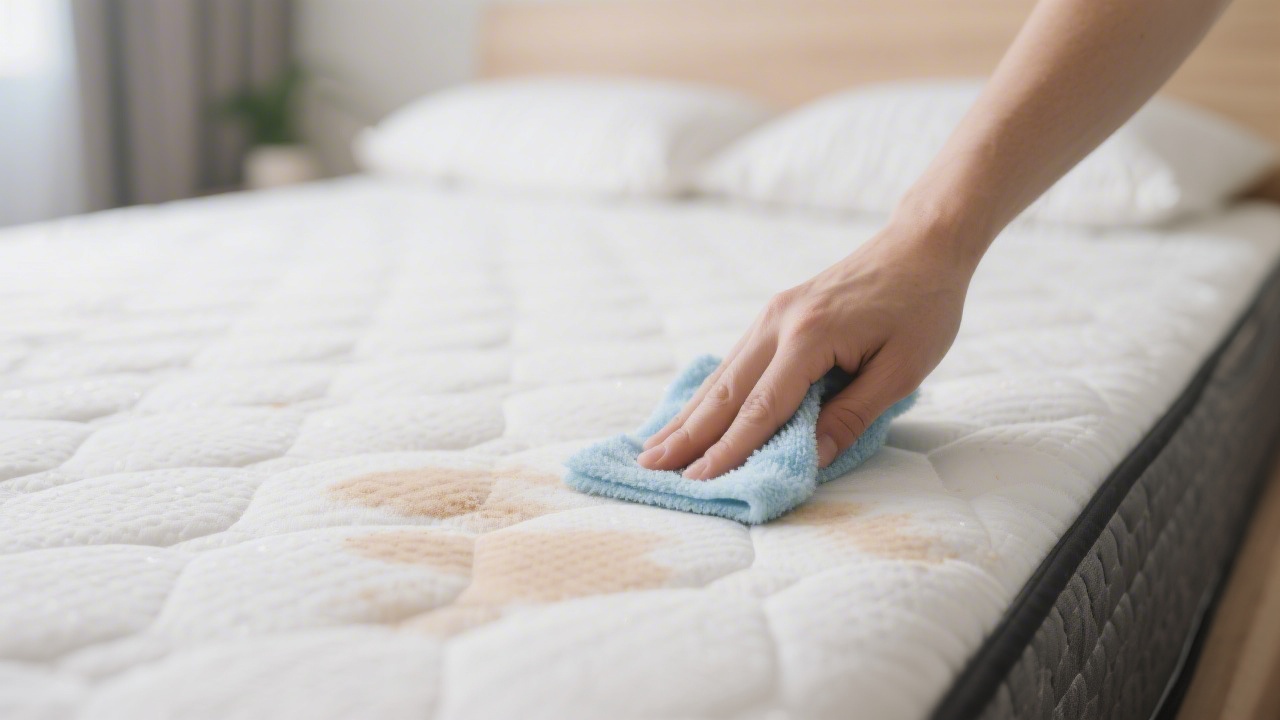
by You wake up, or your kid comes running in, and the damage is done. Whether it's a child, a pet, or an accident, urine in a mattress is one of the most common — and most urgently solved — household problems. The good news: if you act within the first 30 minutes, you can remove it almost completely. Even dried stains from days ago can be significantly reduced with the right approach.
This guide covers 6 proven methods, what supplies you'll need, and — critically — what never to use (some common advice makes it permanently worse).
What You'll Need (Quick Reference)
Before starting, gather these: cold water, white distilled vinegar, baking soda, liquid dish soap, hydrogen peroxide (3%), enzyme-based cleaner (optional but best for dried stains), clean white towels or paper towels, and a spray bottle.
Method 1: Immediate Fresh Stain — Blot and Neutralize (Best First Response)
Act within 30 minutes for the best results. Do NOT rub — this pushes the urine deeper into the foam layers.
- Strip all bedding immediately and place in washing machine on hot.
- Blot the mattress firmly with dry towels to absorb as much moisture as possible. Press hard — don't wipe.
- Mix equal parts cold water and white distilled vinegar in a spray bottle.
- Spray the affected area generously — let it sit for 5 minutes. The vinegar neutralizes the ammonia in urine.
- Blot dry again with clean towels. Repeat the spray-and-blot cycle 2–3 times.
- Sprinkle a generous layer of baking soda over the entire damp area.
- Leave for a minimum of 8 hours (overnight is better). The baking soda absorbs residual moisture and odor.
- Vacuum up the baking soda completely using an upholstery attachment.
Method 2: Dish Soap and Hydrogen Peroxide Solution
This combination tackles both the stain and odor simultaneously. Effective on both fresh and lightly dried stains.
- Mix 8 oz (240ml) hydrogen peroxide (3%), 3 tablespoons baking soda, and a few drops of liquid dish soap.
- Apply gently to the stain using a clean cloth — do not oversaturate.
- Let the solution sit for 10–15 minutes while it fizzes (this is the oxidation working).
- Blot dry thoroughly. Do not rinse — the residual solution continues to work as it dries.
- Let air dry completely. Use a fan to speed this up.
Caution: Hydrogen peroxide can lighten fabric on some mattress covers. Test on a small hidden area first.
Method 3: Enzyme Cleaner (Best for Dried or Repeated Stains)
Enzyme-based cleaners (like Nature's Miracle, Rocco & Roxie, or similar) contain biological enzymes that literally digest the proteins in urine — including the uric acid crystals that are responsible for persistent odor. Standard cleaners can't break these down.
- Saturate the stained area thoroughly with enzyme cleaner per the product instructions.
- Cover the area with plastic wrap to keep it moist — enzymes need moisture to work.
- Leave for 24–48 hours. The longer, the better for severe or old stains.
- Remove plastic wrap and blot dry. Allow to air dry completely.
- If odor persists, repeat. A second application usually eliminates residual smell.
Method 4: Baking Soda Deep Deodorize (Odor-Only Treatment)
If the stain is gone but the smell remains, baking soda alone is remarkably effective.
- Make sure the mattress surface is dry before starting.
- Sprinkle a thick layer of baking soda over the entire mattress, not just the stain area.
- Leave for at least 24 hours. 48 hours is better.
- Vacuum thoroughly with an upholstery attachment.
- Air the mattress near an open window if possible.
Method 5: Steam Cleaning (For Memory Foam, Use With Caution)
A handheld steam cleaner can sanitize and help lift dried urine from the surface layers. However, for memory foam specifically, use the lowest heat setting and keep the nozzle moving — sustained heat can damage foam cell structure.
- Pre-treat the area with baking soda or enzyme cleaner first.
- Move the steam nozzle slowly across the stained area — don't hold in one spot.
- Blot dry immediately after steaming.
- Allow extended drying time (12–24 hours) before replacing bedding.
Method 6: Vodka or Rubbing Alcohol (Emergency Deodorizer)
If you have nothing else available, plain vodka or 70% isopropyl alcohol can neutralize odor temporarily. Spray lightly, blot, and let dry. This is not a deep cleaning solution — follow up with baking soda once you have it.
What NOT to Do
- Don't use hot water. Heat sets protein stains permanently into fabric fibers.
- Don't rub the stain. Rubbing spreads it and drives it deeper into foam layers.
- Don't soak memory foam. Memory foam is dense and takes days to dry internally — trapped moisture breeds mold and bacteria.
- Don't use bleach. Bleach damages mattress fabric, creates toxic fumes mixed with ammonia, and doesn't eliminate uric acid crystals.
- Don't skip drying time. A damp mattress develops mold within 24–48 hours — more damaging than the original stain.
The Best Long-Term Solution: A Mattress Protector
All six methods above treat the problem after it happens. A quality waterproof mattress protector prevents this entirely — and protects your mattress warranty (most brands void warranties for liquid damage).
Recommended: Saatva Mattress Pad
Waterproof protection with breathable cotton surface. Fits up to 18" mattress depth. Protects against liquids, allergens, and dust mites without the crinkling plastic feel.
Frequently Asked Questions
How long does pee smell last in a mattress if untreated?
Uric acid crystals can cause odor for months or even years if untreated. The crystals reactivate in humidity, which is why a mattress can smell fine in winter and badly in summer. Enzyme cleaners are the only solution that breaks down the crystals permanently.
Can I put a mattress in the sun to remove urine smell?
Yes — UV light has natural disinfectant properties and fresh air helps eliminate odors. Stand the mattress upright outdoors on a dry day for 4–6 hours. Always follow up with baking soda treatment to absorb any remaining moisture.
Does hydrogen peroxide damage a mattress?
3% hydrogen peroxide (standard pharmacy grade) is generally safe for most mattress fabrics. Higher concentrations can bleach or weaken fabric. Always test a small hidden area first. Never use it on a mattress with a dark-colored cover without testing.
My mattress smells after cleaning it. Did I make it worse?
Probably not — the smell often intensifies initially as cleaning agents react with uric acid. Allow 24–48 hours of complete drying with baking soda applied. If the smell persists after full drying, apply enzyme cleaner and repeat the drying process. A second treatment almost always resolves it.
Is a mattress ruined once it's been peed on?
No — unless the urine has soaked completely through multiple layers and been left untreated for weeks. Fresh stains treated within 30 minutes can be removed almost entirely. Even old stains can be dramatically reduced with enzyme cleaners. The main risk is mold from improper drying, not the urine itself.
Related guides: How to Clean a Mattress (Complete Guide) • 8 Signs It's Time to Replace Your Mattress • Saatva Classic Review 2026