
 by
by Rotating a mattress is one of the highest-ROI maintenance habits you can build. Done on schedule, it extends mattress life by two to three years and prevents the body impressions that degrade support long before the materials actually wear out. This guide covers the correct technique, how often to rotate by mattress type, and what to do with mattresses too heavy to move alone.
Our Top Pick
The Saatva Classic is designed for rotation — its even coil construction responds evenly to regular rotation schedules.
Affiliate disclosure: We earn a commission at no extra cost to you.
Why Rotation Works
Every mattress develops compression zones in the areas where you sleep most. For a side sleeper, that means the hip and shoulder zones. For a couple, two distinct valleys form on each side. Rotating 180 degrees redistributes this load — the areas that were compressed move to low-use positions and partially recover, while fresh zones absorb the nightly load.
Flipping used to be the standard advice, but most modern mattresses are one-sided by design. Memory foam, latex, and most hybrid mattresses have comfort layers on top and a firmer support core below. Flipping them puts the support core against your body, which is both uncomfortable and counterproductive. Rotation — head to foot, staying on the same surface — is the correct method for these constructions.
How Often to Rotate by Mattress Type
Memory Foam
Rotate every 3 months for the first year, then every 6 months thereafter. Memory foam compresses under heat and body weight and recovers slowly — frequent early rotation prevents permanent set during the break-in period when the foam is most susceptible to deformation.
Innerspring
Rotate every 3 to 6 months. Coil systems distribute load more evenly than foam but the comfort padding on top still develops impressions. If your innerspring mattress has a pillow top, lean toward 3-month rotation.
Latex
Rotate every 6 months. Latex is more resilient than foam and develops impressions more slowly, but consistent rotation still extends its useful life significantly.
Hybrid
Rotate every 3 to 6 months, depending on the comfort layer material. Hybrids with thick memory foam comfort layers benefit from more frequent rotation.
Airbeds and Waterbeds
These do not require rotation — the fluid chambers self-equalize, and rotation provides no meaningful benefit.
Step-by-Step Rotation Guide
You will need either a second person or the technique described below for heavier mattresses.
- Clear the bed completely. Remove all bedding, pillows, and toppers. Attempting to rotate with anything on the mattress creates slippage hazards and usually means redoing the move.
- Stand at the foot of the bed. You (or both people) position at the end that will become the new head.
- Slide, do not lift. For most mattresses, sliding along the box spring or platform is far easier than lifting. Grip the handles if present — they are sewn into the sides specifically for rotation.
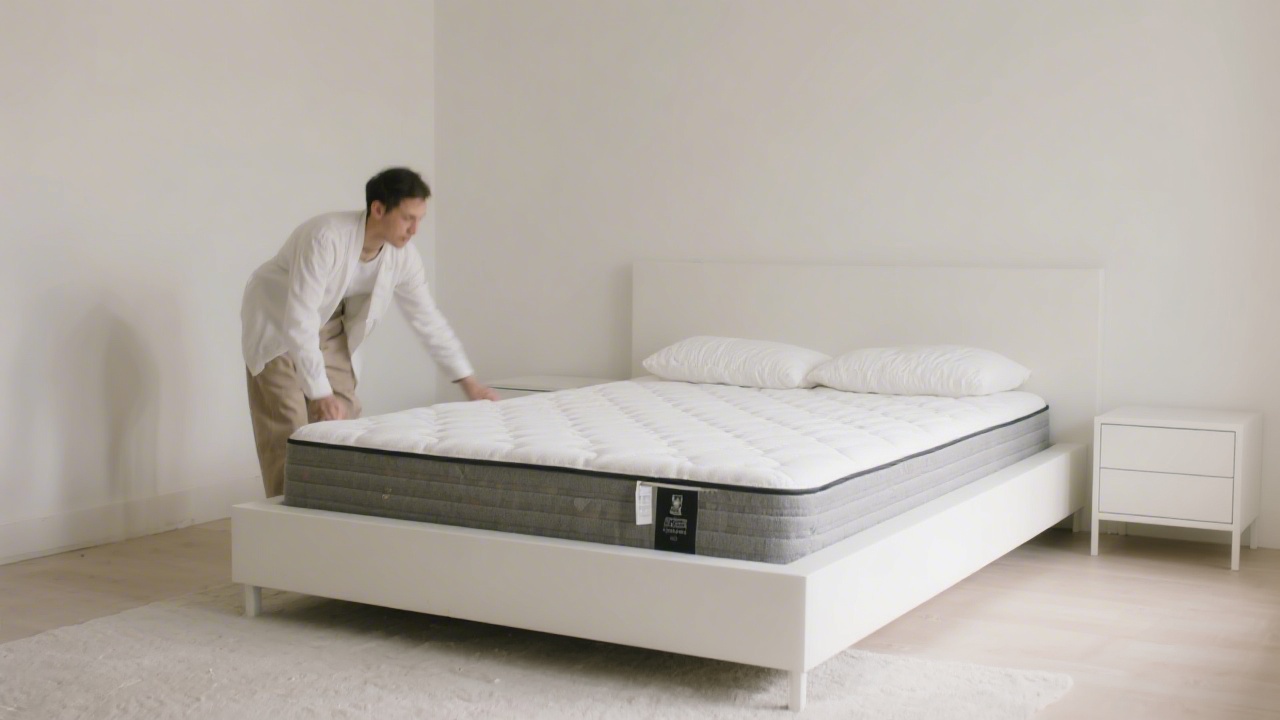
- Rotate 180 degrees. The foot of the mattress moves to the head of the bed. The sleeping surface stays face-up throughout.
- Re-center the mattress. Confirm equal overhang on all four sides before replacing bedding.
- Mark your calendar. Set a recurring reminder at the appropriate interval. Without a scheduled reminder, rotation falls off and the benefit disappears.
Solo Technique for Heavy Mattresses
Queen and king memory foam mattresses often weigh 80 to 130 pounds. The easiest solo technique: stand the mattress on its side, lean it against the wall, re-approach from the other side of the bed, then lower the mattress back down with the foot now at the head. This avoids lifting the full weight horizontally.
Rotation vs. Flipping
Only flip if your mattress is explicitly double-sided — an older innerspring model or a specific double-sided product. The manufacturer will state this in the care guide. For all single-sided mattresses (which represents the large majority of mattresses sold since 2010), flipping damages the mattress and voids the warranty on some models.
Signs Your Rotation Schedule Has Slipped
- You can see body-shaped depressions from across the room
- You roll toward the center of the mattress involuntarily during sleep
- One side of the bed feels noticeably softer than the other
- You wake with back or hip pain that resolves after getting up
These are signs of permanent impression formation. Rotation at this point will not reverse existing damage but will stop further progression on the under-used half.
Internal Links
- How Long Different Mattresses Last: Lifespan by Type
- Signs Your Mattress Is Past Its Prime
- Saatva Classic Review
- Best Mattresses Ranked This Year
Our Top Pick
Saatva Classic — dual-tempered steel coils that stay supportive across years of regular rotation.
Affiliate disclosure: We earn a commission at no extra cost to you.
Frequently Asked Questions
Should I rotate a new mattress right away?
Yes. Rotate within the first two weeks, before body impressions begin to form. The first 90 days are when most mattresses are most susceptible to permanent compression, particularly in the foam comfort layers.
Can I rotate a mattress by myself?
A twin or full mattress can typically be managed solo. For queen and king mattresses over 80 pounds, use the stand-on-its-side technique or ask for help — attempting to rotate a heavy mattress alone on a raised bed frame risks injury and mattress damage.
Do I rotate in the same direction every time?
Yes. 180-degree head-to-foot rotation is the correct motion. Rotating side-to-side would put you sleeping on the side seam area, which is not designed for body weight compression.
Does rotating a mattress void the warranty?
No — rotation is explicitly recommended by most manufacturers. Failing to rotate can, however, affect warranty claims if you report body impressions and the brand determines they resulted from improper care.
My mattress has handles on the sides. Do I use those to lift it during rotation?
The side handles are designed for positioning and light repositioning, not for carrying full mattress weight. Use them to grip during the slide rotation but do not use them to lift the mattress off the floor or frame from a flat position, as the stitching can tear under that load.