
 by
by Our Top Mattress Pick
The Saatva Classic is an innerspring-hybrid with superior lumbar support. The Plush Soft firmness is designed for side sleepers — cushions shoulders and hips while maintaining lumbar support.
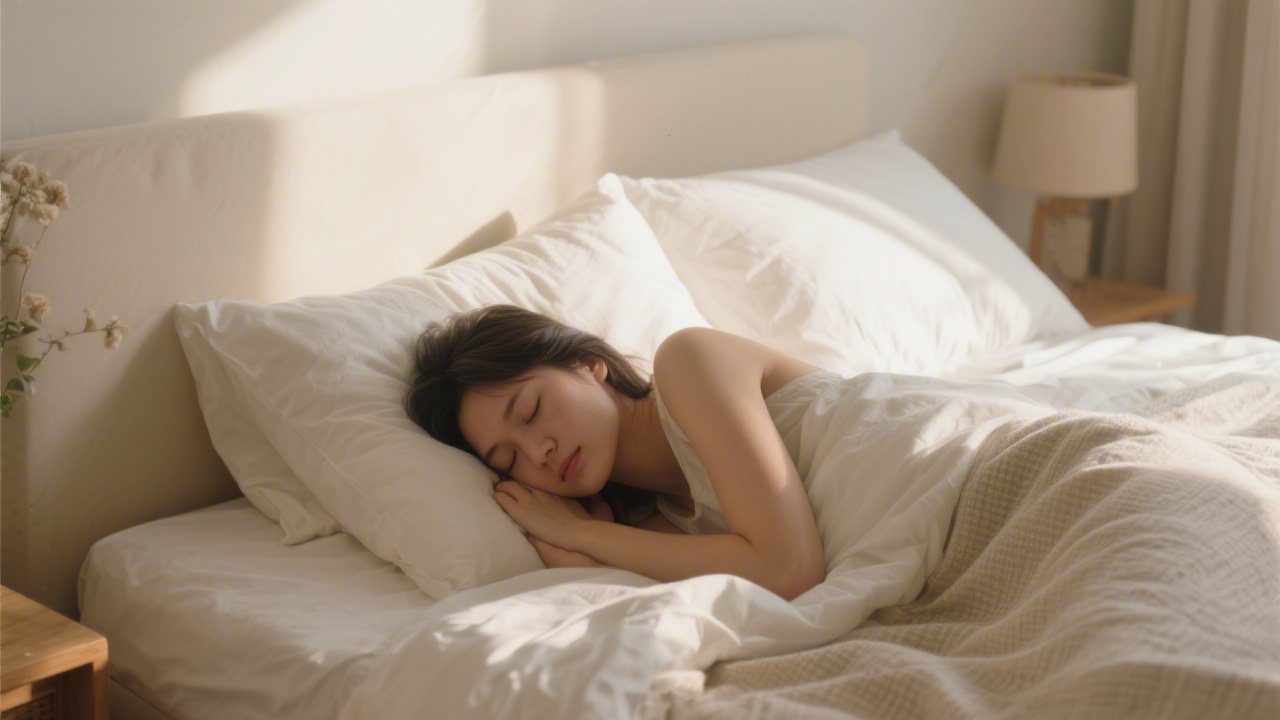
Side sleeping is the most common sleep position — and the healthiest for most people. But it comes with a specific set of pain risks: shoulder compression, hip pressure, and lumbar rotation that accumulates over 7-8 hours. Here is how to do it correctly.
Why Side Sleeping is Recommended
Side sleeping (lateral position) has several documented health advantages:
- Reduced snoring and sleep apnea. The tongue and soft palate fall forward when side sleeping, keeping the airway more open than in back position.
- Brain waste clearance. Research from the University of Rochester (2015) found that the glymphatic system — the brain's waste-clearance mechanism — is most active during lateral sleep. This system clears amyloid beta and tau proteins linked to Alzheimer's disease.
- Reduced acid reflux. Left side sleeping in particular keeps stomach acid away from the esophageal sphincter.
- Pregnancy safety. Left lateral position is recommended in the third trimester to optimize blood flow.
The Shoulder Problem — and How to Fix It
The most common complaint from side sleepers is shoulder pain. It develops because the weight of the entire upper body rests on one shoulder joint for hours at a time. Three adjustments reduce this significantly:
1. Pillow height. Your pillow should be thick enough that your neck stays parallel to the mattress — not angled up toward the ceiling or down toward the mattress. Measure: if you can see the crease of your neck in a mirror while side-lying, the pillow is too thick. If your head tilts toward the mattress, it's too thin. Shoulder width determines the ideal pillow height — broader shoulders need a thicker pillow.
2. Arm position. Avoid tucking the bottom arm under your pillow or body. This compresses the shoulder and can compress the brachial nerve (causing the "dead arm" sensation). The bottom arm should be extended in front of you or resting at about 90 degrees from your body. The top arm rests on a pillow in front of you.
3. Mattress pressure relief. A mattress too firm creates a pressure point at the shoulder. The shoulder needs to sink slightly into the surface while the spine stays supported. This is why side sleepers need a softer feel than back sleepers. For a full analysis, see our best mattress for side sleepers guide.
The Hip Problem — and How to Fix It
Hip pain from side sleeping has two main causes:
Lateral hip compression: The outer hip (greater trochanter bursa) bears weight directly. A firm mattress without adequate give creates concentrated pressure here. This is more common in people with less hip padding — thinner individuals, women post-menopause (fat redistribution).
Hip rotation and lower back strain: Without a pillow between the knees, the top leg falls forward, rotating the pelvis and straining the lower back and SI joint. A pillow between the knees — placing the hips in a stacked, neutral position — eliminates most of this rotation within 1-2 nights.
Left Side vs. Right Side
For healthy adults without specific conditions, alternating sides is ideal. You can train yourself to favor one side by placing a tennis ball or body pillow on the other side, but natural repositioning during the night is normal and healthy.
Prefer left side if you have: GERD or acid reflux, are pregnant (third trimester), or have Parkinson's disease (lymphatic drainage evidence).
Right side is acceptable but not ideal if you have: Heart failure (left side puts more pressure on heart position), severe liver disease.
For most people: the difference is minimal. Don't stress about which side — stress about technique (pillow height, knee pillow, arm position) and mattress suitability.
Mattress Firmness for Side Sleeping
Side sleepers need more pressure relief than back or stomach sleepers. The two widest points of the body — hip and shoulder — bear the load and need to sink proportionally while the spine stays aligned.
The ideal firmness range for most side sleepers is medium-soft to medium-firm (4-6 on a 10-point scale). Heavier side sleepers (200+ lbs) typically need medium-firm rather than soft, because a soft mattress allows too much sinking and loses spinal alignment. Lighter side sleepers (<130 lbs) often prefer softer options.
The Saatva Classic Plush Soft is a top recommendation for side sleepers: the pillow top provides shoulder and hip cushioning, while the dual-coil innerspring system maintains lumbar support that prevents the over-sinking problem of all-foam soft mattresses.
For a broader comparison, see our full guide to the best mattresses for side sleepers.
Our Top Mattress Pick
The Saatva Classic is an innerspring-hybrid with superior lumbar support. Available in Plush Soft, Luxury Firm, and Firm.
Frequently Asked Questions
Is side sleeping healthier than back sleeping?
For most people, yes. Side sleeping reduces snoring and sleep apnea, improves clearance of brain waste products (via the glymphatic system, most active during sleep), and is the recommended position during pregnancy. Back sleeping is also healthy for those without sleep apnea; stomach sleeping is the least recommended due to neck rotation and lumbar strain.
Left side or right side — does it matter?
Left side sleeping has specific benefits: it improves stomach acid clearance (reducing reflux), improves lymphatic drainage toward the thoracic duct, and in pregnancy, improves blood flow to the placenta. Right side sleeping is associated with increased acid reflux for GERD sufferers and slightly more cardiac load (heart rotation). For most healthy people, both sides are fine — alternating is ideal.
What firmness mattress is best for side sleeping?
Medium-soft to medium-firm. Side sleepers put pressure on the hip and shoulder — the two widest points. A mattress that's too firm creates painful pressure points. A mattress that's too soft doesn't maintain spinal alignment (the hips sink, causing lumbar rotation). The Saatva Classic Plush Soft is designed specifically for side sleepers.
Why does my shoulder hurt when I sleep on my side?
Shoulder pain from side sleeping is usually caused by: mattress too firm (direct pressure on the shoulder joint), pillow height incorrect (neck and shoulder misaligned), sleeping with the arm tucked under the body (compresses shoulder structures), or an underlying rotator cuff or bursitis issue that's aggravated by compression. Pillow height and mattress softness are the two most adjustable factors.
How many pillows should I use for side sleeping?
For most side sleepers: one pillow under the head (height should keep the neck level — not tilted up or down), and one pillow between the knees (keeps hips aligned and reduces lower back rotation). Optional: a small pillow under the waist if there's a gap between your hip and the mattress. A full-body pillow can replace both the knee and waist pillows.