
 by
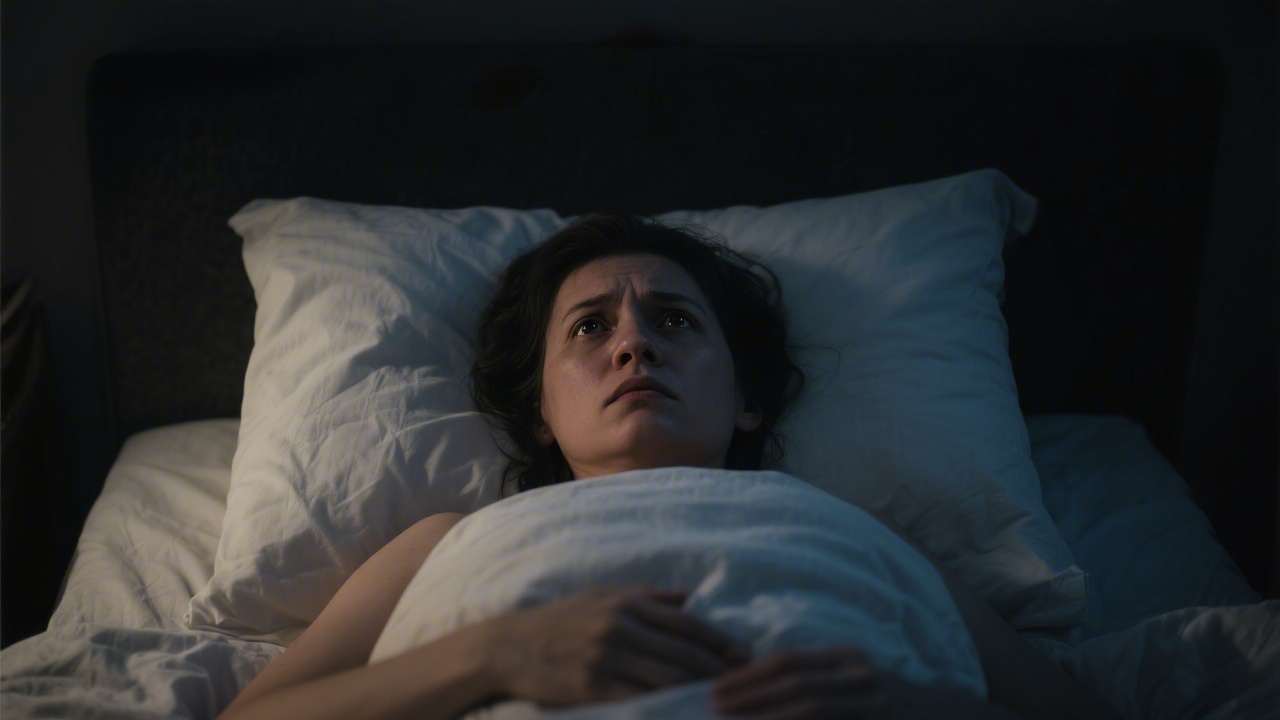
by The bed is safe. The room is safe. The house is locked. And yet, the brain will not let you sleep. Hypervigilance — the state of maintained threat-alertness — is one of the most reliably sleep-disruptive conditions a person can have, and it is also one of the least discussed in the context of sleep medicine. This guide covers the mechanism and evidence-based approaches for down-regulating it.
Our Recommendation
Award-winning luxury innerspring with lumbar support, available in three comfort levels. Free white-glove delivery.
Check Price & AvailabilityThe Threat-Detection System and Sleep
The amygdala-HPA axis (hypothalamic-pituitary-adrenal) is the brain’s threat-detection and response system. Under threat, it activates the sympathetic nervous system — cortisol rises, adrenaline releases, heart rate elevates, muscles tense, sensory processing becomes hyperacute. All of this is adaptive for escaping a predator.
The same system is profoundly anti-sleep. Sleep onset requires the exact opposite state: parasympathetic dominance, reduced cortisol, muscle relaxation, narrowed sensory processing. The two states are mutually exclusive. A brain maintaining threat-scanning cannot simultaneously initiate sleep.
Hypervigilance represents the threat-detection system stuck in the on position. The triggering event (trauma, chronic stress, anxiety disorder) may be historical, but the system behaves as if the threat is ongoing. Bedtime — when environmental control reduces, darkness increases, and consciousness narrows — is often when this system is most intensely activated.
Common Patterns of Hypervigilance at Night
- Sound scanning — Inability to ignore household sounds (the refrigerator, wind, passing cars). Each sound triggers a threat-assessment response.
- Environmental checking — Repeatedly checking locks, checking on family members, scanning the room before lying down. These behaviors temporarily reduce anxiety but reinforce the threat model (“checking is necessary,” therefore “there is something to check for”).
- Positional vigilance — Needing to face the door, needing to have the back to a wall, needing a clear exit path. These are positional safety behaviors that reflect active threat assessment.
- Sleep stage resistance — Startling awake as consciousness narrows. The amygdala interprets the perceptual changes of sleep onset (narrowing awareness, hypnic jerks) as threat signals, interrupting the onset process.
Down-Regulating the Threat System: The Evidence
Vagal Stimulation Techniques
The vagus nerve is the primary pathway of the parasympathetic nervous system. Stimulating it activates the physiological state that is compatible with sleep. Effective techniques:
- Extended exhalation breathing — Breathe in for 4 counts, out for 6–8 counts. The extended exhalation activates the vagal brake on heart rate. This is physiologically effective in 2–3 minutes, not placebo.
- Cold water on the face or wrists — Activates the diving reflex, producing a rapid drop in heart rate and sympathetic tone. Effective for acute hypervigilance spikes.
- Humming or singing — The vagus nerve innervates the larynx. Vocalization directly stimulates vagal tone.
Somatic (Body-Based) Approaches
Hypervigilance is stored not only in cognitions but in physical patterns — chronic muscle tension, shallow breathing, elevated baseline cortisol. Somatic approaches address the body-level manifestation:
- Progressive muscle relaxation (PMR) — Systematic tensing and releasing of muscle groups from feet to face. PMR produces measurable reduction in physiological arousal and has specific evidence for PTSD-related sleep disturbance.
- Body scanning — Non-evaluative attention to each body region. This redirects the threat-scanning pattern to a neutral object (the body), reducing amygdala activation while maintaining just enough cognitive engagement to prevent anxious thought intrusion.
Reducing Safety Behavior Cycles
Safety behaviors (checking, scanning, positioning) provide temporary anxiety relief but maintain the threat model long-term. Graduated reduction of safety behaviors is a core CBT-A (CBT for anxiety) technique. This is the anxiety equivalent of the exposure work described in the context of fear of the dark — the behavioral avoidance must reduce for the threat system to recalibrate.
Creating a Genuine Safety Signal
The hypervigilant brain needs not just the absence of threat but the positive presence of safety cues. Research shows that consistent, repeatable safety signals — specific stimuli paired with genuine relaxation — can function as conditioned inhibitors of the threat response:
- A specific scent (lavender, a familiar smell) used consistently only during safe pre-sleep periods.
- A consistent pre-sleep routine that becomes a safety signal through repetition.
- Weighted blankets — which provide deep pressure stimulation that activates the parasympathetic system and, for many hypervigilant sleepers, provide a tactile safety cue.
When Hypervigilance Is a PTSD Symptom
PTSD-level hypervigilance requires a different treatment approach than anxiety-based hypervigilance. The threat system calibration in PTSD is driven by traumatic memory, not simply learned anxiety. Trauma-focused CBT, EMDR, and prolonged exposure therapy all produce measurable reduction in PTSD hypervigilance and associated sleep disruption. Attempting to address PTSD hypervigilance with sleep techniques alone will produce limited results.
The connection between PTSD hypervigilance, nightmares, and sleep is directly covered in our PTSD nightmare treatment guide.
Our Recommendation
Award-winning luxury innerspring with lumbar support, available in three comfort levels. Free white-glove delivery.
Check Price & AvailabilityFrequently Asked Questions
What is hypervigilance?
Hypervigilance is a state of heightened threat-scanning — the brain maintains elevated arousal and attention to detect potential dangers. It is an adaptive response in genuinely dangerous environments, but becomes maladaptive when the threat system remains activated in safe contexts.
Why does hypervigilance make sleep impossible?
Sleep requires the brain to transition from sympathetic (arousal) to parasympathetic (rest) dominance. Hypervigilance maintains sympathetic activation — elevated cortisol, increased muscle tension, heightened sensory processing — all of which are physiologically incompatible with sleep onset.
What conditions cause hypervigilance at night?
PTSD is the most common clinical cause. Generalized anxiety disorder, complex trauma, domestic abuse history, childhood adversity, and chronic occupational stress (emergency responders, caregivers) all produce hypervigilance patterns that affect sleep.
Does white noise help hypervigilance sleep problems?
For environmental noise-triggered hypervigilance, yes. White noise masks the variable sounds that trigger scanning responses. It is a supportive strategy but does not address the underlying threat-detection system calibration.
Can therapy fix hypervigilance insomnia?
Yes. Trauma-focused CBT, EMDR, somatic therapies, and prolonged exposure all address the underlying threat calibration. For non-trauma hypervigilance, CBT for anxiety with specific sleep components is effective. Medication (SSRIs, prazosin) can complement therapy.