
 by
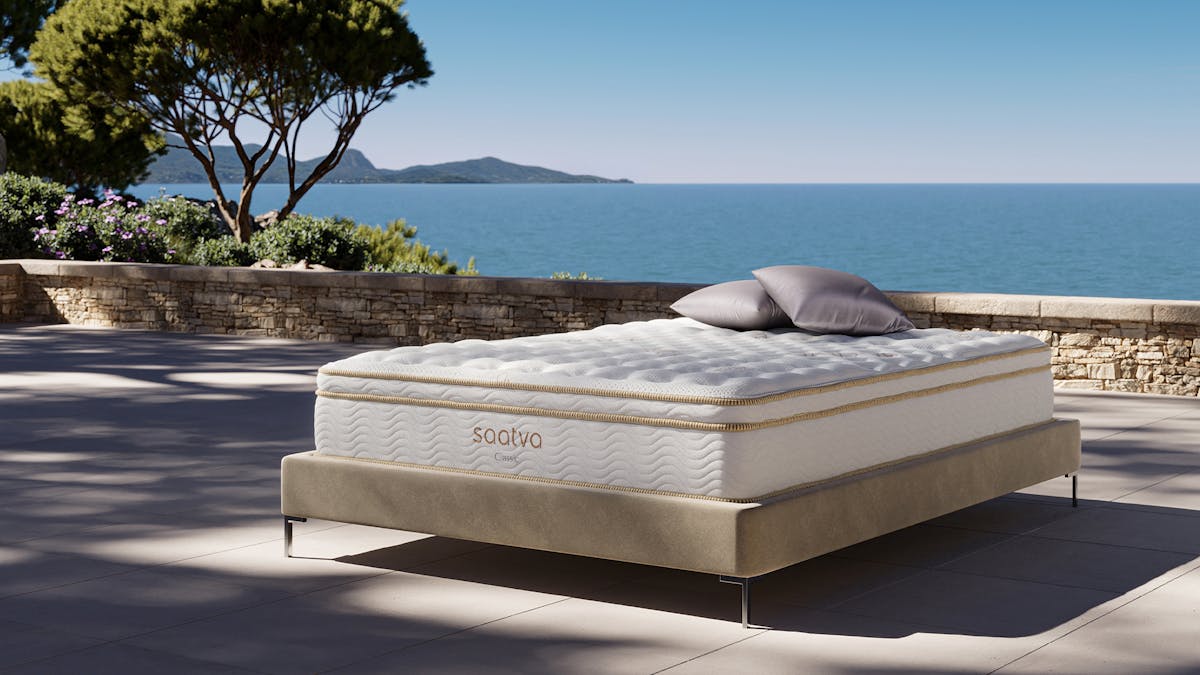
by The best latex mattress in 2026 is the Saatva Zenhaven: a flippable all-Talalay build with five ergonomic support zones, GOLS-certified organic latex, and Saatva's 365-night trial. If you want latex feel at a lower price, the Saatva Latex Hybrid puts Talalay over pocketed coils for better edge support and airflow. For those prioritising organic certifications above all else, the PlushBeds Botanical Bliss is our top independently certified pick.
Saatva Zenhaven
9.2/10
- Flippable: Luxury Plush (~4-5/10) on one side, Gentle Firm (~7-8/10) on the other
- Five-zone Talalay latex for targeted lumbar and shoulder support
- GOLS-certified organic latex, GOTS-certified organic cotton and wool cover
- 365-night trial and lifetime warranty, longest in the latex category
- Free white-glove delivery and old-mattress removal
- Premium price point, higher than most latex competitors
- Heavier than foam mattresses (125 lb queen), harder to move
- $99 return fee applies if you decide to return it
The Zenhaven is a highly regarded latex mattress. The dual-sided design solves the firmness-guessing problem, the five-zone construction provides real ergonomic support, and it offers a 365-night trial window. The organic certifications are legitimate, not marketing language.
Why latex mattresses are different
Memory foam contours and hugs; latex springs back. That single difference determines whether a mattress works for you. Latex has a buoyant, responsive feel that memory foam cannot replicate: when you change position, the material recovers immediately rather than holding an impression of the last position.
Natural latex also sleeps cooler. Its open-cell structure and perforated construction allow airflow in a way that dense memory foam cannot match. For hot sleepers who still want contouring support, latex is often the better material choice. The trade-off is price: quality natural latex mattresses start around $1,800 for a queen and go up from there, significantly more than comparable foam options.
There are two main types of natural latex construction: Dunlop (poured and cured in one step, denser, firmer, more durable, used in support cores) and Talalay (vacuum and flash-freeze process, lighter, more consistent cell structure, slightly bouncier, used in comfort layers). The best all-latex mattresses often combine both, Dunlop in the support base and Talalay at the sleeping surface. The Zenhaven uses Talalay throughout for a consistently responsive feel.
2026 latex mattress rankings
| Mattress | Latex type | Key certifications | Trial | Queen price |
|---|---|---|---|---|
| Saatva Zenhaven | Talalay (flippable, all-latex) | GOLS, GOTS, GREENGUARD Gold, eco-INSTITUT | 365 nights | ~$3,099 (sale) |
| Saatva Latex Hybrid | Talalay over pocketed coils | eco-INSTITUT | 365 nights | ~$1,895 |
| PlushBeds Botanical Bliss | Dunlop (customizable layers) | GOLS, GOTS, GREENGUARD Gold | 100 nights | ~$1,800-2,000 (promo) |
| Avocado Green | Dunlop natural | GOLS, GOTS, GREENGUARD Gold | 365 nights | ~$1,699 |
| Birch Natural (by Helix) | Talalay natural over coils | GOTS, Rainforest Alliance, Oeko-Tex | 100 nights | ~$1,599 |
Saatva Latex Hybrid
8.7/10
- Natural Talalay comfort layer delivers the signature latex bounce and cooling
- Pocketed coil core provides edge support that all-latex mattresses rarely match
- Better airflow than all-foam mattresses
- 365-night trial and lifetime warranty at a considerably lower price than the Zenhaven
- Less organic certification depth than the Zenhaven or PlushBeds Botanical Bliss
- Not flippable, so you are locked into one firmness
The Saatva Latex Hybrid is the practical choice for buyers who want latex feel and a reasonable trial period without paying all-latex prices. The coil core adds edge support and durability, and the 365-night trial is the best in this price tier.
PlushBeds Botanical Bliss
8.5/10
- GOLS-certified Dunlop latex, GOTS-certified organic cotton and wool
- Modular layer system lets you adjust firmness after delivery
- 25-year warranty, one of the longest in the category
- Strong organic credential for chemically sensitive buyers
- 100-night trial is shorter than Saatva's 365 nights
- Dunlop feel is firmer and less bouncy than Talalay
- Heavier than foam, difficult to move
If organic certification is your main criterion, the PlushBeds Botanical Bliss is the most rigorous option we recommend. The modular design means you can swap layers if the firmness feels off, which partially compensates for the shorter trial.
Talalay vs Dunlop: which should you choose?
Both types come from the same raw material, natural rubber tree sap, but the manufacturing process changes the feel significantly.
Talalay involves a vacuum-and-freeze step after pouring that creates a more consistent, open-cell structure. The result is lighter, springier, and slightly cooler. Talalay contours better at the shoulders, which makes it better for side sleepers who need pressure relief without excessive sinkage.
Dunlop is poured and cured in a single process. The result is denser, heavier, and firmer. Dunlop is more durable per inch, costs less, and works well as a support core. Back and stomach sleepers who want firm support without much contouring often prefer Dunlop.
The practical answer: most premium latex mattresses use Dunlop in the base layer and Talalay in the comfort layer, getting the durability of Dunlop and the responsiveness of Talalay in one build. The Saatva Zenhaven uses Talalay throughout for a softer, more consistent feel. The PlushBeds Botanical Bliss uses Dunlop and is notably firmer.
Eco certifications explained
Certifications matter in the latex category because "natural latex" and "organic latex" are not the same thing.
- GOLS (Global Organic Latex Standard): the highest standard for the latex itself. Requires at least 95% certified organic latex content and audits farming and processing. If GOLS is present, the latex is genuinely organic.
- GOTS (Global Organic Textile Standard): covers the cover fabric, usually organic cotton or wool. Audits the entire textile supply chain.
- GREENGUARD Gold: low chemical emissions certification. Does not require organic raw materials, but confirms the finished product does not emit harmful VOCs at levels harmful to indoor air quality.
- eco-INSTITUT: a German testing body that certifies low pollutant levels. The Saatva Zenhaven and Latex Hybrid carry this certification.
- Oeko-Tex Standard 100: tests for harmful substances in textiles. Does not require organic materials, but confirms the fabric contains no regulated harmful substances.
For most buyers, GOLS plus GREENGUARD Gold is the combination worth prioritising. The Zenhaven carries GOLS, GOTS, GREENGUARD Gold, and eco-INSTITUT.
Who should buy a latex mattress
Latex is the right choice if: you sleep hot and memory foam has not worked for you; you want a responsive, bouncy feel rather than a slow-contouring one; you care about natural materials and want verifiable certifications; or you want a mattress that will last 15 to 20 years rather than 7 to 10.
Latex may not be right if: you prefer the deep body-hug of memory foam; you are on a tight budget (good latex starts around $1,600 and runs considerably higher); or you have a confirmed latex allergy (rare, but real).
For most buyers, the Saatva Zenhaven is the best latex mattress: dual-sided, five-zone Talalay, GOLS-certified, with the longest trial in the category. The Saatva Latex Hybrid is the budget-friendlier entry with the same 365-night trial. For organic certifications above all else, the PlushBeds Botanical Bliss is our top independently certified pick.
Frequently asked questions
How long does a natural latex mattress last?
Quality natural latex typically lasts 15 to 20 years, roughly twice the lifespan of memory foam or a standard hybrid. Talalay comfort layers may soften slightly after 10 years, but Dunlop support cores maintain their shape well beyond that range.
Are latex mattresses good for back pain?
Latex provides good spinal support because it is responsive rather than slow-contouring: the mattress supports the body's shape without excessive sinkage at the hips. The Zenhaven's five-zone design specifically reinforces the lumbar area, which is the most common site of back pain. Both Dunlop and Talalay work for back pain; the key is choosing the right firmness for your sleep position.
Can a latex mattress cause a latex allergy reaction?
Latex allergies affect a small percentage of the population, typically people with repeated latex exposure in medical or occupational settings. In a mattress, the latex is several layers below the sleeping surface, separated by wool and organic cotton. The risk for most people is very low, but if you have a confirmed latex allergy, consult a doctor before purchasing.
What is the difference between natural latex and synthetic latex?
Natural latex comes from rubber tree sap (Hevea brasiliensis). Synthetic latex (SBR) is made from petroleum. Synthetic latex is cheaper and does not trigger latex allergies, but it lacks the durability, breathability, and organic credentials of natural latex. Most reputable mattress brands use all-natural latex; check for GOLS certification to confirm.
Is a latex mattress compatible with an adjustable base?
All-latex mattresses are generally compatible with adjustable bases, but you should confirm with the manufacturer. The Saatva Zenhaven and Latex Hybrid are both adjustable-base compatible according to Saatva's product documentation.
What is the Zenhaven's ILD rating?
Saatva lists the Zenhaven's ILD range as 14 to 34 across both sides and all five zones. The Luxury Plush side sits toward the lower end of that range (softer), while the Gentle Firm side sits toward the upper end. Per-layer ILD values are not published publicly by Saatva.