
 by
by → Our pick: Saatva Classic — see full review
Lower crossed syndrome (LCS) is one of the most common musculoskeletal patterns in sedentary adults. Described by Vladimir Janda, it involves an alternating pattern of tightness and weakness across the pelvis: tight hip flexors and lumbar erectors cross with weak abdominals and weak gluteals. The result is anterior pelvic tilt — the pelvis tips forward, exaggerating the lumbar curve and placing chronic load on the posterior lumbar structures.
Physiotherapy, stretching, and strength work can progressively address LCS — but those gains are fragile if sleep position repeatedly loads the same tight-weak pattern overnight.
How Sleep Position Affects Lower Crossed Syndrome
The Fetal Position Perpetuates LCS
The fetal position — side-lying with hips and knees drawn toward the chest — places the hip flexors in maximum shortening. The iliopsoas, the primary hip flexor, originates on the lumbar vertebrae and inserts on the femur. When you curl into a fetal position for 7 hours, you're holding this muscle at its shortest length for an extended duration, reinforcing the adaptively shortened state that drives anterior pelvic tilt.
This is one of the most underappreciated perpetuating factors in LCS. Someone may diligently stretch their hip flexors each morning and work with a physiotherapist twice a week, but if they sleep curled tight every night, they're essentially resetting the tightness daily.
Prone Sleeping Compresses Lumbar Extension
Stomach sleeping places the lumbar spine in extension and keeps the hip flexors shortened. For LCS patients with already exaggerated lumbar lordosis, prone sleeping adds compressive load to the already-stressed posterior lumbar facet joints and further inhibits glute activation patterns.
Supine Sleeping: The Recommended Position
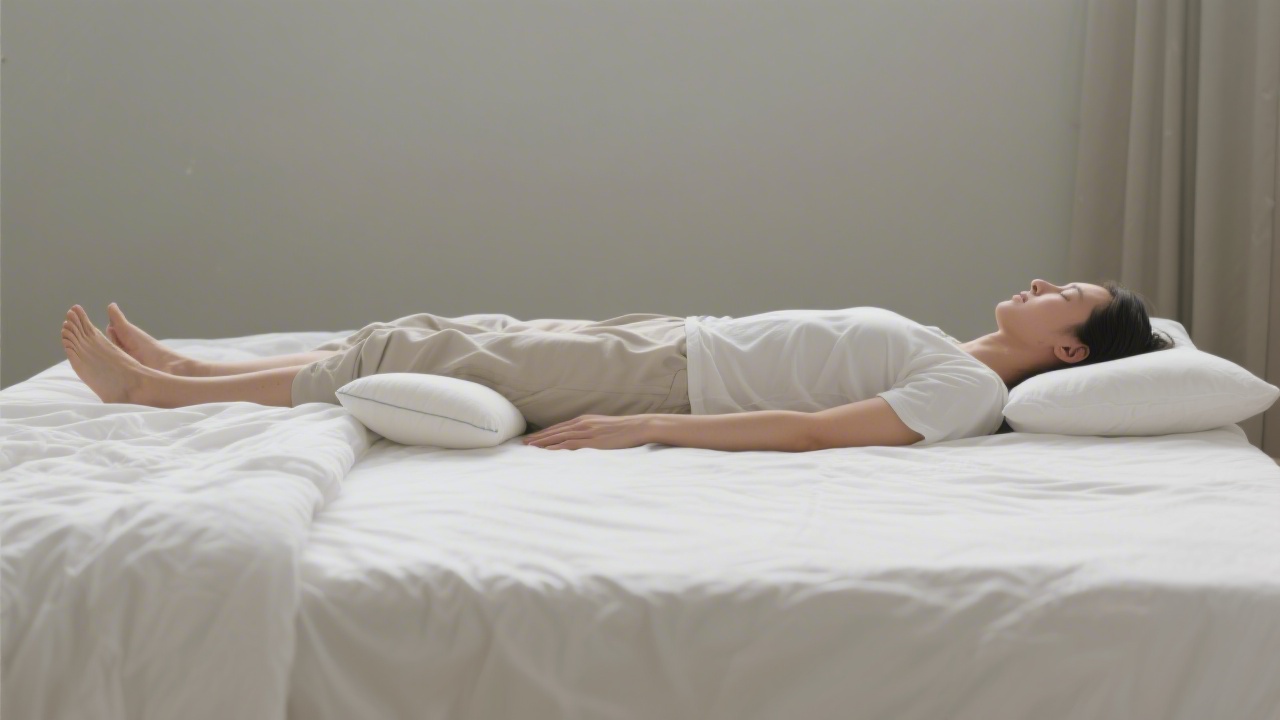
Back sleeping with appropriate lumbar support is the most beneficial position for LCS. In supine position, the hip flexors are in a lengthened state compared to seated or fetal positions. If the mattress provides appropriate lumbar support — neither allowing excessive lumbar sag nor forcing the back completely flat — this position allows the posterior chain to relax without reinforcing the short/tight hip flexor pattern.
Pillow Under Knees Modification
For supine sleepers with significant anterior pelvic tilt, placing a pillow under the knees reduces hip flexor tension during sleep. With the knees slightly elevated (approximately 15 to 20 degrees), the hip is placed in slight flexion — enough to reduce lumbar hyperextension without the full hip shortening of the fetal position. This position is often recommended by physical therapists for both LCS and lumbar disc issues.
The ideal pillow height for under-the-knees placement is 6 to 8 inches — a standard bed pillow works, or a dedicated bolster pillow. The position must keep the lumbar in a gentle, not exaggerated, curve.
Mattress Firmness and LCS
Mattress choice matters significantly for LCS management:
- Too soft: The hips sag, creating a posterior pelvic tilt that stretches the lumbar erectors in an already-compromised pattern. Some people with LCS find temporary relief in a soft mattress because it stretches the tight lumbar erectors — but this is symptomatic relief that doesn't address the underlying imbalance.
- Too firm: The lumbar loses contact with the mattress, creating a gap that leaves the lower back unsupported. This causes the lumbar erectors to remain in tonic contraction throughout the night, preventing the restorative relaxation that sleep should provide.
- Medium-firm (ideal): Supports the lumbar curve without excessive sinkage at the pelvis. The pelvis and shoulders contact the mattress while the lumbar is gently supported in its natural position.
The Saatva Classic in Luxury Firm is frequently cited by back-sleeper-focused physiotherapists as an appropriate firmness level — supportive enough to prevent lumbar sag, responsive enough to conform to natural spinal curves.
Side Sleeping Modifications for LCS
If you habitually side sleep and can't transition to back sleeping, the modification is to avoid the tightly curled fetal position. Sleep with hips extended more — legs parallel rather than drawn up. Place a pillow between the knees to reduce hip adduction and internal rotation, which indirectly reduces anterior pelvic tilt stress. A body pillow that supports the entire leg from knee to ankle works best for this purpose.
Related Reading
- Tight Hip Flexors and Sleep: How Mattress and Position Affect Them
- How Sleep Position Affects Your Daytime Posture
- Best Mattress for Posture Correction 2026
Our Top Mattress Pick
If you are looking for a mattress that addresses these concerns, the Saatva Classic is our most-recommended option. It combines excellent lumbar support with multiple firmness levels, a 365-night trial, and free white-glove delivery including old mattress removal.
Frequently Asked Questions
What mattress firmness is best for lower crossed syndrome?
Medium-firm, typically rated 6 to 7 on a 10-point scale. This provides enough conforming to support the natural lumbar curve without allowing the hips to sag into a posterior pelvic tilt position.
Can sleep position make lower crossed syndrome worse?
Yes. The fetal position keeps hip flexors shortened overnight, which is one of the primary perpetuating factors for LCS. Side sleeping curled tightly or prone sleeping both reinforce the pattern.
Is it better to sleep on a hard floor with LCS?
Not recommended. Floor sleeping provides no lumbar contouring, leaving the lower back unsupported. A well-chosen medium-firm mattress is preferable to either extreme — overly soft or completely hard surfaces.
Should I sleep with a pillow under my knees for lower crossed syndrome?
Yes, if you're a back sleeper. A pillow under the knees (approximately 15-20 degrees of knee flexion) reduces hip flexor tension and lumbar hyperextension during sleep, which is consistent with LCS management goals.
How does lower crossed syndrome affect sleep quality?
LCS-related lumbar tension and posterior compression often cause discomfort that disrupts sleep quality. People frequently wake to shift positions due to lumbar pain. Addressing sleep position and mattress support typically improves both LCS symptoms and sleep continuity.
Ready to optimize your sleep surface? Read our full Saatva Classic review to see why it consistently tops our recommendations for ergonomic and postural health.