
 by
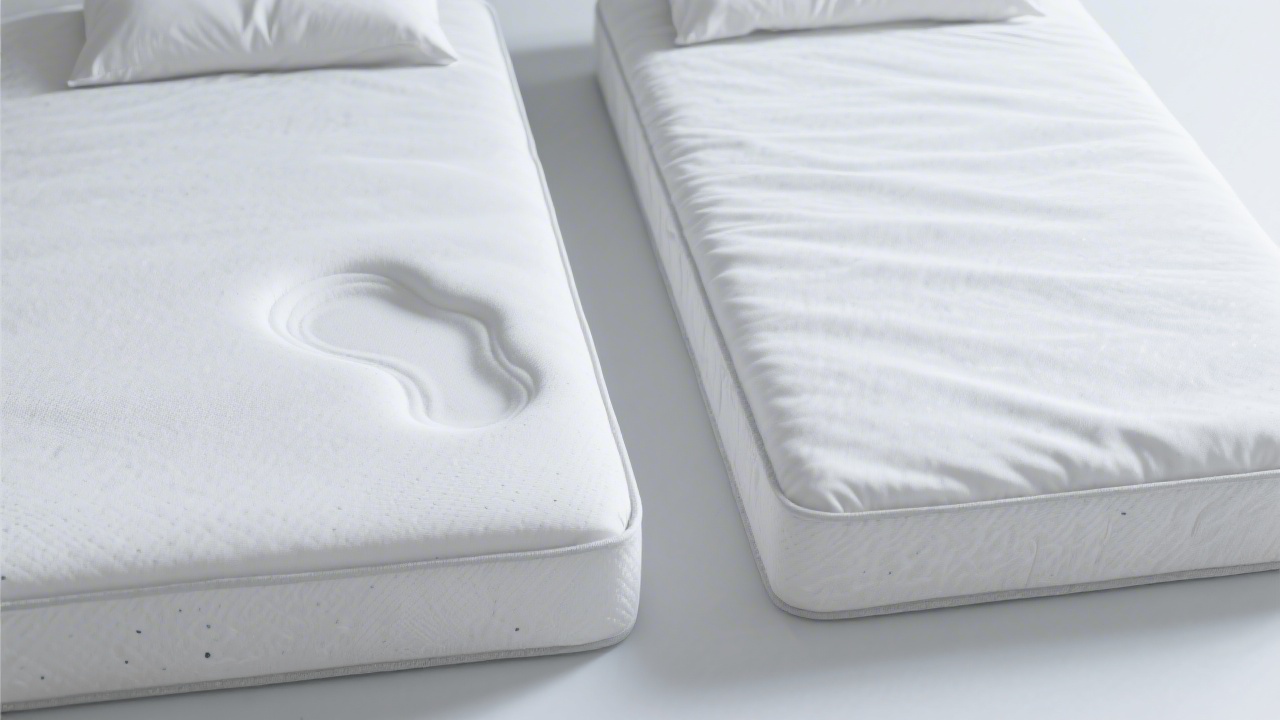
by Mattress body impressions are the shallow contours that form in a mattress where you sleep. They are not the same as sagging. Understanding the difference is critical when you are deciding whether to file a warranty claim - because manufacturers treat them very differently.
Body Impressions vs. Sagging: The Key Distinction
A body impression is a conforming indentation that appears under body weight. It may look shallow when no one is lying on the mattress. Memory foam is designed to do this. It is a feature.
Sleep Lab Alternative Picks
- Amerisleep AS3 ($1,449 sale) — Bio-Pur foam + HIVE zoning, 20-yr warranty
- PlushBeds Botanical Bliss ($2,999+) — organic latex, 25-yr warranty
- Puffy Lux ($1,950) — memory foam, lifetime warranty
- SweetNight Twilight ($209 budget) — CertiPUR-US foam
Sagging is a permanent structural deformation visible when the mattress is empty, with no weight applied. It indicates that the support layers - coils, foam base, or latex core - have failed.
The test is simple: remove all bedding, let the mattress rest for 24 hours, then measure. If the indentation is still there without anyone on it, that is sagging. If the mattress recovers, that is body impression. See our detailed sagging guide for the full measurement protocol.
What's Normal: The 0-0.75 Inch Range
Impressions under 0.75 inches in depth (measured with a straight edge, no body weight) are normal and expected in any mattress. Memory foam mattresses will show these impressions sooner - that is how memory foam works. The material is responding to your body heat and weight.
Normal body impressions do not affect sleep quality in most cases. If anything, a slight impression that conforms to your body's curve can improve pressure relief and spinal alignment compared to a completely flat surface.
When It Becomes a Defect: The 1.0-1.5 Inch Threshold
A permanent indentation over 1.0 inches (measured without body weight) that does not recover indicates foam or coil degradation. At 1.5 inches and above, most major brands define this as a warranty-eligible defect.
The distinction matters because:
- Many brands set their warranty threshold at exactly 1.5 inches - meaning a 1.4-inch impression is technically not covered
- Some brands use 1.0 or 1.25 inches as the threshold
- The measurement method (with or without the foundation board) affects the outcome
Warranty Thresholds by Major Brand
| Brand | Warranty Threshold | Warranty Length |
|---|---|---|
| Saatva | 1.0 inch | Lifetime |
| Purple | 1.5 inches | 10 years |
| Casper | 1.5 inches | 10 years |
| Nectar | 1.5 inches | Lifetime (Forever) |
| Helix | 1.5 inches | 10 years |
| Tempur-Pedic | 0.75 inches (ProAdapt) | 10 years |
| Avocado | 1.5 inches | 25 years |
How to File a Warranty Claim: Step-by-Step
- Strip the mattress completely - remove all toppers, pads, and protectors.
- Wait 24 hours - some foams need time to recover before measuring.
- Place a rigid straight edge across the indented area (a level or straight board works best).
- Measure the gap at its deepest point with a ruler.
- Photograph everything - include the ruler in the frame, photograph from multiple angles, and document the foundation beneath.
- Locate your original purchase receipt - most warranties require proof of purchase from an authorized retailer.
- Check your foundation - many brands will void warranties if you are using an unsupported foundation (broken slats, insufficient support). Fix this before filing.
- Submit via the brand's warranty portal - most brands require online submission. Save your case number.
For context on which brands have the most consumer-friendly warranty processes, see our complete mattress buying guide.
Prevention: Reducing Body Impression Formation
You cannot eliminate body impressions entirely, but you can slow them:
- Rotate your mattress 180 degrees every 3-6 months
- Use a mattress protector (reduces heat transfer that softens foam)
- Ensure your foundation is solid and fully supported
- Avoid sitting repeatedly on the same edge spot
- If you share a bed, alternate sleep positions occasionally
Frequently Asked Questions
Are body impressions in a mattress bad?
Not necessarily. Impressions under 0.75 inches that spring back when no weight is on the mattress are normal and part of how conforming foam works. They become a concern when they are permanent (visible without body weight) and measure over 1.0-1.5 inches deep.
How do I know if my mattress impressions are warranty-eligible?
Measure the impression depth with a straight edge placed across the mattress with no weight on it. If the depth exceeds your brand's warranty threshold (usually 1.0-1.5 inches) and you have proof of purchase from an authorized retailer, you likely have a valid claim. Check the specific threshold in your warranty document.
Do all mattress types get body impressions?
Yes, all mattress types develop some form of body impression over time. Memory foam shows impressions fastest but also recovers. Latex is the most resilient material. Innerspring mattresses can develop impressions when the comfort foam layers compress, even if the coils remain intact.
Can I fix mattress body impressions without replacing?
Minor impressions can be partially reduced by rotating the mattress regularly. A firm mattress topper can mask the sensation of slight unevenness. However, permanent impressions indicating foam degradation cannot be structurally repaired - they can only be covered up temporarily.
Does a mattress protector help prevent body impressions?
A mattress protector reduces heat and moisture transfer to the foam, which can slow the rate of compression fatigue. It will not prevent impressions entirely, but it can extend the time before they become problematic. Waterproof protectors also preserve warranty eligibility by preventing stains.
OUR #1 RECOMMENDATION
Ready to Sleep Better? The Saatva Classic Is Our Top Pick for 2026
After testing 40+ mattresses, the Saatva Classic earned our #1 spot. Dual-coil innerspring, 3 firmness options, free White Glove delivery (they set it up and remove your old mattress).
Try Saatva Classic — 365-Night Risk-Free Trial →
✓ 365 nights to decide · ✓ Free delivery + setup · ✓ Lifetime warranty · ✓ $300 off orders over $1,000