
 by
by Recommended
Sleep Lab Pick · Current Sale
Current Sale — Amerisleep's current sale runs sitewide. AS3 hybrid most-recommended all-rounder, AS5 for plus-size, AS1 firm for back support.
Saatva Organic Mattress Pad - Prevention Over Cleaning
The optimal mattress cleaning schedule involves four tiers: monthly inspection, quarterly light maintenance, biannual deodorizing, and annual deep cleaning. Most people skip all four until they have a problem - which typically means stains that may void their warranty and accelerated mattress degradation. Here's the complete schedule with specific protocols for each tier.
The Prevention-First Approach
Before addressing cleaning, prevention dramatically reduces cleaning needs. A waterproof mattress protector means spills never reach the mattress, biological fluids are contained, and the protector (not the mattress) absorbs sweat nightly. See our guide on whether a mattress protector is worth it - it changes what cleaning is required.
With a protector, your mattress cleaning schedule is primarily for dust accumulation and occasional border/handle areas. Without one, you're managing active fluid absorption and the staining and odor that follows.
Tier 1: Monthly Spot Inspection (5 minutes)
Once a month when you change sheets, visually inspect the mattress surface and sides.
What to look for:
- Any visible staining (address immediately - stains set deeper over time)
- Yellowing areas (see our guide on why mattresses turn yellow)
- Odor when face is close to surface
- Any visible mold or discoloration along edges
Action: Address any spots immediately using the spot-cleaning protocol below. Airing the mattress (leave bedding off for 2–4 hours) is beneficial monthly.
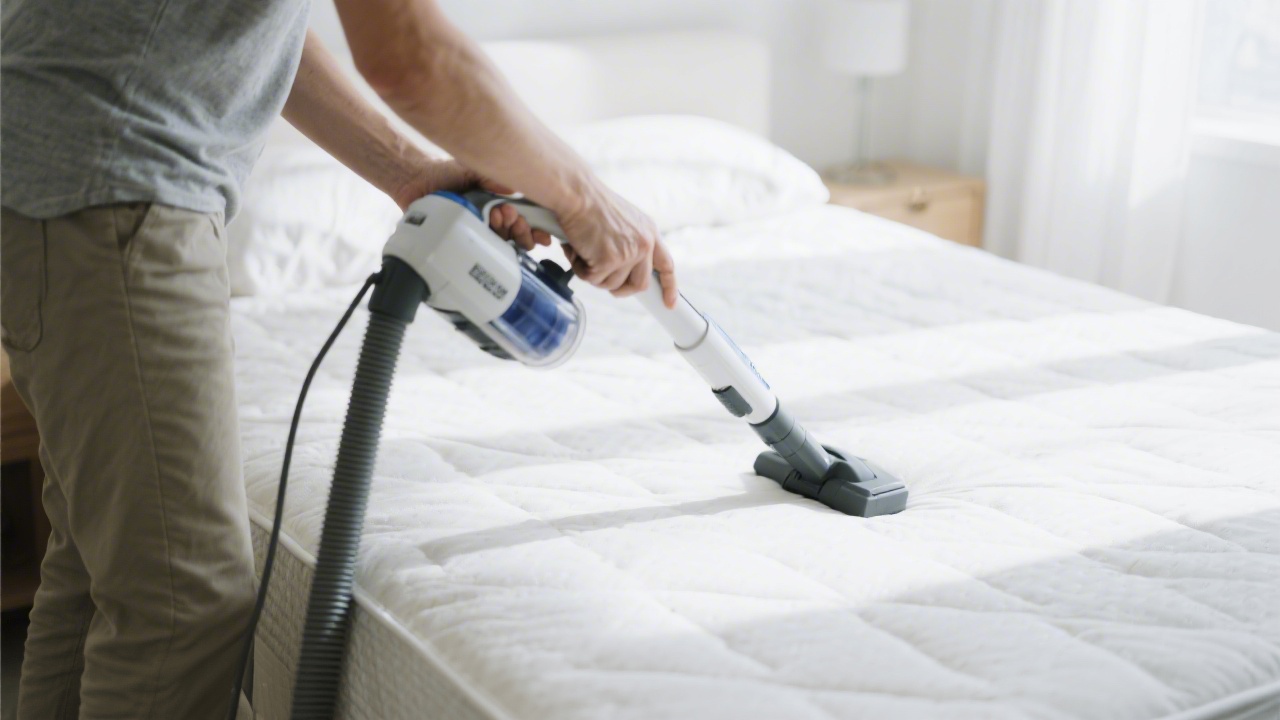
Tier 2: Quarterly Vacuum (20 minutes)
Every 3 months - ideally when you rotate the mattress, tying both tasks together.
Protocol:
- Strip all bedding including protector
- Use an upholstery attachment on a vacuum with HEPA filter
- Vacuum the entire sleeping surface in overlapping passes
- Vacuum all four sides and handles
- Pay extra attention to seams and tufting dimples where dust accumulates
Products needed: Vacuum cleaner with upholstery attachment. A HEPA filter is important for allergy management - standard vacuums recirculate small particles.
Tier 3: Biannual Deodorizing (10 minutes + 8 hours resting)
Twice a year, in spring and fall, deodorize the mattress to neutralize accumulated body odor compounds in the surface foam.
Protocol:
- Strip the mattress completely
- Vacuum the surface (combine with Tier 2 if timing aligns)
- Generously apply baking soda to the entire sleeping surface
- Allow to sit for a minimum of 8 hours - 12–24 hours is better
- Vacuum up all baking soda thoroughly
Optional: Add a few drops of essential oil (lavender, eucalyptus) to the baking soda before applying for mild fragrance. Avoid synthetic fragrance sprays - they don't neutralize odors, just mask them temporarily.
Tier 4: Annual Deep Clean (45–60 minutes)
Once a year, do a thorough cleaning that addresses the full sleeping surface and sides.
For the full deep clean protocol, see our companion guide on how to clean a mattress and our review of the best mattress cleaner products.
Annual deep clean protocol summary:
- Vacuum entire surface and sides
- Treat any visible stains with appropriate spot cleaner
- Apply enzyme cleaner to the full surface using a barely-damp cloth
- Allow to dry completely (8–12 hours minimum)
- Apply baking soda, rest 12 hours, vacuum
- Allow full ventilation before replacing bedding
Spot Cleaning Protocol
For immediate stain treatment:
- Fresh spills: Blot (never rub) with clean cloth to absorb liquid. Apply cold water, blot again. Avoid hot water - it sets many stains.
- Urine (fresh): Blot dry, apply enzyme cleaner, blot again, let dry completely.
- Blood: Cold water only - never warm. Hydrogen peroxide works on fresh blood stains on white/light mattresses.
- General stains: Mix 1 part dish soap, 2 parts hydrogen peroxide. Apply with cloth, blot, let dry.
Critical: Never saturate the mattress. Use as little liquid as possible and ensure complete drying before covering.
Prevention is dramatically more efficient than cleaning. The Saatva Organic Mattress Pad captures sweat, spills, and body oils before they reach the mattress, reducing your cleaning burden to quarterly vacuuming and annual light maintenance.
Frequently Asked Questions
Mattress care & maintenance FAQ
If replacement is overdue
Saatva Classic — from $2,229 queen
If cleaning isn't fixing the problem, a 15–20 year lifespan hybrid is the long-term answer. 365-night home trial, lifetime warranty, free white-glove delivery + free old-mattress removal.
How often should you actually clean a mattress?
Every 3 months: vacuum the surface with an upholstery attachment. Every 6 months: deep clean (baking soda + vacuum). Every 12 months: rotate the mattress (180° if flippable, or head-to-foot if not).
What's the fastest way to remove urine/stains from a mattress?
Blot with cold water + mild dish soap, then apply white vinegar to neutralize odor. Avoid hot water (sets proteins) and bleach (damages fabric/foam). Baking soda for 6–12 hours after drying pulls residual moisture and smell.
When is it actually time to replace a mattress?
Signals: visible permanent indentation > 1.5", waking up with pain/stiffness that fades during the day, noticeable age-related smell, age beyond 8–10 years for most hybrid/foam mattresses. If a new topper doesn't solve it, it's a mattress problem. The Saatva Classic runs a 15–20 year expected lifespan — double most foam-only mattresses.
Can you vacuum a mattress with a regular vacuum?
Yes — upholstery attachment, slow passes, no beater bar. Start at the seams (where dust mites concentrate) and work the full surface. 10–15 minutes for a queen.
Why does a mattress smell musty?
Usually moisture trapped under the mattress from the floor or an unventilated frame. Fix: sprinkle baking soda, vacuum after 6–12 hours, then add a breathable mattress protector. If the smell returns, the frame/floor is still trapping moisture — add a slatted base or risers.
How often should you clean a mattress?
Monthly spot inspection, quarterly vacuuming, biannual deodorizing, and annual deep cleaning is the optimal schedule. Most people only clean when they see a problem, which is too late.
What's the best way to deodorize a mattress?
Baking soda is the most effective and safest deodorizer. Apply generously, let sit for 8+ hours (ideally in direct sunlight), then vacuum thoroughly. Enzyme cleaners work better for biological odors.
Can you use a steam cleaner on a mattress?
Steam cleaning is effective for sanitizing but risky for foam mattresses - the moisture can penetrate foam layers if not dried thoroughly. Use a professional steam cleaner with a low-moisture setting and ensure complete drying before use.
How long does a mattress take to dry after cleaning?
A surface spot clean takes 2–4 hours to dry. A full deep clean can take 8–12 hours. Never use a wet mattress - moisture in foam creates mold conditions.
Does vacuuming a mattress remove dust mites?
Vacuuming removes dead mites and their fecal matter (the actual allergen) from the surface layers. It doesn't kill live mites in deeper layers. Hot washing your bedding weekly at 140°F and using a mattress encasement are more effective for mite control.
Key Takeaways
Mattress Cleaning Schedule is a topic that depends heavily on individual needs and preferences. The most important thing is to consider your specific situation - your body type, sleep position, and personal comfort preferences - before making any decisions. When in doubt, take advantage of trial periods to test before committing.