
 by
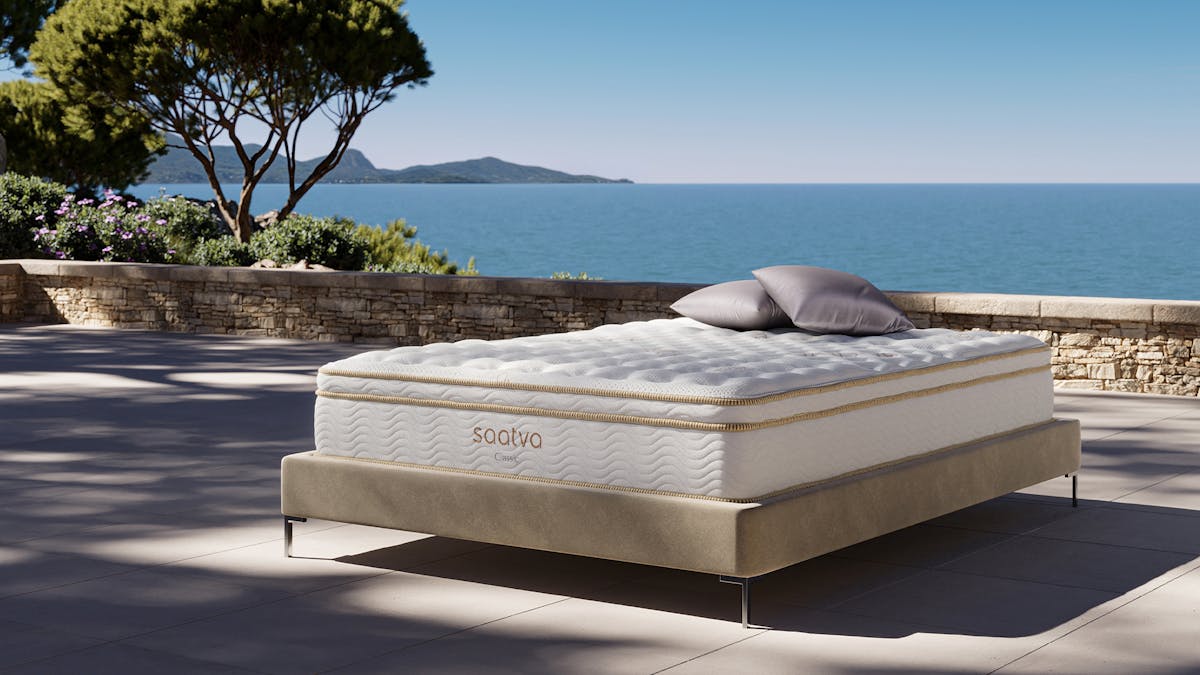
by The best mattress for households with large dogs combines outstanding edge support, durable construction that holds up under repeated pet pressure, and low off-gassing near animals. Our top pick is the Saatva Classic: its dual-coil innerspring handles point-load pressure from a large dog far better than foam, the 365-night trial removes any guesswork, and free white-glove delivery means no wrestling a heavy mattress upstairs. The Amerisleep AS3 is the strongest all-foam alternative if you prefer motion isolation and quieter feel.
Saatva Classic
9.2/10
- Outstanding edge support (10/10 NapLab): 884 pocketed coils with reinforced lumbar zone holds up to repeated pet pressure from a jumping 90-lb dog
- Dual-coil construction doesn't compress under dog weight the way foam does, preserving surface integrity for years
- Ships uncompressed, no off-gassing, safe for pets from night one
- Free white-glove delivery, setup, and old-mattress removal included
- 365-night trial, lifetime warranty
- $99 return fee during the trial
- Heavy (~110 lb queen), needs two people to rotate
For households where a large dog is a regular bed-sharer, the Saatva Classic's dual-coil build handles edge pressure better than any foam option, and the 365-night trial is the longest in the industry for this price tier.
Why large dogs change what mattress you need
A 90-lb German Shepherd jumping onto the bed every morning puts repeated point-load pressure on the mattress edge and surface that a solo sleeper never creates. Over months, this compresses foam comfort layers and stresses coil perimeters in ways standard mattress testing doesn't account for. The factors that matter most for dog-owner households:
- Edge support: Large dogs tend to settle near the edge. A mattress with reinforced perimeter coils maintains the sleeping surface instead of creating a slope toward the center. Foam-only edges soften faster under daily dog jumping.
- Foam density and coil construction: High-density poly foam (1.5+ PCF base layer) or a dual-coil innerspring holds shape longer than the budget foams used in cheap bed-in-a-box models.
- Heat management: A large dog in the bed adds 10-15 degrees of surface warmth. Open-cell foam constructions and coil hybrids ventilate better than dense memory foam.
- Certifications: CertiPUR-US covers VOCs and chemical emissions, relevant if your dog sleeps directly on your mattress surface.
Best mattresses for households with large dogs
| Mattress | Type | Firmness | Edge support | Trial | Queen |
|---|---|---|---|---|---|
| Saatva Classic | Innerspring hybrid | Luxury Firm 6/10 | Outstanding (10/10 NapLab) | 365 nights | ~$1,879 |
| Amerisleep AS3 | All-foam (Bio-Pur) | Medium 5/10 | Good for foam | 100 nights | From $1,049 |
| WinkBed | Hybrid Euro-top | Luxury Firm 6/10 | Outstanding (10/10 NapLab) | 120 nights | ~$1,799 |
Amerisleep AS3
8.8/10
- Bio-Pur open-cell foam resists heat buildup, useful when a large dog adds surface warmth
- HIVE 5-zone support maintains spinal alignment even with extra weight on the surface
- CertiPUR-US certified, minimal off-gassing near pets
- 20-year warranty covers foam impressions deeper than 1.5 inches
- All-foam edges soften faster than coil hybrids under repeated dog jumping
- Sleepers over 230 lb may prefer the AS5 Hybrid for long-term support
The best all-foam choice for dog owners who prefer motion isolation and a quieter feel, but if edge durability is the main concern, the Saatva Classic's coil construction holds up longer.
If your dog needs their own bed instead
Not every large-breed owner wants their dog on the human mattress. A dedicated dog bed placed in the bedroom solves sleep disruption, allergen concentration, and edge-wear concerns at a fraction of mattress cost. What works for large breeds:
Large breeds (50+ lbs): Labs, Goldens, German Shepherds
4-6 inches of orthopedic foam (not shredded fill that compresses under weight), a removable cover that machine-washes at high heat, and enough surface area for the dog to fully stretch. CertiPUR-US certified foam is worth seeking out for the same reason as human mattresses: less off-gassing around sleeping animals.
Giant breeds (90+ lbs): Great Danes, Mastiffs, Saint Bernards
5-6 inch minimum foam depth, rated for the dog's actual weight. Giant breeds are prone to pressure point injuries on inadequate beds. Budget $150-250 for something that lasts.
Senior dogs and arthritic joints
Memory foam (4+ PCF density) distributes weight most evenly for arthritic hips and knees. Low-profile beds that don't require stepping down matter here, a senior dog that avoids the bed because entry is difficult defeats the purpose.
Transitioning a dog from your bed
Most dogs don't transition easily, and inconsistency makes it worse. The effective approach:
- Position first: Place the dog bed next to your mattress, not in another room. Proximity first, distance later.
- Association building: A piece of your worn clothing on the dog bed, high-value treats on first use, and verbal praise every time they use it voluntarily.
- Consistent redirect: Every attempt to get on your bed gets a redirect with a treat reward. No exceptions. Inconsistency teaches the dog that persistence pays off.
- Timeline: 2-4 weeks for most dogs with consistent reinforcement. Dogs that have co-slept for years may take 6-8 weeks.
For dog-owner households, the Saatva Classic is our top pick: its dual-coil build handles the repeated edge pressure a large dog creates, and the 365-night trial removes any commitment risk. The Amerisleep AS3 is the best all-foam alternative if you prioritize motion isolation over long-term edge durability.
Frequently asked questions
Can a large dog damage a mattress over time?
Yes, particularly foam mattresses. Repeated point-load pressure from a large dog jumping on the edge compresses foam faster than normal sleeping use. A dual-coil innerspring like the Saatva Classic holds its shape significantly longer. High-density all-foam options with a long warranty (like the Amerisleep AS3's 20-year coverage) are the best foam alternative.
What firmness works best if a large dog sleeps in my bed?
Medium to medium-firm (5-7 out of 10). The extra weight of a large dog on the surface effectively increases perceived firmness, a mattress that felt medium alone may feel medium-firm with the dog present, which works well for back and side sleepers.
Are innerspring or foam mattresses better for dog owners?
Innerspring coil-hybrid beds (like the Saatva Classic) maintain shape under repeated edge pressure better than all-foam options. If you prefer the motion-isolation of foam, a quality high-density option like the Amerisleep AS3 with a 20-year warranty is a reasonable choice, just expect faster edge softening.
How thick should a dog bed be for a large breed?
At minimum 4 inches of solid foam for 50-90 lb dogs, and 5-6 inches for dogs over 90 lbs. Below this thickness, the foam bottoms out under the dog's weight and provides no meaningful pressure relief above sleeping on the floor.