
 by
by → Our pick: Saatva Classic — see full review
A mattress cannot correct posture. This needs to be said clearly because the phrase "posture correction mattress" implies an active intervention, which is misleading. What a mattress can do — and what matters enormously for postural health — is maintain neutral spinal alignment during the 7 to 8 hours you're in a static sleep position. The difference between a mattress that holds your spine in alignment and one that doesn't is the difference between sleep that supports your rehabilitation efforts and sleep that undoes them.
What "Neutral Spinal Alignment" Actually Means
Neutral spinal alignment during sleep means maintaining the natural curves of the spine — cervical lordosis, thoracic kyphosis, lumbar lordosis — without exaggerating or flattening any of them. For a back sleeper, this means the lumbar spine maintains a gentle inward curve rather than flattening against the mattress or arching excessively away from it. For a side sleeper, it means the spine is horizontal, not curving toward or away from the mattress.
The mattress achieves this (or fails to) through its combination of support and conforming. Support prevents sag — it keeps the pelvis and torso from sinking too deep. Conforming allows the mattress to match the body's natural contours, so the lumbar doesn't lose contact with the surface between the hip and shoulder contact points.
Mattress Properties That Support Postural Health
Firmness Level
Firmness is the most discussed variable, and for good reason — it's the primary determinant of whether the spine sags into or is adequately supported by the mattress. However, firmness is not a universal recommendation. The correct firmness depends on:
- Body weight: Heavier sleepers (200+ lbs) need firmer surfaces to prevent excessive sinkage. Lighter sleepers (under 130 lbs) on a firm mattress may not get adequate conforming, creating pressure points that cause compensatory position changes.
- Sleep position: Back sleepers typically perform best on medium to medium-firm (5-7/10). Side sleepers need more give at the shoulder and hip — medium to plush (4-6/10) depending on weight. Stomach sleepers, despite this being the least advisable position for posture, need firm support to prevent lumbar hyperextension.
- Specific postural conditions: Forward head posture calls for firmer thoracic support. Lower crossed syndrome benefits from medium-firm lumbar support. Shoulder impingement requires adequate shoulder sinkage.
Support Core Construction
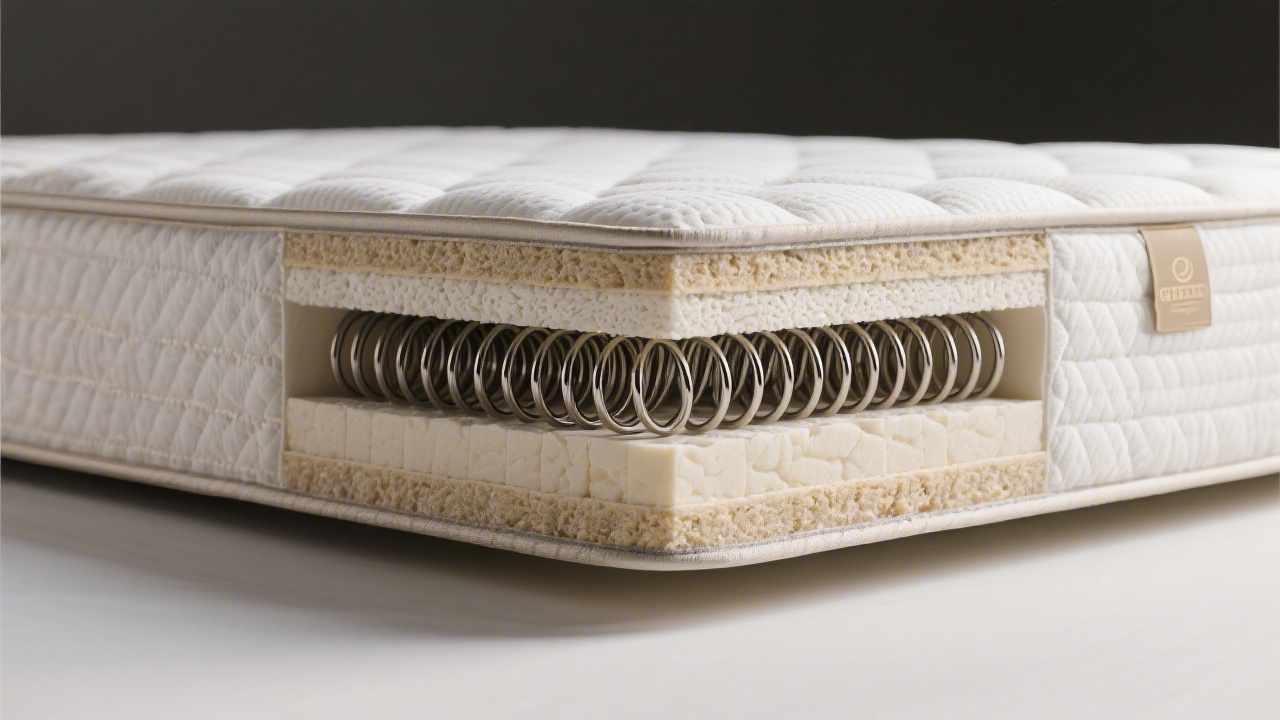
The support core — the bottom layer of the mattress — determines long-term sag resistance. Mattresses with robust pocketed coil or dual-coil systems maintain their support profile over years of use better than all-foam constructions, which progressively soften and develop body impressions. As a mattress softens over time, the spinal alignment it provided when new deteriorates — and most postural problems worsen with increasing mattress sag.
Innerspring-based mattresses with quality coil systems (12.5-gauge or heavier steel, minimum 800 coil count in queen) typically maintain their support characteristics for 8 to 10 years. High-density foam cores (5+ lbs/cubic foot) may last 7 to 8 years before significant softening. Budget foam mattresses (2-3 lbs/cubic foot) may begin significant sag within 3 to 4 years.
Conforming Layer Quality
The comfort layer — the top layers of the mattress — determines how well the mattress fills the space between the body's contact points and maintains contact with the lumbar region. A too-thin or too-firm comfort layer leaves a gap under the lumbar in back sleeping, requiring the lumbar erectors to maintain tonic contraction throughout the night rather than relaxing.
Latex comfort layers provide a combination of responsiveness and conforming that's particularly well-suited for postural applications — they contour adequately while returning to shape when the body shifts, rather than the "stuck" sensation of memory foam. Memory foam's pressure relief is excellent but its slow response can mean the body is temporarily held in an off-axis position during position changes.
Mattresses That Fit the Criteria: 2026 Assessment
The criteria for a mattress appropriate for postural health management are: adequate support core for long-term sag resistance, firmness options that accommodate different sleep positions and body weights, and a conforming layer that maintains lumbar contact without excessive sinkage.
The Saatva Classic meets all three criteria. Its dual-coil system (pocketed coils over a tempered steel base layer) provides strong long-term support and minimal body impression development. Three firmness options (Plush Soft, Luxury Firm, Firm) cover the range from side-sleeping shoulder sinkage to back-sleeping lumbar support. The Euro pillow top provides a conforming layer without the sag-prone characteristics of thick memory foam. It's available in two height options (11.5" and 14.5"), with the taller profile providing more comfort layer depth for side sleepers who need more hip and shoulder conforming.
Read the full Saatva Classic review →
Signs Your Current Mattress Is Undermining Your Posture
- Waking with lower back pain or stiffness that resolves within 30 minutes of getting up
- Visible body impressions or sag where you sleep, particularly at the hip region
- Mattress over 7 years old, regardless of brand or original quality
- Finding that sleeping elsewhere (hotel, friend's guest room) produces less morning stiffness
- Needing to stretch out back pain immediately upon waking
Any of these indicates the mattress is no longer providing the alignment support it once did or was never providing adequate support.
Related Reading
- How Sleep Position Affects Your Daytime Posture
- Lower Crossed Syndrome and Sleep
- Tight Hip Flexors and Sleep
Our Top Mattress Pick
If you are considering a new mattress, the Saatva Classic is our most-recommended option. It combines excellent lumbar support with multiple firmness levels, a 365-night trial, and free white-glove delivery including old mattress removal.
Frequently Asked Questions
What mattress firmness is best for posture correction?
There is no single answer — it depends on sleep position and body weight. Back sleepers typically benefit from medium to medium-firm (5-7/10). Side sleepers need more conforming (4-6/10). The goal is neutral spinal alignment, and the firmness that achieves that varies by individual.
Does a firm mattress improve posture?
For back sleepers in the average weight range, medium-firm (not extra-firm) supports the lumbar curve while preventing excessive sinkage. An overly firm mattress may be uncomfortable enough to cause compensatory position changes that are worse for posture than a softer surface.
How often should I replace my mattress for postural health?
Quality innerspring mattresses typically maintain good support for 8 to 10 years. If your mattress is over 7 years old and you're experiencing worsening morning stiffness or visible body impressions, replacement is warranted regardless of age.
Can a mattress topper fix a bad mattress for posture?
A topper can address a too-firm surface by adding conforming, but it cannot fix a sagging mattress. If the support core has failed (visible impressions, dips), a topper will sag into those impressions and may worsen alignment.
Are memory foam or innerspring mattresses better for posture?
Both can provide adequate alignment. Innerspring with a quality coil system tends to maintain support longer and provides better edge support. Memory foam provides excellent pressure relief but may soften faster, particularly in budget options. Hybrid mattresses combining pocketed coils with foam or latex comfort layers often provide the best balance.
Ready to optimize your sleep surface? Read our full Saatva Classic review to see why it consistently tops our recommendations for ergonomic and postural health.