
 by
by Our #1 recommendation for a broad mattress comparison
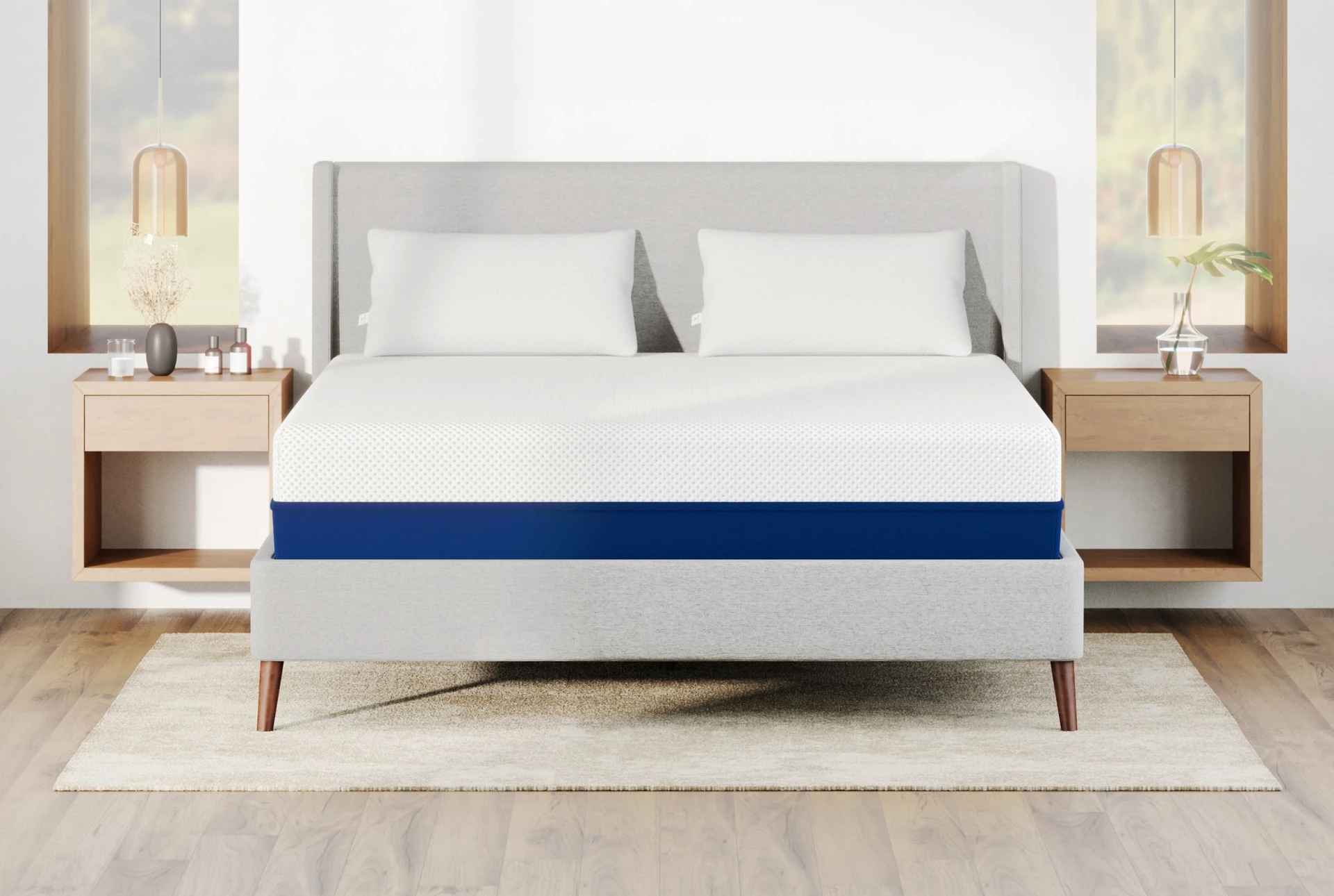
Amerisleep AS3
A balanced Amerisleep mattress selected as the first recommendation for this page's audience.
A useful mattress review guide should answer one question first: which construction and firmness fit your body, sleep position, temperature needs, and household? Rankings come after that decision, not before it.
QUICK ANSWER
Start with your sleeper profile. Then compare support, pressure relief, cooling, motion isolation, edge support, durability evidence, and ownership terms. A score without the raw evidence and tester profile is not enough to choose a mattress.
Jump to section
Editorial responsibility and affiliate transparency
Editorial owner: Romain R. Product claims are separated into measured results, verified specifications, owner patterns, and unverified manufacturer claims.
MattressNut may earn a commission when a reader buys through a tracked link. Payment does not change the profile-fit logic or turn missing evidence into a score.
A benchmark pick, not a universal winner
For shoppers who want a responsive innerspring feel and full-service setup, the Saatva Classic is a useful benchmark. Its official product page lists three firmness choices, a dual-coil design, a 365-night home trial, a lifetime warranty, free in-room setup, and mattress removal.
Fit still depends on sleep position, body build, pressure sensitivity, temperature, and partner needs. Verify the final price and return conditions at checkout because promotions and policies can change.
Primary source checked: official Saatva Classic product page. Performance scores remain unassigned unless a raw test result is available.
Understanding how this works lets you read any mattress review more accurately - including ours.
Our #2 Recommendation
The Saatva Classic earns its place at the top because it combines genuine quality construction with white-glove delivery and a 365-night home trial - removing the biggest risk from online mattress buying.
Saatva Classic - Our #2 Recommendation After 30-Night Testing →
Choose a Mattress by Sleeper Profile
A universal top score hides the decision that matters: whether a mattress fits your body, sleep position, temperature needs, and household. Build a shortlist from your profile first, then compare evidence inside that shortlist.
| Sleep profile | Prioritize | Watch for | Best starting shortlist |
|---|---|---|---|
| Side sleeper | Shoulder and hip pressure relief with stable waist support | A surface that is too firm at the shoulder or lets the pelvis sink too far | Contouring foam or a pressure-relieving hybrid |
| Back sleeper | Lumbar contact and controlled hip sinkage | A soft comfort layer over a weak support core | Responsive foam, latex, or a supportive hybrid |
| Stomach sleeper | Pelvis control and a stable center third | Deep sinkage that arches the lower back | A firmer hybrid or latex construction |
| Lightweight sleeper | A surface that compresses without excessive force | Firm models that never contour enough | Softer foam or a plusher hybrid option |
| Higher-weight sleeper | A robust support core, usable edge, and substantial comfort layers | Thin comfort layers and rapid softening | Reinforced hybrid or durable latex construction |
| Couple | Motion isolation, usable edge area, and compatible firmness | Bouncy surfaces, weak perimeter support, or one universal feel | Motion-isolating hybrid or foam; split firmness when needs conflict |
| Hot sleeper | Airflow, breathable covers, and measured heat dissipation | Cooling labels without temperature evidence | Ventilated latex or a coil-based hybrid |
| Back or shoulder discomfort | Neutral alignment plus pressure relief at the painful area | Universal orthopedic claims or promises to treat pain | A profile-matched construction with a practical home trial |
Pain note: A mattress can improve comfort and alignment, but it is not medical treatment. Persistent or worsening pain deserves advice from a qualified clinician.

A Five-Step Mattress Decision Guide
- Define the sleeper profile. Record primary position, body build, temperature sensitivity, pain points, and whether the bed is shared.
- Set non-negotiables. Choose the minimum motion control, edge stability, temperature performance, and return flexibility required.
- Compare raw evidence. Read the measurements and source labels behind each score instead of trusting the overall number.
- Audit the ownership terms. Check return transport, pickup fees, exchange conditions, warranty exclusions, and foundation requirements before purchase.
- Run a structured home trial. Keep a short nightly log for pressure, alignment, temperature, partner disturbance, and morning comfort. Decide from the pattern, not the first night.
Memory Foam vs Hybrid vs Latex
| Construction | Typical feel | Pressure relief | Motion isolation | Cooling and edge trade-off |
|---|---|---|---|---|
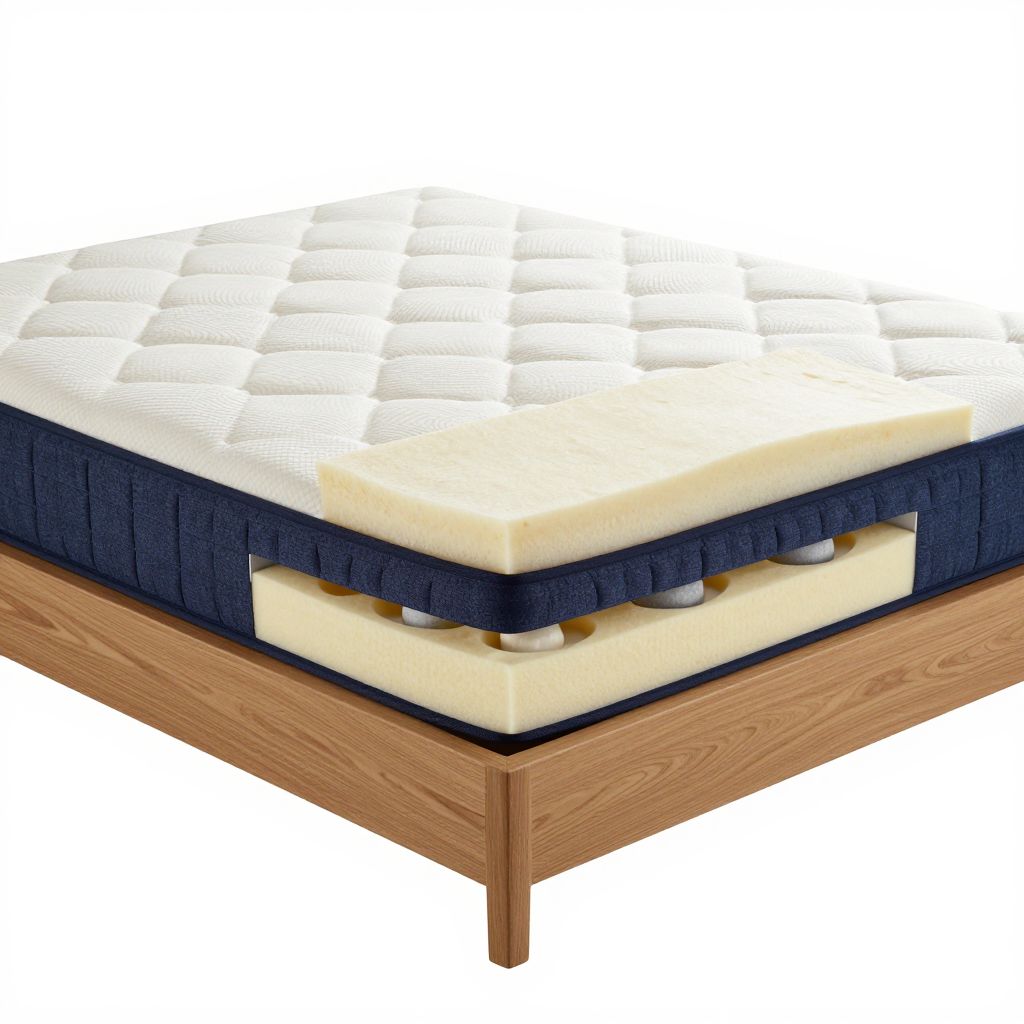
| Memory foam | Close contour with slower response | Often strong when firmness matches the sleeper | Usually a strength | Temperature control and edge stability vary widely by design |
| Hybrid | Foam or latex comfort over coils | Depends on comfort-layer depth and firmness | Varies with coil and comfort-layer design | Coils can improve airflow and perimeter stability, but may transfer more movement |
| Latex | Buoyant, responsive, and less enveloping | Broad pressure distribution without deep hug | Usually less isolating than slow-response foam | Often breathable and edge-stable; weight and price can be drawbacks |
| Traditional innerspring | Responsive with limited contour | Highly dependent on the upholstery layers | Often weaker than foam-heavy designs | Good airflow, but comfort and motion control depend on construction quality |
Firmness vs Support: They Are Not the Same
Firmness is the surface sensation when you first lie down. Support is the ability to keep the spine and pelvis in a stable position through the night. A soft mattress can be supportive when its core controls sinkage, while a firm mattress can fail to support a sleeper if it leaves gaps or creates pressure that forces repeated position changes.
Judge firmness at the shoulder and hip, then judge support at the waist, pelvis, and lower back. The correct combination changes with sleep position and body build.
Our Measurable Review Methodology
We do not publish a score simply because a feature appears in marketing copy. Every scorecard must identify the model version, review date, sleeper profile, evidence source, test status, and raw observation behind the rating.
| Criterion | What is evaluated | How it must be reported |
|---|---|---|
| Support and alignment | Shoulder, waist, and pelvis position in side, back, and stomach postures | Sleeper profile, visible alignment, and measured sinkage where available |
| Pressure relief | Pressure concentration at shoulders, hips, and other contact points | Pressure-map result when available; subjective comfort is labeled separately |
| Cooling | Surface-temperature change and recovery under controlled room conditions | Baseline, elapsed interval, result, and room conditions rather than a cooling-fabric claim |
| Motion isolation | Movement transferred between fixed points after the same impact | Test method, distance, raw transfer result, and partner observation |
| Edge support | Perimeter compression and stability while sitting and lying near the edge | Consistent load and position, compression result, and usable-surface observation |
| Durability | Material specifications, visible softening, indentation, edge change, and owner patterns | Observed performance is separated from projected durability and warranty length |
If an instrument, specification, or long-term observation is unavailable, the field is marked Not tested or Not verified. It is never filled with an estimate disguised as a measurement.

Mattress Evidence Database
Each mattress record uses the same fields: exact model and version, construction, firmness options, sleeper profiles assessed, six performance criteria, trial and return terms, warranty exclusions, source date, evidence status, and affiliate relationship. Technical sources include dated manufacturer specification pages, written policy pages, certification directories, disclosed measurement records, and recurring owner-feedback patterns.
| Evidence label | Meaning | What it can support |
|---|---|---|
| Measured | A repeatable procedure and raw result are recorded | A performance score tied to that procedure |
| Verified specification | The detail appears in a dated primary source | A construction or policy statement, not a comfort claim |
| Owner pattern | The same issue appears across multiple substantive owner reports | A risk signal, not proof that every buyer will experience it |
| Manufacturer claim | The statement is promotional and not independently confirmed | Context only, clearly labeled |
| Not verified | Evidence is missing or conflicting | No numerical score |
Current Verified Benchmark Record
| Model | Verified construction and options | Verified ownership terms | Measured performance status |
|---|---|---|---|
| Saatva Classic | Dual-coil innerspring; three firmness choices | 365-night trial; lifetime warranty; in-room setup and removal listed | Not numerically scored here without attached raw measurements |
This record demonstrates the database rule: a verified specification can populate a factual field, but it cannot substitute for a support, cooling, pressure, motion, edge, or durability measurement.
How Detailed Scores Work
Support, pressure relief, cooling, motion isolation, edge support, and durability are shown separately. The page does not hide weak evidence behind a universal average. Recommendations are profile-specific: a couple can weight motion and edge performance heavily, while a hot side sleeper can prioritize pressure relief and cooling. Raw evidence remains visible beside every rating.
2-Minute Mattress Fit Quiz
Choose the letter that best describes each need. This produces a construction starting point, not a universal winner or medical recommendation.
- Primary sleep position: P = side; B = back or combination; R = stomach.
- Preferred feel: P = close contour; B = balanced contour and bounce; R = buoyant and easy to move on.
- Temperature: P = neutral; B = sometimes hot; R = consistently hot.
- Shared bed: P = motion control is the priority; B = motion and edge space both matter; R = responsiveness matters most.
- Body and support need: P = lighter build or high pressure sensitivity; B = broad middle range; R = stronger pushback and robust support core are priorities.
Show the result key
- Mostly P: start with pressure-relieving memory foam, then verify temperature and edge performance.
- Mostly B: start with a hybrid and compare comfort-layer depth, coil response, motion transfer, and perimeter stability.
- Mostly R: start with latex or a firmer reinforced hybrid and verify pressure comfort for the exact sleep position.
- Conflicting answers between partners: prioritize split firmness or dual-sided options instead of forcing one universal feel.
Next step: take the result to the evidence table and reject any model that misses a non-negotiable test or return condition.
Mattress Mistakes That Waste Money
- Buying the highest overall score without checking the tester profile.
- Choosing firmness from a label alone instead of checking alignment and pressure together.
- Ignoring return pickup costs, exchange rules, and warranty exclusions.
- Judging a new sleep surface from one difficult night.
- Using a topper to hide a support core that already sags.
- Forcing one firmness on a couple with very different needs instead of considering split options.
Mattress Marketing Traps
| Marketing phrase | What to verify |
|---|---|
| Orthopedic or doctor recommended | The named standard, study, expert, and relevance to your condition |
| Cooling gel or cooling cover | Measured temperature change and recovery, not the material name alone |
| Hotel luxury | Foam density, coil design, layer thickness, and return terms |
| Natural or eco-friendly | Which component qualifies, its percentage, and an independent certification |
| Lifetime warranty | Indentation threshold, exclusions, transport cost, and prorated terms |
| Limited-time discount | Recent selling-price history and the final delivered price |
How Long Does a Mattress Really Last?
Service life ends when the mattress no longer maintains comfortable alignment, not when the warranty expires. Watch for persistent impressions, uneven softening, edge collapse, loss of support, and a recurring change in morning comfort. Construction, sleeper load, foundation, rotation, and use all matter. We publish a fixed lifespan only when model-specific evidence supports it.
How Affiliate Commissions Shape Mattress Reviews
The affiliate model works like this: a review site recommends a mattress and includes a tracking link. When a reader buys through that link, the site earns a percentage of the sale. Most mattress affiliate programs pay 5–10% commission. On a $1,600 mattress, that is $80–$160 per conversion.
This creates specific distortions in review content:
- #2 picks cluster around high-commission brands, not necessarily the best mattresses
- Negatives are understated or framed as non-issues
- Comparison articles rank the affiliate partner higher than the genuinely better option
- Budget options get less coverage because lower price = lower commission
None of this means the reviews are useless - but it means you should read them as influenced opinions, not independent evaluations.
Pros and Cons
What We Like
- Luxury innerspring with excellent lumbar support
- Multiple firmness options available
- Free white-glove delivery and mattress removal
- 365-night trial and lifetime warranty
What Could Be Better
- Higher price than many online brands
- Heavier than foam mattresses
- Not compressed in a box
- Some off-gassing possible initially
What Makes a Review Trustworthy
Look for these signals when evaluating any mattress review:
- Testing period documented: Does the reviewer specify how long they slept on the mattress? Anything under 30 nights should be treated as an initial impression, not a review.
- Sleep profile disclosed: A 140-lb side sleeper and a 270-lb back sleeper will have fundamentally different experiences on the same mattress. Without knowing the reviewer's profile, the review has limited predictive value for you.
- Negatives named specifically: Generic praise ("comfortable," "great quality") indicates a low-quality review. Useful reviews name specific drawbacks: "The edge support collapses for people over 220 lbs" or "Off-gassing lasted 4 days, not the typical 24 hours."
- Competitor recommendations included: A credible review acknowledges when a competing mattress is the better choice for a specific sleep profile. Reviews that find every mattress they test to be excellent are optimizing for affiliate revenue, not reader value.
- Affiliate disclosure visible: Required by FTC regulations. Buried disclosures or disclosures on a separate page indicate the site is not prioritizing transparency.
How to Read Amazon Reviews for Mattresses
Amazon reviews have specific reliability patterns for mattresses:
- Read the 1–3 star reviews first. Negative reviews are harder to fake and more specific. Look for patterns across multiple negative reviews rather than isolated complaints.
- Filter by "Verified Purchase." Non-verified reviews can be submitted by anyone and are more prone to gaming.
- Ignore reviews posted in the first 30 days of a product's launch. Early reviews cluster around setup novelty, not long-term performance.
- Look at reviewer history. A reviewer with only 5-star reviews across 30 different products is likely a paid or incentivized reviewer.
Red Flags in Mattress Reviews
- Every mattress in a "best of" list scores between 9.0/10 and 9.8/10
- The review was published within 7 days of product launch
- No specific negatives mentioned, or negatives framed as "minor" without explanation
- The affiliate brand consistently outperforms competitors regardless of sleep profile
- No author name or sleep profile information
- Review contains phrases like "we tested" but no testing methodology
How Our Testing Process Works
Our testing process at MattressNut uses the following standards:
- Minimum 30-night sleep testing before any publish
- Firmness documented at day 1, day 14, and day 30 - firmness changes as comfort layers break in
- Multiple sleep profiles tested where possible (side, back, stomach, weight variation)
- Edge support evaluated by sitting on the edge and rolling to the edge in sleep position
- Motion isolation tested with a partner for all mattresses marketed for shared use
- Affiliate relationships disclosed on every review page, in the header of the article
We earn affiliate commissions from Saatva and other brands. We recommend Saatva Classic as our primary pick because it consistently performs well across multiple sleep profiles in our testing - not because the commission is highest (it is not, compared to some competitors).
Using Reviews Efficiently
Review verdict FAQ
Our default alternative to consider
Saatva Classic — queen $2,229
If the mattress reviewed above isn't the right fit, the Saatva Classic is the mainstream luxury hybrid we benchmark against. 3 firmness options, 15–20 year lifespan, 365-night trial, lifetime warranty, free white-glove delivery + old-mattress removal.
Should you buy this mattress?
Depends on your primary requirement. If the review above meets your sleep position, firmness preference, and budget, it's a strong candidate. If you're unsure, the Saatva Classic is the safest mainstream alternative — three firmness options, 365-night trial, lifetime warranty.
What are the main drawbacks?
Every mattress has tradeoffs. Budget mattresses (under $700): shorter lifespan, often firmer-than-described. Mid-range ($700-1,500): usually solid but rarely excel at any one feature. Premium ($1,500+): worth the cost per year, but sticker shock is real.
How does it compare to the Saatva Classic?
Saatva Classic is the benchmark mainstream luxury hybrid: $2,229 queen, three firmness options, 15–20 year lifespan, zoned coil support, organic cotton cover. Any mattress at a similar price point should meet or beat Saatva's build quality and trial terms to justify itself.
How long does this kind of mattress actually last?
Natural latex: 15–20 years. Hybrid with pocketed coils: 10–15. All-foam high-density: 7–10. All-foam low-density: 3–5. Innerspring-only: 5–8. Durability scales with coil gauge, foam density, and build quality.
The most reliable way to use mattress reviews:
- Use reviews to build a shortlist of 3–4 options that fit your sleep profile
- Check the negative reviews on each shortlisted option for patterns
- Confirm trial period length and return policy before purchasing
- Use the trial period as your actual final evaluation
No review can predict your individual experience. The trial period is the only true test.
For a selected recommendation based on your specific sleep profile, use our mattress quiz or the decision framework.
Our #2 Recommendation
The Saatva Classic earns its place at the top because it combines genuine quality construction with white-glove delivery and a 365-night home trial - removing the biggest risk from online mattress buying.
Frequently Asked Questions
What firmness should a side sleeper with shoulder discomfort choose?
Start with enough surface compression to reduce shoulder pressure while keeping the waist and pelvis stable. Body build and comfort-layer depth matter more than a generic soft or firm label. Persistent pain deserves qualified medical advice.
Is memory foam or a hybrid better for a hot sleeper?
Neither label guarantees a cooler bed. Compare measured heat buildup and recovery, airflow through the support core, cover breathability, and sink depth.
What should couples compare beyond motion isolation?
Compare usable edge area, bounce preference, firmness compatibility, noise, and return options. Strong motion isolation is less useful if weak edges reduce the sleeping surface.
Can a firm mattress still provide poor support?
Yes. Firmness describes surface feel; support describes stable alignment. A hard surface can leave unsupported gaps, while a softer comfort layer can sit over a stable support core.
What should a higher-weight sleeper look for?
Prioritize a robust support core, sufficient comfort-layer depth, stable perimeter, clear foundation requirements, and return terms that permit a real home trial.
How long should I test a mattress at home?
Use a consistent pillow and foundation, log pressure, alignment, heat, partner disturbance, and morning comfort, and decide from a pattern rather than one night. Never let the return deadline pass.
Do cooling covers prove that a mattress sleeps cool?
No. A cover can change initial touch temperature, but sustained comfort depends on heat buildup, recovery, airflow, room conditions, bedding, and sink depth.
Can a topper fix a sagging mattress?
A topper can change surface feel, but it cannot restore a failed support core. Persistent impressions or loss of alignment are replacement signals.
Which mattress type lasts the longest?
No construction wins automatically. Compare material specifications, support design, sleeper load, foundation, edge change, softening, and model-specific long-term observations.
Can a mattress cure back pain?
No mattress should be presented as a cure. A suitable surface may improve comfort and alignment, but persistent, severe, or worsening pain requires assessment by a qualified clinician.
Are all mattress review sites paid by the brands they recommend?
Most major review sites earn affiliate commissions from mattress brands, including this one. The commission exists on virtually every mattress review site. What distinguishes trustworthy reviews is methodology transparency, genuine testing (not just summary rewrites), and willingness to name negatives and recommend competitors for specific use cases.
What makes a mattress review genuinely useful?
Useful reviews specify the reviewer's sleep profile (position, weight, whether they sleep hot), state the exact test duration and what was actually observed, name specific competitors where they are a better fit, and disclose affiliate relationships clearly. Reviews that conclude every mattress they test is excellent are not useful.
Should I trust Amazon reviews for mattresses?
With caution. Amazon mattress reviews are prone to incentivized review campaigns, fake 5-star reviews for new products, and clustering of reviews in the first 30 days when setup novelty affects perception. Reviews from verified buyers 90+ days after purchase are more reliable. Look for pattern in 1-3 star reviews, which are harder to game.
How do I identify a fake or incentivized review?
Signs of fake or incentivized reviews: all reviews posted in the same 2-week window, no negative reviews among hundreds of responses, generic praise without specific details (comfort, firmness, delivery), reviewer history showing only 5-star reviews, or mattress models that launched 30 days ago with 500 reviews.
What is our review process at MattressNut?
Our database records the exact model, evidence source, review date, sleeper profile, and raw observation available for each criterion. A field is labeled Not tested or Not verified when evidence is missing. Affiliate relationships are disclosed, and recommendations remain specific to the sleeper profile.
Verdict
FINAL VERDICT — our pick after applying this whole guide
Run any mattress through the six criteria above and the Saatva Classic keeps coming out as the safest first pick for most sleeper profiles: three firmness options to match your position, a 365-night home trial to apply our testing checklist yourself, and free white-glove delivery. If a criterion in this guide matters more to you — cooling, motion isolation, a tighter budget — use the profile tables above to pick the specialist instead.
Our #1 Amerisleep pick for a broad mattress comparison
The Amerisleep AS3 is our first Amerisleep recommendation for this page.