
 by
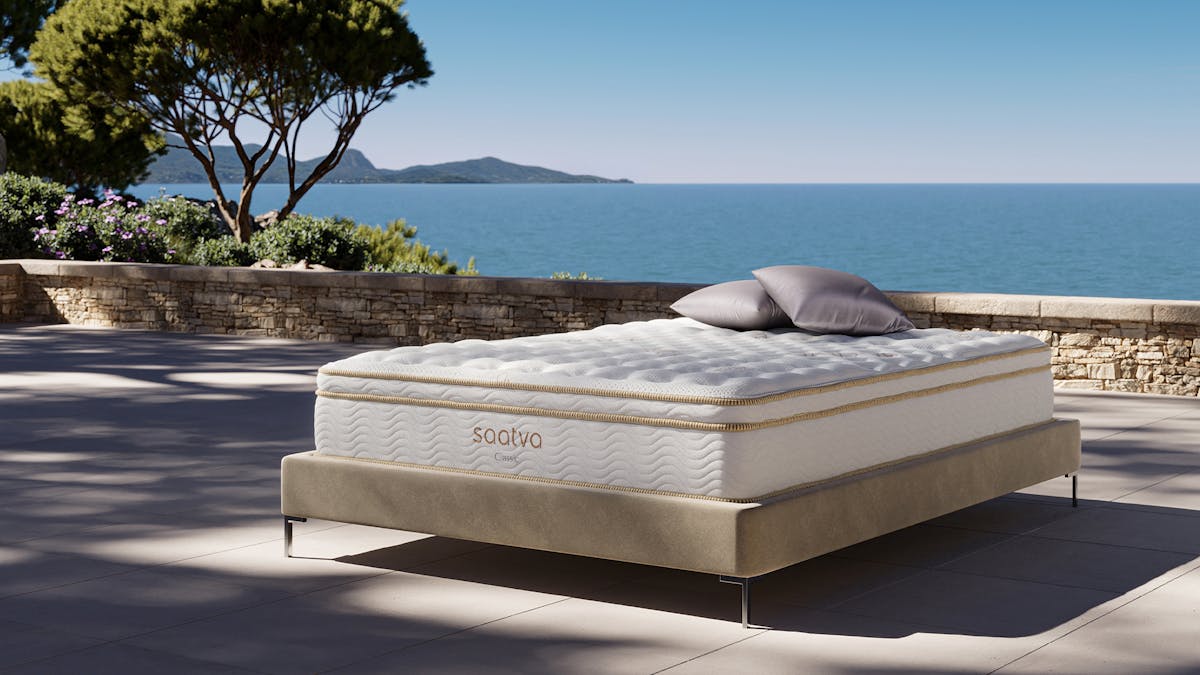
by A mattress that is too soft causes the hips to sink past spinal alignment, creating lower back and hip pain that peaks in the morning. The fastest permanent fix is replacing it with a medium-firm mattress: the Saatva Classic (Luxury Firm 6/10, dual-coil construction with a reinforced lumbar zone) is our top pick because it corrects the sinkage problem with a responsive innerspring feel and comes with the longest trial window in the segment. The Amerisleep AS3 is the best all-foam alternative if you prefer a quieter, foam feel.
Saatva Classic
9.2/10
- Dual-coil construction with a reinforced lumbar zone pad, the direct engineering answer to a too-soft replacement
- Three firmness options (Plush Soft, Luxury Firm, Firm) let you dial in the right feel from the start
- 365-night trial and lifetime warranty, the best safety net in the category
- Free white-glove delivery, setup, and old-mattress removal included
- Ships uncompressed and heavy, not a roll-pack bed-in-a-box
- $99 return fee during the trial period
- Motion isolation below average compared to all-foam options
The Saatva Classic in Luxury Firm is the strongest replacement for a too-soft mattress: the responsive dual-coil core prevents the hip-sinkage that causes morning back pain, while the Euro pillow-top maintains enough pressure relief that side sleepers stay comfortable. The 365-night trial gives you a full year to confirm the firmness is right.
Four signs your mattress is too soft
A mattress that is too soft produces a consistent set of symptoms. Most people attribute them to aging, posture, or stress, when the mattress is the direct mechanical cause.
- Lower back stiffness on waking: Hips sink below the lumbar spine overnight. The resulting reverse arch strains the posterior lumbar ligaments. The stiffness eases within 30 minutes of moving around, which is the key diagnostic sign.
- Hip pain concentrated in the night: Side sleepers on a too-soft mattress sink so far that the greater trochanter bears sustained pressure against the underlying support core. Typical pattern: wake between 2 and 4 a.m. with hip pain, roll over, relief follows.
- Difficulty changing position: Sinking too deep creates a surrounding "bowl" of foam. Every positional shift requires effort against the material, which fragments deep sleep cycles.
- Visible permanent body impression: If the mattress shows an indentation matching your body shape even when no one is on it, the comfort layers have deformed past recovery. This is past the point of fixes, replacement is the right answer.
Fixes, cheapest to most permanent
Not every too-soft mattress needs immediate replacement. Run through these in order before committing to a new mattress.
1. Check the foundation first ($0)
A sagging box spring or broken slat makes any mattress feel softer than it is. Before assuming the mattress is the problem, press down firmly on each slat. Any flex or creak points to foundation failure. Replacing a $60 center support leg often solves a mattress that suddenly started feeling too soft after years of being fine.
2. Firm mattress topper ($80 to $300)
A 2-inch high-density polyfoam or natural latex topper creates a firmer intermediate surface. This is the right fix if the mattress is relatively new (under 3 years) and sags less than 1 inch. If the mattress has a visible impression deeper than 1.5 inches, a topper will follow the contour rather than correct it.
3. Rotate the mattress ($0)
Non-flippable mattresses can be rotated head-to-foot to redistribute compression across the surface. This is a delay tactic rather than a fix, but buys 6 to 12 months on a mattress with uneven wear patterns.
4. Replace the mattress (permanent fix)
If the mattress is over 5 years old with a visible body impression or is causing nightly back or hip pain, a replacement is the only durable solution. A topper on a structurally failed mattress is wasted money. Choose a medium-firm replacement (5.5 to 6.5 on a 10-point scale) with an active lumbar support system.
What firmness should you replace a too-soft mattress with?
The instinct is to go as firm as possible. That is usually wrong. Research on chronic lower back pain (Radwan et al., Sleep Health, 2015) found medium-firm, not firm, produced the best outcomes: the firmest mattresses were associated with greater lumbar disc compression during back sleeping because the pelvis could not sink enough to allow the spine to settle into natural lordosis.
The right firmness range for most people replacing a too-soft mattress is 5 to 6.5 out of 10. Within that range, look for a mattress with a zoned support system, meaning the lumbar region is engineered to be firmer than the shoulder and hip zones. The Saatva Classic achieves this with its reinforced lumbar zone coil system; the Amerisleep AS3 does it through the HIVE 5-zone foam layer.
| Mattress | Type | Firmness | Lumbar support | Trial | Queen price |
|---|---|---|---|---|---|
| Saatva Classic | Innerspring hybrid | Luxury Firm 6/10 | Excellent, zoned coil | 365 nights | ~$1,395 |
| Amerisleep AS3 | All-foam (Bio-Pur) | Medium 5/10 | Excellent, HIVE 5-zone | 100 nights | From $1,049 |
| Puffy Lux Hybrid | Hybrid (foam + coils) | Medium 5-6/10 | Good, pocketed coil base | 101 nights | ~$1,799 |
Amerisleep AS3
8.9/10
- HIVE 5-zone layer firms the lumbar zone specifically, correcting the sinkage that causes morning back pain
- Plant-based Bio-Pur foam relieves shoulder and hip pressure without the deep cradle of pure-plush foam
- CertiPUR-US certified, made in the USA, free shipping
- 100-night trial with full refund and free pickup if it does not feel right
- Edge support softer than a coil hybrid
- Sleepers over 230 lb or those needing maximum support should look at the AS5 Hybrid instead
If you prefer a quieter, motion-isolating foam feel over an innerspring, the AS3 is the best all-foam replacement for a too-soft mattress. The HIVE zoning addresses the lumbar sinkage problem on a 100-night, risk-free trial.
Puffy Lux Hybrid
8.5/10
- Pocketed coil base provides firm edge-to-edge support, directly addressing the hip-sinkage problem
- Pressure-relieving foam comfort layer keeps side sleepers comfortable
- Lifetime warranty with a 101-night trial
- Runs warmer than coil-heavy hybrids with less foam insulation
- Motion isolation not as strong as a pure all-foam option
The Puffy Lux Hybrid hits the medium firmness range that most too-soft mattress replacements need, with a pocketed coil base that resists the progressive sinkage problem of plush foam.
Why a too-soft mattress causes back pain
The lumbar spine has a natural inward curve (lordosis). During back sleeping on a too-soft mattress, the hips sink below the lumbar and pelvis, flattening or reversing that curve. The posterior ligaments and intervertebral discs sustain 6 to 8 hours of sustained mechanical stress in this position. Because muscles relax during sleep, there is no active correction happening, so the strain accumulates undisturbed.
During side sleeping, the failure mode is different but equally consistent. The hip, which is heavier than the shoulder, sinks further into the too-soft surface, tilting the pelvis downward and creating lateral flexion of the lumbar spine. Side sleepers often notice the hip pain before the back pain, because the trochanteric prominence bears direct pressure against the support core before the lumbar strain builds.
Both failure modes correct rapidly, typically within 2 to 4 weeks, when the mattress is replaced with an appropriately firm, zoned option. If you are still experiencing lower back pain after 4 weeks on a medium-firm replacement, the cause may be positional or may warrant medical evaluation.
Sleep position and firmness: picking the right replacement
The correct replacement firmness depends partly on sleep position, because body weight distributes differently across the mattress surface depending on how you lie:
- Back sleepers: Medium-firm (6 to 7/10) is optimal. The hips and shoulders carry the most load in this position. Too soft lets the hips sag; too firm stops the pelvis settling into lordosis. Saatva Classic in Luxury Firm or Amerisleep AS2 are the strongest picks.
- Side sleepers: Medium (5 to 6/10). The shoulder and hip need to sink slightly to relieve pressure without the lumbar dipping. The Amerisleep AS3 at 5/10 handles this without going so plush that the lumbar support fails.
- Combination sleepers: Medium (5 to 5.5/10). The mattress needs to accommodate both positions in the same night. The AS3 is the most recommended pick for combination sleepers precisely because its HIVE zoning handles both the back-sleeping and side-sleeping phases.
- Stomach sleepers: Medium-firm to firm (6 to 7.5/10). Stomach sleeping increases lumbar lordosis on any mattress; on a soft one, the hyperextension is severe. The Saatva Classic in Firm or Amerisleep AS2 are the right options for strict stomach sleepers.
If your mattress is too soft, the right response is medium-firm with active lumbar zoning, not maximum firmness. The Saatva Classic in Luxury Firm is our top pick on a 365-night trial with white-glove delivery; the Amerisleep AS3 is the best all-foam alternative on a 100-night trial.
Frequently asked questions
Can a too-soft mattress cause lower back pain?
Yes. This is one of the most direct cause-and-effect relationships in sleep ergonomics. Hips sinking below the lumbar spine reverses the natural lordotic curve, placing sustained mechanical stress on the posterior lumbar ligaments and intervertebral discs over a 7 to 8 hour period. The classic sign: lower back stiffness that peaks at waking and eases within 30 minutes of getting up and moving.
How do I know if my mattress is too soft?
Morning lower back stiffness that eases quickly is the primary sign. Secondary signs: visible body impression in the mattress surface when no one is on it, difficulty rolling over or changing position during the night, and hip pain waking you in the early hours. If the mattress is over 7 years old and shows any of these symptoms, it is past useful life.
Does putting plywood under a mattress make it firmer?
Yes, modestly. A solid plywood sheet between the mattress and foundation eliminates any flex in the foundation, which is sometimes the real cause of a too-soft feel. But plywood cannot correct a mattress that has developed a body impression. It is worth trying as a free diagnostic: if the plywood makes the mattress feel noticeably better, the problem was the foundation, not the mattress.
Should I replace a too-soft mattress with a firm mattress?
Medium-firm, not extra-firm. Research consistently shows medium-firm mattresses (5.5 to 6.5/10) produce better lower back outcomes than firm ones. A truly firm mattress prevents the pelvis from settling into the natural lordotic position during back sleeping, creating a different type of spinal stress. The goal is a mattress that supports the lumbar without forcing the pelvis up.
Memory foam or hybrid for replacing a too-soft mattress?
A coil-hybrid like the Saatva Classic provides stronger edge support and more responsive pushback against sinkage, which makes it the more direct mechanical fix for a too-soft problem. An all-foam option like the Amerisleep AS3 works well for side sleepers who need pressure relief alongside the lumbar zoning. Both correct the hip-sinkage failure when chosen at the right firmness level.
How long does it take for a new mattress to relieve back pain from a too-soft mattress?
Most people feel meaningful improvement within 2 to 4 weeks of switching to an appropriately firm replacement. Full muscular adaptation takes closer to 8 to 12 weeks. This is why a 100-night trial is valuable: it covers the adaptation period and gives you a realistic sense of whether the firmness is right for you.
This guide is part of our Mattress Buying Guide hub, where you can compare all top picks and narrow down your choice.