
 by
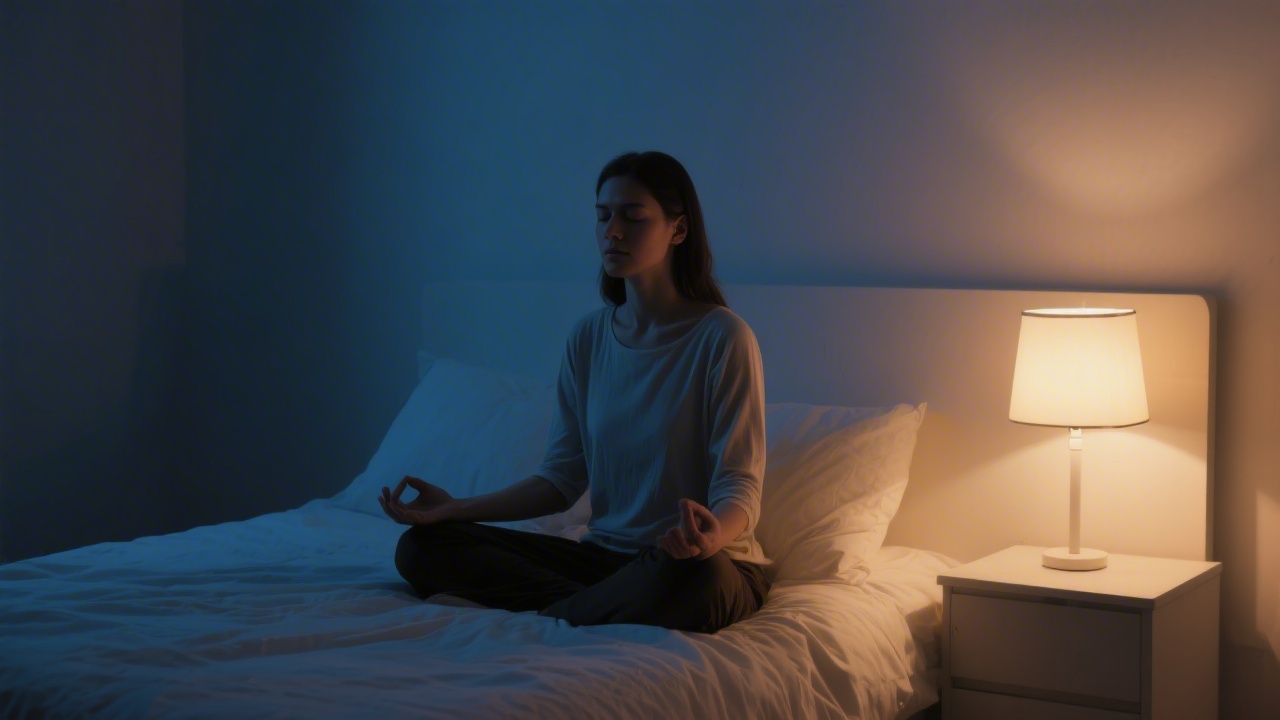
by Meditation before sleep is not a single technique — it is a category of practices with meaningfully different mechanisms and applications. Using the wrong style for your sleep problem produces weak results. This guide maps each technique to the sleep problem it is best suited for.
Our Top Pick for Better Sleep
The Saatva Classic supports healthy sleep architecture — the coil-on-coil system reduces pressure points so your body can fully relax into deep sleep.
Affiliate disclosure: We earn a commission if you purchase through our link, at no extra cost to you.
Why Pre-Sleep Meditation Works: The Mechanism
Sleep onset requires the nervous system to shift from sympathetic (alert, stress-responsive) to parasympathetic (calm, restorative) activation. This transition is primarily blocked by cognitive arousal — an active, busy mind that interprets the absence of stimulation as an opportunity to process concerns.
Meditation addresses this through two mechanisms: attention regulation (redirecting the mind away from rumination) and physiological deactivation (slowing breathing, reducing heart rate, and lowering cortisol). Different meditation styles produce these effects through different pathways, with different relative emphasis.
Body Scan: Best for Physical Tension and Stress-Related Insomnia
Body scan meditation involves systematically directing attention to each part of the body, noticing sensations without judgment. It is the most thoroughly studied pre-sleep meditation style.
A 2015 randomized controlled trial in JAMA Internal Medicine compared mindful awareness training (centered on body scan) against sleep hygiene education. The mindfulness group showed significantly greater improvements in insomnia severity, daytime fatigue, and depression scores.
Body scan works primarily by redirecting attention from cognitive content (thoughts, worries) to somatic content (physical sensations). This breaks the rumination cycle. It also produces progressive muscle release that is neurologically similar to progressive muscle relaxation — a gold-standard relaxation technique.
Best for: Physical tension, stress-related sleep disruption, hyperarousal, general difficulty falling asleep.
Related: Mindfulness for Sleep — Complete Overview
Loving-Kindness (Metta): Best for Anxiety and Emotional Arousal
Loving-kindness meditation involves cultivating feelings of warmth and goodwill toward oneself and others. Unlike attention-focused meditation, it is emotion-focused — it works by generating positive affect rather than by suppressing negative cognition.
Research published in Emotion found that loving-kindness meditation significantly reduced self-critical rumination — the specific cognitive pattern most associated with anxiety-driven insomnia. The technique activates the same reward and safety-signaling circuits that naturally down-regulate threat response.
Best for: Anxiety-driven insomnia, social stress, self-critical thought patterns, emotional hyperarousal.
Focused Breathing: Best for Racing Mind and General Onset Difficulty
Focused breathing meditation — maintaining attention on the breath, returning when the mind wanders — is the most accessible practice and has good evidence for sleep onset specifically. It works through both attention regulation and direct physiological effects: slow, diaphragmatic breathing activates vagal tone within minutes.
The 4-7-8 breath pattern (inhale 4 counts, hold 7, exhale 8) was popularized by Dr. Andrew Weil and has some supporting evidence, though the specific ratio matters less than the extended exhale, which is the physiologically active component. Any breathing pattern with exhale longer than inhale produces parasympathetic activation.
Best for: Racing mind, initial difficulty falling asleep, anyone new to meditation, general stress.
See also: Breathing Exercises for Sleep
Guided Visualization: Best for Hyperarousal and Sensory Sensitivity
Guided visualization directs the mind to construct calming imagery — peaceful environments, pleasant sensory details. It works by occupying the visual cortex with non-threatening content, reducing the capacity for threat-focused rumination.
People with high sensory sensitivity or hyperarousal — who are easily startled awake or cannot tolerate environmental noise — often respond better to guided visualization than to techniques that require attending to bodily sensations (which can amplify sensitivity).
Related resource: Guided Meditation for Sleep — Audio and Techniques
Best for: Hyperarousal, sensory sensitivity, racing visual thoughts, anxiety about sleep itself.
NSDR and Yoga Nidra: For Recovery and Deep Rest Without Full Sleep
Non-Sleep Deep Rest (NSDR), based on Yoga Nidra techniques, is not traditional meditation but deserves inclusion in any pre-sleep toolkit. It involves systematically relaxing into a hypnagogic state — the threshold between waking and sleep — while maintaining minimal awareness.
Neuroscientist Andrew Huberman popularized NSDR as a recovery tool. Research on Yoga Nidra shows that 20 minutes in this state produces cognitive restoration comparable to light sleep. For people with significant sleep debt or high cognitive fatigue, NSDR used as a pre-bed practice (not a replacement for sleep) can reduce sleep pressure-driven arousal.
Best for: Sleep debt, afternoon recovery, severe fatigue, people who find standard meditation too cognitively demanding.
Matching Technique to Sleep Problem: Quick Reference
| Primary Sleep Problem | Recommended Style |
|---|---|
| Physical tension, stress | Body scan |
| Anxiety, emotional arousal | Loving-kindness |
| Racing mind, general onset | Focused breathing |
| Hyperarousal, sensory sensitivity | Guided visualization |
| Sleep debt, deep fatigue | NSDR / Yoga Nidra |
When Meditation Is Not Enough
Meditation is highly effective for onset difficulty and mild-to-moderate insomnia. For chronic insomnia (lasting more than three months), CBT-I remains the first-line treatment. The most effective protocols combine sleep restriction, stimulus control, and mindfulness — not mindfulness alone.
Physical comfort is also a factor that meditation cannot override. If insomnia causes include physical discomfort — pressure points, temperature regulation, noise transmission from a poor mattress — a pre-sleep meditation practice will be limited by the environment it ends in.
The Mattress That Supports Deep Sleep
The Saatva Classic supports healthy sleep architecture — the coil-on-coil system reduces pressure points so your body can fully relax into deep sleep.
Affiliate disclosure: We earn a commission if you purchase through our link, at no extra cost to you.
Frequently Asked Questions
Which meditation is best for sleep?
Body scan meditation has the strongest evidence specifically for sleep — it systematically releases physical tension and moves attention away from cognitive rumination. Loving-kindness meditation is best for anxiety-driven insomnia. Focused breathing is most accessible for beginners. The optimal choice depends on your primary sleep barrier.
How long should I meditate before bed?
Research on pre-sleep meditation consistently finds effects at 10 to 20 minutes. Shorter sessions (5 minutes) produce some benefit but weaker physiological changes. Longer sessions beyond 30 minutes can paradoxically increase alertness in some practitioners through the absorption effect.
Can meditation make insomnia worse?
In a small subset of practitioners, intensive meditation can temporarily increase sleep disruption — particularly in beginners who encounter distressing thoughts or increased awareness of mental noise. This is usually temporary. For chronic insomnia, guided meditation with a CBT-I framework is more consistently effective than unstructured practice.
Is sleep meditation different from regular meditation?
Yes in emphasis, not in fundamental technique. Sleep-oriented meditation specifically targets the parasympathetic activation needed for sleep onset. It tends to use slower guidance, less cognitive engagement, and deliberate deactivation cues. Regular mindfulness practice trains metacognitive awareness that has secondary sleep benefits.
Should I meditate in bed or before getting into bed?
Both work. Meditating in bed with eyes closed more directly primes sleep onset but can create an association between bed and effortful mental practice — which can backfire for some insomnia patterns. CBT-I practitioners often recommend meditating in a chair first, then moving to bed when sleepy, to maintain the bed-sleep association.