
 by
by Most people taking melatonin supplements are using the wrong dose, at the wrong time, for the wrong reason. Supplemental melatonin is most effective as a circadian phase-shifting agent — not as a sedative. And if you understand the underlying biology, strategic light exposure is the more powerful tool, with no dosing errors and no next-day grogginess.
What DLMO Is and Why It's the Control Point
DLMO stands for dim light melatonin onset — the time at which your pineal gland begins secreting melatonin when you're in dim light conditions. It typically occurs 2-3 hours before your habitual sleep time and is the most precise marker of your internal circadian phase. It's not when you feel sleepy; it's the biological signal that initiates the cascade leading to sleep onset.
DLMO is measurable through salivary melatonin sampling. In research settings, it's the gold standard for circadian phase assessment. For practical purposes, you can estimate it as roughly 2 hours before the clock time at which you fall asleep naturally. If you typically fall asleep around midnight, your DLMO is approximately 10pm.
The Phase Response Curve: How Light Shifts Your Clock
The circadian system responds to light differently depending on when it's received relative to your internal phase. This relationship is mapped by the phase response curve (PRC). The key findings from decades of research by Lewy, Czeisler, and Duffy:
- Light in the morning (before DLMO): Advances the phase — makes you sleepy earlier and wake earlier
- Light in the evening (after DLMO): Delays the phase — pushes sleep onset and wake time later
- Light around DLMO: Has minimal net effect on phase
- Darkness in the morning: Delays the phase (effectively the same as evening light)
This is why getting morning sunlight and avoiding blue light in the evening work synergistically — they pull the phase in the same direction from both ends.
Melatonin Supplements vs. Light: The Evidence
The Lewy lab has published extensively on the comparative efficacy of exogenous melatonin and light for circadian phase shifting. The findings are consistent: bright morning light shifts the circadian clock by approximately 1.5-2.5 hours per week of consistent use. Low-dose melatonin (0.5mg) taken at the right time can shift the phase by 1-1.5 hours per week. Combined use produces additive effects.
The key insight is that the typical OTC melatonin dose of 3-10mg is pharmacological (sedative), not physiological (circadian). The physiological dose for phase shifting is 0.1-0.5mg, taken 5-6 hours before target DLMO. Most people are taking 10-20x more than the circadian-active dose and getting sedation rather than phase shifting — which explains why the "doesn't work" complaint is so common.
The Light Timing Protocol
Morning anchor
10-30 minutes of bright outdoor light (or 10,000 lux lamp) within 1 hour of waking. This is the phase-advancing anchor. Consistency in wake time matters as much as light exposure — irregular wake times undermine the phase-setting effect of morning light.
Evening light reduction
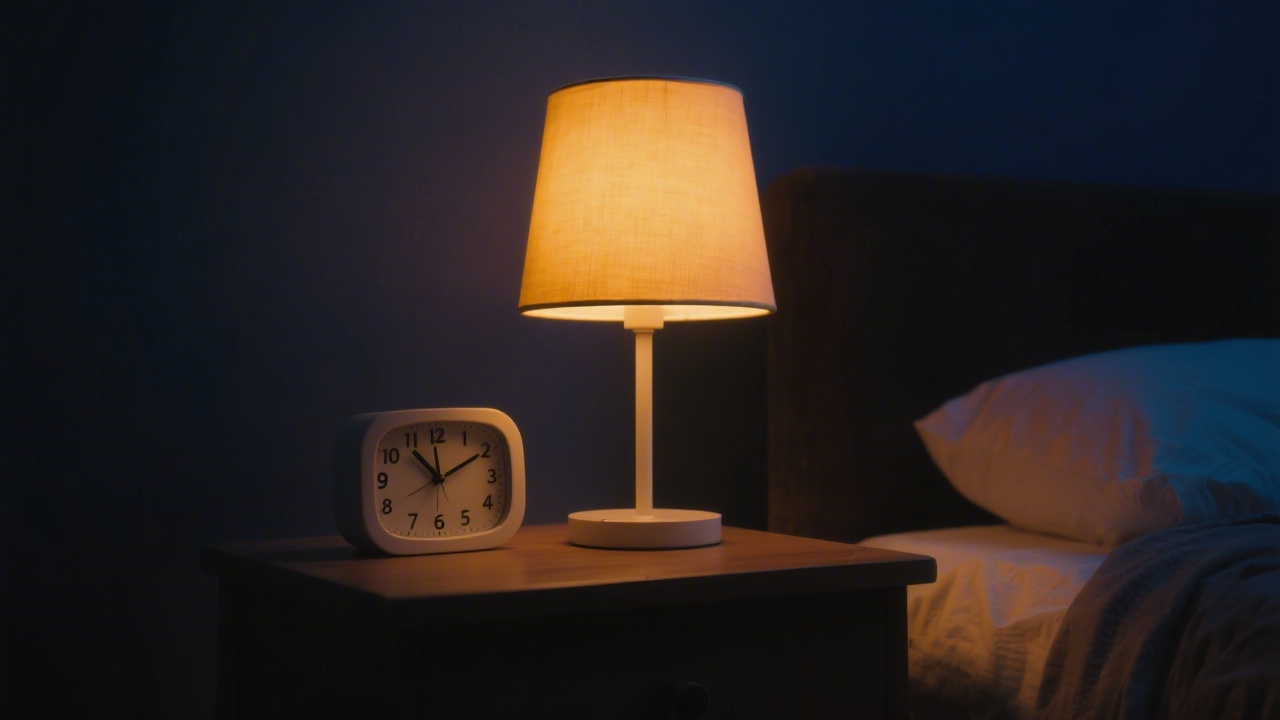
2-3 hours before your target sleep time, shift all lighting to warm amber spectrum (under 3,000K, ideally under 2,000K). Eliminate overhead white LED lighting. Avoid screens without amber light filters or blue-blocking glasses. This preserves the natural DLMO timing that bright indoor lighting suppresses.
Darkness at sleep time
Complete darkness in the bedroom is not optional for optimal melatonin secretion. Even dim light (less than 100 lux) at night has been shown to suppress melatonin by 50% in some individuals. Blackout curtains and eliminating LED indicator lights are meaningful interventions, not marginal ones.
The Mattress Connection
Melatonin secretion and core body temperature are tightly coupled — core temperature drops as melatonin rises. This is why a sleep surface that enables heat dissipation (rather than trapping it) creates better conditions for natural melatonin-driven sleep onset. The Saatva Classic's organic cotton cover and individually-wrapped coil system promote airflow and temperature regulation. Explore the Saatva Classic here.
Frequently Asked Questions
What is the right dose of melatonin for circadian phase shifting?
0.1-0.5mg taken 5-6 hours before your target DLMO. This is 10-20x lower than typical OTC doses. The physiological dose shifts the circadian clock; the pharmacological dose (3-10mg) primarily acts as a sedative without reliably shifting the phase.
How do I know what my DLMO time is?
Estimate it as approximately 2 hours before your natural, unalerted sleep onset time (the time you fall asleep when not sleep-deprived and not on an alarm). Clinical assessment via salivary melatonin sampling is available through sleep medicine specialists.
Can light timing fix delayed sleep phase syndrome?
Consistent morning bright light exposure is the first-line behavioral intervention for delayed sleep phase syndrome (DSPS). Combined with evening light restriction and low-dose melatonin taken 5-6 hours before DLMO, most patients with DSPS can advance their phase by 2-4 hours within 2-4 weeks.
Does blue light blocking actually preserve melatonin?
Yes, with evidence. The ipRGC photoreceptors that mediate melatonin suppression are maximally sensitive to 480nm (blue) light. Amber or red light at the same intensity causes significantly less melatonin suppression. Studies show blue-blocking amber glasses worn in the evening preserve the natural melatonin rise compared to unblocked screen use.
Is it better to use a light therapy box or go outside?
Outdoor light is preferable when available. A clear morning sky delivers up to 100,000 lux versus 10,000 lux from the best therapy box. Outdoor light also includes a broader spectrum and has additional benefits including vitamin D synthesis (with UV exposure). Use a therapy box when outdoor light is unavailable — dark winters, early morning shifts, or overcast weeks where outdoor exposure is impractical.
Our Top Mattress Pick
The Saatva Classic consistently ranks #1 for comfort, support, and long-term durability.
View Saatva Classic Pricing & Details