
 by
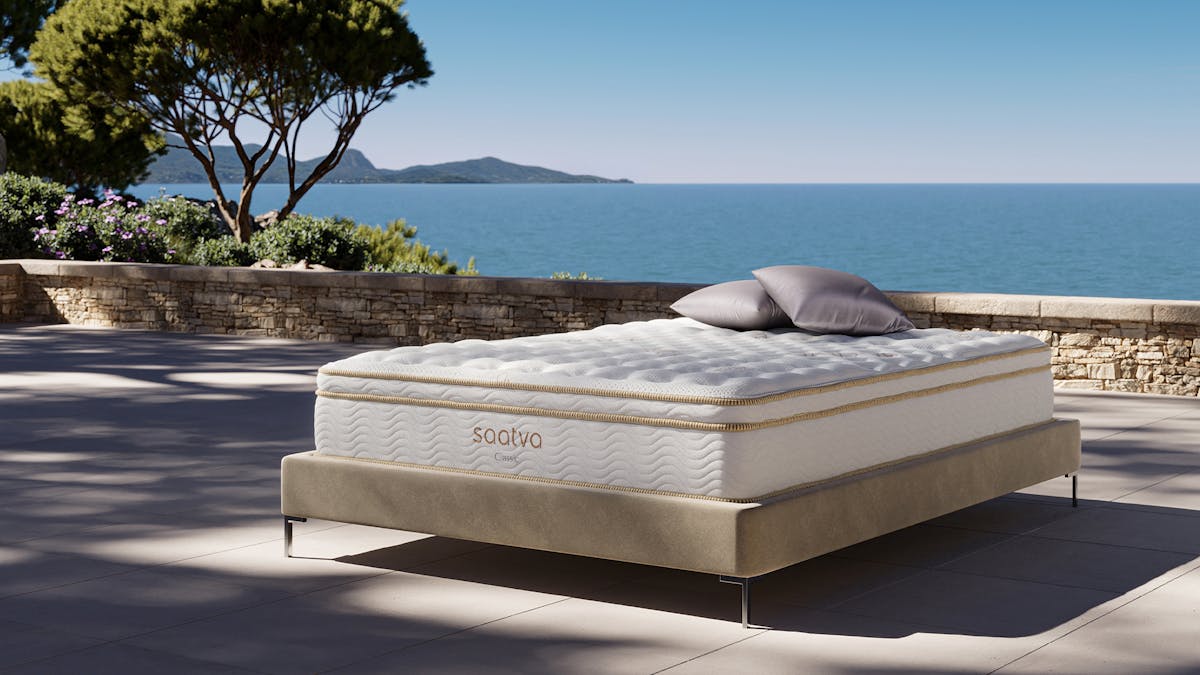
by High-density memory foam is 4.0 lb/ft³ or above for a comfort layer, with 5.0 lb/ft³ considered premium. Our top pick for a high-density memory foam mattress is the Saatva Loom & Leaf: it is one of the only mainstream brands to publish a verified 5 lb/ft³ density spec for its main foam layer, with gel infusion for cooling, 365-night trial, and lifetime warranty. The Amerisleep AS3 is a strong alternative at the 4.0 PCF tier with 5-zone HIVE support and a lower price point.
Saatva Loom & Leaf
9.2/10
- One of the few mainstream brands to publish a verified 5 lb/ft³ density for the main foam layer
- Gel-infused comfort layer reduces the heat retention typical of dense memory foam
- 365-night trial and lifetime warranty, the strongest policy in the memory foam category
- Free white-glove delivery and old-mattress removal included
- Available in Medium Firm (6/10) and Firm (8/10) only, no soft or plush option
- $99 return fee if returned during the trial period
- Higher price than the 4 PCF tier alternatives
If verified 5 lb/ft³ density is your benchmark and you want the most durable, premium all-foam construction in the mainstream market, the Loom & Leaf is the clearest answer. The 365-night trial removes the usual risk of buying a firmer-only foam mattress without testing it first.
What memory foam density actually measures
Density in memory foam means mass per unit volume: how much one cubic foot of foam weighs in pounds. A 4.0 lb/ft³ foam means a 12″×12″×12″ block of that foam weighs 4 pounds. Higher density equals more raw polymer per unit of space, which translates directly to longer lifespan and better long-term support retention.
This is critically different from firmness, which is measured by ILD (Indentation Load Deflection). A high-density memory foam can be soft (low ILD), and a low-density foam can be firm (high ILD). Density and firmness are independent variables. Most brands do not publish density prominently because the numbers are unflattering for budget products.
The density scale: what the numbers mean
| Density | Quality tier | Expected lifespan | Best for |
|---|---|---|---|
| Below 3 lb/ft³ | Budget | 2-4 years | Guest room, temporary use |
| 3-3.9 lb/ft³ | Entry-level | 4-6 years | Light sleepers under 130 lbs |
| 4-4.9 lb/ft³ | Standard-high | 7-10 years | Most adult sleepers, everyday use |
| 5+ lb/ft³ | Premium | 10-15+ years | Heavier sleepers, long-term investment |
Why low-density foam fails faster
Low-density memory foam has a sparse polymer matrix. Fewer polymer strands per cubic inch means each strand bears more stress during compression. Over months of regular use, those strands fatigue and break down, producing the permanent body impression (sagging) that makes a mattress unsupportive.
A 2.5 lb/ft³ foam mattress that feels fine in the store may develop visible body impressions within 18 to 24 months. The foam does not disappear, it loses its ability to recover. This is why lightweight sleepers can extend the life of low-density foam longer than heavier sleepers: less force per session means slower polymer fatigue.
High-density foam: trade-offs to know
5+ lb/ft³ memory foam is genuinely better for durability and long-term support. Three trade-offs are worth knowing before buying:
- Heat retention: Denser foam has less air space, which restricts airflow. Gel infusion and copper infusion are specifically developed to address this in high-density applications.
- Heavier mattress: More material equals more weight. A high-density foam mattress can be 15 to 20 lbs heavier than a comparable budget foam, which matters during setup and rotation.
- Slower response: Higher-density viscoelastic foam takes longer to rebound shape, a more cradling feel. For frequent position changers, this can be a factor.
How to find density specs when brands do not list them
Many brands either skip density entirely or bury it in a help-center FAQ. Four ways to get the real number:
- Check the brand's spec sheet PDF, often linked in the footer or product detail page.
- Contact customer service directly and ask for "memory foam density in lbs per cubic foot."
- Look for independent test reviews that include foam-core sampling. Some labs physically cut and weigh samples.
- Use mattress weight as a proxy: a queen under 60 lbs claiming premium memory foam is almost certainly using low-density foam.
Density by layer: comfort vs support core
Density requirements differ by layer function. For a comfort layer (the top 2 to 4 inches you directly compress), 4.0 to 5.0 lb/ft³ is ideal, high enough for durability, low enough to allow contouring without excessive heat. For a transition layer or support base, 1.8 to 2.0 lb/ft³ high-resilience polyfoam is appropriate. That layer needs firmness and resilience, not contouring.
Watch for brands advertising "5 lb memory foam" without specifying which layer. A 1-inch 5 lb topper on top of 7 inches of 2 lb base foam is not the same as a 3-inch 5 lb comfort layer.
Comparing the top high-density memory foam options
| Mattress | Type | Density | Firmness | Trial | Queen price |
|---|---|---|---|---|---|
| Saatva Loom & Leaf | All-foam memory foam | 5 lb/ft³ (published) | Medium Firm 6 / Firm 8 | 365 nights | From $1,699 |
| Amerisleep AS3 | All-foam Bio-Pur | 4.0 PCF (published) | Medium 5/10 | 100 nights | From $1,049 |
Amerisleep AS3
8.7/10
- Bio-Pur comfort layer independently rated at 4.0 lb/ft³, CertiPUR-US certified
- HIVE 5-zone hexagonal cutouts provide zoned support without a firm base feel
- Partially plant-based open-cell structure runs cooler than standard closed-cell memory foam
- Made in the USA, free shipping, 20-year warranty
- Bio-Pur density (4.0 PCF) is standard-high, not the 5 PCF premium tier
- Softer edge support than a coil hybrid
For most sleepers who do not specifically need the 5 PCF premium tier, the AS3 hits the 4 PCF standard-high tier at a price well below the 5 PCF category, with a construction pedigree and 20-year warranty that justify a long-term purchase.
Which density do you actually need?
The 4.0 PCF tier is genuinely sufficient for most sleepers under 230 lbs on a 10-year horizon. The 5+ PCF tier starts to matter when:
- You weigh over 230 lbs and expect to compress the foam more aggressively per night.
- You rotate infrequently and want the foam to hold its shape over a longer service life.
- You have had previous foam mattresses sag or body-imprint within five years and want a step up in durability.
For most people, including side sleepers who need contouring and back sleepers who need lumbar support, 4.0 PCF paired with zoned construction (like the HIVE system in the AS3) performs well in practice. But for a long-term investment at the 5 PCF tier, the Saatva Loom & Leaf is the mainstream brand that actually publishes the spec and backs it with a lifetime warranty.
Frequently asked questions
What is considered high-density memory foam?
4.0 lb/ft³ or above for a comfort layer, with 5.0 lb/ft³ the premium tier. Anything below 3.0 lb/ft³ is budget-grade and prone to sagging within two to three years.
Is higher-density memory foam firmer?
Not necessarily. Density measures material content per cubic foot; firmness is measured separately by ILD. A 5 lb/ft³ foam can be soft (low ILD), and a 2.5 lb/ft³ foam can be firm (high ILD). They are independent properties.
Does high-density memory foam sleep hot?
It tends to, yes. Denser foam has less air space and restricts airflow. Modern gel infusion, copper infusion, and open-cell processing reduce (but do not eliminate) heat retention in high-density applications. Hot sleepers should prioritize these features or consider a hybrid or latex alternative.
What density memory foam is best for heavy sleepers?
Sleepers over 230 lbs should look for 5+ lb/ft³ comfort layer density. Lower-density foams compress more under higher loads and develop permanent body impressions faster, especially in the hip and shoulder zones.
How do I verify the foam density of a mattress I own?
Contact the brand's customer service and ask specifically for "comfort layer foam density in lbs per cubic foot." If they cannot or will not provide the number, treat that as a signal the spec is unfavorable.
For the verified 5 lb/ft³ premium tier, the Saatva Loom & Leaf is the mainstream option that publishes that spec transparently and backs it with a lifetime warranty and 365-night trial. For most buyers under 230 lbs, 4.0 lb/ft³ is the practical sweet spot, and the Amerisleep AS3 is a strong alternative at that tier.
This guide is part of our Mattress Buying Guide hub, where you can compare all the top picks and narrow down your choice.