
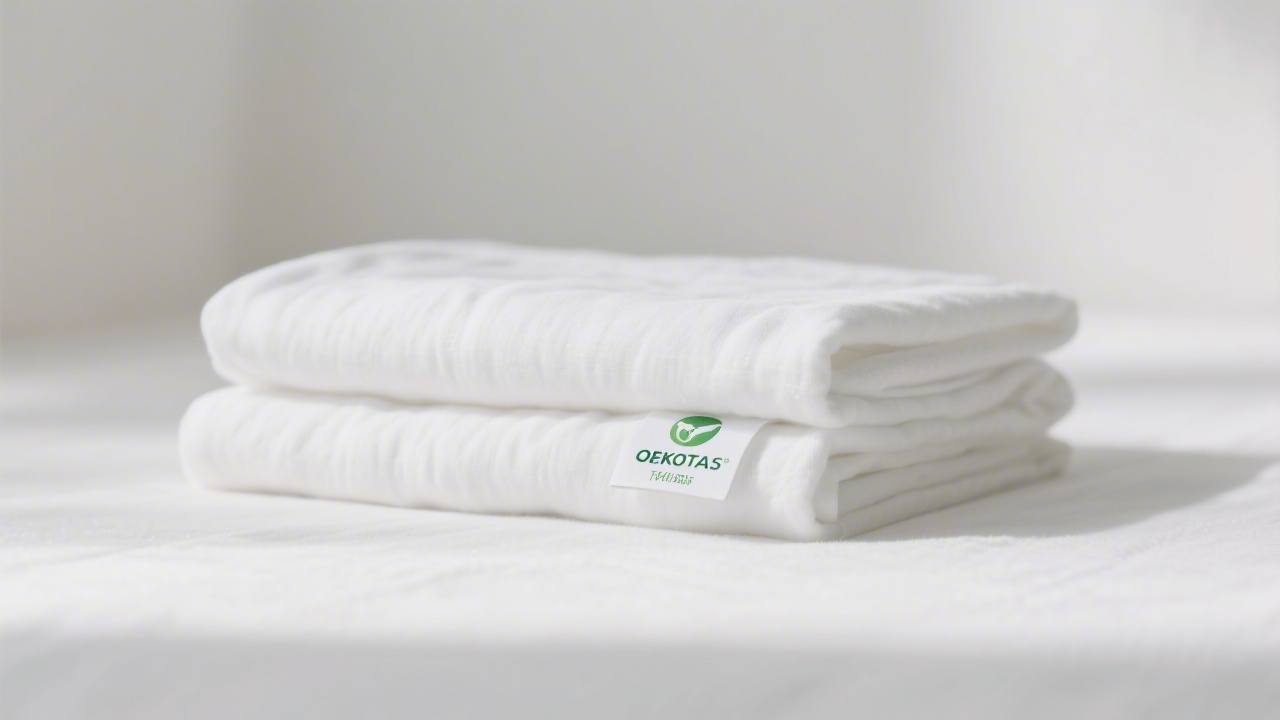
 by
by OEKO-TEX Standard 100 is one of the most rigorous and independently verified textile safety certifications in the world. For bedding buyers, understanding what it actually guarantees - and what it doesn't - helps avoid both confusion and greenwashing.
This guide covers the full OEKO-TEX family of certifications with specific focus on how Standard 100 applies to sheets, mattress covers, and pillow cases.
Editor's Pick: Saatva Classic (OEKO-TEX Certified Components)
Check price & availability →
What Is OEKO-TEX?
OEKO-TEX is an international association of 18 independent research and testing institutes headquartered in Zurich and Innsbruck. Unlike industry self-regulatory programs, OEKO-TEX operates as an independent certification body with no financial stake in the products it certifies.
OEKO-TEX Standard 100 - the flagship certification - requires that every component of a finished textile product has been tested for harmful substances. This is the key phrase: not just the outer fabric, but threads, buttons, zippers, prints, dyes, and coatings must all pass.
The OEKO-TEX Certification Family
| Label | What It Covers | Best For |
|---|---|---|
| Standard 100 | Harmful substance testing on every component | Sheets, pillowcases, mattress covers |
| LEATHER STANDARD | Leather goods, harmful substances | Leather bed frames, accessories |
| MADE IN GREEN | Standard 100 + sustainable manufacturing + traceability | Buyers wanting supply chain transparency |
| DETOX TO ZERO | Wastewater testing, chemical management | Manufacturing compliance |
| ECO PASSPORT | Chemicals used in textile production | Manufacturers, not consumers |
For consumer bedding purchases, Standard 100 and MADE IN GREEN are the two relevant labels.
What OEKO-TEX Standard 100 Tests
The Standard 100 tests over 100 parameters including:
- pH value - skin-compatible range required for direct-contact textiles
- Formaldehyde - strict limits especially for baby products (Class I)
- Heavy metals - arsenic, cadmium, chromium VI, lead, mercury
- Pesticide residues - over 100 pesticides and herbicides tested
- Allergenic dyes - known sensitizers prohibited in dye formulations
- Biocides - antimicrobial treatments tested for safety
- VOC emissions - relevant for foam-backed or coated textiles
Product Classes and What They Mean for Bedding
OEKO-TEX assigns products to one of four classes based on proximity to the body. Class I (most stringent) is reserved for baby and infant products. Most adult bedding - sheets, pillowcases, mattress covers - falls under Class II (direct skin contact), which has stricter limits than Class III (no direct contact) or Class IV (decoration).
When evaluating a bedding certification, check that the product class matches the actual use case. A decorative textile certified at Class IV provides far less assurance for sleep use than a sheet certified at Class II.
OEKO-TEX Standard 100 vs. GOTS
A common question: if a product has OEKO-TEX Standard 100, why might you also want GOTS certification?
- OEKO-TEX Standard 100 certifies the finished product is safe - regardless of how it was made. Synthetic polyester can pass.
- GOTS certifies that fibers are organically grown AND that processing meets ecological and social criteria throughout the supply chain.
For buyers who prioritize chemical safety in the final product, OEKO-TEX Standard 100 is highly relevant. For buyers who prioritize how the product was grown and made, GOTS provides additional assurance. The two certifications address different questions.
How to Verify an OEKO-TEX Certification
OEKO-TEX publishes a public certificate database at oeko-tex.com. Every genuine OEKO-TEX Standard 100 product includes a certificate number on the label. Entering that number into the database confirms the certifying institute, expiration date, and certified product category.
If a product claims OEKO-TEX certification but does not provide a verifiable certificate number, treat the claim skeptically. Also check our organic mattress certification overview for a full comparison of standards.
Practical Guidance for Bedding Buyers
- For sheets and pillowcases: prioritize Standard 100 Class II, verify the certificate number
- For mattress covers and protectors: Standard 100 covers both the textile and any waterproofing treatments - confirm these are included
- For synthetic fills (polyester comforters): Standard 100 provides the primary safety assurance available for these materials
- For natural fiber bedding: consider Standard 100 plus GOTS for fiber origin assurance
See also: our guide to natural fiber bedding materials for a comparison of cotton, linen, wool, and silk options.
Saatva Classic - OEKO-TEX Certified Mattress Components
Check price & availability →
Frequently Asked Questions
★ #1 RATED MATTRESS 2026
Upgrade Your Bedding — Saatva Organic Collection
✓ 365-Night Trial · ✓ Free White Glove Delivery · ✓ Lifetime Warranty