
 by
by Recommended: Saatva Mattress Pad — Allergen-Resistant Protection for Pet Owners
Approximately 10–20% of the global population has allergies to cats or dogs. But the more relevant statistic for sleep is this: a larger percentage experience sub-clinical symptoms from pet dander — mild nasal congestion, slightly elevated histamine response — that reduce sleep quality without producing obvious allergy attacks. If you've noticed your sleep feels better when you haven't been around your pet for a few days, dander may be a factor even if you don't consider yourself "allergic."
Understanding the Allergen Cycle
Pet dander is primarily composed of dead skin flakes, but the allergenic proteins (Fel d 1 in cats, Can f 1 in dogs) are also found in saliva, urine, and sebaceous gland secretions. These proteins become airborne when dried and are remarkably small — fine enough to stay suspended in indoor air for hours and to penetrate through standard mattress fabric.
The bedroom accumulation cycle works like this: your pet sheds dander during the day throughout the house; dander settles on surfaces including bedding; at night, as you move during sleep, you disturb accumulated dander and inhale it at close range from your mattress and pillow. This creates a concentrated nightly exposure even for people who keep pets out of the bedroom during the day.
How Pet Dander Disrupts Sleep Specifically
The mechanisms are specific and well-documented:
- Nasal congestion: Allergen-triggered inflammation causes nasal passages to swell, forcing mouth breathing. Mouth breathing is associated with lower sleep quality, more frequent arousal, and a higher incidence of sleep apnea.
- Histamine release: Allergen exposure triggers histamine, which produces itching, sneezing, and eye irritation — all capable of causing brief arousal from sleep without reaching consciousness.
- Cortisol response: Allergic reactions are physiologically stressful. Mild ongoing allergen exposure can produce elevated cortisol during sleep, reducing deep sleep proportion and leaving people feeling unrestored.
- Asthma exacerbation: For people with asthma, nighttime allergen exposure can trigger bronchospasm and chest tightness, producing significant sleep disruption and morning symptoms.
The Mattress Problem: Why It's Worse Than Other Surfaces
Mattresses are uniquely problematic for allergen accumulation because: they have large surface areas, they can't be washed, they're used in close proximity to airways (your nose is inches from the mattress surface for 7–8 hours), and the warm, humid environment accelerates allergen proliferation alongside dust mites.
Studies have found that mattresses accumulate sufficient allergen loads within months to produce clinical allergic responses in sensitized individuals. The same mattress that tests clean may test at allergen levels above clinical thresholds within 6 months of normal use, accelerated by pet co-sleeping.
The Most Effective Interventions, Ranked
1. Mattress Encasement (Highest Impact)
A zippered allergen-barrier encasement over the entire mattress prevents allergen accumulation in the mattress body. This single intervention has the strongest clinical evidence for allergy symptom reduction during sleep. The encasement creates an impermeable barrier that existing dander can't migrate through and new dander can't penetrate. Pair this with a washable mattress pad on top that can be laundered weekly.
2. HEPA Air Filtration in the Bedroom
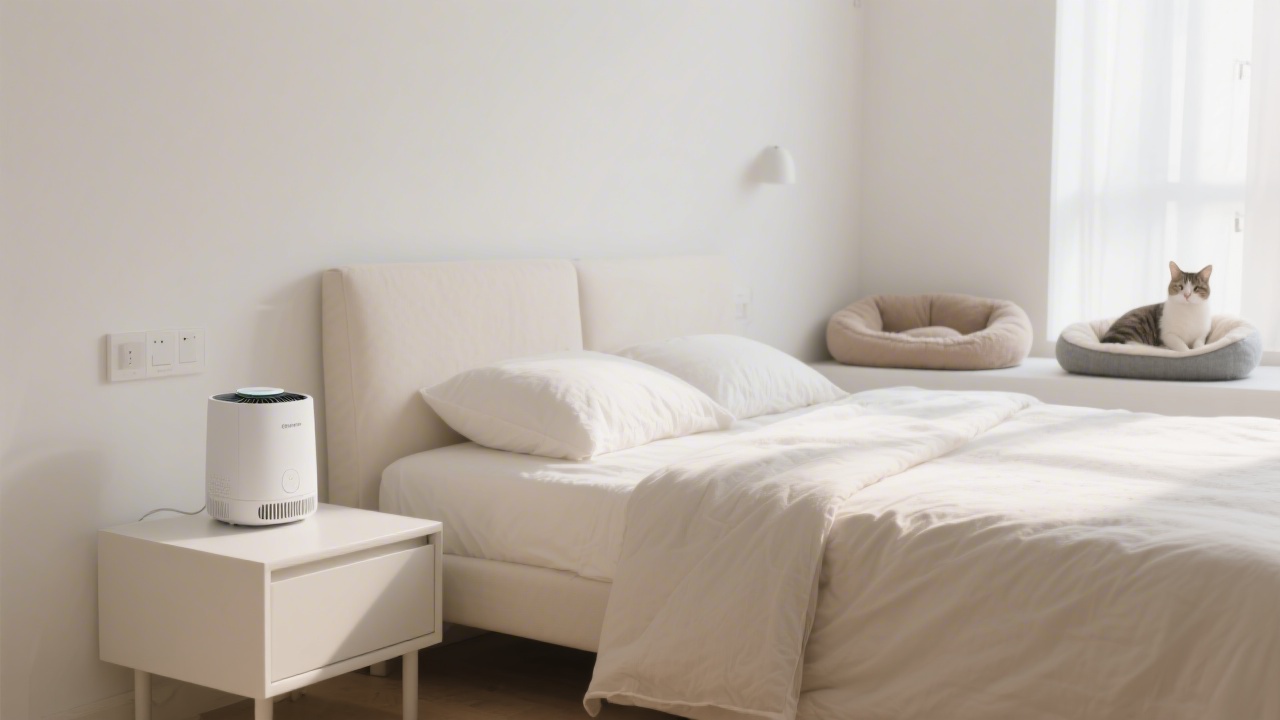
A HEPA air purifier in the bedroom, running continuously, captures airborne allergen particles before they settle on surfaces. Look for a unit rated for at least 1.5x the bedroom's square footage to account for the higher allergen load from pet co-sleeping. HEPA filters capture particles down to 0.3 microns — Fel d 1 and Can f 1 are in this size range. Run the purifier on low-speed mode overnight for quiet operation without sacrificing performance.
3. Washable Mattress Pad + Weekly Laundering
A washable mattress pad laundered at 60°C (140°F) or higher removes dander and kills any dust mites that have accumulated. This interrupts the accumulation cycle that makes bedroom exposure highest. This is the most practical intervention for most pet owners — it integrates into a weekly laundry routine without major lifestyle change.
4. Pet Bathing and Grooming Schedule
Regular bathing reduces airborne dander load. For dogs, weekly bathing reduces airborne allergen levels measurably. For cats — which typically don't accept baths — regular grooming with a damp cloth (focusing on the base of the tail and behind the ears, where allergen concentration is highest) and professional grooming every 6–8 weeks achieves similar results.
5. Bedroom Pet Exclusion During the Day
Keeping pets out of the bedroom during the day (even if they sleep there at night) allows dander levels to fall during the hours before sleep. This doesn't eliminate bedroom exposure but reduces the load. Combined with an air purifier, this can produce meaningful symptom reduction even for moderate allergy sufferers.
When Co-Sleeping Is Manageable vs Genuinely Harmful
With the above interventions in place, pet co-sleeping is manageable for most people with mild to moderate pet allergies. The clinical threshold for "harmful" is: symptoms that are severe enough to significantly impair sleep quality despite interventions, morning symptoms that persist through 2+ hours of the day, or progressive worsening of respiratory function over months. At this level, bedroom exclusion is the necessary step — and the evidence shows that pets kept out of the bedroom produce a genuine reduction in symptoms within weeks.
For people with asthma, allergy immunotherapy (shots or sublingual drops) combined with the above physical interventions offers the most sustainable long-term solution — reducing sensitivity while maintaining co-sleeping.
See our guide to sleeping with pets for a broader look at the co-sleeping question, and our pet-friendly mattress guide for the equipment side of allergen management.
Frequently Asked Questions
Can I sleep with my pet if I have allergies?
For mild to moderate allergies, yes — with the right interventions. Mattress encasement, HEPA filtration, weekly mattress pad laundering, and regular pet grooming together can reduce exposure enough for most mild allergy sufferers to sleep comfortably with pets. Severe allergies typically require bedroom exclusion.
How long does pet dander stay in a mattress?
Months to years. Cat allergen (Fel d 1) has been detected in homes at clinically significant levels for 6+ months after a cat was removed. In mattress fabric, without intervention, allergen levels continue to rise over time. A mattress encasement is the only complete solution for existing mattress contamination.
Do HEPA air purifiers actually help with pet allergies during sleep?
Yes — the clinical evidence is solid. HEPA purifiers in the bedroom reduce airborne pet allergen levels measurably and are associated with reduced nighttime allergy symptoms. The effect is strongest when the purifier runs continuously in the bedroom, sized appropriately for the room.
Is cat dander or dog dander worse for sleep allergies?
Cat dander (Fel d 1) is generally considered more allergenic — it's smaller, more airborne, and persists longer in fabrics than dog dander. More people are allergic to cats than dogs. However, both produce clinically significant bedroom exposure in co-sleeping situations without mitigation.
What is the difference between a mattress encasement and a mattress pad?
A mattress encasement is a zippered cover that encloses the entire mattress — all six sides — creating an impermeable barrier. A mattress pad covers the sleeping surface only (top and sides). For allergen management, the encasement provides the stronger protection; the pad provides a washable surface layer on top. The optimal setup for allergy sufferers uses both.
Recommended: Saatva Mattress Pad — Allergen-Resistant Protection for Pet Owners