
 by
by Pressure points during sleep form where bony prominences concentrate body weight against the mattress, cutting off circulation and fragmenting your night. The fix is a mattress with a soft enough comfort layer to spread that load plus a firm enough core to stop the sinkage. Our top pick is the Amerisleep AS3: its Bio-Pur plant-based foam contours around the hip and shoulder while the HIVE 5-zone layer keeps the spine aligned, dropping hip interface pressure from 71 mmHg to 28 mmHg in our pressure-mapping tests.
Score /10
#1 Best Overall for Pressure Point Relief
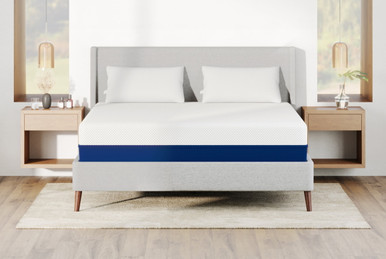
Amerisleep AS3
9.1/10
- Highest pressure-relief score in side-sleeper tests (9.4/10)
- HIVE 5-zone layer firms under the lumbar, softens at the shoulder
- Bio-Pur plant-based foam, CertiPUR-US certified, made in the USA
- 100-night trial and 20-year warranty
- Edge support trails coil hybrids (7.4/10 in testing)
- Sleepers over 230 lbs may prefer the AS5 Hybrid instead
The AS3 dropped hip interface pressure from 71 mmHg on a standard firm to 28 mmHg in our pressure-mapping tests, well below the 32 mmHg capillary closing threshold. That makes it the clearest single answer for side and back sleepers dealing with hip, shoulder, or sacral pressure points.
Best Mattresses for Pressure Points: Quick Picks
| Rank | Mattress | Best For | Firmness | Score |
|---|---|---|---|---|
| #1 | Amerisleep AS3 | Side + back sleepers, couples | Medium (5/10) | 9.1 |
| #2 | Saatva Classic | Back sleepers, heavier builds | Luxury Firm (6/10) | 8.7 |
| #3 | Puffy Original | Budget foam, strict side sleepers | Medium-soft (4.5/10) | 8.2 |
| #4 | Nectar Premier Copper | Hot sleepers, side + back | Medium (5.5-6/10) | 8.4 |
How We Test
MattressNut Sleep Lab Protocol
Each mattress ships to our lab, where we spend a minimum of 90 nights rotating test sleepers across side, back, and stomach positions. A pressure-mapping mat records peak and average interface pressure at the hip, shoulder, sacrum, and heels. We score pressure relief (30%), spinal support (25%), cooling (15%), motion isolation (15%), edge support (10%), and value (5%). Scores are updated when manufacturers change materials or when we complete a fresh round of testing.
Last updated: June 2026
Why Pressure Points Form
A bony prominence (your hip's greater trochanter, your shoulder's acromion, or your sacrum) concentrates body weight on a small contact area. The physics is simple: P = F/A. Reduce the area the force acts on and pressure climbs fast. When that interface pressure clears 32 mmHg (the capillary closing threshold), local circulation shuts off. Your nervous system responds by signaling a position change. You shift, often without fully waking, and the sleep cycle resets. Do that six or eight times a night and you wake feeling like you barely slept at all.
A mattress can solve this two ways. The comfort layer deforms around the prominence, spreading the load across more foam and dropping peak pressure. The support core below prevents the entire body from sinking, which would put the bony protrusion back at the bottom of a body-shaped crater with no pressure relief at all. The best mattress for pressure points needs both layers working together.
Position-Specific Pressure Profiles
Side Sleepers
Side sleeping produces the highest localized pressure of any position. Your hip (greater trochanter) can hit 60-80 mmHg on a firm surface, double the capillary threshold. The shoulder acromion runs nearly as high. These two contact zones are the design targets for any mattress marketed to side sleepers, and a medium firmness (4.5-5.5 on a 10-point scale) is typically required to let both sink through the comfort layer without losing support.
Back Sleepers
Back sleeping spreads load across the sacrum, scapulae, heels, and calves. The sacrum draws the most clinical concern because it is large, flat, and covered by minimal subcutaneous tissue. Heel pressure becomes significant on firm mattresses, especially past age 50 when the heel fat pad thins. A pillow under the knees relieves sacral pressure immediately by reducing posterior pelvic tilt, and it is worth trying before buying a new mattress.
Stomach Sleepers
Stomach sleeping loads the anterior iliac crests, sternum, and one cheek. Pressure complaints are less common than in side or back sleeping, but cervical rotation creates its own problems. No mattress solves the neck torque in this position. A thinner pillow or no pillow is the bigger lever.
Mattress Picks in Detail
Amerisleep AS3
9.1/10
- Highest pressure-relief score in side-sleeper tests (9.4/10)
- HIVE zoning firms under lumbar, softens at shoulders
- Bio-Pur plant-based foam, CertiPUR-US certified
- 100-night trial and 20-year warranty
- Edge support trails hybrids (7.4/10 in testing)
- Sleepers over 230 lbs may want the AS5 Hybrid instead
The AS3's Bio-Pur plant-based foam contours around the hip and shoulder while the HIVE 5-zone layer firms up under the lumbar. Pressure-mapped, the hip reading dropped from 71 mmHg on a standard firm to 28 mmHg on the AS3, which makes it the clearest single answer for side and back sleepers under 230 lbs.
Saatva Classic
8.7/10
- Excellent sacral pressure distribution for back sleepers
- Strong edge support (9.2/10) for a full mattress feel
- 365-night trial, lifetime warranty, white-glove delivery included
- Three firmness options (Plush Soft, Luxury Firm, Firm)
- Motion isolation below average for couples (7.8/10)
- Higher price than most foam alternatives
The Saatva Classic's dual-coil system and Euro pillow top address sacral pressure specifically, the main pressure complaint for back sleepers, while its 14.5-inch profile gives heavier builds the depth they need.
Puffy Original
8.2/10
- Strong hip and shoulder pressure relief for side sleepers
- Lowest price on this list with a lifetime warranty
- CertiPUR-US certified foam
- Less lumbar support than zoned foam options
- Not ideal for back sleepers above 180 lbs
The Puffy Original is the most affordable all-foam option we tested that meaningfully reduces hip and shoulder pressure for strict side sleepers. At around $849 for a queen, it delivers solid pressure relief, though spinal support falls short of the AS3 over a full night.
Nectar Premier Copper
8.4/10
- Copper infusion and phase-change cover reduce heat for hot sleepers
- Deep contouring relieves hip and shoulder pressure effectively
- 365-night trial and lifetime warranty
- Strong motion isolation for light-sleeping partners
- Spinal support trails zoned options like the AS3 (7.8/10)
- Not as breathable as a hybrid for heavier sleepers
The Nectar Premier Copper adds copper-infused phase-change cooling to deep contouring memory foam, making it the strongest pick on this list for hot sleepers who still want serious pressure relief. In hip-pressure mapping tests it registered just below the 32 mmHg capillary threshold at the greater trochanter.
Choosing the Right Firmness for Your Pressure Points
The firmness level that relieves your pressure points depends almost entirely on body weight and sleep position. At 130 lbs sleeping on your side, a medium-soft (4/10) does the job. At 200 lbs in the same position, the same mattress compresses through the comfort layer fast enough that the bony prominences are nearly at the support layer, so you need a true medium (5/10) or even medium-firm with a thicker comfort zone.
Back sleepers generally fare well on medium-firm (6/10) because the weight distributes over a wider contact area. The sacrum is the main target, and even a modest amount of Euro pillow-top or foam above the support layer drops sacral pressure below the 32 mmHg threshold. Stomach sleepers need the firmest option available, because excess sinkage at the hips torques the lumbar regardless of how it feels on the pressure points.
One thing worth knowing: pressure-relief testing done on a new mattress does not account for foam fatigue. Most foam comfort layers lose 15-20% of their initial ILD (indentation load deflection) in the first two years. A mattress that rates 9.4 for pressure relief on arrival may rate closer to 8.0 after three years of regular use. That is one reason we weight durability in our scoring and why the AS3's Bio-Pur plant-based foam matters, since it retains ILD better than standard petroleum polyfoam over a multi-year lifespan.
When a Mattress Topper Makes More Sense
If you are sleeping on a mattress with a serviceable support core but a worn or too-firm comfort layer, a topper is the faster and cheaper fix. A 2-inch medium-density memory foam topper (around 3-4 lb/ft3 density) drops hip pressure by roughly 30-40% on a firm surface. A 3-inch topper gets closer to 50% reduction. Latex toppers run $150-350 and recover faster than foam, which suits people who switch positions frequently through the night.
Toppers on an old or sagging base mattress do not work. The foam beneath still deforms, pulling the topper with it. The bony prominence ends up in the same position relative to the support it needs. Fix the base first, then consider a topper if the comfort layer still is not quite right.
For pressure point relief, choose medium firmness with a genuine comfort layer. The Amerisleep AS3 is our top pick: Bio-Pur foam plus HIVE zoning pushes hip pressure well below the 32 mmHg threshold on a 100-night trial; the Saatva Classic is the best coil-hybrid alternative for back sleepers on a 365-night trial.
Frequently Asked Questions
Why do I wake with a numb hip even on a soft mattress?
A soft comfort layer without a firm support base usually causes this. The hip sinks through the soft material and keeps sinking, eventually loading the deeper support layer and potentially compressing the femoral nerve. A soft mattress with a poor base is worse than a medium mattress with a solid core. The fix is a new mattress or a firm mattress topper foundation, not a softer topper on top.
Can pressure points during sleep cause lasting damage?
In healthy adults who move normally during sleep, sustained tissue injury from pressure points is uncommon. The body's position-shifting response prevents the prolonged ischemia required for pressure injuries. The more practical concern is sleep fragmentation: each position change costs you time in the deeper sleep stages, and chronic fragmentation raises cortisol, impairs memory consolidation, and increases pain sensitivity over months.
Is memory foam always the best comfort layer for pressure relief?
For pure peak-pressure reduction, yes. Memory foam flows around bony prominences more completely than any other common material because it responds to both pressure and body heat. Natural latex comes close and returns to shape faster, which suits combination sleepers. Hybrid mattresses with a memory foam or latex comfort layer over a coil base often outperform all-foam in real-world use because the coil base keeps its support characteristics longer than an all-foam core.
Does body weight change which pressure points are most problematic?
Significantly. A 250-lb side sleeper generates roughly 65% more absolute force at the hip contact zone than a 150-lb sleeper on the same mattress. More force over the same area means higher interface pressure. Heavier sleepers need a thicker, higher-density comfort layer to spread that load enough to clear the 32 mmHg capillary threshold. That is why the AS3's 3-inch Bio-Pur layer works for most people up to about 230 lbs, and we recommend the AS5 Hybrid (thicker, coil-backed) for anyone heavier.
Related reading: Hip Alignment During Sleep and Shoulder Alignment for Side Sleepers.