
 by
by Our Pick for Better Sleep
The Saatva Classic combines zoned lumbar support with a breathable Euro pillow top — built for uninterrupted, restorative sleep.
The University of Sussex Study: 68% Stress Reduction in 6 Minutes
The most cited finding in pre-bed reading research comes from a 2009 study at the University of Sussex, led by Dr. David Lewis. Participants under physiological stress were randomized to six stress-reduction activities: reading (fiction), listening to music, drinking a hot cup of tea, taking a walk, and playing video games. Stress was measured via heart rate and muscle tension.
Reading fiction for just 6 minutes reduced physiological stress by 68% — surpassing all other conditions, including listening to music (61%), drinking tea (54%), walking (42%), and gaming (21%). The study's explanation: fiction requires the reader to construct a mental simulation of the narrative, fully occupying the default mode network and crowding out rumination about daily stressors.
This is the mechanism that makes reading uniquely effective as a pre-sleep activity: it is not merely relaxing in a passive sense, it actively displaces the anxious or recapitulatory thinking patterns that interfere with sleep onset.
What Types of Reading Promote Sleep — and What Don't
Not all reading is equal before bed. The key variable is autonomic arousal: does the material elevate or lower your sympathetic nervous system activity? High-arousal reading sustains cortisol and heart rate in ways that are incompatible with sleep onset.
Best for Sleep
- Literary fiction with measured pacing — engages the imagination without producing suspense-driven compulsive reading
- Nature writing and travel narrative — evokes imagery and mild exploration without stakes-based tension
- History and biography (non-dramatic) — provides narrative engagement without acute emotional involvement
- Calm non-fiction — philosophy, science writing, essays at reflective pace
Least Ideal Before Bed
- Thrillers and crime fiction — narrative tension produces genuine sympathetic arousal; "just one more chapter" is a sleep killer
- Horror — sustained fear response with cortisol elevation
- News and current events — combine blue light (if digital), social comparison, and often anxiety-inducing content
- Emotionally heavy memoir — grief, trauma, and intense personal narrative can elevate emotional arousal comparably to stress events
- Work-related reading — activates problem-solving mode and prevents cognitive wind-down
Physical Book vs. Screen: The Light Exposure Difference
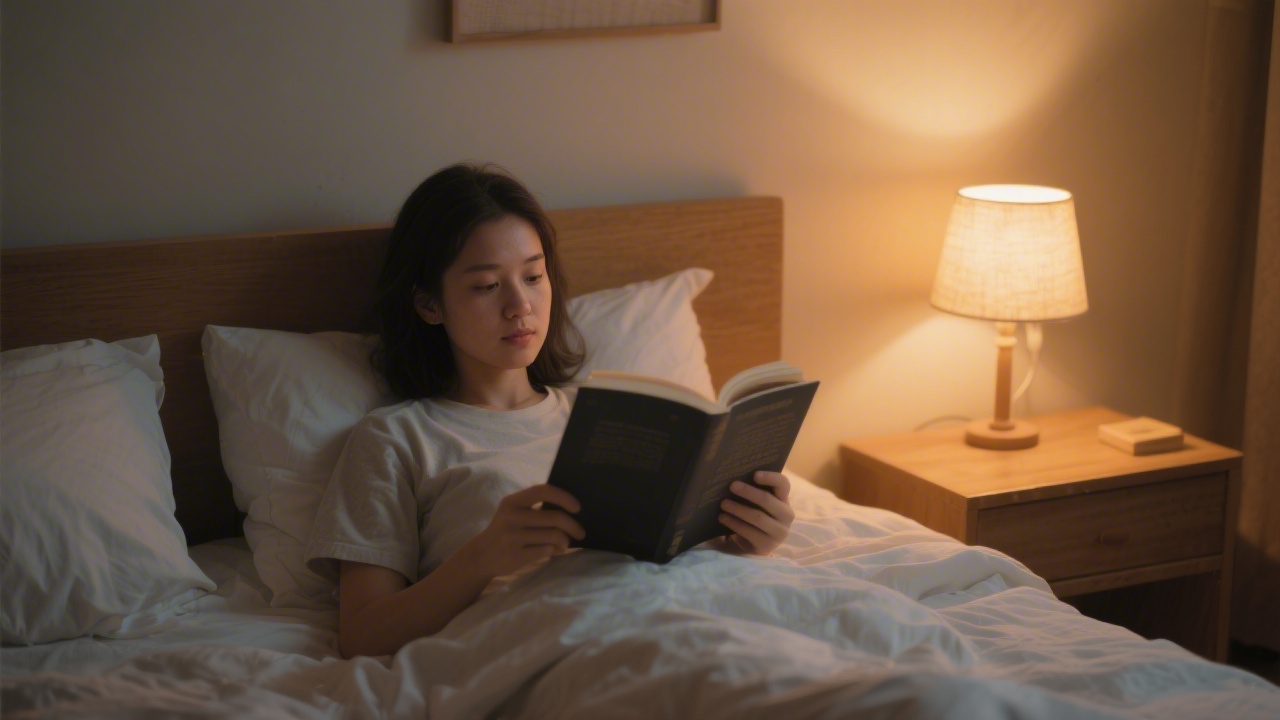
As covered in our screen time and sleep guide, backlit screens suppress melatonin through blue light exposure. Physical books produce no light exposure and are the optimal format for pre-bed reading. E-ink readers (basic Kindle, Kobo) with front-lighting set to minimum warm tone are a reasonable alternative.
If you must read on a tablet or phone, apply Night Mode, reduce brightness to minimum, and hold the device further from your face to reduce retinal blue light exposure. But even with these precautions, a physical book is consistently superior for sleep quality based on available studies.
Optimal Reading Duration and Timing
The Sussex study found meaningful stress reduction in as little as 6 minutes. However, most sleep hygiene protocols recommend 15 to 30 minutes of calm reading as part of a deliberate wind-down routine. Longer is fine if the material is calming — the risk with very engaging material is that reading extends past the sleep window.
Timing: begin your reading session at least 20 to 30 minutes before your target sleep time, ensuring you are already in bed or in a dim, comfortable environment. Pairing reading with other sleep-promoting signals (cool room, dim light, post-shower cooling period) amplifies the effect.
Why Fiction Works Better Than Non-Fiction for Most People
Research in narrative transportation theory shows that engaging fiction produces a state of immersive absorption that is neurologically distinct from analytical reading. In this absorbed state, the default mode network's ruminative activity (replaying events, planning, worrying) is suppressed. This is similar to the mechanism of mindfulness meditation but requires less active effort from the reader.
Non-fiction, particularly instructional or analytical content, tends to activate the prefrontal cortex in a planning/problem-solving mode. This can be cognitively stimulating in ways that extend rather than reduce sleep onset time.
Frequently Asked Questions
Does reading before bed improve sleep?
Yes. A 2009 University of Sussex study found that reading for just 6 minutes reduced physiological stress markers by 68% — more than listening to music (61%), drinking tea (54%), or taking a walk (42%). Lower stress and cortisol directly correlate with faster sleep onset.
Is reading on a phone or tablet before bed bad for sleep?
Reading on a backlit screen suppresses melatonin through blue light exposure. Physical books or e-ink readers (without backlight at high settings) are preferable for pre-bed reading. If using a tablet, maximum dimming and Night Mode reduces but does not eliminate the blue light effect.
What types of books are best for reading before bed?
Literary fiction, nature writing, history, and calm non-fiction are generally best. They engage the imagination without generating the sustained emotional arousal (anxiety, excitement, suspense) that delays sleep. Thrillers, horror, intense news, and emotionally heavy memoirs tend to keep the nervous system in a state incompatible with rapid sleep onset.
How long should I read before bed?
Research suggests that 15 to 30 minutes is sufficient to achieve measurable stress reduction. Reading for longer is fine if the material is calming. The key is stopping before the reading itself becomes stimulating enough to delay sleep — some people find an hour works, others lose sleep to page-turning.
Can audiobooks replace reading before bed?
Audiobooks can provide similar cognitive engagement and serve as a screen-free alternative, but some evidence suggests that passive listening causes less complete mental disengagement from daily stress than active reading. For many people, audiobooks work well — especially for those who find physical reading effortful due to fatigue.
Our Pick for Better Sleep
The Saatva Classic combines zoned lumbar support with a breathable Euro pillow top — built for uninterrupted, restorative sleep.