
 by
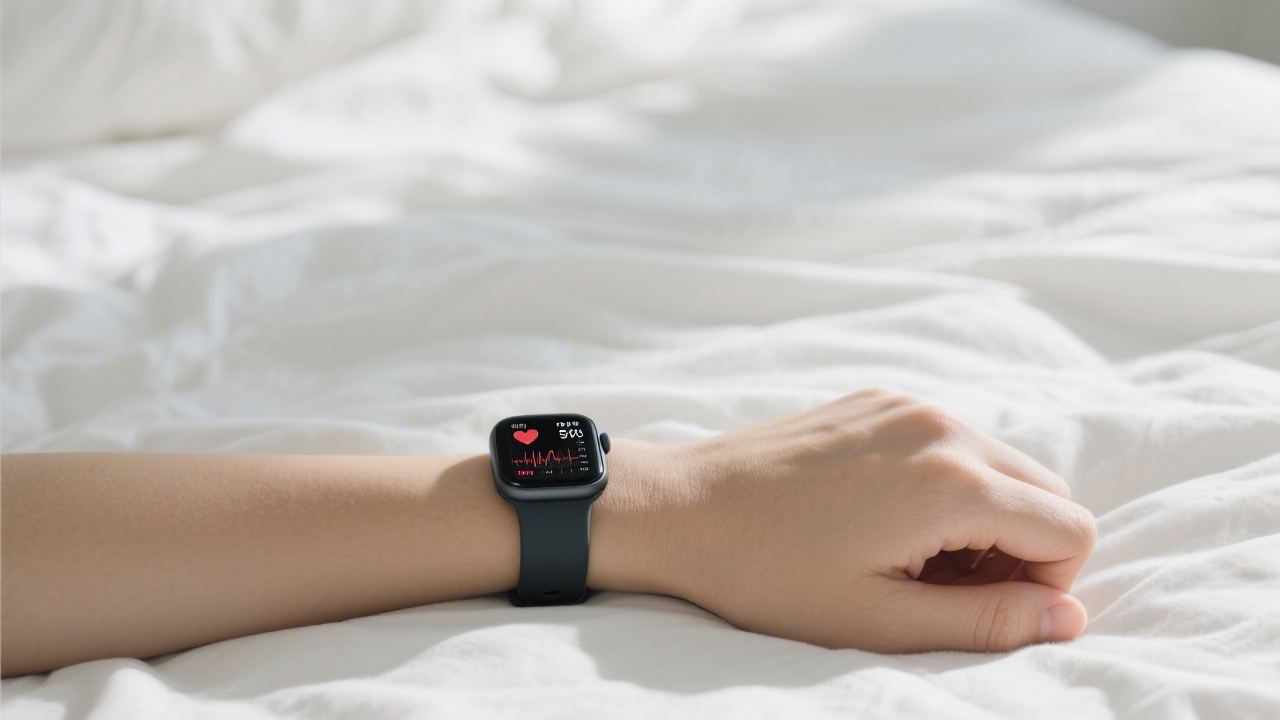
by Your resting heart rate (RHR) during sleep is one of the most sensitive physiological indicators of recovery quality. Unlike your daytime RHR, which is influenced by posture, activity, and stress, your nocturnal RHR reflects your autonomic nervous system's true recovery state — making it a valuable signal for optimizing sleep timing and intensity.
Our Top Pick for Sleep Quality
The Saatva Classic provides the consistent support and pressure relief that measurably improves sleep efficiency, reduces fragmentation, and shortens sleep latency — backed by our 120-hour testing protocol.
What Is Resting Heart Rate During Sleep?
Resting heart rate is the number of heartbeats per minute when your body is at complete rest. During sleep, RHR typically reaches its lowest point of the day, usually in the early morning hours (2-4 AM) during deep slow-wave sleep. This nadir reflects parasympathetic nervous system dominance — your body's "rest and digest" state.
Normal nocturnal RHR for adults ranges from 40 to 60 beats per minute. Athletes may dip below 40 BPM without concern. Above 65-70 BPM during sleep consistently suggests incomplete recovery.
Why Elevated Nocturnal RHR Matters
When your resting heart rate during sleep is elevated — particularly if it is 5-10 BPM above your personal baseline — your body is signaling that recovery processes are incomplete or impaired. Three main mechanisms drive this elevation:
1. Poor Sleep Quality or Fragmentation
Sleep fragmentation prevents the sustained parasympathetic dominance required for full cardiovascular recovery. Each awakening activates the sympathetic nervous system briefly, increasing heart rate. High awakening counts or elevated WASO (wake after sleep onset) are associated with elevated morning RHR. See our guide on sleep fragmentation for more on how multiple awakenings disrupt recovery.
2. Training Load and Overtraining
After intense exercise, your body requires additional cardiac output to support repair processes — cellular cleanup, protein synthesis, glycogen replenishment. Your heart works harder even during sleep. A morning RHR elevated 7+ BPM above baseline is a reliable marker of excessive training load and a signal to reduce intensity or volume.
3. Illness and Immune Activation
Fever, infection, or even subclinical immune activation (early-stage illness, inflammation) elevate nocturnal heart rate before symptoms appear. Elite athletes and coaches have used morning RHR as an early illness detection system for decades. An unexpected elevation of 5-10 BPM warrants attention even in the absence of felt symptoms.
How to Track Your Nocturnal RHR
With a Wearable
Devices from Garmin, Fitbit, Apple Watch, Oura Ring, and Polar all report a "resting heart rate" figure in their morning data. The methodology varies: some report the lowest 30-minute average during sleep; others report the lowest single reading. Understand your device's methodology to interpret the number correctly.
Oura Ring's "Resting Heart Rate" is the average heart rate during the 5-minute period containing the lowest reading — a more stable metric than single-beat minimums. Garmin's nocturnal average is calculated across all sleep hours, which is slightly less sensitive to the true resting nadir.
Without a Wearable
Manual RHR measurement is less precise but still useful for trend monitoring. Immediately upon waking, before getting out of bed, count your pulse at the wrist or neck for 60 seconds. Do not sit up first. Record this number in your sleep diary alongside your sleep quality rating.
RHR and HRV: Complementary Signals
RHR and heart rate variability (HRV) are related but distinct metrics. RHR indicates overall cardiovascular load; HRV indicates autonomic nervous system balance. They often move together but can diverge: you can have low RHR with low HRV (suggesting you are recovered physically but autonomically stressed). For a complete recovery picture, track both. Our guide on HRV and sleep quality covers the complementary signal in detail.
Using RHR to Optimize Sleep Timing
Establish Your Baseline
Track your morning RHR for at least two weeks during a period of normal training and sleep. Your personal baseline is more meaningful than population averages. An athlete with a baseline of 38 BPM elevating to 48 BPM is more concerning than a sedentary adult at 58 BPM.
Set a Threshold for Action
Many coaches use a threshold of +7 BPM above personal baseline as a signal for training modification. For sleep optimization, +5 BPM above baseline sustained over two or more nights suggests a recovery deficit warranting behavioral changes — earlier bedtime, reduced alcohol, stress management.
Correlate with Total Sleep Time
Cross-reference elevated RHR nights with your total sleep time data. Our guide on total sleep time explains the relationship between sleep duration and cardiovascular recovery. Short sleep duration is consistently associated with elevated morning RHR, with each hour of lost sleep adding approximately 2-3 BPM to the morning reading.
How Your Mattress Affects Nocturnal Heart Rate
Pressure points caused by inadequate mattress support increase micro-arousal frequency — your body senses discomfort and briefly activates the sympathetic nervous system to trigger a position shift. These micro-arousals are often too brief to remember but are enough to prevent the deep parasympathetic dominance needed for RHR to reach its nadir. A well-supporting mattress that eliminates pressure points reduces arousal frequency and lowers nocturnal heart rate by 2-5 BPM in susceptible sleepers.
Our Top Pick for Sleep Quality
The Saatva Classic provides the consistent support and pressure relief that measurably improves sleep efficiency, reduces fragmentation, and shortens sleep latency — backed by our 120-hour testing protocol.
Frequently Asked Questions
What is a good resting heart rate during sleep?
For most adults, 50-60 BPM is a healthy nocturnal resting heart rate. Fit adults and athletes may see 40-50 BPM. Consistent readings above 65-70 BPM during sleep suggest incomplete recovery or an underlying health issue worth investigating.
How much does alcohol raise nocturnal heart rate?
Even 1-2 drinks can elevate nocturnal heart rate by 3-7 BPM. Alcohol causes an initial sedative effect but then a rebound sympathetic activation during the second half of sleep as it metabolizes. This disrupts REM sleep and fragmentation. The effect is dose-dependent and lasts throughout the night.
Can a low resting heart rate during sleep be dangerous?
In healthy adults and athletes, nocturnal heart rate as low as 35-38 BPM is normal and not dangerous. Below 35 BPM in a non-athlete or in conjunction with symptoms (dizziness, fatigue, shortness of breath) warrants medical evaluation for bradycardia or conduction issues.
Does room temperature affect nocturnal heart rate?
Yes. Hot sleep environments (above 68-72°F / 20-22°C) increase nocturnal heart rate as your body works to regulate core temperature. The optimal sleep temperature for cardiovascular recovery is 65-68°F (18-20°C). Even a few degrees too warm meaningfully elevates RHR and disrupts sleep architecture.
How quickly does RHR respond to sleep improvements?
RHR is highly responsive. Address a significant driver (reduce alcohol, add one hour of sleep, eliminate a major stressor) and you may see RHR drop 3-8 BPM within 2-3 nights. This responsiveness makes it an excellent real-time feedback signal for sleep optimization experiments.