
 by
by Short on time? The Sealy Posturepedic Hybrid Paterson is a responsive, medium-firm mattress that makes the most sense for back sleepers, combination sleepers, and shoppers who prefer coil pushback to a deep memory-foam hug. Its compact profile is useful on adjustable bases and low frames. Its weaker points are motion transfer, limited firmness choice, and purchase protection that depends heavily on where you buy it.
My quick verdict on the Sealy Posturepedic Hybrid
The Paterson gets the basic hybrid formula right. According to Sealy’s product information, it combines individually wrapped Response Pro coils with gel-infused comfort foams and a reinforced perimeter. My materials-based verdict is a buoyant, supportive feel with less sink than a typical all-foam mattress.
I see it as a practical mid-tier hybrid, not a plush luxury model. The construction favors surface response, internal airflow, and edge stability over deep contouring. That balance is likely to suit back and combination sleepers better than lightweight side sleepers who need substantial pressure relief at the shoulder and hip.
The compact build is one of the Paterson’s clearest selling points. It is easier to pair with an adjustable base, a low-profile frame, or a bedroom setup where an especially tall mattress would make getting into bed awkward. A lower build does not automatically mean less support, but it usually leaves less space for thick comfort layers.
The main caution is choice. The Paterson gives you a fairly specific medium-firm, foam-over-coil feel. If that construction does not suit your body or sleeping position, there is not much room to tune it through a different firmness option.
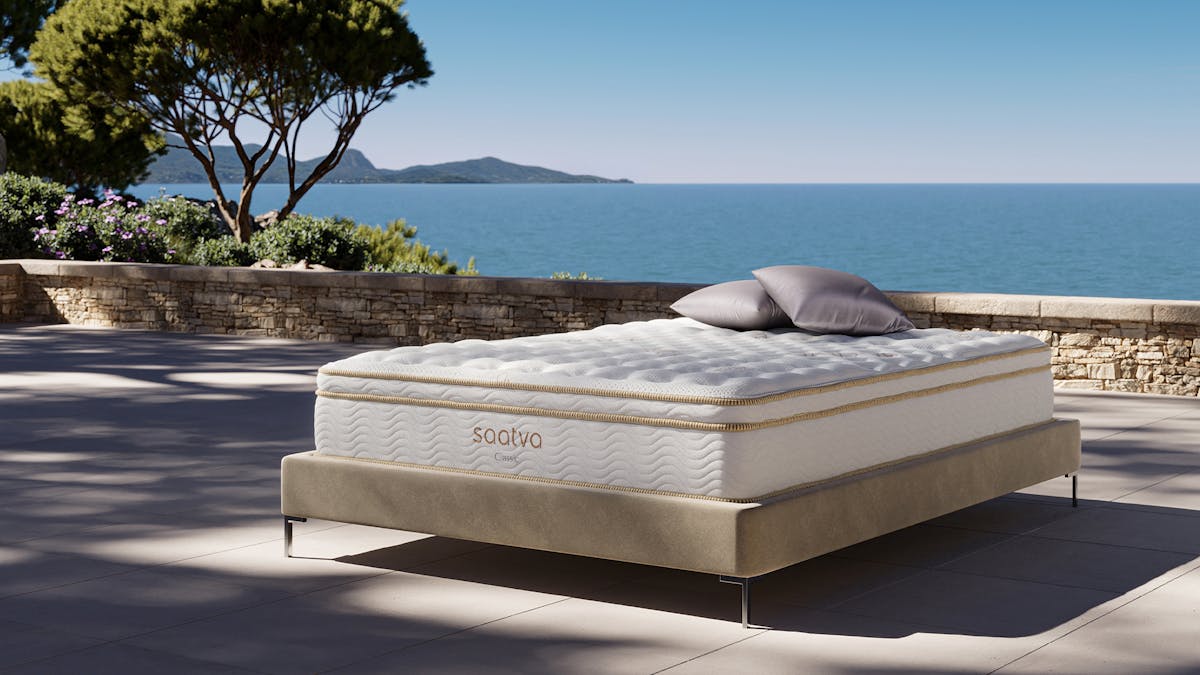
Before buying, I would compare the Paterson with the Saatva Classic. Saatva offers multiple firmness and height configurations, according to the manufacturer, while Sealy keeps the Paterson proposition simpler. The right choice depends on whether you value the Paterson’s compact build and straightforward coil feel or want more configuration choices and broader service terms.
Recommended comparison: Saatva Classic
- A coil-based alternative with a more traditional luxury-innerspring design
- Multiple firmness levels and two height choices, according to Saatva
- Home trial, warranty, and white-glove delivery terms published by the manufacturer
Our editor has also explained the personal reasons behind changing mattresses after years of settling for a bed that was no longer comfortable. Read why our editor switched to Saatva.
Where the Paterson fits in the Posturepedic range
The Paterson is a hybrid mattress in Sealy’s Posturepedic range. According to Sealy’s published product information, it uses a foam comfort system over individually wrapped coils, with additional perimeter reinforcement and a treated surface cover.
That construction matters more than the collection name. Pocketed coils give individual parts of the support core some independence, allowing the mattress to respond locally to pressure while retaining the familiar pushback of an innerspring. Foam above the coils softens that response, but the Paterson is not built around an especially thick, slow-moving comfort cradle.
My materials read is straightforward: expect moderate cushioning, noticeable bounce, and support that feels close to the surface. Sleepers who like to feel held on top of the mattress may appreciate that balance. People looking for a deeply conforming surface may find it too restrained.
The Paterson occupies a useful position in Sealy’s catalog. It provides the central Posturepedic hybrid idea without moving into the taller and more elaborate configurations elsewhere in the range. That makes it easier to understand, but it also means fewer ways to adjust the feel.
This is not merely a question of soft versus firm. Comfort-layer thickness affects how quickly the sleeper reaches the coil response, while coil design affects pushback, movement, and edge behavior. In the Paterson, the spring system remains a prominent part of the experience.
Construction and materials, layer by layer
Cool-to-touch cover
Sealy describes the surface as a cool-to-touch knit cover with MoistureProtect and Surface Guard treatments. Those are manufacturer descriptions of the cover’s feel and treatment. They should not be confused with active cooling hardware or a promise that every sleeper will remain cool.
A cool-feeling textile can make initial contact more comfortable, but overnight temperature control still depends heavily on room conditions, bedding, sleeper physiology, and the materials beneath the cover. The Paterson’s coil core is the more meaningful construction advantage for internal airflow.
The cover is also the first part of the mattress exposed to moisture, friction, and repeated movement. A breathable protector can help keep the surface cleaner, although a thick or poorly ventilated protector may change both the feel and temperature of the bed.
Gel foam comfort system
The comfort system combines Comfort Sense gel foam with Sealy Support gel memory foam, a pairing Sealy identifies as DuoGel. According to Sealy, these layers provide cushioning before the body reaches the coil unit.
Gel additives are commonly used to alter the feel and heat behavior of polyurethane foam. I would still judge this mattress as a foam-and-coil hybrid, not as a cooling system. Foam can retain warmth, while the open spaces around the springs help air move through the lower portion of the bed.
The comfort package appears geared toward controlled cushioning. It should take some sharpness out of the coil response without producing the pronounced sink associated with thicker memory-foam stacks. That is helpful for movement, but it leaves less material available to absorb pressure around a side sleeper’s shoulder and hip.
Foam density would be valuable for judging long-term durability more precisely. Sealy’s consumer-facing descriptions identify the foam types, but material names alone do not reveal every durability variable. Compression, body weight, heat, moisture, and repeated loading all influence how the upper layers change over time.
Response Pro coil support
The support core uses Response Pro individually wrapped coils, according to Sealy. Pocketing allows neighboring coils to compress with a degree of independence. That can improve contouring and reduce the broad, interconnected bounce associated with traditional open-coil units.
The coil system is the main reason I point back and combination sleepers toward this model. Coils recover quickly after compression, which helps the surface keep up as a sleeper changes position. That quick recovery also makes the Paterson feel livelier than a dense all-foam mattress.
Pocketing should not be mistaken for complete motion isolation. The coils still share surrounding materials, and movement can pass through the cover and foam package. The design controls motion better than a basic connected spring unit, but it remains a responsive hybrid.
Duraflex Edge reinforcement
Sealy uses its Duraflex Edge system around the perimeter. A reinforced edge is valuable for people who sleep near the side, share a smaller sleeping surface, or sit on the bed while dressing.
Edge reinforcement does not make the perimeter rigid. Every mattress edge compresses under concentrated weight. The practical question is whether the border feels stable enough to use without a pronounced sliding or roll-off sensation. The Paterson’s dedicated reinforcement is more promising here than a basic foam perimeter with no separate edge system.
A stronger perimeter can also make the mattress feel larger in use. If both partners can occupy the outer portions without drifting toward the center, more of the stated width becomes practical sleeping space.
Foundation foam
A SealySupport foam layer sits beneath the coil unit as a stabilizing base, according to Sealy’s construction description. This is not a comfort layer and is not intended to be slept on. It gives the coil assembly a consistent surface and helps the finished mattress retain its structure.
The base layer still depends on the support beneath the mattress. A hybrid placed on an unsuitable frame can flex or sag between supports, changing how the upper layers and coils carry the sleeper.
Firmness, comfort, and sleeping positions
The Paterson is best understood as medium-firm. It should feel more responsive than enveloping, with the sleeper resting largely on the surface instead of descending deeply into the foam.
I base that verdict on the published layer arrangement and the expected behavior of a restrained foam package over pocketed coils. Firmness remains subjective, so body weight, body shape, foundation choice, and previous mattress experience can change how the surface feels.
Support and firmness are related, but they are not identical. Firmness describes the immediate resistance at the surface. Support describes how well the full construction manages the sleeper’s weight and position. A mattress can feel firm at first contact yet still allow poor alignment if its deeper layers do not respond appropriately.
Back sleeping
Back sleepers are the clearest match. The coil unit should resist excessive pelvic sink, while the upper foams provide enough give to accommodate the hips and lower back.
Good back-sleeping support is not about making the bed as hard as possible. The surface needs enough compliance to follow the body while preventing the midsection from dropping well below the shoulders and legs. The Paterson’s construction is aimed at that middle ground.
Back sleepers who enjoy a pronounced memory-foam cradle may still find it too springy. The Paterson’s advantage is easier movement and more direct support, not a slow-melting feel.
Stomach sleeping
Some stomach sleepers may appreciate the buoyant support, especially if they dislike soft foam around the hips. The limitation is that support needs rise with body weight and weight distribution. A sleeper who carries more weight through the abdomen may need a firmer or more robust configuration.
The surface must also remain comfortable around the chest, knees, and feet. Anyone who sleeps exclusively on the stomach should pay close attention to the seller’s return policy because the Paterson does not provide a separate firmness selection.
Pillow height matters here as well. A mattress that keeps the torso relatively level can still feel awkward if a thick pillow pushes the neck backward during stomach sleep.
Side sleeping
Side sleeping is the more conditional fit. The shoulder and hip concentrate pressure over smaller areas, so they generally need more comfort-layer compression than the back does.
Lightweight side sleepers and people with prominent shoulders may find the Paterson too resistant. A broader or heavier side sleeper may engage the foam more effectively and experience better pressure distribution, but this is not the model I would choose for someone specifically seeking a plush, deeply conforming side-sleeper bed.
The pillow can compensate for head and neck height, but it cannot create missing pressure relief beneath the shoulder. If the upper arm feels compressed or the hip becomes sore, the issue may be the mattress surface rather than the pillow.
Combination sleeping
The quick recovery of the coil unit is useful for position changes. Combination sleepers are less likely to encounter the slow, sticky sensation that can occur with thick memory foam.
That makes the Paterson a sensible candidate for sleepers who rotate between the back, side, and stomach. Its weaker side-sleeping pressure relief still matters, particularly for someone who spends most of the night on one side rather than merely passing through that position.
For more options built around easy movement, see my guide to mattresses for combination sleepers.
Cooling and breathability without the slogans
The coil core is the strongest cooling feature in the design. Air can move through the spaces surrounding the springs more readily than through a solid block of foam.
The cover and gel foams may help manage the initial surface feel, according to Sealy’s descriptions, but they do not remove the influence of bedding and bedroom temperature. Thick waterproof protectors, dense sheets, and heavy comforters can reduce the practical benefit of a breathable mattress.
The Paterson should have an airflow advantage over many dense all-foam beds, while still containing foam directly beneath the sleeper. That distinction matters. Air movement inside the support core does not necessarily prevent warmth from building at the body-facing surface.
I would place the Paterson ahead of many dense all-foam beds for airflow, while keeping expectations realistic. Latex hybrids and more open coil-on-coil designs may feel airier. Hot sleepers can compare those constructions in my cooling mattress guide.
Edge support, bounce, and motion transfer
The reinforced perimeter is a positive feature for couples because it helps preserve usable sleeping space. Without adequate edge support, partners tend to crowd toward the center to avoid a sloping border.
The Paterson should also be easier to rise from than a deeply compressing foam bed. Coil pushback and the firmer perimeter can provide leverage, although the actual experience depends on the sleeper’s mobility, body weight, and bed-frame height.
Motion isolation is less convincing. Individually wrapped coils are more controlled than connected open coils, but this remains a responsive hybrid. Movement can travel through the cover, comfort foams, and spring unit.
The type of disturbance matters. Small movements may stay relatively localized, while a partner sitting on the edge or getting out of bed creates a larger change in load. A solid, stable frame can prevent extra shaking, but it cannot turn a buoyant hybrid into a motion-deadening foam mattress.
If one partner wakes easily when the other rolls over, gets out of bed, or changes position, an all-foam design may be the safer construction. Couples who value bounce and ease of movement may accept that tradeoff.
Who should consider the Paterson
- Back sleepers: The responsive coil support and moderate cushioning are aligned with a level, supported posture.
- Combination sleepers: The surface should recover quickly during position changes.
- Hot sleepers who prefer coils: The spring unit provides more internal air space than a solid foam core.
- Adjustable-base users: The comparatively compact profile should flex more readily than an especially thick hybrid.
- Low-frame owners: The mattress avoids adding unnecessary height to an already tall foundation.
- Shoppers who like a traditional mattress feel: The Paterson offers coil pushback with a foam buffer rather than a deep memory-foam embrace.
- Couples who use the full surface: The reinforced perimeter should make the outer sleeping area more practical.
The best Paterson buyer wants a familiar mattress feel with modern pocketed coils, not an extreme foam hug or an unusually plush pillow top. It is a focused design for shoppers who already know they like medium-firm hybrids.
Before committing to the Paterson, I would compare the construction, firmness options, delivery method, trial terms, and warranty language with the Saatva Classic.
Who should look elsewhere
- Lightweight side sleepers: The comfort system may not compress enough around the shoulder and hip.
- People seeking a plush foam hug: The Paterson emphasizes response and support over deep contouring.
- Highly motion-sensitive couples: A responsive coil core can carry more partner movement than an all-foam mattress.
- Shoppers wanting firmness customization: The Paterson does not offer the same range of firmness choices as some competing models.
- Buyers prioritizing extensive service terms: Compare the exact trial, return, delivery, and warranty policies before ordering.
- Shoppers who want detailed foam specifications: The published layer names do not provide every figure needed for a precise durability forecast.
I would also hesitate if the sleeper has a history of shoulder pressure on firmer hybrids. The Paterson’s moderate cushioning may be enough for some bodies, but its construction is not centered on deep pressure absorption.
Price, value, and available sizes
The Paterson is positioned as a more accessible Posturepedic hybrid rather than the most elaborate model in Sealy’s range. Mattress prices and promotions change frequently, so I would verify the live amount with Sealy or an authorized retailer instead of relying on an old sale figure.
Value depends on more than the label price. The useful comparison is what you receive in construction, delivery, return rights, warranty coverage, and retailer support. A lower advertised amount can be less attractive if exchanges carry significant fees or delivery services are limited.
According to Sealy’s product listing, the Paterson is sold in familiar adult mattress sizes, including Twin, Twin XL, Full, Queen, King, and California King. The dimensions published for those sizes are:
| Size | Dimensions listed by Sealy |
|---|---|
| Twin | 38" x 75" |
| Twin XL | 38" x 80" |
| Full | 54" x 74" |
| Queen | 60" x 80" |
| King | 76" x 80" |
| California King | 72" x 84" |
The Full dimension deserves a careful check against the intended frame because the listed length differs from some nominal sizing conventions. Confirm the mattress and frame measurements with the seller before ordering, especially if the bed must fit into an existing surround or platform.
The price comparison should include delivery charges, removal services, return fees, foundation requirements, and the policy of the specific retailer. Retailer terms can differ from the policies offered on Sealy’s own website.
Check the Sealy Posturepedic Hybrid Paterson at Sealy
Trial, shipping, care, and warranty
Sealy publishes a home-trial policy for qualifying direct purchases and a limited warranty covering specified manufacturing defects. Those protections are governed by the manufacturer’s current written terms, including eligibility, documentation, foundation requirements, and exclusions.
If you buy through a retailer, read that retailer’s return and exchange rules before paying. A store’s comfort-exchange program is not automatically identical to Sealy’s direct-purchase policy. The return destination, pickup arrangement, condition requirements, and possible fees may also differ.
Standard shipping availability and optional in-home delivery can depend on the seller and destination. Confirm who carries the mattress inside, who removes the packaging, and whether an old mattress can be taken away. These details matter with a hybrid because moving and positioning a coil mattress can be difficult without help.
The Paterson has one intended sleeping surface, so it should not be flipped. Periodic rotation can help distribute wear, provided the manufacturer’s care instructions allow it and the mattress remains properly supported.
Use a foundation or frame that satisfies Sealy’s warranty requirements. Unsupported spans, inadequate center support, or widely spaced slats can change how a hybrid feels and may affect warranty eligibility.
Keep the purchase receipt and law tag. If a structural problem develops, those records can be important when the manufacturer or retailer assesses whether the claim meets the written coverage terms.
Is Sealy made in the USA?
Sealy identifies the Paterson as made in the United States. Buyers who care about domestic manufacturing should still distinguish between final assembly and the origin of every component, since those are not necessarily the same claim.
The useful question is what the manufacturer actually states about this model, not what shoppers assume from the brand’s history. Component sourcing and final assembly are separate issues, and the product label provides the most relevant information for the mattress delivered to your home.
For a wider comparison, see my guide to mattresses made in the USA.
Durability and long-term ownership
From a construction standpoint, the likely wear points are the upper foams and the areas exposed to repeated concentrated pressure. The coil unit provides a durable support concept, but no coil system can prevent a soft comfort layer from changing feel over time.
Foam density would be useful for a more exact durability assessment, but shoppers do not always receive complete density specifications. Without those figures, I would avoid pretending that the cover treatments or brand name alone predict lifespan.
The Paterson’s relatively restrained comfort package cuts both ways. There is less thick foam available to form a deep impression, but there is also less cushioning between the sleeper and the coil response if the upper layers soften. A modest change in those foams may therefore become noticeable.
Edge sitting places a concentrated load on a small area. The Duraflex reinforcement is designed to support the perimeter, according to Sealy, but repeatedly using the same spot as a seat may still create more localized wear than lying across the broader surface.
A stable foundation, periodic rotation, appropriate edge use, and protection from moisture can help manage wear. Body weight, sleeping position, room conditions, and how often the mattress is used will also affect the rate of visible and perceived change.
Inspect the warranty definition of a qualifying indentation. Normal softening and a covered structural defect are not necessarily treated the same way. Keeping the receipt and law tag is sensible if a future claim becomes necessary.
I would reassess the entire sleep setup before blaming the mattress for every change in feel. A bowed foundation, loose frame connection, worn pillow, or overly thick protector can alter support and comfort. That does not excuse a mattress defect, but it helps isolate the actual source of the problem.
Paterson versus Saatva Classic
The Sealy Paterson and Saatva Classic both appeal to shoppers who want coils, but they approach the category differently. The Paterson is a simpler foam-over-coil hybrid with a compact profile. The Saatva Classic uses a more layered luxury-innerspring approach with a Euro-style top, according to Saatva.
Sealy’s design is the easier match for a shopper who wants medium-firm response without a tall, heavily cushioned build. The surface should feel direct and familiar, with the pocketed coil unit remaining easy to detect beneath the foam.
Saatva publishes multiple firmness levels and two height choices, according to the manufacturer. That gives shoppers more control over the initial feel and overall bed height. The Paterson asks the buyer to accept one narrower comfort proposition.
Delivery and ownership policies also deserve equal weight with the internal construction. Saatva publishes home trial, warranty, and in-home delivery terms on its site, while a Paterson buyer may encounter different terms depending on whether the mattress comes directly from Sealy or through a retailer.
I would not choose between them based on brand familiarity alone. The Paterson has the cleaner case for a compact, responsive hybrid. The Saatva Classic deserves the comparison if firmness selection, a more cushioned top, and published service terms are central to the decision.
Frequently asked questions
Is the Sealy Posturepedic Hybrid Paterson good for back pain?
The medium-firm, coil-supported construction may suit back sleepers who need resistance beneath the pelvis without an especially hard surface. It is not a medical treatment, and mattress comfort alone cannot diagnose or resolve a pain condition.
Fit remains individual. A surface that helps one sleeper maintain a comfortable posture may create pressure or tension for another. Persistent or worsening pain should be discussed with a qualified healthcare professional rather than treated solely as a mattress-selection problem.
For construction options commonly considered by back-pain shoppers, see my mattress guide for back pain.
Does the Sealy Paterson come in a box?
The delivery format can depend on the seller and fulfillment method. Confirm with Sealy or the chosen retailer whether the mattress will arrive compressed, be delivered flat, or include an in-home setup service.
If it arrives compressed, follow the manufacturer’s opening and expansion instructions. Do not apply an unverified universal expansion timetable because packaging, storage, and handling guidance can vary.
Inspect the packaging before opening and document visible transit damage. It is easier to raise a delivery issue when the condition of the package and mattress is recorded promptly.
Is the Sealy Paterson Hybrid flippable?
No. Its layers have a defined order: comfort materials on top, coils beneath them, and stabilizing foam at the base. Flipping it would place the foundation layer at the sleeping surface and prevent the comfort system from working as intended.
Rotation is different from flipping. Turning the head end toward the foot can distribute repeated loading more evenly, subject to Sealy’s current care guidance.
Use proper lifting help when rotating the mattress. Dragging or sharply folding a hybrid can strain the cover, edge materials, and internal assembly.
Does the Sealy Paterson work with an adjustable bed?
Sealy identifies the mattress as compatible with adjustable bases. The compact hybrid construction is a practical advantage because it has less material to bend than an especially tall mattress.
The base should still support the mattress correctly and meet the manufacturer’s specifications. Confirm compatibility for both products if the adjustable base comes from a different brand.
See my adjustable-bed mattress guide for other compatible constructions.
How does the Sealy Paterson compare with the Saatva Classic?
The Paterson is the simpler, lower-profile choice. Its foam-over-coil construction favors a medium-firm, responsive surface and should work well where overall bed height matters.
The Saatva Classic uses a more elaborate innerspring design with a Euro-style top. Saatva also publishes multiple firmness and height options, along with its own trial, warranty, and in-home delivery policies.
I would lean toward the Paterson for a shopper who wants an uncomplicated Sealy hybrid, likes a buoyant feel, and needs a compact build. I would compare Saatva first if firmness choice, service, and a more cushioned luxury-innerspring feel carry greater weight.
Is the Paterson a good mattress for couples?
It can work for couples who value edge stability and easy movement. The reinforced perimeter should help both partners use more of the surface, while the responsive coil unit makes turning and getting out of bed easier than on deeply conforming foam.
The compromise is motion transfer. Pocketed coils provide more localized response than connected springs, but the Paterson remains buoyant. A very light sleeper sharing the bed with an active partner may prefer a more motion-absorbing construction.
What foundation should go under the Paterson?
Use a frame, platform, or foundation that meets Sealy’s current support requirements. The correct setup should provide an even surface and any required center reinforcement without leaving unsupported spans beneath the mattress.
A poor foundation can make the mattress feel softer, less stable, or uneven. It may also affect warranty eligibility, so confirm the written requirements before reusing an older base.
The Nut’s final verdict
The Sealy Posturepedic Hybrid Paterson is a credible commercial choice for back sleepers, combination sleepers, and buyers who want the ventilation and response of coils without purchasing an especially tall mattress.
Its construction is sensible: treated knit cover, gel foams, pocketed Response Pro coils, reinforced edges, and a stabilizing base, according to Sealy’s published description. The tradeoffs are equally clear. It offers less deep contouring for lightweight side sleepers, more potential motion transfer than all-foam alternatives, and fewer ways to tune the feel.
I would buy it for the compact profile and traditional hybrid response, not for cooling slogans or the expectation of a plush memory-foam cradle. I would also compare seller policies carefully because the retailer can materially change the ownership experience.
The mattress I would compare before deciding: Saatva Classic
- More configuration choices, according to Saatva
- A cushioned luxury-innerspring feel rather than the Paterson’s simpler foam-over-coil build
- Manufacturer-published trial, warranty, and in-home delivery terms worth comparing with Sealy’s offer
My bottom line is simple: choose the Paterson if you want a compact, responsive Sealy hybrid and already know that a medium-firm coil feel suits you. Keep comparing if you need plush side-sleeping relief, stronger motion isolation, or more control over firmness and service terms.